
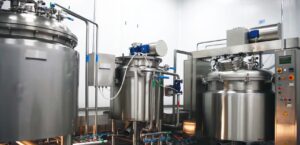
The “Chervona Zirka” Chemical and Pharmaceutical Plant (Kharkiv) produced goods worth 546.883 M UAH in 2025 and sold goods worth 526.744 M UAH.
According to a report published on the company’s website, the cost of goods sold in 2025 amounted to 213.733 million UAH.
The company reported that 96.4% of its output consisted of pharmaceutical products in the form of tablets, capsules, ointments, and tinctures.
Meanwhile, production of perfumes and cosmetics, which accounted for 2.9% of total sales, amounted to 15.121 million UAH.
“Despite the difficult times our country is facing, the company operated as usual in two shifts, with production capacity utilized at 67%. Currently, the company has increased its production and sales volumes compared to the pre-war period. Sales of finished products were primarily conducted on a credit basis, sometimes with payment terms of up to 60 days or on a prepayment basis. Sales volumes for the reporting year amounted to approximately 44 million UAH per month. “The share of the Ukrainian market is up to 2%; there were no exports in 2025,” the company’s report states.
“Chervona Zirka Chemical and Pharmaceutical Plant is a Ukrainian manufacturer of pharmaceuticals, therapeutic cosmetics, and dietary supplements.
According to data from the OpenDataBot system, the company’s net profit for 2024 was 24.063 million UAH, which is 64% more than in 2023.
The company’s ultimate beneficiary is Olena Galkina.
KHARKIV, MANUFACTURING, MEDICATION, PHARMACEUTICALS, Червона зірка
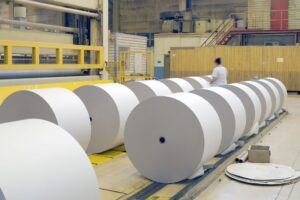
The Zhydachiv Pulp and Paper Mill (ZhCPK, Lviv Oblast) plans to invest approximately UAH 50 million of its own funds in production development in 2026 to improve manufacturing processes in order to reduce production costs, purchase new equipment to expand the product range, and improve product quality.
According to the company’s 2025 financial report, published in the disclosure system of the National Securities and Stock Market Commission (NSSMC), in the near future, the company plans to purchase an automated production line for four-valve corrugated boxes with three-color printing (UAH 46.5 million), as well as an automated packaging line for corrugated products (UAH 8.5 million).
In addition, there are plans to purchase a 500 kW solar power plant (UAH 9.5 million).
The report does not specify the amount of funds invested in development in 2025, but it notes that over the past five years, the plant has purchased fixed assets for production purposes totaling UAH 160.91 million, including machinery and equipment worth UAH 125.3 million.
Most of the funds were invested in 2024 (55.9% of the total investment), while in 2025 – 3% (2021 – 20%, 2022 – 9.5%, 2023 – 11.6%).
According to the report, ZhCPK increased its net profit by 85% in 2025 compared to 2024—to UAH 9.85 million—as net revenue grew by 19.2%—to UAH 524.3 million.
Exports accounted for 2.6% of sales (UAH 13.9 million), specifically to Poland, Moldova, and Latvia.
ZhCPK has an annual production capacity of 40,300 tons of paper (corrugating medium, linerboard, wrapping paper), 50,000 tons of cardboard (boxboard and linerboard for glued cardboard), corrugated cardboard – 100 million square meters, and egg trays – 48 million units per year.
As reported, ZhCPK slightly increased its corrugated packaging output last year to 19.9 million square meters. Packaging board output decreased by 4.4% to 10,400 tons, while wrapping paper output increased by 38.4% to 5,200 tons.
As of the first quarter of 2026, according to the NSSMC, the shareholders include Melfort Trading (21.118%), Hangli International Holdings (20.154%), Halefield Holdings (nearly 12.09%), Grammel Holdings (nearly 10%), as well as the closed-end investment fund “Seventh” LLC “Asset Management Company ”Svarog Asset Management,“ associated with businessman Kostyantyn Hryhorishyn – 17.65%, and FC ”Meridian” – nearly 8.64%.
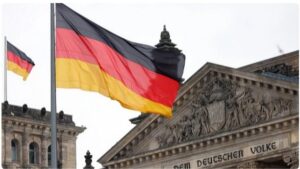
Industrial production in Germany fell by 0.7% in March compared to the previous month, according to the country’s statistics office. Analysts had expected industrial production to rise by 0.5% on average, according to Trading Economics.
According to revised data, the figure fell by 0.5% in February, whereas a 0.3% decline had previously been reported.
Output of consumer goods fell by 1.9% in March, while output of capital goods declined by 1.6%. Meanwhile, production of intermediate goods rose by 0.8%.
Production in the machinery sector decreased by 2.7%, and the energy sector saw a 4% decline. Meanwhile, construction output increased by 1.9%, and automotive production also rose by 1.9%.
On an annual basis, industrial production in Germany fell by 2.8% in March, following a 0.2% decline the previous month.
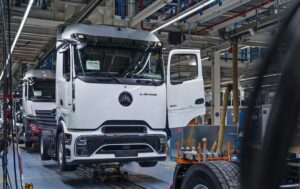
Amid an industrial downturn and challenges in the automotive sector, Germany is indeed accelerating the reorientation of some of its production capacity toward defense products; however, this does not mean a complete abandonment of the automotive industry, but rather a significant strengthening of the defense-industrial sector. The Wall Street Journal reports on this, and other international media outlets have previously confirmed specific examples of this shift.
According to the WSJ, Berlin is attempting to utilize idle capacity, engineering expertise, and the workforce of traditional industries—primarily the automotive sector—to expand the production of defense-related goods. The newspaper links this shift to the industrial downturn, rising defense spending in Germany and Europe, as well as heightened security threats amid Russia’s war against Ukraine and Europe’s declining confidence in long-term U.S. guarantees.
Part of this trend has already been confirmed at the level of specific companies. For instance, Reuters previously reported that Rheinmetall intended to repurpose two of its automotive plants in Germany for primarily defense production, retaining only a portion of civilian output. Additionally, Volkswagen is exploring the possibility of using its site in Osnabrück to manufacture military equipment, though it emphasized that no final production decisions have been made yet.
Another example is the negotiations regarding the potential production of components for the Iron Dome air defense system at one of Volkswagen’s German plants. However, Reuters separately noted that the automaker itself ruled out the production of weapons per se and spoke only of exploring options for utilizing the facility and producing components.
At the same time, pressure on the German auto industry is mounting. Reuters reported in February that nearly half of the auto suppliers surveyed were cutting jobs in Germany, and the industry association VDA described the situation as a crisis. Against this backdrop, the defense sector is becoming one of the few growing markets with a long-term order horizon for some manufacturers.
An additional factor has been the sharp intensification of Germany’s own defense policy. Following changes to budget rules and an expansion of borrowing capacity, Berlin has gained the leeway to significantly increase military spending in the coming years. Reuters previously reported that Germany’s total defense spending could rise from €95.1 billion in the 2025 draft budget to €161.8 billion by 2029, while the total volume of potential borrowing for defense in 2025–2029 was estimated at €380 billion.
auto industry, CRISIS, DEFENSE SECTOR, GERMANY, MANUFACTURING, reorientation

Industrial Park “Krasyliv Technoport” (Krasyliv, Khmelnytskyi Oblast) has attracted its first foreign industrial investment—German company Goldhofer AG has begun manufacturing components and spare parts for semi-trailers designed to transport oversized cargo, according to Dmytro Kysilevskyi, deputy chairman of the Verkhovna Rada Committee on Economic Development.
“The total investment for Goldhofer AG’s project in Krasyliv is EUR4.5 million, of which EUR1.5 million has already been contributed. The facility, which produces component sets for 7–8 semi-trailers per month, currently employs 36 workers, mostly welders. The products are shipped to Germany for further assembly,” he wrote on Facebook on Thursday.
According to Kysilevsky, the industrial park’s management company has also signed a memorandum to attract another foreign investor—the Polish company Modular, which plans to open a production facility in Krasyliv for commercial and residential modular homes made of metal structures.
“In addition, the Ukrainian company ‘Aton Energy’ has launched production of heat exchangers for solid-fuel boilers within the industrial park. The company also plans to purchase equipment to establish production of wall-mounted gas boilers at the industrial park,” the post states.
Kysilevsky also noted that the “Krasyliv Technoport” industrial park is currently preparing an application for state funding to develop engineering and transportation infrastructure.
The program provides for 50:50 co-financing of up to UAH 150 million and requires the recipient to ensure the construction of at least 5,000 square meters of industrial space and attract at least two participants within three years.
The “Krasyliv Technoport” industrial park, covering 10.1 hectares, was established in 2023 on a portion of the Krasyliv Machine-Building Plant’s territory that had been unused for a long time. The industrial park features industrial buildings with a total area of over 8,000 square meters. The park is connected to 8 MW of electricity, water, sewage, gas, and a railway spur.
According to information on its website, the German company Goldhofer is a provider of transport solutions with annual sales of approximately EUR 300 million. It has about 1,000 employees and an international presence with branches in Europe, North America, India, and the Middle East.
Goldhofer AG, INDUSTRIAL PARK, Krasyliv Technoport, MANUFACTURING

According to the results of 2025, Lutsk Agrarian Company (Avesterra Group) produced 56,003 thousand tons of products, which is 6.8% more than in 2024 (52,448 thousand tons), while net revenue grew by 28.2% to UAH 4.77 billion, the company’s press service told the Interfax-Ukraine news agency.
According to the company’s financial indicators, net profit for the year amounted to UAH 472.68 million, compared to UAH 408.63 million a year earlier.
The group’s press release notes that in 2025, approximately UAH 500 million in taxes were paid to budgets at all levels (approximately UAH 1.5 billion during the period of full-scale war).
“For us, being recognized as one of the best taxpayers is confirmation of our responsible approach to business. Avesterra Group will continue to operate transparently, supporting Ukraine’s food security,” emphasized the company’s CEO, Svitlana Sobipan.
According to the head of the relevant committee of the Verkhovna Rada, Danylo Getmantsev, the company entered the ranking of leaders in terms of taxes paid among meat producers.
According to him, the list of the largest taxpayers in the industry in 2025 also includes Globinsky Meat Processing Plant LLC, Meat Master LLC, Koziatinsky Meat Processing Plant LLC, Agro-Ros LLC, Zhytomyr Meat Processing Plant LLC, Meat-IF LLC, Stovpynski Sausages LLC, and Dmitruk-Foods LLC. In addition to large enterprises, high tax efficiency was demonstrated by Poliana M Farm, Galmyaso Private Enterprise, and a number of individual entrepreneurs.
As reported, Avesterra Group intends to increase its poultry population by 2.5 times to 10 million birds (currently 4.1 million birds). To provide feed for the new capacity, it is planned to modernize the existing feed mill or build a new one, as well as expand the land bank from 3,000 hectares to 25,000 hectares. The development strategy also provides for the creation of its own incubation facility and the formation of a parent flock to complete the full production cycle.
The Avesterra Group was established in January 2025. It includes the Volodymyr-Volynskyi Poultry Farm and the Lutsk Agricultural Company. In June 2025, Avesterra launched a new 30,000 sq m processing plant in Volyn, with investments amounting to EUR 60 million.
Avesterra Group owns infrastructure consisting of 100 poultry houses, a slaughterhouse, and seven branches in the largest cities of Ukraine. The company’s financial statements are audited annually by an international auditor. The business is owned in equal shares by the Dobkin family.
Volodymyr-Volynskyi Poultry Farm accounts for about 5% of the Ukrainian chicken market. It has seven branches: Kharkiv, Kyiv, Odesa, Dnipro, Vinnytsia, Lviv, and Volodymyr. The factory’s infrastructure consists of 100 poultry houses, a slaughterhouse, and a feed mill. The company also has its own land fund of 3,000 hectares, where it grows grains and legumes for the production of feed, as well as industrial crops. The factory employs over 1,500 people.



