Business news from Ukraine

Business news from Ukraine

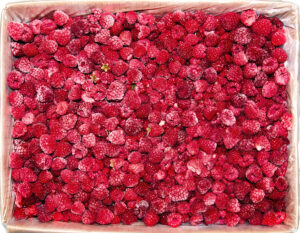
Raspberry harvest in Ukraine in 2026 declined, but prices reached record highs

The raspberry harvest in Ukraine in 2026 will likely be lower than last year’s, but the decline in supply was offset by record-high purchase prices, said Taras Bashtannik, president of the Ukrainian Fruit and Vegetable Association (UFVA), in an interview with SEEDS published on September 2, 2026.

According to him, it is still too early to talk about a new record in terms of physical raspberry production volumes.
“I wouldn’t rush to declare a record in terms of volume, that’s for sure. In my opinion, there are fewer raspberries this year than last. In monetary terms, it could be a record or a repeat of last year’s result, because the price of raspberries this year is even higher than last year,” Bashtannik noted.

The most telling factor of the season was the sharp rise in the cost of raw materials for processing. According to the UPOA president, purchase prices for raspberries intended for processing and freezing reached 193–195 UAH per kg, excluding VAT, during certain periods.
Bashtannik noted that the Ukrainian market had never previously recorded such high purchase prices. Thus, the lower yield this season was largely offset by the higher price of the berries.

At the same time, the Ukrainian raspberry market remains predominantly export-oriented. According to the UPOA president’s estimate, 90–95% of the raspberries produced in Ukraine are exported, while domestic consumption remains relatively low.
“I would say that 90–95% of raspberries are exported. And this trend will most likely continue,” he said.

One of the main constraints on further production growth remains the high demand for manual labor. According to Bashtannik, raspberries are essentially harvested by hand, and the possibilities for mechanizing this process are still limited. This hinders rapid expansion of cultivation areas even when market prices are high.

High purchase prices also confirm the shortage of high-quality raw materials on the European market. According to EastFruit, Ukraine already ranks first in the world in net raspberry exports, and export revenue in the 2025/26 season reached a record $250.8 million, an increase of approximately 65% compared to the previous season.

Thus, the 2026 season for Ukrainian raspberry producers could set a record not in terms of harvest volume, but in terms of the value of products sold. How the situation develops will depend on the harvest in Ukraine and major European producing countries, as well as on demand from companies that freeze and process berries.

, , , , ,

Exports of frozen raspberries from Ukraine reached 63,300 metric tons in 2025/26 season

According to Experts.news, Ukraine has a strong chance of taking first place in the world during the 2026/27 season—not only in terms of net exports but also in terms of the total volume of frozen raspberry exports—amid a sharp decline in harvests among its main competitors, Serbia and Poland, according to the August analytical report by the Ukrainian Berry Growers Association.

The association estimates that Serbia’s raspberry harvest in 2026 could total about 30,000 metric tons, compared to approximately 65,000 metric tons in a typical season—the lowest figure in about 30 years. Production was affected by spring frosts, plant diseases, heat, and extreme drought: Serbia received only about 7 mm of precipitation in August.

The situation has also worsened in Poland, where spring frosts damaged berry plantations. The reduction in supply immediately affected European prices: the cost of Serbian IQF raspberries reached about 7 euros/kg, which is approximately 51% higher than last year’s level.

This creates a favorable price window for Ukrainian suppliers. Ukraine is already the world leader in net exports of frozen raspberries—that is, export volume minus imports. During the 2025/26 season, from June 2025 to May 2026, the country exported 63,300 metric tons of frozen raspberries for a record $250.8 million. Export revenue rose by 65% year-over-year, and the average price was 3.96 euros per kilogram.

The new season also began with high prices. In June 2026, Ukraine exported approximately 2,150 metric tons of frozen raspberries at an average price of 4.14 euros per kilogram. The main export destinations were the Czech Republic, Poland, and Germany.

Over the past few years, Ukraine’s frozen raspberry sector has significantly strengthened its position in the European market. Based on 2024 results, EastFruit analysts estimated Ukraine’s exports at approximately 65,1 thousand metric tons, while Serbia exported about 67,7 thousand metric tons. However, Serbia simultaneously imported about 4,700 metric tons of berries for subsequent re-export, so its net exports amounted to about 63,000 metric tons. Ukraine, which imports virtually no raspberries, became the world leader in this category for the first time.

Poland also remains one of the largest hubs for the global trade in frozen raspberries; however, its role is largely tied to the processing and re-export of imported berries. According to EastFruit estimates, in 2024, more than half of the frozen raspberries exported by Poland consisted of imported raw materials, a significant portion of which came from Ukraine. Poland’s net exports were estimated at only about 16,000 metric tons.

At the same time, Ukraine is gradually reducing its dependence on Polish intermediaries. Between 2022 and 2024, Poland’s share of Ukrainian frozen raspberry exports fell from 63% to 35%, while the combined share of Germany, the Czech Republic, Austria, and France rose to 48%. During this period, direct shipments to Germany increased 4.5-fold, to the Czech Republic 4.2-fold, and to Austria 33-fold.

The key factor in Ukraine’s ability to maintain its leading position remains the quality of processing. A significant portion of the added value is generated not during the berry cultivation stage, but during sorting, individual quick freezing (IQF), packaging, and direct sales to European retail chains and industrial consumers. Therefore, further growth in processing capacity may be no less important than the expansion of the plantations themselves.

According to the latest available FAOSTAT data for 2024, Russia remained the world’s largest raspberry producer—at approximately 213,800 metric tons—followed by Mexico in second place with 175,500 metric tons and Serbia in third with 94,000 metric tons. Next were the United States with approximately 82,1 thousand metric tons and Poland with about 76,9 thousand metric tons. Ukraine produced about 33,6 thousand metric tons. These figures reflect domestic raspberry production specifically and do not correspond to export rankings, as part of the harvest is consumed domestically, and some countries actively import the berries for processing and re-export.

In the global trade of frozen raspberries, Ukraine, Serbia, and Poland remain the key players. Ukraine has led in net exports since 2024, while Serbia has maintained a slight lead in gross shipments. In the broader HS 081120 tariff category, which also includes frozen blackberries and some related berries, Chile is among the major exporters; therefore, customs rankings cannot be fully equated with the ranking for raspberries specifically.

If the forecast by the Ukrainian Berry Growers Association proves accurate, the 2026/27 season could be the first in which Ukraine simultaneously ranks first in the world in both net and gross exports of frozen raspberries.

, , , ,

Ukraine Earned Record 250.8 Million Euros from Frozen Raspberry Exports

During the 2025/2026 season, Ukraine earned a record 250.8 million euros in revenue from frozen raspberry exports, a 65% increase over the previous season.

Between June 2025 and May 2026, Ukrainian companies exported 63,300 metric tons of frozen raspberries, increasing the physical volume of shipments by 7%, according to data from the July analytical report by the Ukrainian Berry Growers Association, published on August 7.
Thus, the main factor driving the growth in export revenue was not an increase in volume but a significant rise in the price of Ukrainian berries. The average export price was 3.96 euros per kg, which is 54% higher than in the previous season.

In May, the final month of the 2025/2026 season, Ukraine exported approximately 2,900 metric tons of frozen raspberries at an average price of 3.95 euros per kilogram. Poland, the Czech Republic, and Germany were among the main export destinations.
This revenue growth continues a trend that began as early as the 2025 calendar year. At that time, frozen raspberry exports rose from 55,700 metric tons in 2024 to 60,700 metric tons—an increase of approximately 9%—while their value jumped from 129.3 million euros to 216.7 million euros.

The average price of Ukrainian raspberries rose significantly throughout last year. While it stood at about 2.78 euros per kg at the beginning of 2025, it exceeded 3.8 euros in the second half of the year and reached 4.29 euros per kg in December.
Poland Remains the Main Market

Poland remains the largest buyer of Ukrainian frozen raspberries and is also a major European processing and re-export hub.
In 2025, Ukraine supplied 24.1 thousand metric tons of frozen raspberries to Poland. The Polish market accounted for 39.7% of Ukraine’s total export revenue from this product, or 86.1 million euros. A year earlier, that share stood at 31.8%.

Germany is the second-largest market. Direct Ukrainian shipments there in 2025 totaled 14.1 thousand metric tons, compared to 15.4 thousand metric tons the previous year. At the same time, the “Berry Growers of Ukraine” Association suggests that a portion of German demand is increasingly being met through Polish intermediaries.
The Czech Republic retained its third-place position. Ukraine supplied approximately 10,000 metric tons of frozen raspberries there annually, and the value of shipments in 2025 rose from 24.1 million euros to 39.1 million euros, primarily due to higher prices.

The price situation remains favorable for Ukrainian producers
The “Berry Growers of Ukraine” Association expects that in the 2026/2027 season, the situation on the European market may remain favorable for Ukrainian exporters.

Among the factors supporting prices, analysts cite problems with the raspberry harvest in Serbia and the uneven condition of plantations in Poland. In its July report, the association estimates Serbia’s 2026 harvest to be 20–30% below normal levels due to drought.
This potentially reduces supply from one of Europe’s traditionally largest producers and exporters of frozen raspberries and opens up additional opportunities for Ukrainian suppliers.

As a result, Ukraine is gradually increasing not only the physical volume of berry exports but also the value of its shipments. In the 2025/2026 season, price increases had a significantly greater impact on export revenue than increases in tonnage, bringing revenue from frozen raspberries to a historic high of 250.8 million euros.

, , , ,

Ukraine reduced its exports of organic berries by 12.5% in 2025

In 2025, Ukraine reduced the physical volume of organic berry exports by 12.5% compared to 2024—to 15,400 tons—but increased its value by 8.5%—to EUR39.8 million.

“Over the past two years, organic raspberries, strawberries, currants, and blueberries have remained the main export items,” said Iryna Fedorchenko, a leading export specialist at the organic production certification body “Organic Standard,” during a presentation of a study on the export of organic berries and nuts in 2024–2025 at the forum “Development of Exports in Ukraine’s Berry and Nut Sector” on June 10 in Kyiv.

She noted that Ukraine accounts for a significant share of organic berry exports to the EU. The largest buyers of Ukrainian products were Poland, the Czech Republic, Italy, Germany, and Austria.
“We are second only to Serbia in raspberries. Ukraine accounts for about 20% of organic raspberry imports, and 30% for blackberries. Blueberries are our trump card, because almost all organic blueberries exported to the EU come from Ukraine,” said Fedorchenko.

Currently, there are 55 companies in Ukraine exporting organic berries to 18 countries worldwide.
According to the study, wild berries continued to form the bulk of last year’s shipments—11,800 tons worth EUR27.1 million—while 3,600 tons of cultivated berries were exported for EUR12.7 million.

The cultivated berry segment saw an increase in export value despite a decline in volume. For example, organic raspberry exports fell by 18.7% to 2,230 tons, but their value rose by 31% to EUR8 million.
Organic strawberry shipments decreased by 13% to 1,290 tons, while revenue rose from EUR3.4 million to EUR4.2 million. Exports of organic blueberries, on the other hand, increased more than 11-fold—from 8.1 tons to 91.8 tons—and their value rose from EUR0.1 million to EUR0.5 million.

According to Fedorchenko, the vast majority of Ukrainian organic berries are exported in frozen form. “It is very difficult for us to export fresh berries, especially when they are organic and untreated,” she emphasized.

Separately, the representative of “Organic Standard” noted changes in the structure of organic berry farming. The area under organic raspberries in 2025 increased to 842 hectares from 768 hectares a year earlier, and under blueberries—to 353 hectares from 337 hectares. In contrast, the area under strawberries decreased to 210 hectares from 309 hectares, and under cherries—to 54 hectares from 146 hectares. The total area of organic berry plantations decreased from 1,700 hectares to 1,600 hectares.

The study was conducted by the certification body “Organic Standard” in collaboration with the Office for Entrepreneurship and Export Development and the national project “Dія.Бізнес” with support from Switzerland as part of the Global Quality and Standards Program (GQSP Ukraine), implemented by UNIDO.

, , , ,

Ukraine has strengthened its position in German frozen raspberry market

Die Ukraine hat in den letzten Jahren ihre Präsenz auf dem deutschen Markt für gefrorene Himbeeren deutlich ausgebaut, der zusammen mit Polen nach wie vor ein wichtiger Absatzmarkt für ukrainische Beeren ist und die Exporttrends für die Branche bestimmt, berichtet der Verband „Yagidnyctvo Ukrainy“.

Nach Angaben des Verbandes führte das Wachstum des ukrainischen Angebots zuvor zu einem Rückgang der durchschnittlichen Importpreise in Deutschland um fast die Hälfte.

Gleichzeitig kam es 2025 aufgrund von Ernteeinbußen in der Ukraine, Polen und Serbien zu einer Verknappung auf dem europäischen Markt, was die Preise in Deutschland auf das Niveau von 2022 steigen ließ, wie der Verband feststellt und dabei die Sensibilität des Marktes gegenüber Produktionsausfällen bei den drei wichtigsten Lieferanten, darunter die Ukraine, betont.


, , , ,

UPOA President: There will be no cheap vegetables and fruits in 2026

At the end of 2025, Ukraine confirmed its status as the world’s largest exporter of frozen raspberries, and in the 2026 season, the key vector for the development of the fruit and vegetable sector against the backdrop of stagnant domestic consumption will remain the expansion of exports, said Taras Bashtannik, president of the Ukrainian Fruit and Vegetable Association (UFOA).

“We have been the world’s largest raspberry exporter for two years in a row. According to the results of the 2025 season, exports are expected to reach about 80,000 tons, compared to 65,000 tons a year earlier. The potential for growth remains,” he said during the conference “Profitable Agribusiness 2026.”

According to the expert, a similar trend is observed in the blueberry segment, where production is growing by 15-20% annually. Bashtannik emphasized that the domestic blueberry market has reached a consumption “ceiling” of about 10,000 tons, so further development of the industry is only possible through exports. Currently, Ukraine exports about 8-10 thousand tons of this berry, while world leaders such as Chile and Peru supply up to 400 thousand tons to foreign markets, which indicates significant room for replacement of players in the global market.

Detailing the forecasts for the 2026 season, the president of the UPOA stressed that cheap vegetables and fruits should not be expected. He expressed confidence that the world has entered a phase where the opportunities for low-cost production have been exhausted, and Ukraine remains competitive only because of its lower costs compared to EU countries.

The high profitability of certain crops in previous years (sometimes up to 700% above cost—IF-U) is prompting farmers to rapidly expand their acreage without proper analysis. Bashkanik recalled that this has already led to a “slump” in prices for borscht vegetables in 2025. However, in the new season, the risk of overproduction of carrots or beets will remain and will depend on the timing of spring sowing.

According to the expert, the key obstacle to the development of the fruit and vegetable sector will be the shortage of skilled and unskilled workers. As a result, the industry will face the need for either total mechanization or even the involvement of foreign labor.

Bashkanik predicts that fruit and vegetable producers will traditionally experience problems in the 2026 season due to extreme weather conditions, ranging from drought to abnormal rainfall. This will require farmers to increase their investments in irrigation and protection systems.

Given the high cost and long logistics, particularly to Middle Eastern markets, the success of the season will depend not on the volume of the harvest, but on the ability to sell it to foreign markets.

“The issue of overproduction is not about how much we harvested, but whether we were able to sell it. If we work well for export, everything will be fine. Ukraine has an advantage in the diversity of its soil and climate zones, and if you choose the right varieties, you can invest in any crop — from pears to Jerusalem artichokes,” summarized the president of the UPA.

Earlier, the Experts Club information and analytical center released a video dedicated to global raspberry production https://www.youtube.com/shorts/IHaYTp6IbCM

, , , ,