

Ukraine has transferred 773 seed samples of ten agricultural crops from its national collection to the Global Seed Vault on the Svalbard archipelago in Norway.
The samples transferred to the Arctic seed vault include triticale, barley, buckwheat, millet, peas, white lupine, vetch, Sarepta mustard, alfalfa, and clover. These samples represent valuable genetic resources from Ukrainian plant breeding, which are essential for developing new varieties, adapting agriculture to climate change, and ensuring food security.
According to the National Academy of Agrarian Sciences of Ukraine (NAAS), the seeds were prepared by the V.Y. Yuryev Institute of Plant Growing and the Ustymiv Experimental Station of Plant Growing. Scientists selected the most valuable samples and ensured their testing, packaging, and documentation under wartime conditions.
“Preserving the national plant gene pool is a matter of our national security and ensuring food stability for future generations,” emphasized Taras Vysotsky, Minister of Agrarian Policy and Food of Ukraine, as quoted by SEEDS.
According to him, transferring the duplicate collection to an international repository will protect the unique achievements of Ukrainian plant breeders from risks associated with the war.
This transfer marks the second such event in Ukraine’s history. The previous deposit of Ukrainian seeds on Svalbard took place in 2012.
According to the Delegation of the European Union to Ukraine, these two transfers have ensured the backup storage of genetic material representing approximately 10% of the national seed collection.
Ukraine’s National Plant Genetic Bank contains over 154,300 samples of 2,002 plant species. Of these, approximately 56,900 samples are of Ukrainian origin. The collection includes genetic material from cereals, legumes, oilseeds, forage crops, and other agricultural crops.
Preserving this collection is of strategic importance for agricultural science. Genetic diversity enables breeders to develop new varieties that are resistant to drought, diseases, temperature fluctuations, and other adverse growing conditions.
Following the outbreak of full-scale war, Ukraine’s system for conserving genetic resources came under threat due to hostilities, damage to scientific infrastructure, and the risk of losing unique collections.
To protect the seeds, the Food and Agriculture Organization of the United Nations (FAO), with financial support from the European Union, implemented a program to establish backup storage facilities in collaboration with the National Academy of Agrarian Sciences of Ukraine (NAAS) and international partners.
As part of this initiative, 51,000 seed samples were evacuated to the western regions of Ukraine, and in November 2025, a permanent backup center was opened, equipped with modern laboratories and specialized infrastructure for the long-term storage of genetic material.
Storing part of the collection on Svalbard provided an additional layer of protection. In the event of damage to or loss of Ukraine’s primary collections, the backup samples can be used to restore genetic resources.
At the same time, the transferred seeds remain the property of Ukraine. The international repository ensures their storage without transferring ownership rights to the genetic material.
Ukraine has also acceded to the International Treaty on Plant Genetic Resources for Food and Agriculture, which entered into force for the country on August 12, 2026. This creates additional opportunities for international scientific cooperation and the protection of agricultural biodiversity.
The Svalbard Global Seed Vault is located on the Norwegian archipelago of Svalbard, above the Arctic Circle, and has been in operation since 2008. It was established for the long-term backup storage of genetic resources of agricultural plants from around the world.
According to the vault’s administration, as of 2026, it holds more than 1.4 million seed samples provided by gene banks and scientific institutions from various countries.
During the October 2026 ceremony, 21 research institutions from various regions of the world donated samples. In total, the repository received more than 16,000 new samples.
The project is supported by the Norwegian government, the Nordic Genetic Resource Center (NordGen), and the international organization Crop Trust. Its primary goal is to ensure the restoration of crop varieties in the event of wars, natural disasters, man-made disasters, or other threats to plant genetic diversity.
Sources: SEEDS, publication dated October 16, 2026; V. Ya. Yuryev Institute of Plant Growing, National Academy of Agrarian Sciences of Ukraine; Svalbard Global Seed Vault, announcement dated October 14, 2026.
agricultural sector, FOOD SECURITY, plant breeding, SEEDS, UKRAINE

State-owned PrivatBank and Limagrain, one of the world’s largest seed companies, have launched two partnership financing programs for agricultural producers ahead of the fall planting season, the bank’s press service reported.
“We are expanding financing options and offering farmers new tools that are more effective and convenient, given the specific nature of agricultural production,” the press service quoted Mykhailo Kovalov, head of PrivatBank’s Department of Documentary Operations and Trade Finance, as saying.
According to the announcement, farmers can take advantage of a working capital financing program to purchase seeds and a promissory note program, which allows for flexible payment planning and optimizes the financial burden on the farm.
The bank noted that both programs offer preferential financing terms as well as a simplified application process.
For more details on the loan terms, please contact Limagrain Ukraine managers or visit your nearest PrivatBank branch.
Limagrain—a seed company founded by farmers in France over 50 years ago—ranks fourth in the global seed industry. The company has been operating in Ukraine since 2008. The main crops it breeds include corn, sunflower, rapeseed, spring and winter wheat, and spring and winter barley (for feed and brewing). The company’s global network of branches spans 56 countries. Each year, the company invests approximately 14% of its revenue in research.
PrivatBank is Ukraine’s largest bank. According to the National Bank, the financial institution’s total assets as of June 1, 2026, amounted to 965.11 billion UAH (22.7% of the total).
The state-owned bank noted that, according to regular Brand Health Tracking surveys for the first quarter of 2026, the level of trust in it is higher than that of other financial institutions on the market and stands at 49%. The bank attributes this to the availability of accessible, personalized, and digitized products for its customers.
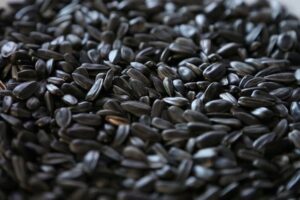
Ukraine exported 35,000 metric tons of sunflower seeds in the 2025/2026 marketing year, according to the Ukrainian Grain Association.
The association noted that sunflower seeds have traditionally been processed primarily within the country.
Total exports of oilseeds in the 2025/2026 marketing year declined: Ukraine exported 2.7 million metric tons of soybeans, 1.82 million metric tons of rapeseed, and 35,000 metric tons of sunflower seeds.

Foreign exchange earnings from rapeseed oil exports from Ukraine in the second half of 2025 increased 2.2 times compared to the same period of the previous season, while rapeseed meal revenues increased 1.4 times, according to Dmytro Kysilevsky, deputy chairman of the Verkhovna Rada Committee on Economic Development, citing data from the Ukroliyaprom association.
“The introduction of a 10% export duty on soybeans and rapeseed has allowed Ukraine to increase the production of oil and meal from these raw materials, as well as to increase exports of processed products,” he wrote on Facebook.
According to the association’s data, in July-December 2025, rapeseed processing into oil increased 1.8 times. In the soybean segment, in September-December 2025, oil production increased by 22.4%, exports by 23.3%, and foreign exchange earnings by 1.5 times.
“The processing of soybeans into oil and meal exceeded its exports by 3.7%,” the parliamentarian emphasized.
Ukroliyaprom predicts that in the 2025-2026 marketing year (MY, July-June), rapeseed processing will reach a record 1.7 million tons (over 50% of the gross harvest), and soybeans — 3.0 million tons (over 60%). This will ensure the production of 720,000 tons of rapeseed oil and 600,000 tons of soybean oil.
Kysilevsky emphasized that the processing model proved its effectiveness in the very first season of the duty law, providing billions of hryvnias in taxes. He also recalled the support programs “Made in Ukraine,” in particular, “5-7-9” loans and 25% compensation for the cost of agricultural machinery.

The elevators of the Zakhidny Bug group of companies received over 320,000 tons of grain in 2025, according to a Facebook post by the agricultural holding’s press service.
According to the report, the Zakhidny Bug seed plant produced over 13,000 tons of seeds in 2025.
In total, the group’s fields harvested 82,700 tons of winter wheat, 77,500 tons of corn, 26,700 tons of barley, 70,000 tons of soybeans, and 22,300 tons of rapeseed in 2025. The company also harvested hard wheat varieties: 18,200 tons of winter wheat and 3,450 tons of spring wheat.
PP “Zakhidny Bug” was founded in 2003 and specializes in growing grain and industrial crops. It owns a land bank of 65,000 hectares in the Lviv, Chernivtsi, Ternopil, and Volyn regions.
The company is building Ukraine’s first mill to process durum wheat, as well as a pasta factory. The projected capacity of the first stage of the mill is 80 tons per day for durum wheat and 150 tons per day for soft wheat varieties. The second stage will increase the capacity by another 200 tons for durum wheat and 300 tons for soft varieties. The total investment in the project is UAH 1 billion.
The beneficiaries of the enterprise are Oksana Drul (30%), Valery Ovcharuk (30%), and Yuriy Gladun (30%).
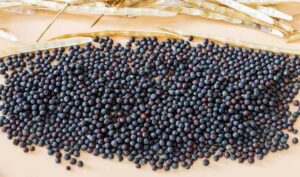
Rapeseed processing in Ukraine in 2024/2025 MY amounted to 0.5 million tons, or 14% of rapeseed production, according to the Ukroliyaprom association.
“It was not possible to use rapeseed for processing, as in the previous marketing year (when a record amount of over 1.0 million tons was processed), due to its massive export (almost 90% of its production). 3.1 million tons of rapeseed were exported, or over 86% of its production. Only over 0.5 million tons, or 14% of rapeseed production, was processed,” the industry association said.
Ukroliyaprom added that rapeseed oil exports in the 2024/2025 season amounted to 210,400 tons, worth $194 million, of which 153,500 tons (worth $144.1 million) were shipped to EU countries.
The top 10 countries purchasing Ukrainian rapeseed oil included China (48.3 thousand tons), Poland (46.1 thousand tons), Belgium (26.5 thousand tons), Lithuania (23.1 thousand tons), the Netherlands (15.2 thousand tons), Spain (13 thousand tons), Italy (9 thousand tons), Bulgaria (8.2 thousand tons), Germany (4.3 thousand tons), and Latvia (3.6 thousand tons).
Exports of rapeseed meal in 2024/2025 MY amounted to 218.5 thousand tons worth $53.9 million at an average price of $246.7 per ton. At the same time, 86.9% of rapeseed meal was supplied to EU countries, 9.9% was purchased by Israel, and 3.2% by Turkey.
The main importers of rapeseed meal were Spain (95.7 thousand tons), Hungary (39.7 thousand tons), Lithuania (21.4 thousand tons), France (15 thousand tons), Italy (5.9 thousand tons), Poland (5.5 thousand tons), Israel (21.8 thousand tons), and Turkey (6.9 thousand tons).
The processing season for rapeseed harvested in 2025 began in July of this year. In July-August, only about 60 thousand tons of rapeseed were processed into oil, which allowed for the production and export of 25.0 thousand tons of rapeseed oil.
At the same time, in September 2025, under the conditions of export duties on rapeseed, its processing at domestic enterprises increased to a record monthly volume of 250 thousand tons. According to Ukroliyaprom’s estimates, production reached 120,000 tons, of which 108,800 tons were exported for $121.9 million. This represents a 2.8- and 3.3-fold increase over the same period last year. The cost of one ton of exported oil increased in the current marketing year compared to the previous one to $1,120.4 per ton, or by $171.4 per ton.
The main consumers of Ukrainian rapeseed oil in September 2025 were EU countries, which imported 92 thousand tons from Ukraine, or 84.5% of the total exports of this product from Ukraine.
Among EU countries, the largest importers were the Netherlands, which purchased 29,000 tons of rapeseed oil, accounting for 27% of total exports, Belgium – 15,500 tons (14.2%), Spain – 14, 4 thousand tons (13.2%), and Poland – 13.5 thousand tons (12.4%).
16.8 thousand tons (15.5%) were exported to other countries, in particular, 13.9 thousand tons (15.5%) were exported to Singapore.
Ukroliyaprom reminded that on September 4, 2025, amendments to the law “On Export Duty Rates on Seeds of Certain Oil Crops” came into force, approving export duty rates of 10% of the customs value of goods for soybeans (UKTZED code 1201) and rapeseed (UKTZED code 1205). The association expressed hope for further positive results in the processing of rapeseed and soybeans, provided that the conditions for their processing remain in place.



