

Moldova is preparing proposals regarding the possible transfer of 20 locomotives to Ukraine; the parties are also working on opening a new joint border crossing and ensuring the unimpeded transit of Ukrainian cargo, said Mykola Kalashnyk, Ukraine’s Minister of Recovery, Infrastructure, and Transport.
“Our priority is unimpeded traffic from Odesa to the Danube region,” Kalashnik wrote following a working meeting in the Odesa region with Moldova’s Deputy Prime Minister and Minister of Infrastructure and Regional Development, Vladimir Bolea.
According to him, to ensure transit, it is necessary to guarantee free and safe passage along a 7-kilometer section of the M-15 highway near Palanka. The parties are also preparing to open a new joint border crossing point.
In the field of rail transport, Moldova is preparing proposals regarding the possibility of providing Ukraine with 20 locomotives. The parties are also working to ensure competitive freight rates and additional routes for Ukrainian cargo through Moldova to the Romanian port of Constanța.
Kalashnik noted that the agreements are expected to result in an increase in the number of routes, faster border crossings, and strengthened logistics links between Ukraine, Moldova, and the European Union.

New fares for single rides on public transit will take effect in Kyiv on July 15—a single ride on the metro, bus, tram, trolleybus, or funicular will cost 30 UAH.
Mayor Vitali Klitschko signed the corresponding order on July 7; the document was published on the Kyiv City State Administration’s website on Friday, July 10.
At the same time, discounts are available on “multi-ride passes” depending on the number of trips: 1–9 trips—30 UAH; 10–19 trips—28.90 UAH; 20–29 trips—27.80 UAH; 30–39 trips—26.60 UAH; 40–49 trips—25.50 UAH; 50 trips – 25 UAH.
Starting August 1, a 60-UAH ticket will also be available, allowing for an unlimited number of transfers within 90 minutes.
Tickets purchased before July 14 are valid until September 14. After that, any unused balance will be automatically credited as a cash equivalent to the transit card.
As previously reported, five petitions on the Kyiv City Council website calling for a halt to fare increases on the capital’s public transit system until the end of martial law had already garnered the number of votes required for consideration, but most of them were rejected by city authorities.
On May 18, the Kyiv City State Administration announced plans to update public transit fares. Specifically, the cost of a single trip will depend on the number of trips purchased on the transit card. Specifically, for 1–9 trips, the fare will be 30 UAH; for 10–19 trips, 28.90 UAH; for 20–29 trips, 27.80 UAH; for 30–39 trips, 26.60 UAH; for 40–49 trips, 25.50 UAH; and for 50 trips, 25 UAH. Monthly passes are also available, with the cost of a single trip amounting to approximately 23.3–23.6 UAH. Discounted rates remain in effect for students and schoolchildren: students will pay 50% of the monthly pass price; schoolchildren will ride for free during the school year and receive a 75% discount in the summer. Separately, there are plans to introduce a transfer ticket for 60 UAH, which will allow unlimited transfers between the metro and surface transit within 90 minutes.
Fares in the capital have not been adjusted since 2018. Starting January 1, 2022, there were plans to raise public transit fares to 20 UAH, and to 12 UAH for holders of the “Kyiv Card.”
At the end of 2021, Klitschko assured the public that public transit fares would not increase until the end of the heating season. In 2023, city officials stated that they had no intention of raising public transit fares until the end of the war. In September 2025, Klitschko stated that although public transit in Kyiv is subsidized, the city is looking for ways to avoid raising fares.
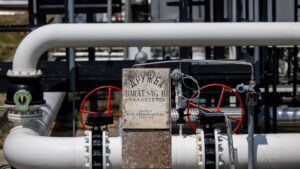
On Wednesday, after 12:00 p.m., Ukraine resumed oil transit via the Druzhba pipeline, according to a source close to the Ukrainian government who spoke to the online portal “Energoreforma.”
“At 12:35 p.m., oil transit was launched. Pumping has begun,” said the source speaking to “Energoreforma.”
He has not yet specified the volume of the transit.
As reported with reference to Slovak Economy Minister Denisa Saková, the resumption of supplies via the Druzhba pipeline to that country is expected on Thursday morning.
Hungary and Slovakia have not received Russian oil via the Druzhba pipeline since January 27 of this year due to damage to the pipeline caused by Russian shelling. Earlier, Hungarian Prime Minister Viktor Orbán stated that he would not lift his veto on the €90 billion EU loan for Ukraine until oil supplies are restored.
Péter Magyar, leader of the Tisza Party, which won the elections in Hungary, called on Ukrainian President Volodymyr Zelenskyy to ensure the Druzhba pipeline is restored as soon as possible.
The day before, the Kremlin stated that Russia is technically ready to resume transit through the Druzhba pipeline to Hungary.
Hungarian MOL announced on Wednesday, April 22, that the state-owned JSC “Ukrtransnafta,” responsible for operating the Ukrainian section of the Druzhba pipeline, had officially notified it of the completion of repair work on the Druzhba pipeline, as well as the termination of the force majeure circumstances that had been in effect since January 27, 2026.

According to Fixygen, Iran is seeking to include a payment mechanism for ships passing through this key energy route in future agreements regarding the Strait of Hormuz. The Financial Times reported that Tehran wants to charge fees to loaded oil tankers, and, according to the publication, the Iranian Union of Oil Exporters insists on payments in cryptocurrency.
However, an independent review shows that the parameters of such a mechanism remain unclear. Reuters, citing a senior Iranian official, reports that Iran does indeed intend to charge a fee for passage through the strait as part of a potential peace agreement; however, according to this information, the fee amount is expected to vary depending on the type of vessel, the nature of the cargo, and other conditions.
Reports of preparations for a protocol with Oman, which may provide for permits and licenses for passage through the strait, serve as an additional indication that Tehran is already attempting to institutionalize control over the passage.
About one-fifth of global oil supplies pass through the Strait of Hormuz. Following the announcement of a two-week ceasefire between the U.S. and Iran, oil prices fell sharply, but market participants continue to factor in the risk that even if shipping resumes, Iran will attempt to maintain economic and political control over the route through new fees and restrictions.
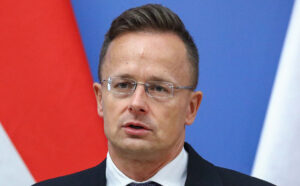
Hungary has decided to block the allocation of a EUR90 billion EU loan to Ukraine until oil transit to Hungary via the Druzhba pipeline is resumed, Hungarian Foreign Minister Péter Szijjártó said.
On Friday evening, he again accused Ukraine on social media of allegedly blackmailing Hungary by stopping oil transit in coordination with Brussels and the Hungarian opposition in order to create supply disruptions in Hungary and raise fuel prices ahead of the elections.
According to Szijjártó, Ukraine is violating the Association Agreement with the EU.
As reported with reference to Ukrtransnafta, as a result of a targeted Russian attack on January 27, significant damage was caused to the technological and auxiliary equipment of the Druzhba oil pipeline.
“Currently, work is underway at various stages to detect defects, stabilize the technical condition of the system, and eliminate the consequences of the hostile attack. Emergency repair work is being carried out with the involvement of specialized technical units and specialized equipment,” the company said in an official comment to Interfax-Ukraine on February 19.
Hungary and Slovakia stopped supplying diesel fuel to Ukraine on February 18 until the transit of Russian oil through the Druzhba pipeline is restored.
The European Commission, in turn, convened a meeting of the oil coordination group on February 25 in connection with the suspension of supplies to Hungary and Slovakia due to Russia’s damage to the Druzhba oil pipeline.
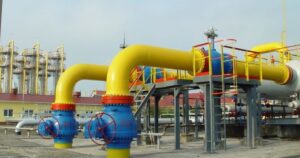
On October 24, the National Energy Regulatory Agency of Moldova (ANRE) held an open meeting of the Board of Directors, during which it approved a 50% reduction in tariffs for gas transportation to Ukraine.
“During the meeting, the Board approved amendments to Decision No. 272/2025 on the optimization of the ”Route 1″ capacity product on the Trans-Balkan pipeline, following a joint initiative submitted by natural gas transmission system operators from Greece, Bulgaria, Romania, the Republic of Moldova, and Ukraine. The initiative aims to strengthen regional energy security and ensure natural gas supplies to Ukraine,“ according to a statement on the ANRE’s official website.
”The approved changes provide for the extension of the Route 1 product for 6 months (November 2025 – April 2026), a 50% reduction in transportation tariffs for SRL “Vestmoldtransgaz” at the Kaushen and Grebeniki interconnection points, as well as the extension of the capacity product to all relevant interconnection points along the route. A 50% reduction in transportation tariffs is also provided for by the Romanian transmission system operator SA “Transgaz,” ANRE explained.
“With this decision, the Republic of Moldova is strengthening its role as a regional transit corridor, facilitating the transportation of natural gas from Greece to Ukraine and contributing to the diversification of routes and sources of supply. In the long term, transportation volumes are expected to increase, and as a result, the associated tariffs will decrease for users of the transport system operated by SRL Vestmoldtransgaz,” the statement emphasized.



