
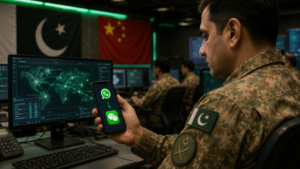
The Pakistani army has ordered to gradually abandon the use of WhatsApp in official correspondence and transfer the official chats of military personnel to the Chinese messenger WeChat, the Experts Club information and analytical center told the Indian publication NDTV, citing an internal directive of the Pakistani armed forces.
According to the outlet, the command explained the decision by the risks of surveillance, information leaks and the hacking of official conversations on WhatsApp. Officers and military personnel have been instructed to gradually move official communications to WeChat.
However, there has so far been no public confirmation of the decision from the Pakistani armed forces’ Inter-Services Public Relations directorate, ISPR, or the country’s Ministry of Defence.
If the decision is implemented on the stated scale, it will become an illustrative example of how a country’s geopolitical orientation is beginning to extend not only to arms procurement but also to digital infrastructure.
NDTV links the decision to the growing cooperation between Pakistan and China in the defence, intelligence and cyber spheres. However, the choice of WeChat raises an obvious question from the standpoint of information security.
WhatsApp uses end-to-end message encryption by default. This does not eliminate all risks: devices, backups, accounts and communication metadata may remain vulnerable.
WeChat, however, is structured differently. In a technical analysis published in 2024, the University of Toronto’s Citizen Lab research group found that WeChat’s encryption system protects data transmission between a user’s device and the company’s servers but does not constitute end-to-end encryption. Tencent’s servers are technically capable of decrypting and processing transmitted messages.
Citizen Lab had previously also identified the monitoring of files and images transmitted through WeChat, including materials belonging to users registered outside China.
It would therefore be incorrect to explain Islamabad’s possible choice solely by WeChat’s supposedly higher level of technical security.
It is more likely to involve a combination of issues concerning control, trust in the digital platform provider and the general reorientation of Pakistan’s military infrastructure towards China.
China is already Pakistan’s principal foreign arms supplier.
According to the Stockholm International Peace Research Institute, SIPRI, China accounted for 81% of Pakistan’s imports of major arms in 2020–2024, compared with 74% during the previous five-year period. Over the same period, Pakistan’s total arms imports increased by 61%.
In SIPRI’s updated statistics, Pakistan remains one of the world’s five largest arms importers based on the results for 2021–2025.
Military cooperation between the two countries covers aviation, naval programmes, joint production, exercises, military personnel training and interaction between their commands.
In May 2026, the head of Pakistan’s armed forces, Field Marshal Asim Munir, once again visited Beijing. During their meeting, Chinese Foreign Minister Wang Yi described China-Pakistan relations as “unwavering” and emphasised the high level of political trust and practical cooperation between the two countries.
The Chinese side has repeatedly called Pakistan one of its closest strategic partners.
However, it would be inaccurate to describe China and Pakistan as formal military allies of the NATO type.
There is no public mutual defence treaty between them that would oblige China to enter a war automatically in the event of an attack on Pakistan. Their relationship is more accurately defined as an exceptionally deep strategic and defence partnership that, in several areas, is effectively acquiring the characteristics of a military alliance.
An analytical report by the Takshashila Institution published in January 2026 also notes that the China-Pakistan defence partnership is built on numerous agreements and joint projects, but that there is no formal allied mutual defence treaty between the countries.
The defence partnership between Beijing and Islamabad is also based on a shared strategic factor — India.
Pakistan regards India as its principal traditional military adversary, while China and India have their own continuing territorial and geopolitical disputes.
This has created a stable model in which close relations with Pakistan help Beijing maintain the strategic balance in South Asia, while helping Islamabad compensate for India’s significantly greater economic and demographic potential.
China-Pakistan military cooperation became especially visible after the new India-Pakistan crisis of 2025.
At the same time, the relationship extends far beyond the defence sphere. China is implementing the China-Pakistan Economic Corridor, CPEC, in Pakistan, linking China’s western regions with the Arabian Sea. The security of Chinese citizens and CPEC infrastructure has become a separate topic of negotiations between Beijing and Pakistan’s military leadership. Reuters reported that China had repeatedly demanded stronger protection for its specialists and projects following attacks on Chinese citizens in Pakistan.
Against this background, the transfer of the Pakistani army’s official communications to a Chinese digital platform, if officially confirmed, will be symbolically significant: dependence on China’s defence ecosystem will begin to extend to communication services as well.
Pakistan is not the first: armed forces have previously abandoned popular messaging applications.
The decision by armed forces to stop using a widely used commercial messenger is not in itself a unique practice.
The most illustrative example is Switzerland.
In January 2022, the Swiss armed forces banned the use of WhatsApp, Signal and Telegram for official communications and ordered a transition to the Swiss messenger Threema. The decision was explained by data protection requirements and the desire to use a service subject to Swiss rather than foreign jurisdiction.
In effect, Switzerland followed a model of digital sovereignty: the military abandoned the most popular international platforms in favour of a national solution.
A similar trend can also be observed in France. In 2023, the government was instructed to stop using WhatsApp, Telegram and Signal for official communications in favour of the French solutions Olvid and, subsequently, Tchap. Since September 2025, Tchap has been the primary secure messenger for French ministries. It is not exclusively a military system, but the rule also applies to government bodies working with sensitive information.
The Indian Army uses a different approach. Under an updated policy introduced in late 2025, military personnel were permitted to exchange only general, non-classified information through WhatsApp, Signal and Telegram, while strict restrictions on publishing official information and using certain social networks remained in place.
Thus, the global trend consists not so much in abandoning WhatsApp specifically as in the gradual separation of ordinary user communications from official military communications.
The Swiss and French examples differ substantially from Pakistan’s reported decision.
Bern and Paris replaced foreign applications with their own or other national platforms to reduce dependence on foreign jurisdictions.
Pakistan, by contrast, according to NDTV, intends to replace an American service with a Chinese one.
This therefore represents not so much digital autonomy as a shift in technological dependence from one external partner to another. That is precisely what makes the story interesting from a geopolitical perspective.
If Islamabad confirms the directive, the decision will provide further evidence of how deeply the China-Pakistan strategic partnership is penetrating Pakistan’s military infrastructure.

Ukraine exported $14.1 billion worth of food products in January–July 2026, according to data from the State Customs Service.
According to calculations by the Experts Club information and analytical centre based on State Customs Service statistics, food products accounted for approximately 58.5% of Ukraine’s total merchandise exports, which amounted to $24.1 billion over the seven-month period.
Metals and metal products ranked second among export categories at $2.5 billion, or slightly more than 10% of total exports.
Exports of machinery, equipment and transport vehicles amounted to $2.1 billion, corresponding to approximately 8.7% of external shipments.
Thus, food, metal products and engineering products collectively accounted for approximately 77.6% of Ukraine’s merchandise exports.
Poland remained the largest market for Ukrainian goods over the seven-month period, receiving $2.8 billion worth of products. Exports to Türkiye amounted to $2 billion, while exports to Germany totalled $1.5 billion.
Overall, Ukrainian exports in January–July 2026 increased by 3.8% compared with the same period last year, rising to $24.1 billion from $23.2 billion.
At the same time, imports increased significantly faster, rising by 26.6% to $58.1 billion.

Major European airports have begun periodically suspending biometric checks under the new Entry/Exit System (EES) when its operation leads to excessive lines at passport control and creates the risk of flight delays.
The current EU transitional mechanism, in effect until September 6, 2026, allows for the temporary suspension of fingerprinting and photographing passengers under exceptional circumstances.
Nine European countries have already called for this option to remain in place after September 6. A joint appeal was submitted by Belgium, France, Germany, Greece, Italy, Malta, the Netherlands, Portugal, and Switzerland. They support the continued use of the EES but warn that the system creates serious operational problems during peak passenger traffic.
Disruptions are particularly noticeable at major tourist airports during the summer season. In some cases, border control authorities temporarily suspend certain biometric procedures to process passengers more quickly and prevent flight schedules from being disrupted.
One of the most telling incidents occurred at Milan-Linate Airport. On April 12, due to hours-long lines at border control, 122 passengers on an easyJet flight to Manchester missed their boarding. Of the 156 registered passengers, the plane was able to depart with only 34.
The EES began to be phased in on October 12, 2025, and has been fully operational at the external borders of 29 European countries since April 10, 2026. Instead of a stamp in the passport, the system records the date and place of entry and exit, document details, a facial image, and travelers’ fingerprints.
The system applies to citizens of non-EU countries visiting EES member states for a short stay—up to 90 days within any 180-day period. It applies to both travelers who require a Schengen visa and citizens of countries with visa-free travel.
In particular, citizens of Ukraine, Georgia, Moldova, Serbia, Montenegro, Bosnia and Herzegovina, North Macedonia, and Albania are subject to the EES; the rules also apply to British, American, Canadian, Australian, and other third-country nationals.
There is a significant exception for Ukrainians. Those who hold a valid residence permit, a long-term visa, or a document granting the right to reside in one of the countries using the EES are not registered in the system as ordinary short-term travelers. Therefore, most Ukrainians who are permanently residing in the EU based on the relevant residence status do not have to go through the EES on every trip.
Ukrainians entering the EU visa-free specifically for a short stay, on the other hand, are subject to the system.
The greatest practical impact is currently felt by UK citizens due to the massive passenger traffic between British and European airports. Following Brexit, British citizens on short-term trips are considered third-country nationals under the EES. It is precisely on routes between the EU and the UK that there have already been instances where long lines at passport control have led to missed flights.
At the same time, the European Commission has no intention of abandoning the EES. Brussels considers the system an important tool for controlling external borders: it allows for the automatic tracking of third-country nationals’ length of stay, the detection of the use of stolen or forged documents, and the recording of previous refusals of entry.
September 6 will now be a key date. If the current flexibility mechanism is not extended, it will become more difficult for border services to temporarily suspend biometric procedures when queues grow sharply. Nine EU and Schengen Area countries are pushing to retain this option, fearing further disruptions at Europe’s largest airports.
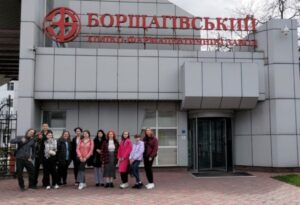
The pharmaceutical company PJSC NVC “Borshchahivsky Chemical and Pharmaceutical Plant” (BCHP) plans to submit four medicines for registration by the end of 2026, develop nine drugs, and conduct bioequivalence studies for two medicines.
According to BHFZ’s disclosure in the National Securities and Stock Market Commission (NSSMC) disclosure system, in 2026, in accordance with the approved Work Plan for expanding the product portfolio, work is planned on 16 drugs in five dosage forms.
Research and development expenses in the first half of the year totaled 6.41 million UAH, which is 13% more than in the same period of 2025.
Currently, the company’s product portfolio consists of approximately 130 items.
BHFZ also reports that during the first half of 2026, the company produced 22.1 million packages of pharmaceuticals with a total value of 1.389 billion UAH.
The average selling price of the drugs was 56.72 UAH per package. Average revenue amounted to 1.201 billion UAH.
In addition, the company reported that total exports amounted to 198.7 million UAH, accounting for 16.5% of total revenue.
According to the company, the main buyers in the first half of 2026 were BADM LLC, OptimaPharm LTD Joint Venture LLC, and Vaksina Healthcare LLC.
During the first six months of 2026, BHFZ exported its products to 14 countries: Azerbaijan, Bosnia and Herzegovina, Armenia, Georgia, Kazakhstan, Latvia, Lithuania, Moldova, Poland, Portugal, Romania, the United States, Uzbekistan, and Croatia.
At the same time, the domestic market accounts for 83.5% of total sales.
According to the company, based on the results for the first six months of 2026, BHFZ ranks sixth in the pharmaceutical market with a figure of 1.119 billion UAH.
As previously reported, BHFZ increased its net profit by 2.96% to 281.788 million UAH in 2025 and boosted pharmaceutical production by 16% to 37.4 million packages, worth 2.481 billion UAH. According to the company, total sales of finished products and goods in 2025 amounted to 43.8 million packages, which is 6.9% more than in 2024.
In addition, the company reported that in 2025, BHFZ exported products worth 307 million UAH, or 13.7% of total sales.
BHFZ forecasts an 18% increase in net sales revenue for 2026 compared to 2025. Annual growth during 2027–2028 is expected to be 13%
Currently, BHFZ is seeking to recover 50.7 million UAH in damages from the Russian Federation for the destruction and damage to property resulting from armed aggression, specifically the destruction and damage to property caused by a missile strike on July 31, 2025.
The amount of direct (actual) damages incurred by the BHFZ as a result of the loss, destruction, or damage to property (fixed assets and inventory according to the lists) in connection with the Russian Federation’s armed aggression (resulting from the explosion and fire on July 31, 2025), is estimated at 50,760,894 thousand UAH, which, at the NBU exchange rate as of the date of the assessment (July 31, 2025), is equivalent to $1,215,358 thousand.
Currently, the shareholders of BHFZ are the pharmaceutical company PJSC “Pharmaceutical Firm “Darnitsa” (Kyiv), which owns 31.8% of BHFZ’s shares; other shareholders include “Beldor Group” (21.26%) and “Lenik Group” (20.32%) .
The ultimate beneficiaries of BHFZ are Gleb Zagoriy, the beneficiary of the pharmaceutical company “Darnitsa,” as well as Yevgen Sova, Tetiana Artemenko, Mykola Bezpalko, and Oleg Goloborodko.
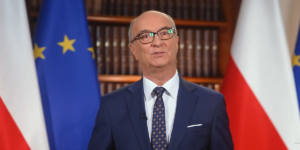
Marshal of the Polish Sejm Włodzimierz Czarzasty has stated that Ukraine’s accession to the European Union will require the Ukrainian side to reconsider controversial chapters of its own history, including its assessment of the mass killings of Poles in Volhynia during the Second World War.
Czarzasty made the statement on August 10 in Szczawnica following a meeting with Chairman of the Verkhovna Rada of Ukraine Ruslan Stefanchuk, the Polish Press Agency PAP reported.
Czarzasty stressed that he personally supports Ukraine’s future membership in the EU but believes that European integration entails not only economic benefits but also the acceptance of a certain system of values and historical responsibility.
“The EU is about democracy and values; it is not merely an ATM,” the Marshal of the Sejm said, adding that it is also necessary “to call genocide genocide.” In his opinion, no nation can escape its own history.
The main subject of the historical dispute remains the mass killings of the Polish population in Volhynia and Eastern Galicia in 1943–1945, responsibility for a significant portion of which the Polish side places on the Organization of Ukrainian Nationalists and the Ukrainian Insurgent Army.
In Poland’s state historical policy, these events are officially classified as genocide. As early as 2016, the Sejm enshrined this interpretation in a parliamentary resolution, and in 2025 Poland went further: by law, it designated July 11 as the National Day of Remembrance of Poles — Victims of the Genocide Committed by the OUN and UPA in the Eastern Territories of the Second Polish Republic. The law was adopted unanimously by the Sejm and subsequently approved by the Senate.
The Polish side demands three things from Ukraine above all: recognition of the genocidal nature of the crimes, the opportunity to search for and exhume the remains of Polish victims without obstruction, and the dignified burial and commemoration of those killed. Poland’s Institute of National Remembrance regards the depoliticisation of exhumations as one of the key conditions for genuine historical reconciliation.
Warsaw therefore no longer views the issue solely as a dispute among historians. In recent years, it has become part of the state’s remembrance policy and is increasingly being linked by Polish politicians to the issue of Ukraine’s European integration.
Official Kyiv does not deny the mass killings of the Polish population or the need to honour the memory of those killed. However, it avoids accepting the Polish formula of sole responsibility on the part of Ukraine and the official classification of the entire Polish-Ukrainian conflict of that period as a genocide of Poles.
The Ukrainian Institute of National Remembrance predominantly uses the terms “Volhynia Tragedy” and “Ukrainian-Polish confrontation.” In July 2026, UINR head Oleksandr Alforov stated during a joint Ukrainian-Polish commemoration that the tragic events of 1943 must be remembered and that relations between the two nations should be built on mutual respect and acknowledgement of past mistakes.
The Ukrainian side also points out that not only Poles but also Ukrainians were killed in the Polish-Ukrainian confrontation, including as a result of retaliatory actions by Polish armed formations and the policies of the Polish state. Notably, in July 2026, Polish Ambassador to Ukraine Piotr Łukasiewicz also publicly stressed the need to take Ukrainian victims into account.
When the Polish Sejm legislatively designated July 11 as a day of remembrance for the “victims of the genocide committed by the OUN and UPA” in June 2025, Ukraine’s Ministry of Foreign Affairs called the decision unilateral and warned that such steps did not contribute to achieving mutual understanding and reconciliation. Kyiv proposed focusing on the joint work of historians, searches, exhumations and the dignified commemoration of all victims.
Despite the political dispute over terminology, substantial progress has been made in practical matters over the past year. Ukraine resumed issuing permits to the Polish side for search and exhumation work. In 2026, investigations were conducted, in particular, in the former villages of Ostrivky and Volia Ostrovetska in Volhynia, while on August 7, Ukraine’s interdepartmental commission approved new exhumation work in Huta Peniatska in the Lviv region and in the village of Uhly in the Rivne region.
Work in Ostrivky and Volia Ostrovetska was completed on August 7, and the remains discovered there are to be reburied. Thus, one of the most acute practical issues that had complicated relations between Warsaw and Kyiv for several years has gradually begun to move forward.
Following his meeting with Stefanchuk, Czarzasty also called for political and historical conflicts not to be transferred to relations between Polish and Ukrainian societies. According to him, a permanent channel of communication must be maintained between the parliaments of the two countries and mutual trust must be restored. At the same time, he stressed that “without a secure Ukraine, there is no secure Poland” and expressed support for Ukraine’s membership in the EU and Poland’s participation in the country’s post-war reconstruction.

The National Bank of Ukraine is preparing a new, large-scale foreign exchange liberalization package that, for the first time since the start of the full-scale war, is expected to significantly expand individuals’ opportunities to conduct foreign exchange and financial transactions abroad. NBU Governor Andriy Pyshnyy made this announcement on August 10. According to him, a significant portion of the consultations with the International Monetary Fund regarding this new phase of liberalization has already been completed, and the National Bank plans to announce the final details once the necessary procedures are finalized.
“We are preparing a currency liberalization package that, for the first time, will have a tangible impact on individuals as well,” said the NBU Governor.
Until now, the main stages of currency liberalization during the war have focused primarily on businesses: the NBU has gradually expanded opportunities for paying for imports, servicing foreign loans, repatriating dividends, and attracting capital from abroad. Transactions by individuals, including money transfers abroad, are part of a later stage of lifting restrictions in the NBU’s strategy.
According to sources in the banking sector, one of the main expected changes will be an increase in the monthly limit on transfers by individuals from foreign currency cards issued by Ukrainian banks to cards abroad, from 100,000 UAH to 200,000 UAH in equivalent value. Sources also note a possible roughly twofold increase in a number of other existing foreign currency limits; however, the NBU has not yet officially published their final parameters.
Currently, the NBU allows transfers from a foreign-currency payment card issued by a Ukrainian bank to another individual’s card abroad of up to 100,000 UAH equivalent per month. Transfers from hryvnia cards directly to cards issued by foreign banks remain prohibited.
For hryvnia cards, there is also a limit on non-cash payments for goods and services abroad of 100,000 UAH equivalent per month. Cash withdrawals abroad from hryvnia accounts are limited to 12,500 UAH equivalent per seven calendar days. There are no general limits of this type for payments with foreign currency cards for ordinary goods and services, although certain restrictions remain in place for some categories of transactions.
Thus, if the changes announced by the banking market are approved as expected, the new package will become one of the most significant relaxations of restrictions directly affecting Ukrainian citizens starting in 2022. Above all, it will simplify support for relatives abroad, the use of funds from Ukrainian accounts during extended stays abroad, and other cross-border transactions by individuals.
At the same time, this new phase of liberalization does not mean the complete abolition of foreign exchange controls.
The NBU maintains a managed floating exchange rate regime and continues to cover the structural foreign exchange deficit in the market through its own interventions. According to the regulator’s strategy, the further lifting of restrictions depends not on a predetermined timeline, but on the state of the foreign exchange market, international reserves, inflation, and other macrofinancial conditions.
The transition to easing restrictions for the general public is of particular importance, as such measures are part of the third stage of currency liberalization in the NBU’s roadmap, alongside foreign investments, freer capital flows, and the expansion of other cross-border financial transactions. At the same time, the NBU may implement certain steps from different stages in parallel, provided that macroeconomic conditions permit.
In January 2026, the NBU had already significantly expanded opportunities for businesses by introducing a so-called “credit limit,” which allows companies to use foreign loans raised after January 1 for a range of transactions, including servicing existing debts and additional repatriation of dividends. In April, the regulator implemented another round of easing measures for certain categories of individuals and companies.
The final amounts of the new limits for individuals, the date they take effect, and the full list of permitted transactions are to be determined by a separate decision of the NBU’s Board. As of the afternoon of August 10, the relevant resolution had not yet been published on the regulator’s official website.



