

According to Serbian Economist, the International Institute for Middle East and Balkan Studies reports that global instability is intensifying amid the war in Ukraine and strategic uncertainty
The International Institute for Middle East and Balkan Studies (IFIMES, Ljubljana, Slovenia) has published an analysis addressing the growing global disorder and the collapse of former strategic benchmarks against the backdrop of Russia’s ongoing war against Ukraine and general geopolitical turbulence.
The author of the study, IFIMES Advisory Board member and President-Commissioner of Glendale Partners, Dr. J. Scott Yanger, notes that as the war in Ukraine enters its fifth year, the international system is increasingly characterized by instability, rising conflict, and a decline in the predictability of decisions by key global players.
The article emphasizes that the protracted war in Ukraine, the crisis in the Middle East, tensions surrounding Iran, as well as increasing impulsiveness and lack of coordination in global politics are creating a new environment of strategic uncertainty. According to the author, traditional mechanisms of international deterrence and coordination are increasingly failing, and leading states are acting in an increasingly unsystematic manner.
The analysis pays particular attention to the impact of these processes on the global economy and energy security. In particular, potential disruptions in strategic transport corridors—including in the Strait of Hormuz—are cited as key risks, which could put pressure on global markets and heighten nervousness in the global economy.
IFIMES believes that the further course of events will depend on the ability of international actors to prevent the escalation of existing conflicts and to move from reactive measures to a more sustainable system of political and economic crisis management.
As noted in the publication, the current phase of global politics increasingly demands not only rapid diplomatic solutions but also a rethinking of the entire architecture of international security, which in recent years has shown signs of systemic weakening.
https://t.me/relocationrs/2722

On April 18, Motor Sich JSC (Zaporizhzhia) canceled a tender for voluntary liability insurance for members of the supervisory board due to a lack of bids. According to the Prozorro e-procurement system, the tender was announced on April 8, with the expected cost of the services amounting to UAH 1.8 million.
Motor Sich is a leading Ukrainian enterprise that designs, manufactures, and repairs aircraft engines for airplanes and helicopters, as well as gas turbine units. It is a strategic engineering facility. In 2022, the company came under state control following a seizure of shares related to an attempted sale to Chinese investors.
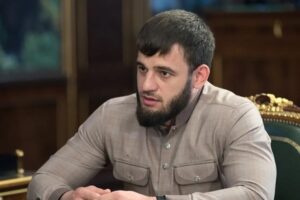
According to Serbian Economist, the Serbian government revoked the citizenship of Jakov Salmanovich Zakriev, the nephew of Chechen leader Ramzan Kadyrov, five days after granting it. This was reported with reference to a decision published in the “Official Gazette.”
The decision to revoke citizenship was signed on April 28 by Serbian Prime Minister Džuro Matsu. Zakriev initially received a Serbian passport under Article 19 of the Citizenship Law—as a foreigner whose admission to citizenship “is in the interest of the Republic of Serbia.”
The authorities later revised this decision. The government cited Article 184 of the General Administrative Procedure Act, which allows for the revocation of a decision that has already been implemented if necessary to eliminate a serious and immediate threat to human life and health, public safety, public order, or to prevent serious disruptions to the economy.
The story became public after Serbian media reported that citizenship had been granted to Zakriyev as a person of interest to the country. Less than a day later, the authorities revoked their decision.
Zakriyev is the son of Kadyrov’s older sister; he previously served as mayor of Grozny and later worked in the Chechen government.
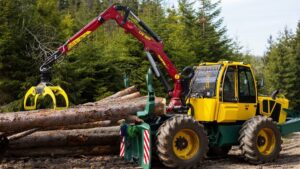
The first skidders manufactured for the Carpathian branch of State Enterprise “Forests of Ukraine” under a contract with a Slovak manufacturer have successfully passed factory tests, the state enterprise announced on its Facebook page.
According to the post, the contract for the delivery of 11 units of equipment was signed in January 2025. The first two skidders have now been manufactured at the plant, and the company’s specialists personally tested them before they were shipped to Ukraine.
“This is a crucial stage, because it’s not just about the quality of the equipment, but also about people’s safety and the reliability of operations in challenging mountainous conditions. That is precisely why we conduct testing at the factory—before the equipment is put into service,” the post notes.
According to the State Enterprise, the first units will arrive in Ukraine in the coming weeks, and deliveries of the remaining nine units are scheduled for mid-summer. The new tractors will be used in 11 forest districts of the Western Region, specifically in the Brustury, Rakhiv, Uzhhorod, and Ivano-Frankivsk districts.
The company emphasized that this is the first purchase of modern specialized equipment of this caliber. Currently, the Carpathian Forest Office uses about 350 tractors, of which more than 80% (285 units) are machines manufactured in the 1980s and 1990s that frequently break down.
“The new equipment will provide greater off-road and mountain mobility thanks to a reinforced frame and all-wheel drive. Twin-drum winches will boost productivity, and modern remote control systems will make the operator’s work safer,” summarized the State Enterprise “Forests of Ukraine.”
As reported, the State Enterprise “Forests of Ukraine” will implement an investment program in 2026 with a total funding volume of 4.1 billion UAH. The modernization strategy allocates over 2.1 billion UAH for the procurement of goods and services from domestic manufacturers, specifically firefighting equipment, trailers, and reforestation equipment.
The modernization of the vehicle fleet aims to replace outdated Soviet-era equipment from the 1980s and 1990s with specialized European-standard machines. The program includes the purchase of more than 200 units of equipment, including modern skidders, harvesters, and energy-efficient tractors, which are expected to increase productivity in challenging terrain and reduce fleet maintenance costs.
The United Arab Emirates (UAE), which produces approximately 3–3.5 million barrels of oil per day, has announced its withdrawal from OPEC and the OPEC+ agreement effective May 1, according to a statement.
“This decision was made following a comprehensive review of the UAE’s production policy, as well as our current and future capacities, and is based on our national interests and our commitment to effectively helping meet the market’s immediate needs,” the UAE stated.
“Although short-term volatility, including disruptions in the Persian Gulf and the Strait of Hormuz, continues to affect supply dynamics, underlying trends point to sustained growth in global energy demand in the medium and long term,” the government emphasized.
The UAE joined OPEC in 1967 through the Emirate of Abu Dhabi.
The UAE explains its decision to leave the organization of exporting countries as an evolution of its approach, “increasing flexibility in responding to market changes while continuing to contribute to stability.”
The UAE notes that it is one of the world’s most price-competitive oil producers with a low carbon footprint. “After leaving the organization, the UAE will continue to act responsibly, gradually, and prudently, increasing production in line with demand and market conditions,” the statement said.
“With a large and competitive resource base, the UAE will continue to collaborate with partners in resource development, supporting economic growth and diversification. This decision does not alter the UAE’s commitment to global market stability or our approach based on cooperation with producers and consumers. On the contrary, it enhances the UAE’s ability to respond to changing market needs,“ the UAE noted.
The country’s government stated that during its time in OPEC, the UAE ”has made significant contributions and even greater sacrifices for the benefit of all.”
“But now is the time to focus our efforts on what our national interests and our commitments to investors, customers, partners, and global energy markets dictate,” the UAE emphasized.
The UAE will continue to invest across the entire value chain, including oil, gas, renewable energy, and low-carbon solutions to support the sustainable and long-term transformation of the energy system.

Raw milk production in Ukraine in January–March 2026 fell by 10% compared to the same period in 2025—to 1.31 million tons, the Association of Milk Producers (AMP) reported, citing data from the State Statistics Service.
The industry association noted that in March 2026, farms of all categories produced 496,200 tons of milk, which is 10.7% less than in March 2025. At the same time, the industrial sector showed growth: enterprises produced 285,800 tons of raw milk (+4.9%), while private farms saw a 25.8% drop in production to 210,400 tons.
“Milk producers are under pressure from lower purchase prices and rising production costs. The spike in oil prices due to the conflict in the Middle East has led to higher logistics costs. Natural gas prices have also risen, triggering higher prices for nitrogen fertilizers. In particular, urea prices rose by nearly 50% year-over-year due to Iran’s blockade of shipping through the Strait of Hormuz,” the UAM reported.
The association’s analysts emphasized that labor shortages, security risks, energy supply issues, and limited access to credit remained among the key obstacles for businesses in March. The situation is particularly critical in the Kharkiv region, where farmers are forced to evacuate their farms or abandon planting due to constant shelling and the mining of fields.
The UAA emphasized that an additional challenge is adapting to the new requirements of the EU’s Common Agricultural Policy for 2028–2034. The European approach involves moving away from payments per hectare or head of livestock in favor of meeting environmental KPIs (soil protection, biodiversity).
“The new architecture of the EU’s agricultural policy requires Ukrainian producers to incur significant modernization costs. Amid martial law and milk prices below cost, farmers urgently need state support. Currently, 10–15% of small and medium-sized dairy farms are at risk of closure,” the association concluded.



