
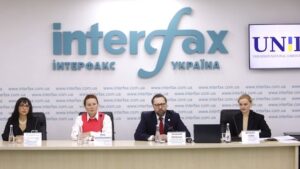
The National Association of Lobbyists of Ukraine (NALU) has announced the introduction of an anti-corruption officer within its structure, stating its intention to become a model of transparent regulation of the lobbying profession and calling on the National Agency for Corruption Prevention (NAZK) to engage in open dialogue on monitoring the activities of lobbyists.
Oleksiy Shevchuk, Chairman of the Board of the National Association of Lobbyists of Ukraine, announced that the Association is introducing the position of anti-corruption officer in accordance with European approaches to transparency and requirements adopted after the NALU was included in the European Parliament’s Transparency Register.
“The National Association of Lobbyists of Ukraine is introducing an anti-corruption officer, complying with EU requirements and confirming that the profession of lobbyist in Ukraine must be transparent, understandable, and operate exclusively within the legal framework and pay taxes,” Shevchuk said at a press conference at the Interfax-Ukraine agency on Wednesday.
According to him, the NALU is the first public organization in Ukraine to formalize the institution of an anti-corruption officer in the professional community of lobbyists. “No gray schemes, no gray money, no tax-free payments. We are setting an example of how modern lobbying should work—as transparent interaction between business and parliament, not corruption,” the chairman of the board emphasized.
At the same time, Shevchuk criticized the NACP’s approved procedure for monitoring the activities of lobbyists, which, according to him, was adopted without public consultation with the professional community. He considers this approach to be interference by a state body in an independent profession.
“The National Agency for Corruption Prevention is actually trying to establish control over the profession of lobbyists by adopting documents without discussion with the market. Just as the state does not interfere in the work of lawyers, private executors, or notaries, it should not usurp influence over lobbyists. Any accountability mechanisms must be discussed publicly with the professional community,” he stressed.
The head of the NLA emphasized that in the absence of open discussion, the association will appeal to parliament, the government, the Office of the President, and European institutions with a report on the risks of excessive interference by the NACP in the regulation of lobbying.
Lyudmila Kozhura, director of the Vadym Hetman KNEU Law Institute and Doctor of Law, in turn, stressed that for European democracies, systematic interaction between state regulators and lobbyist associations is an established practice.
“If Ukraine is moving towards the European community and adopting the best democratic standards, the state must establish regular dialogue with the National Association of Lobbyists of Ukraine. In the EU, the US, and Canada, regulators systematically hold consultations and discussions with lobbyist associations. This format of cooperation should also be introduced in Ukraine, and we are open to this interaction,” Kozhura stressed.
The anti-corruption commissioner of the NALU is Yana Tsymbalenko, an associate professor at Igor Sikorsky Kyiv Polytechnic Institute, a candidate of sciences in public administration, and an expert in corruption prevention. She noted that any new tools related to the transparent profession of lobbying in Ukraine should be implemented openly.
“Lobbying is not corruption; lobbying is anti-corruption if it is carried out transparently and in the interests of society. The profession of lobbyist requires not only a high level of professionalism, but also a clear understanding of ethical standards and the consequences of decisions made. However, the NACP’s decision to regulate the activities of lobbyists seems premature, to say the least, without broad professional discussion. As the authorized person for corruption prevention, I will ensure maximum transparency in the Association’s activities and prevent any shady practices,” Cymbalenko emphasized.
Executive Director of the National Association of Lobbyists of Ukraine Vitalia Globa reported that the NALU board unanimously supported the introduction of the institution of anti-corruption commissioner and a public appeal to the NACP.
“The National Association of Lobbyists of Ukraine is open to dialogue, cooperation, and professional participation in the preparation of regulations concerning the regulation of the lobbying profession. At the same time, we insist that no decisions regarding the professional activities of lobbyists can be made without the involvement of the relevant association, without professional discussion and transparent procedures,” she added.
Vitalia Globa recalled that earlier, the NALU sent an official notification to the NACP stating that the Association is the first professional organization in the field of lobbying and protecting business interests in Ukraine, brings together leading experts, and is ready to cooperate on regulatory decisions.
NALU representatives also reported that the Association has already developed guidelines on transparency rules for lobbyists and a model contract with businesses, and is preparing educational programs in cooperation with leading universities and international partners. Offline meetings with representatives of lobbying communities in the UK, the US, and EU countries are expected to be held.
The National Association of Lobbyists of Ukraine brings together more than 40 specialists, which is about 40% of the total number of lobbyists registered in the transparency register. The organization calls for an open discussion of the NACP draft document with the involvement of industry representatives, in particular from the fuel, agricultural, energy, and tobacco sectors.
https://interfax.com.ua/news/press-conference/1121804.html
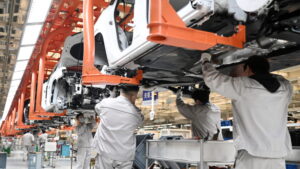
According to Serbian Economist, the Chinese company Techron Automotive plans to build its first foreign plant for the production of plastic car components in the city of Inđija (Vojvodina, Serbia), which will strengthen the country’s role as a regional hub for the automotive industry. This was announced by the Municipality of Inđija, as cited by Serbia-business.eu.
The construction is planned to start by the end of this year. According to the published information, the plant in Indjija will be the first Techron plant outside China. At the first stage, the construction of a 4.5 thousand square meters production building is envisaged. After reaching full capacity, the enterprise will be able to provide about 200 jobs.
The plant is scheduled to open in mid-2026.
Techron produces components for the world’s leading automakers – Volkswagen, Porsche, Audi, Chery, Geely and others. The product line includes engine and transmission parts, interior and exterior components, as well as control system components.
Experts note that the project fits into Serbia’s strategy of deepening specialization in the automotive industry and automotive components: dozens of plants for the production of harnesses, electronics and plastic parts for European and Asian brands are already operating in the country. For the region, this means not only new jobs, but also the need to invest in energy, logistics and vocational education in order to consolidate the effect of the new investor.
https://t.me/relocationrs/1782

Ukrainian shopping streets are not included in the new global ranking of the world’s major commercial locations, Main Streets Across the World 2025, prepared by the international consulting company Cushman & Wakefield, despite the inclusion of 141 streets from nearly 50 countries. Kyiv and other Ukrainian cities are absent from the list.
According to the study, the most expensive shopping street in the world in 2025 will be New Bond Street in London, where the annual rental rate for shops has increased by 22% to €20,482 per square meter. Last year’s leader, Via Montenapoleone in Milan (€20,000), fell to second place, while Upper Fifth Avenue in New York (€18,360) took third place.
The top ten also includes:
4. Tsim Sha Tsui – Canton Road, Hong Kong (€13,900)
5. Champs-Élysées, Paris (€12,520)
6. Ginza, Tokyo (€11,540)
7. Bahnhofstrasse, Zurich (€9,640)
8. Pitt Street Mall, Sydney (€7,300)
9. Myeongdong – Myeongdong-gil, Seoul (€6,000)
10. Kohlmarkt, Vienna (€5,500)
Rental rates rose on 58% of the streets included in the ranking, with Europe showing an average increase of +4%, America +8%, and Asia-Pacific +2%. The largest increase in rental costs was observed on Oscar Freire in São Paulo (+65%) and Fashion Street in Budapest (+33%), while the most significant decline was on Oak Street in Chicago (-14%).
There are no Ukrainian streets in the current ranking, although in previous years (until 2022), Khreshchatyk appeared in some editions of the Cushman & Wakefield study as the main high street location in Kyiv. Experts explain Ukraine’s absence from the current report by a combination of factors: Russia’s military aggression, a decline in investment and transactions in the market, and limited availability of comparable data for international consulting systems.
At the same time, representatives of the Ukrainian retail real estate market note that international brands began to gradually return to Kyiv as early as 2024–2025, and as transparency increases and demand stabilizes, Ukrainian shopping streets may reappear in global rankings in the coming years.

The Zaporizhstal Iron and Steel Works in Zaporizhia allocated UAH 370 million for a complex of major repairs of key production units.
According to a press release issued by the plant on Tuesday, the company is continuing to implement its annual capital investment program to maintain production capacity and environmental protection equipment. The plant has carried out a major overhaul of its main production units in the blast furnace, open-hearth furnace, and hot rolling mill departments, with a total budget of UAH 370 million.
“The domestic mining and metallurgical complex is one of the export-oriented sectors of the Ukrainian economy that has lost the most during the war. We are focusing on survival, because it is the preserved production that will become the basis for future modernization and development projects. Repairs and proper maintenance of production complexes are an important contribution to ensuring the stable operation of Zaporizhstal today and in the future,” said Taras Shevchenko, acting CEO of the metallurgical plant.
According to him, the plant has carried out a series of repairs in the main production units of the enterprise: blast furnace (BF) No. 3 and its gas cleaning system, aspiration of the casting yard and bunker trestle in the blast furnace shop, a two-tank steelmaking unit and its gas cleaning system in the open-hearth shop, the 1150 slab mill and the BTLS-1680 mill, as well as shears and clamp cranes in the hot rolling shop. The work continued around the clock, with more than 400 specialists involved in the repairs: employees of the engineering services and production departments of Zaporizhstal, specialists from Zaporizhogneupor, Kametstal, and contracting organizations.
It is specified that thanks to the overhaul, DP-3, in particular, will ensure high efficiency of technological air cleaning from dust at the level of 20 mg/cubic meter.
As part of the repair of the two-tank steelmaking unit, the main vault and working space of the furnace were refired. For this purpose, Zaporizhogneupor supplied more than 800 tons of refractory fireclay and periclase-chromite products.
At the slabbing-1150 mill, repairs were carried out on the universal cage and its electric drive, roller tables, pressure units of horizontal and vertical rolls, turntable units with platform replacement, overhaul of the mill’s electrical and power equipment, repair of control panels, etc. At the BTLS-1680 mill, specialists inspected and upgraded the unit’s components.
It is also noted that the overhauls were aimed at improving the reliability and efficiency of the equipment, reducing product defects and energy losses. It should be noted that this year Zaporizhstal will also carry out a complex of major repairs of key units of the combined heat and power plant – boiler unit No. 5, turbine generator No. 1, and turbo compressor unit No. 7. The plant has allocated about UAH 75 million in investments for these purposes. Overall, despite the difficult economic situation, the capital investment budget for 2025 will exceed UAH 1 billion.
Zaporizhstal is one of Ukraine’s largest industrial enterprises, whose products are in high demand among consumers both in the domestic market and in many countries around the world.
Zaporizhstal is a joint venture of the Metinvest Group, whose main shareholders are System Capital Management (71.24%) and Smart Steel Limited (23.76%). Metinvest Holding LLC is the managing company of the Metinvest Group.

The Food from Ukraine platform symbolizes the expansion of Ukraine’s initiative from a focus on grain alone to finished products, as well as the transfer of technological knowledge, said Minister of Economy, Environment, and Agriculture Oleksiy Sobolev at the opening of the IV International Food Security Summit “Food from Ukraine” in Kyiv on Wednesday.
Sobolev noted that Ukraine had already exported 5.8 million tons of wheat in the 2025-2026 marketing year.
“This is not just a figure, it is an indicator of the resilience of our agricultural sector, which continues to operate despite the destroyed infrastructure, constant logistical challenges, drone attacks, and daily risks,” the minister emphasized.
He cited USDA forecast data, according to which wheat exports from Ukraine will amount to 15 million tons by the end of the season, or approximately 7% of global trade in this product.
“This confirms that Ukraine continues, despite everything, to be a reliable partner for the global food market. (…) However, the issue of food security remains relevant and will only intensify. Ukrainian farmers provide food to hundreds of millions of people in different regions of the world, from North Africa to Asia. Our country remains a guarantor of global food security, ensuring the stability of supplies of grains, oilseeds, and livestock products,” Sobolev noted.
As the minister noted, Ukraine understands that demand for food will grow most rapidly. In the coming decades, Sub-Saharan Africa, which currently imports more than two-thirds of its food needs, will account for almost 14% of the increase. The average productivity of farms on this continent is only 40% of their potential, grain losses are up to 20%, and the density of mechanization is only 2-4 tractors per 100 square kilometers, which is dozens of times lower than in Europe.
At the same time, he noted the strong response to these challenges from African countries, which are investing in irrigation, mechanization, the creation of agro-industrial zones, the localization of equipment production, infrastructure development, storage, and processing. According to Sobolev, this is not just modernization, but a strategic course towards self-sufficiency.
That is why, according to the Minister of Economy, one of the strategically correct decisions for Ukraine is to transform the Ukrainian President’s Grain from Ukraine initiative into Food from Ukraine.
“The Food from Ukraine platform will form a new approach to global food policy, combining long-term financing of humanitarian programs with the creation of stable and secure logistics routes, the development of processing and production of products with high added value, the attraction of investments, the technological modernization of the agricultural sector, expanding cooperation with countries in Asia, Africa, Latin America, and island states, as well as establishing partnerships between the government, business, and international organizations to create a sustainable, predictable, and innovative global food system,” Sobolev emphasized.
The minister announced that Ukraine will begin creating a network of regional food hubs as part of this initiative. He showed a video presentation of the first project of such a logistics and processing hub, which is planned to be built in Ghana. Its basic infrastructure will be the storage, processing, and distribution of Ukrainian agricultural products, as well as the localization of modern technologies in West Africa.
Sobolev emphasized that Ukraine and Ghana signed a memorandum of cooperation in Kyiv on Wednesday, laying the foundation for long-term partnership and practical development of the initiative and creation of Food for Ukraine.
“Ukraine is ceasing to be a political donor of food. We are becoming part of the architecture of a new model of global food sustainability, a country that not only helps feed the world today, but also creates mechanisms for innovative production tomorrow,” the Minister of Economy concluded.

Metinvest B.V. (Netherlands), the parent company of an international vertically integrated mining and metallurgical group of companies, has paid another coupon on its 2029 Eurobonds and continues to fulfill its debt obligations, including to Eurobond holders, despite the war in Ukraine.
“We can confirm that the coupon was paid on time,” Andriy Burlakov, head of the Metinvest Group’s press service, told Interfax-Ukraine in response to a request.
The coupon payment date for Eurobonds-2029 is November 17.
“The coupon payment dates are May 17 and November 17,” according to the information on the 2029 bonds.
The coupon rate is 7.750% per annum.
Metinvest is a vertically integrated group of mining and metallurgical enterprises. Its enterprises are located in Ukraine – in the Donetsk, Luhansk, Zaporizhzhia, and Dnipropetrovsk regions – as well as in the European Union, the United Kingdom, and the United States.
The main shareholders of the holding company are SCM Group (71.24%) and Smart Holding (23.76%). Metinvest Holding LLC is the managing company of the Metinvest Group.
Metinvest paid the coupon on Eurobonds-2029 despite the war



