
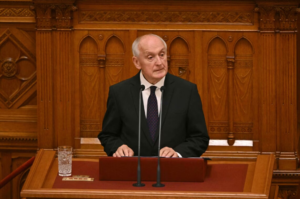
The Hungarian parliament has elected former Supreme Court president András Baka as the country’s new president, marking another important stage in the restructuring of Hungary’s political system following the end of Viktor Orbán’s 16-year rule.
On 11 August, 140 MPs voted for the 73-year-old lawyer, while six voted against. Representatives of the opposition Fidesz party did not participate in the vote, protesting against the early termination of the powers of the previous president, Tamás Sulyok. Baka is due to officially take office on 19 August.
Baka’s election is primarily of political and institutional significance. The president of Hungary does not head the government or determine the country’s economic or foreign policy, but can serve as a constitutional counterweight to the parliamentary majority and the cabinet. This function is particularly important now, as Prime Minister Péter Magyar’s Tisza party holds a constitutional majority in parliament and is carrying out sweeping changes to the institutions shaped under Orbán.
Baka fits well into this political arrangement. From 1991 to 2008, he served as a judge at the European Court of Human Rights, and in 2009 parliament elected him president of the Supreme Court of Hungary. His mandate was terminated early in early 2012 after he publicly criticised the Orbán government’s judicial reforms. The European Court of Human Rights subsequently found violations of his right of access to a court and freedom of expression.
Therefore, Baka’s return to one of the country’s highest public offices almost 15 years later has clear symbolic significance. It demonstrates the new authorities’ intention to distance themselves from the institutional model of the Orbán era while simultaneously making the independence of the judiciary one of the central themes of the political transformation.
“For Hungarian society, this is much more than an ordinary change of president. After sixteen years of dominance by a single political force, any large-scale restructuring of state institutions will inevitably be perceived differently by society. For supporters of change, this is an opportunity to restore the system of checks and balances, while for a significant proportion of Fidesz supporters, what is happening may look like political revenge by the new authorities,” said Oleksandr Poznii, an expert at the Experts Club analytical centre and co-founder and director of the Active Group research company.
According to Poznii, the key test will be the ability of the new institutions to demonstrate genuine independence from Péter Magyar’s government.
“Baka’s main task is not to become the president of the victorious party. If the new head of state can truly distance himself from the government and act as an arbiter between different political groups, this will be an important signal to society. Otherwise, Hungary risks seeing not the dismantling of the former model of concentrated power, but merely a change in the political force controlling that model,” Poznii noted.
The sociologist also draws attention to the high degree of political polarisation in Hungarian society. In such a situation, the significance of the presidential office is determined not so much by the scope of its formal powers as by the trust that different groups of the population place in the head of state.
“In countries with strong political polarisation, symbolic institutions can be far more important than the text of the constitution might suggest. The president may not manage the economy or foreign policy, but he can either reduce the level of conflict in society or, conversely, become another participant in that conflict. Therefore, the main measure of Baka’s success will not be the number of laws he blocks, but whether he can be perceived as the president of all Hungarians,” Poznii emphasised.
Following his election, Baka himself stated that under the previous authorities the system of checks and balances had effectively ceased to function, but stressed that political change should not turn into revenge against supporters of the former government. He also declared his intention to represent citizens with different political views.
Hungary is a parliamentary republic, meaning that the real centre of executive power is located not in the presidential palace, but in the government.
Under the Fundamental Law of Hungary, the president is the head of state, embodies the unity of the nation and is responsible for safeguarding the democratic functioning of state institutions. At the same time, the president has no executive power of his own and does not head the ministries.
Nevertheless, his powers extend beyond purely ceremonial functions. The president signs laws adopted by parliament and, before signing, may return a law to MPs once for reconsideration. If he considers a document to be contrary to the Fundamental Law, he may refer it to the Constitutional Court.
Following parliamentary elections, the president proposes a candidate for prime minister to parliament. He also formally appoints ministers upon the recommendation of the head of government, performs a range of personnel and representative functions, and represents the Hungarian state in foreign relations.
Thus, the head of state can delay certain decisions by the parliamentary majority or initiate a constitutional review of them, but cannot independently determine the country’s political course.
The prime minister, by contrast, is the effective head of the executive branch. The government is the principal body of executive power and public administration, while the prime minister determines its overall political course. It is the prime minister who forms the government team, directs the work of the cabinet and, through the parliamentary majority, implements the principal budgetary, economic, social and foreign policy decisions.
Therefore, the key political figure in Hungary remains Péter Magyar, who came to power following Tisza’s victory in the April parliamentary elections. The party won two-thirds of the seats in parliament, ending Orbán’s 16-year period of uninterrupted rule.
After coming to power, Magyar began seeking the replacement of the heads of a number of state institutions associated with the previous system of government. One of the most notable episodes was the early termination of President Tamás Sulyok’s term of office.
For the new authorities, Baka’s election is particularly symbolic because of his long-standing conflict with the Orbán system. The former president of the Supreme Court is effectively returning to the highest level of state politics after the defeat of the political force under which he lost his judicial post.
At the same time, this is precisely where one of the main risks facing Hungary’s new political system emerges. Tisza holds a constitutional majority and therefore has exceptionally broad powers to change laws and institutions. The new authorities must consequently dismantle the mechanisms created under Orbán while simultaneously proving that they are not replacing them with their own party control.
This is the paradox of Hungary’s new political arrangement: Magyar has obtained an exceptionally strong position thanks to his parliamentary majority, while Baka is expected to embody a limit on the excessive concentration of power.
For Ukrainian audiences, Hungary’s transformation also has foreign policy significance. Following Orbán’s defeat, Budapest’s position on Ukraine has become less confrontational, although Magyar does not present himself as an unconditional supporter of Kyiv and continues to link some bilateral issues to the situation of the Hungarian minority in Transcarpathia.
Therefore, the ultimate criterion for determining whether Hungary has entered a new political era will be not only the departure of officials from the Orbán era, but also whether the new authorities can establish a system of institutions capable of functioning independently of whichever party controls parliament and the government.
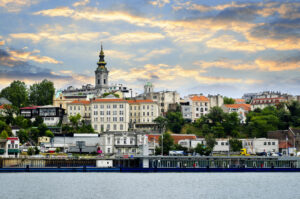
According to Serbian Economist, Belgrade continues to account for a significant portion of Serbia’s construction and investment activity, while the development of the real estate market in other regions of the country remains noticeably less uniform.
In the second quarter of 2026, the Belgrade region was the only region in Serbia where construction activity grew in real terms, with growth reaching 51% compared to the same period last year.
This is evidenced by data from the Republic Statistical Office of Serbia (RZS), published on August 10.
In all other regions of the country, construction activity declined in the second quarter. In Vojvodina, the value of completed construction work at constant prices fell by 2%; in Šumadija and Western Serbia, by 27.5%; and in Southern and Eastern Serbia, by 32.3%.
Thus, the latest quarterly statistics indicate a sharp widening of the gap between the capital and the rest of Serbia in terms of the volume of construction work.
Across Serbia as a whole, the value of construction work in the second quarter rose by 20.6% in current prices compared to April–June 2025.
Building construction grew particularly rapidly. In constant prices, the volume of work in this segment increased by 32.4% year-over-year, while for other construction projects, including infrastructure, the figure decreased by 7.1%.
Vera Yegorova-Tolsta, founder of the Belgrade real estate agency VIDOVSTAN, believes that the concentration of capital in the capital is a sustained trend and is linked not only to local demand but also to Belgrade’s investment appeal.
“Belgrade remains a distinct market within Serbia. It is home to jobs, foreign businesses, major infrastructure projects, and a significant portion of investment demand. Therefore, new projects in the capital’s prestigious neighborhoods typically find buyers faster than similar properties in smaller cities. At the same time, within Belgrade itself, the differences between neighborhoods and the quality of projects are becoming increasingly noticeable,” says Yegorova-Tolstaya.
In practice, this means that nationwide Serbian statistics do not always fully reflect the situation for an apartment buyer in the capital. The growth in supply across the country may be accompanied by persistently high prices in Belgrade’s most popular neighborhoods.
Yegorova-Tolstaya has also previously noted that the Serbian market remains stable, but demand is becoming more selective, and the quality and location of properties are becoming increasingly important.
It will be possible to definitively assess the extent to which construction activity in the second quarter affected apartment prices in Belgrade after the publication of the latest quarterly report from the RGZ Real Estate Price Register.
https://t.me/relocationrs/3427

The Ukrainian government has changed the procedure for verifying military registration documents when obtaining consular services abroad: men aged 18–60 are no longer required to specifically generate an electronic military registration document no earlier than 72 hours before visiting an embassy or consulate.
Now, to receive consular services, it is sufficient to present an electronic military registration document that is valid at the time of the visit to the diplomatic mission, according to the Consular Service Department of the Ministry of Foreign Affairs of Ukraine. The new rules are already being implemented by Ukrainian diplomatic missions abroad.
The electronic military registration document, or e-MRD, is generated via the “Reserve+” mobile app and is used by the consul to verify a citizen’s military registration data.
Previously, men aged 18 to 60 were required to present an e-VOD—generated no earlier than 72 hours before visiting a diplomatic mission—when applying for virtually any consular service. The 72-hour requirement has now been abolished. The main condition is that the document must remain valid, and the personal data it contains must be up to date.
In what cases may the consulate refuse service
A consular service may be denied if the e-VOD is invalid or if verification reveals that the data needs to be updated, if the applicant has not presented a valid document at all, or if the document lacks confirmation that the personal data is current.
However, the requirement to present a military registration document does not apply to all consular services.
An e-VOD is not required when applying for an identity certificate to return to Ukraine. An exception also applies when performing consular services for children of Ukrainian citizens if the other parent is a foreign national or a stateless person, as well as for applications from Ukrainians who are under arrest, detained, or imprisoned abroad.
What Should Ukrainians Do If They Cannot Log In to “Reserve+”?
The Ministry of Foreign Affairs has also announced additional simplifications for citizens abroad who are unable to log in to “Reserve+.”
In the near future, they plan to allow these citizens to update their military registration data through Ukrainian embassies and consulates. By the end of 2026, the Ministry of Foreign Affairs, in cooperation with the Ministry of Defense, intends to introduce a mechanism for updating data through consular registration.
To do this, a citizen will need to register with the consulate if they have not already done so, or update their information at a diplomatic mission if they are already registered with the consulate.
A separate procedure is provided for Ukrainians who cannot update their information through “Reserve+” due to the lack of a taxpayer identification number. Such citizens may personally contact the nearest Ukrainian embassy or consulate to obtain a taxpayer identification number using the “e-Consul” system.
Thus, the changes do not eliminate the requirement for men aged 18–60 to have a valid military registration document for most consular services, but they significantly simplify the procedure: it is no longer necessary to regenerate the e-VOD specifically within 72 hours before each visit to the consulate.
The Ministry of Foreign Affairs recommends checking “Reserve+” before your visit to ensure that your e-VOD is valid and that your personal information is up to date.
Official clarification from the Ministry of Foreign Affairs of Ukraine: procedure for verifying military registration documents at Ukrainian consulates and embassies abroad. A similar clarification has been published by Ukrainian embassies and consulates in other countries.
CONSULATE, military registration, MINISTRY OF FOREIGN AFFAIRS, reserve, е-ВОД
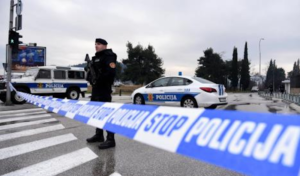
Montenegrin police are conducting a large-scale investigation into more than 50 foreign nationals, most of whom are Ukrainian citizens, who were found in a rented house in the Mareza district of Podgorica together with hundreds of digital devices, specialised equipment and a significant amount of cash, the Serbian Economist Telegram channel reports.
This was reported by the Police Directorate of Montenegro. In addition to Ukrainian citizens, Moldovan and Slovak citizens were among those present in the house.
The operation was conducted on 10 August after law enforcement officers had located and identified the premises in advance. Police seized equipment and other materials that may be relevant to the investigation.
According to the police, several hundred digital devices and items of specialised equipment were found in the building. The amount of equipment seized was so large that a lorry was required to remove it. In addition, a significant amount of money was found, the origin of which is also being investigated.
The police are establishing the grounds for the foreigners’ stay and employment in Montenegro, the nature of their activities and movements, as well as the purpose of the digital equipment discovered. The group’s possible connection to illegal activities is being investigated separately.
The Montenegrin publication Vijesti, citing preliminary investigation data, reported that the group’s possible involvement in online fraud is among the theories under consideration.
The director of the Montenegrin police formed a special operational group to conduct the investigation. It includes specialists in cybersecurity and high-tech crime, financial investigations and money laundering, international police cooperation, as well as matters involving foreigners and migration. Montenegro’s National Security Agency has also joined the investigation, which is being coordinated with the prosecutor’s office.
The police stressed that, due to the complexity of the investigation, they cannot disclose additional details at this stage. After the initial investigative and expert procedures have been completed, the authorities have promised to announce the results of the inquiry.
Azerbaijan intends to increase electricity exports to neighboring countries and enter the European energy market, said the country’s president, Ilham Aliyev.
“By expanding our export capabilities to neighboring countries, we will also enter the European market. After all, we have already entered the European market with our oil and gas, but we want to enter it with electricity as well,” Aliyev said in an interview with the Azerbaijani state television channel AzTV.
According to him, the only route for supplying electricity to Europe currently runs through Georgia and Turkey, but Azerbaijan intends to expand the number of export routes. In this regard, a feasibility study for the Black Sea Energy project has already been prepared.
In addition, in November 2024, as part of COP29, Azerbaijan, Kazakhstan, and Uzbekistan signed an agreement to lay an electrical cable along the bottom of the Caspian Sea.
“Azerbaijan will establish itself as a country that generates, receives, transmits, and exports electricity,” Aliyev said.
He also noted that the capacity of solar power plants in the Nakhchivan Autonomous Republic (NAR) could reach 500 MW, and up to 1 GW in the future.
“The main issue here is export capacity. To achieve this, of course, negotiations must be held with the relevant authorities in the respective countries, and these are already underway,” the president said.
At the same time, Aliyev noted that the existing power transmission lines from the NAR to Iran and Turkey have limited capacity, which needs to be increased.
“That is, for exporting 500 megawatts—or even 1,000 megawatts—of electricity, there are currently two routes: one to Turkey and the other to Iran. But in the future, this could also include Europe,” he said.
The head of state added that Azerbaijan’s plans to export electricity are in line with the interests of the countries “surrounding us.”
“It’s just that coordination efforts here must be carried out properly, at the necessary level, and negotiations must be accelerated. I can say that negotiations on this matter are currently underway with both Turkey and Iran. It’s too early to say anything for sure,” the president said.
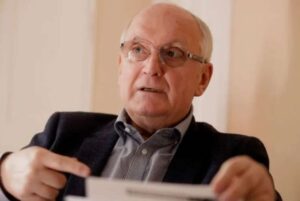
András Baku has become Hungary’s new president, according to Hungarian media reports.
“On Tuesday, the Hungarian Parliament elected 73-year-old lawyer and former Chief Justice of the Supreme Court András Baku as the country’s new president,” the reports state.
It is noted that 140 lawmakers voted in favor of his candidacy, while six voted against it. Representatives of the former ruling coalition, Fidesz—the Christian Democratic People’s Party—had announced in advance that they would not participate in the vote.
Hungary’s new Prime Minister, Péter Magyar, has repeatedly stated since his election in May that he intends to reform the Hungarian government; in particular, he has sought the resignation of President Tamás Szujók. Magyar believes that Szujók was not fulfilling his role and was serving the interests of former Prime Minister Viktor Orbán and his government.
Szujok refused to step down voluntarily, stating that he saw neither constitutional nor legal grounds for doing so. Later, in July, the Hungarian parliament approved a package of constitutional reforms that, among other things, provided for the president’s resignation. As a result, last week Szujok signed the constitutional amendments and stepped down from his post.
Magyar nominated renowned Hungarian chess grandmaster Judit Polgár for the position of the country’s new president, but she declined the offer.
The president in Hungary performs mainly ceremonial functions. The government is headed by the prime minister.



