

The Ukrsadvinprom Trade Center has begun forming a Ukrainian delegation to participate in the SIAL Paris 2026 international food industry exhibition, which will take place October 17–21 at the Paris Nord Villepinte Exhibition Center in France.
Ukrainian producers of food and beverages, fruits, vegetables, berries, nuts, and processed products, as well as other companies in the agri-food sector, are invited to participate.
Ukrsadvinprom expects that participation in the exhibition will allow Ukrainian companies to present their products to international importers, distributors, and buyers; conduct negotiations on future contracts and shipments; and find new partners and expand their export markets.
As is traditional at SIAL, special attention is given to new products, food industry technologies, packaging, and changes in consumer demand. For Ukrainian companies, the exhibition can serve as a platform both for finding direct buyers and for studying the requirements of major international markets.
According to the organizers, SIAL Paris is held every two years and expects to welcome approximately 295,000 trade visitors from about 200 countries in 2026. Around 8,000 exhibitors are expected to participate, showcasing approximately 400,000 products. The total exhibition area will exceed 280,000 square meters.
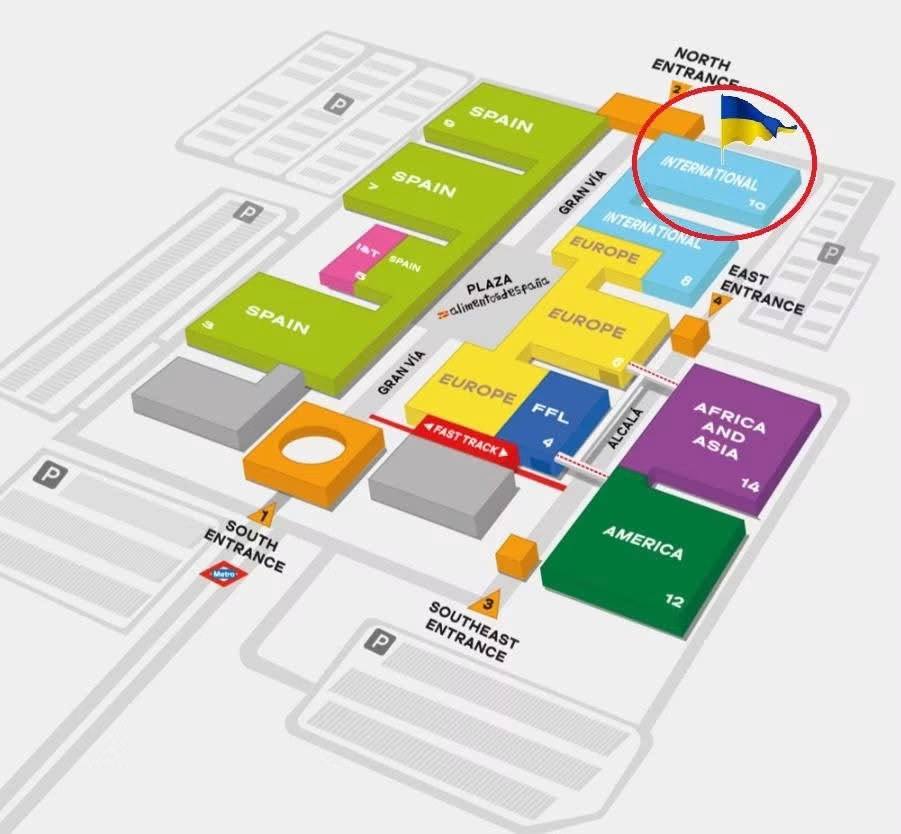
The exhibition brings together food and beverage manufacturers, international retail chains, importers and exporters, distributors, foodservice companies, and representatives of the food industry. SIAL Paris is positioned by its organizers as one of the world’s largest professional platforms for the food sector and innovations in the agri-food industry.
Ukrsadvinprom notes that Ukrainian companies that participated in international exhibitions alongside the association in previous years used such events to establish new business contacts, expand their export markets, and develop partnerships with foreign buyers.
Information on the terms of participation for Ukrainian producers at SIAL Paris 2026 is available from “Ukrsadvinprom” via email at info@ukrsadvinprom.com.
“Ukrsadvinprom” is the Public Union “Association of Gardeners, Grape Growers, and Winemakers of Ukraine,” which brings together approximately 200 producers of fruits, berries, nuts, and grapes. The organization supports companies in the industry, develops exports, promotes Ukrainian products in foreign markets, handles certification, and establishes contacts with foreign buyers. Members of the association export their products to international markets. The head of “Ukrsadvinprom” is Volodymyr Pechko.
SIAL Paris is an international trade show for the food industry held in Paris every two years. In 2026, it will take place from October 17 to 21 at Paris Nord Villepinte. The exhibition covers ten key sectors of the food industry—from fresh produce, meat, fish, dairy products, and beverages to groceries and food processing solutions.
Organizers expect approximately 8,000 participating companies and industry representatives from 200 countries.
EXPORT, MANUFACTURER, SIAL, trade show, UKRSADVINPROM, ПЕЧКО

The cost of construction and installation work on civil engineering projects in Ukraine in June 2026 rose by 24.3% compared to June of last year—the highest rate among the major construction segments. According to data from the State Statistics Service, nonresidential construction rose in price by 23.8% over the same period, while residential construction rose by 19.2%. On average across the construction industry, the increase was 23.1%.
Civil engineering also led the way in terms of monthly trends. In June, compared to May, prices in this sector rose by another 1.8%, compared to 1.3% in non-residential construction and 0.8% in residential construction.
In the second quarter of 2026, civil engineering and installation work cost 22.4% more than in April–June of the previous year. A similar increase—22.4%—was recorded in non-residential construction, while residential construction prices rose by 18.2%.
The quarterly trends are particularly telling. Compared to the first quarter, prices for engineering work rose by 12.4% in the second quarter, and for non-residential construction by 12%, while the residential sector saw an increase of only 0.4%.
According to Andriy Ozeychuk, owner and director of the engineering and construction company Rauta, the shortage of skilled workers remains one of the key factors driving up construction costs.
“The market is currently short about 30% of construction specialists,” Ozeychuk noted, commenting on the situation in the industry in February 2026.
According to his data, the labor shortage has already led to a noticeable acceleration in wage growth. While wages in the construction sector grew by an average of approximately 15–20% annually between 2022 and 2024, the growth rate reached 25–30% in 2025. Wages rose particularly sharply for concrete workers—by 50%, surveyors—by 44%, and concrete pourers—by 38%.
Thus, the current rise in the cost of construction work is not driven solely by prices for building materials and equipment. The cost of construction work itself and labor is playing an increasingly important role.
Ozeychuk also drew attention to the long-term nature of the labor shortage. According to him, vocational schools are facing both a shortage of students enrolling in construction programs and a high dropout rate as early as the first years of study.
“In the long run, this could lead to an even greater labor shortage and slow down Ukraine’s recovery,” says the owner of Rauta.
According to the company’s estimates, the labor shortage is already forcing the construction industry to seek workers outside Ukraine, particularly in India, Nepal, Bangladesh, and Pakistan.
The rising cost of civil engineering is of particular importance to Ukraine due to the massive need to rebuild energy, transportation, utilities, and other critical infrastructure. According to Rauta’s estimates for 2025, the segment of critical infrastructure restoration and protection already accounted for about 20% of the Ukrainian construction market.
Therefore, further increases in the cost of civil engineering work could directly impact the cost estimates for restoration projects. If the cost of construction and installation work rises by 20–25%, projects whose budgets were established much earlier may require additional funding or a revision of technical solutions and implementation timelines.
At the same time, non-residential and infrastructure construction remain among the most active segments of the market. In 2025, the main targets for investment in commercial real estate were warehouse, industrial, and retail buildings, while the most attractive regions for new construction were the Kyiv, Lviv, and Ivano-Frankivsk regions, Ozeychuk noted.
In the first half of 2026, civil engineering construction costs rose by 16.1% year-over-year, non-residential construction by 16.5%, and residential construction by 13.7%.
“Rauta” operates in the fields of design, construction, and installation of buildings and is a member of the European Construction Industry Association. According to data from the Unified State Register, Andriy Ozeychuk owns 100% of the company’s authorized capital.
CONSTRUCTION, INFRASTRUCTURE, OZEYCHUK, PRICE, RAUTA, RESTORATION, STAFF
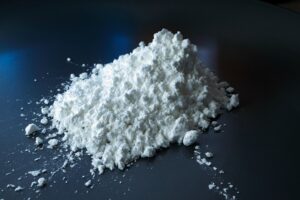
The Security Service of Ukraine dismantled an international drug smuggling ring operating out of Southern Europe and seized the largest shipment of cocaine since the start of the full-scale war, valued at approximately 70 million hryvnia. As part of a special operation in the Kyiv, Dnipropetrovsk, and Lviv regions, ten suspected members of an international drug syndicate were detained simultaneously, the SBU reported on August 12.
According to the security service, the group was involved in the distribution of wholesale shipments of cocaine, ecstasy, and other psychotropic substances imported from abroad. The SBU estimates the monthly revenue from these illegal activities at 15–20 million hryvnias.
Investigators believe a Kyiv resident was the organizer of the group’s activities in Ukraine. According to law enforcement, he recruited people to distribute drugs in various regions of the country.
During the first series of searches, SBU officers discovered approximately 2 kg of cocaine and other prohibited substances. Subsequently, more than 8 kg of cocaine and other potent substances were found in hiding places. The SBU estimated the total value of the seized substances at approximately 70 million hryvnias.
Thus, this amounts to approximately 10 kg of cocaine, not including the other seized substances. The SBU describes this shipment as the largest the agency has uncovered in Ukraine since the start of the full-scale war.
The ten detainees have been notified of charges under Part 3 of Article 307 of the Criminal Code of Ukraine—the illegal production, acquisition, storage, transportation, or sale of narcotic drugs and psychotropic substances committed by an organized group. They are currently in custody. The investigation has also established the possible involvement of three Ukrainian citizens currently in Spain in organizing the trafficking route. The issue of their extradition to Ukraine is currently being resolved.
The operation was carried out by SBU officers under the procedural supervision of the Dnipro District Prosecutor’s Office in Kyiv.
The SBU operation comes amid high cocaine supply in Europe. According to the 2026 European Drug Report, cocaine remains the second most prevalent illicit drug in Europe after cannabis. Approximately 4.3 million Europeans aged 15–64 have used it in the past year.
The EUDA notes that large shipments of cocaine continue to flow into Europe primarily from South America, with international criminal networks actively exploiting global commercial and maritime cargo flows. Large quantities of the drug are regularly seized at European ports.
Spain and the Western Balkans are a key component of the European system for combating international drug trafficking, primarily due to the activities of major organized crime groups in the region.
Europol notes that certain criminal networks linked to Montenegro are involved in organizing large-scale cocaine shipments from South America to European markets and have connections both within the EU and in Latin America.
In April 2026, Europol reported the arrest in Montenegro of one of the leading members of the so-called “Balkan Cartel.” Montenegrin law enforcement authorities charged a group of suspects in connection with the illicit trafficking of approximately 2,700 metric tons of cocaine between October 2024 and April 2026. The drugs had previously been seized during several operations in EU countries and South America.

The National Bank of Ukraine’s (NBU) increase of the monthly limit on non-cash foreign currency purchases by individuals from 50,000 UAH to 200,000 UAH may lead to a short-term rise in demand, but will not have a significant impact on the foreign exchange market, according to bankers surveyed by Interfax-Ukraine.
“In our opinion, there may be a certain surge in demand for non-cash foreign currency purchases in the first few days after the changes take effect,” said Emal Bakhtari, director of the financial instruments sales department at Raiffeisen Bank.
According to him, the proportion of customers who previously found the monthly limit of 50,000 UAH insufficient is relatively small. He suggested that the National Bank would, if necessary, smooth out short-term spikes in demand through currency interventions.
Serhiy Mamedov, Chairman of the Board of Globus Bank, also does not expect a proportional increase in demand following the fourfold increase in the limit. According to him, the limit determines only the maximum possible transaction amount, whereas the public’s purchase of cash foreign currency was not previously restricted by a similar monthly limit.
Currency liberalization in and of itself is unlikely to pose a threat to exchange rate stability at this point, Mamedov believes. Substantial international reserves give the regulator the ability to smooth out excessive exchange rate fluctuations, and the high discount rate should maintain the attractiveness of hryvnia-denominated instruments; however, this model depends to a large extent on the regularity of international financial assistance.
Anton Kurinny, a dealer in OTP Bank’s Global Markets Department, also forecasts an increase in demand for foreign currency but does not expect this to have a significant impact on the interbank market, where importers’ needs and the shortfall in export proceeds remain the more significant factors.
According to Kurinnyi, additional demand may also arise in the cash market following the increase in the daily limit for currency withdrawals from 100,000 UAH to 200,000 UAH, since the cash exchange rate hovers close to interbank quotes and is sometimes even lower than them.
Mamedov identified the worsening balance between goods imports and exports as a separate risk. According to the data he cited, in January–July 2026, goods imports totaled $58.1 billion, while exports amounted to $24.1 billion, resulting in a trade deficit of approximately $34 billion.
According to the banker, a further increase in the trade imbalance and problems with maritime logistics could intensify structural demand for foreign currency and the need for NBU interventions, while the dynamics of reserves will also depend on the volume of international financing.
Oleksandr Pecheritsyn, director of the analytical research department at Raiffeisen Bank, assesses the risk of a significant outflow of household savings from hryvnia deposits and domestic government bonds (OVGZ) into foreign currency as limited.
In his view, hryvnia-denominated deposits and domestic government bonds remain more attractive than holding savings in foreign currency cash, and the growth in household investments in domestic government bonds was primarily driven by their higher returns relative to the expected devaluation of the hryvnia.
At the same time, Pecheritsyn suggests that raising the limit on non-cash foreign currency purchases could reduce the volume of so-called “technical” foreign currency deposits, which households opened for three months to subsequently obtain foreign currency.
“If the volume of such deposits declines and banks need foreign currency resources to conduct active operations—particularly lending—interest rates on foreign currency deposits may rise slightly. At the same time, this will not necessarily become a general trend across the entire banking sector,” he noted.
Raising the daily limit on cash foreign currency withdrawals could theoretically also boost public interest in foreign currency deposits; however, according to Pecheritsyn’s assessment, given the population’s average incomes and savings, this effect will not be widespread and will not lead to a significant increase in such deposits.
As previously reported, effective August 11, the NBU increased the monthly limit on the public’s purchase of non-cash foreign currency from 50,000 hryvnias to 200,000 hryvnias and extended it to include the purchase of non-cash bank metals and securities issued by foreign entities.
The regulator also raised the daily limit on cash withdrawals by individuals from foreign currency accounts in Ukraine and abroad from 100,000 hryvnias to 200,000 hryvnias and eased a number of other foreign exchange restrictions for individuals and legal entities.
The National Bank stated that the new package of easing measures will not pose risks to the stability of the foreign exchange market and has already been factored into the updated macroeconomic forecast, which projects an increase in international reserves to nearly $70 billion by 2026.

Poland’s Deputy Minister of the Interior, Maciej Duszkiewicz, highlighted the contribution of Ukrainians to the functioning of the Polish economy. He made this statement during an appearance on Polsat News.
Polsat News reports that Duszczyk believes that in many cases, the absence of Ukrainians is noticeable. “If it weren’t for Ukrainian citizens, we’d be waiting 10 minutes for the bus instead of five. After all, they fill the gaps in the Polish labor market. That’s why a certain part of the Polish economy depends on refugees from Ukraine. Generally speaking, these are Ukrainians living in Poland, and we need to reiterate this more and more often, because if a situation were to arise where one day all Ukrainians united and refused to go to work, the Polish economy would grind to a halt,” he said.
He also criticized the Law and Justice (PiS) party’s proposal to deport unemployed men of draft age from Ukraine. In this context, the figure of 3,000 people has been mentioned in public discussions. “Three thousand is a small group. Let me remind you that 900,000 people have been mobilized in Ukraine, so this is no help at all. In fact, those who aren’t working in Poland are either caring for their disabled children or are people who were wounded on the front lines and are undergoing rehabilitation in Poland,” he said.
When asked whether refugees will begin returning to Ukraine once the war ends, Dushchyk replied that “this is a process we’ve observed in other countries, and it’s very easy to predict.”
“Sometimes, those who say, ‘I’m staying,’ end up leaving because something happens. And those who say, ‘I’ll leave as soon as the war ends,’ end up staying. Of course, these trends change with each passing month, as the roots they put down in the host society—in this case, Polish society—grow deeper and deeper. “If someone has enrolled their children in school, they’re learning Polish; if a person is working in the labor market, the likelihood that they’ll return to Ukraine without a strong incentive to do so is practically very low,” he noted.

In the first half of 2026, foreign citizens purchased 51,627 residential properties in Spain, which is approximately 4% more than during the same period last year and marks the highest figure in the history of relevant statistics from Spanish registries.
The second quarter proved to be the most active: foreigners concluded over 26,800 transactions, and their share of all registered residential property purchases reached 15.98%—a historic high, according to data from the Colegio de Registradores de España.
At the same time, the overall Spanish housing market, on the contrary, cooled slightly in the second quarter. The number of transactions fell by 5.7% compared to the previous quarter—to 167,934 thousand, with sales of new-construction properties dropping by 11.5% to 34,919 thousand. Thus, foreign demand strengthened against the backdrop of declining overall buyer activity.
British citizens remained the largest group of foreign buyers in the first half of the year. They purchased 3,567 properties, though the number of transactions fell by approximately 10% year-over-year.
Dutch citizens were close behind, with 3,489 purchases—a 12% increase compared to the first half of 2025. The gap between the two largest groups was just 78 transactions. In the second quarter alone, British buyers concluded 1,843 transactions, while Dutch buyers concluded 1,830.
Official statistics for the second quarter show that British buyers accounted for 6.99% of all foreign transactions, while Dutch citizens accounted for 6.94%. Germans came in third with a share of 6.11%.
Germany retained its third place among the largest foreign markets, although demand from German buyers declined slightly over the first half of the year—by approximately 2%. At the same time, the number of purchases by Italian citizens rose by 11%, by Polish citizens—also by 11%, by French citizens—by 3%, and by Irish citizens—by 6%. Belgian demand, on the other hand, fell by approximately 16%.
Thus, the structure of foreign demand in Spain is becoming increasingly diversified. Ten years ago, British buyers were significantly ahead of other nationalities, whereas now the gap between the United Kingdom, the Netherlands, Germany, and the next group of European buyers has narrowed considerably. In the first quarter of 2026, for example, British and Dutch buyers accounted for 6.82% and 6.56% of foreign purchases, respectively.
The most detailed official report from the Colegio de Registradores for the first quarter of 2026 shows that Ukrainians ranked 10th among foreign buyers, accounting for 3.08% of all foreign real estate transactions; Ukrainian citizens accounted for approximately 765 purchases over the three-month period.
In terms of the number of transactions at the start of the year, Ukrainians trailed behind the British, Dutch, Moroccans, Germans, Italians, French, Romanians, Poles, and Belgians, but outpaced citizens of China, Sweden, Ireland, the United States, and Russia.
By comparison, Chinese nationals accounted for 2.69% of foreign purchases, while Russians accounted for only 1.44%. Thus, the share of Ukrainians was more than twice that of Russians.
The full official report for the first half of the year, broken down by nationality, has not yet been presented in the registrars’ brief press release; therefore, the exact number of purchases made by Ukrainians over the six-month period should be interpreted with caution. If the share remains at around 3%, this could amount to approximately 1,500 transactions for January–June; however, this is an estimated figure, not a separately published official statistic.
The opposite trend is observed among Russian citizens. In the first half of the year, Russians purchased fewer than 1,000 properties, and the number of transactions fell by more than 20% year-over-year.
In the second quarter, the share of foreign buyers reached 32.27% in the Balearic Islands and 31.03% in the Valencian Community. At the same time, the share of foreign buyers increased in all of the country’s autonomous communities.
In the first quarter, a high concentration of foreign demand was also observed in the Canary Islands—22.78% of transactions—and in the Murcia region—21.73%. In the province of Alicante, foreigners accounted for about 44.7% of home sales, and in Málaga—more than a third.
Overall, over the past 12 months, foreign citizens have purchased approximately 99,400 residential properties in Spain, meaning the market has come very close to the 100,000-mark for foreign transactions per year.
The growth in international demand is occurring alongside a rapid rise in real estate prices. The average registered housing price in the second quarter reached a new all-time high of 2,487 euros per square meter, increasing by 2.4% quarter-over-quarter and 9.2% year-over-year. The resale index showed even more significant year-over-year growth—16.7%.
Thus, despite a decline in the total number of transactions in Spain, foreign demand continues to strengthen. At the same time, the market is becoming less dependent on traditional British and German buyers: the role of the Netherlands, Poland, and a number of other European countries is growing, while Ukrainians remain among the most prominent nationalities in the Spanish real estate market.



