

Prices for construction and installation work in Ukraine’s non-residential and civil engineering sectors rose sharply in the second quarter of 2026: compared to the first quarter, the cost of work increased by 12% and 12.4%, respectively. At the same time, quarterly growth in residential construction was significantly more moderate—at 0.4%, according to data from the State Statistics Service of Ukraine.
On an annual basis, the trend is even more pronounced. In the second quarter, prices for construction and installation work were generally 21.6% higher than in April–June 2025. Nonresidential and civil engineering construction rose by 22.4%, while residential construction rose by 18.2%.
The increase continued through June. Compared to June of last year, the cost of civil engineering construction had already risen by 24.3%, nonresidential construction by 23.8%, and residential construction by 19.2%. The average rate of increase in the construction sector reached 23.1%.
Thus, the sharpest price increases are currently being observed not in residential development, but in non-residential buildings and engineering infrastructure.
This may be particularly noticeable in the construction of industrial facilities, warehouses, retail and office properties, as well as infrastructure projects, where rising construction costs directly impact investment budgets and the need for additional financing.
In the first half of the year, prices for construction and installation work in Ukraine rose by 15.8% year-over-year. By comparison, the increase for all of 2025 was 5.8%, for 2024—7.9%, and for 2023—15.8%.
The statistics indicate a noticeable acceleration in price pressures in the construction industry specifically in the second quarter of 2026, primarily in segments that are directly relevant to business investment and infrastructure restoration.

Prices for construction and installation work in Ukraine rose by 23.1% in June 2026 compared to June of last year, according to data from the State Statistics Service of Ukraine. Growth was recorded in all major segments of construction. Residential construction rose by 19.2% year-over-year, nonresidential construction by 23.8%, and civil engineering structures by 24.3%.
In June alone, compared to May, the cost of construction and installation work increased by 0.8% in residential construction, by 1.3% in non-residential construction, and by 1.8% in civil engineering. Thus, work related to infrastructure projects is currently rising in price the fastest.
In January–June 2026, prices for construction and installation work were, on average, 15.8% higher than during the same period last year. In the residential segment, the increase was 13.7%; in the non-residential segment, 16.5%; and in civil engineering, 16.1%.
The current growth rate is significantly higher than last year’s. For the full year 2025, construction and installation work prices rose by 5.8%; in 2024, by 7.9%; and in 2023, by 15.8%.
Thus, the annual rate of price growth in June is approximately four times higher than the growth rate of construction and installation costs for the full year of 2025, although a direct comparison of the monthly annual rate with the full-year result should be viewed as an indicator of acceleration rather than as identical statistical values.
The acceleration in construction cost growth is significant not only for the real estate development market but also for Ukraine’s recovery. If this trend continues, previously established budgets for the construction, repair, and reconstruction of facilities may need to be revised upward.
The State Statistics Service updated the “Changes in Construction Prices” dataset on August 10, 2026.
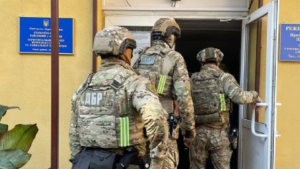
A total of 76.7% of Ukrainians consider the system of territorial recruitment and social support centres to be the most affected by corruption.
This is evidenced by the results of a sociological survey conducted by the Politarena publication jointly with the Active Group company on 1 August 2026.
According to the survey, 82.6% of respondents believe that the level of corruption in Ukraine has increased since 2022. A decline was reported by 6.6% of respondents, while 10.8% were unable to decide on an answer.
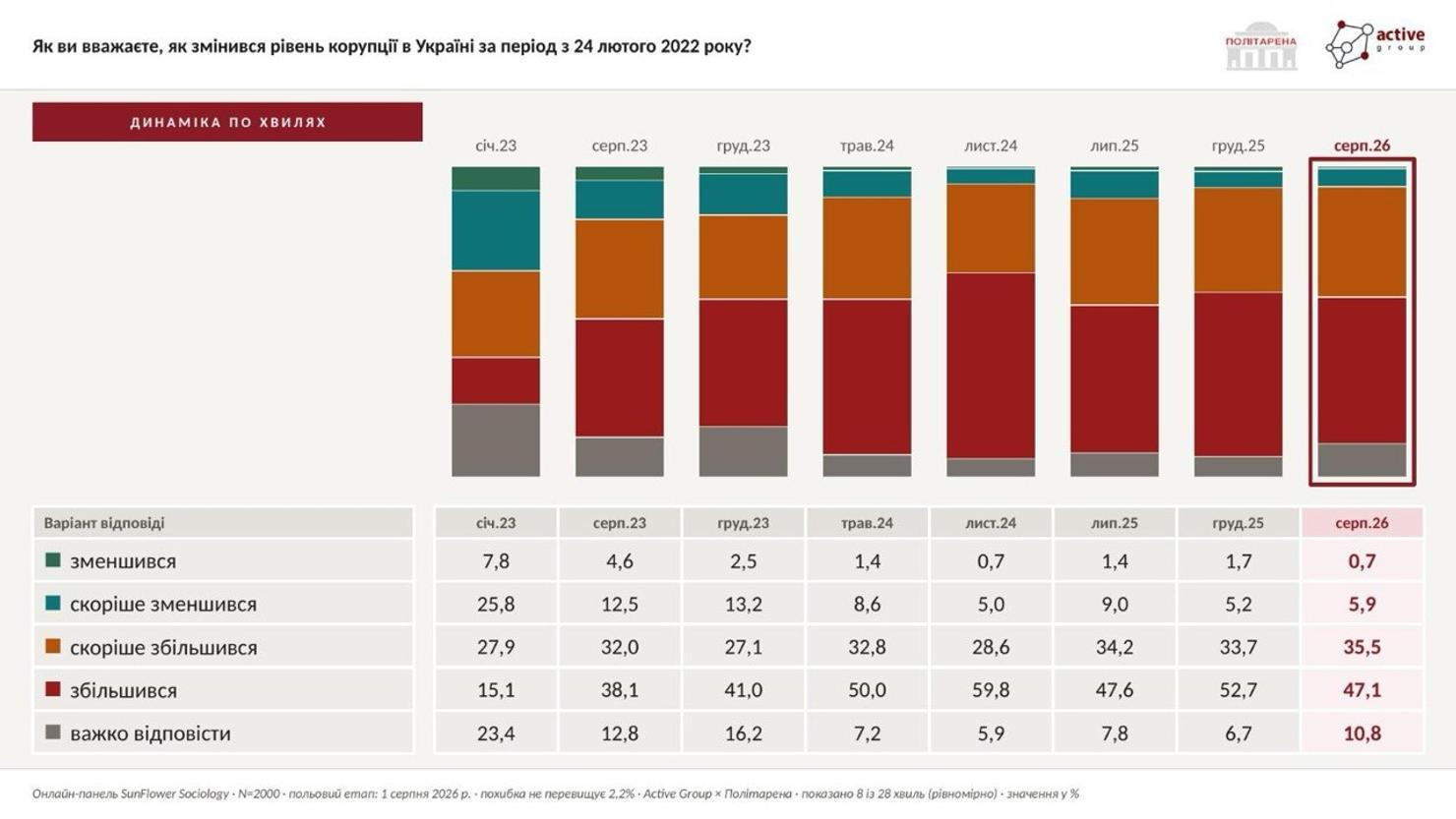
Compared with January 2023, Ukrainians’ assessments have deteriorated significantly. At that time, 43% of respondents spoke of an increase in the level of corruption, while 33.6% spoke of its decrease.
Territorial recruitment and social support centres ranked first among the structures that Ukrainians consider the most corrupt, with a figure of 76.7%. In October 2024, 71.3% of respondents expressed this opinion.
The judicial system ranked second, with 62.2% of respondents calling it corrupt, compared with 71.2% in 2024. Law enforcement agencies ranked third with 59.1%, compared with 67.7% in 2024.
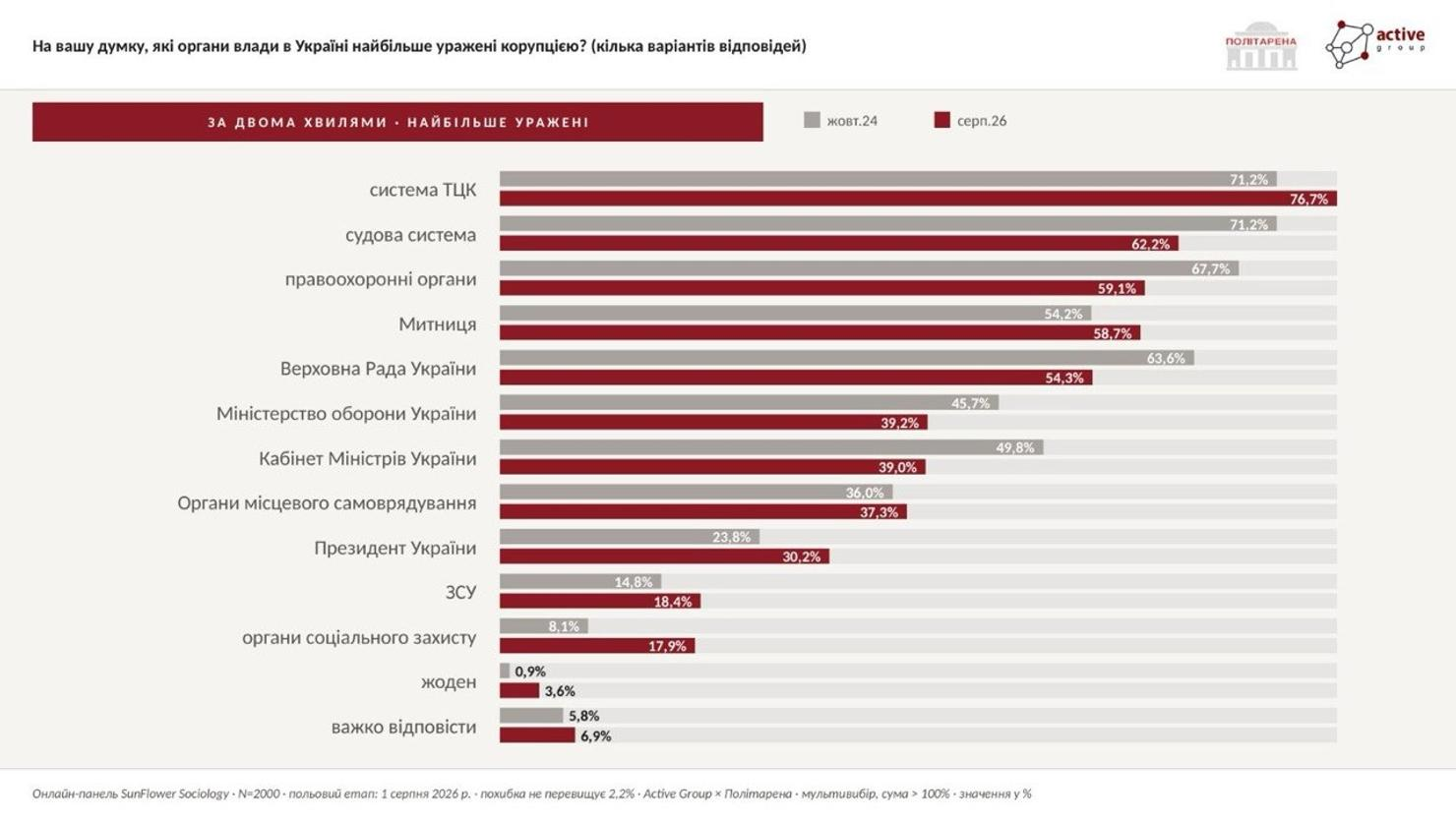
The Ministry of Defence of Ukraine is considered corrupt by 39.2% of survey participants, the Cabinet of Ministers by 39%, and local self-government bodies by 37.3%.
A total of 30.2% of respondents included President of Ukraine Volodymyr Zelenskyy among corrupt institutions and officials. The Armed Forces of Ukraine were described as corrupt by 18.4% of respondents, while social protection bodies were named by 17.9%.
Research methodology: the study was conducted using the SunFlower Sociology online panel. Method: self-completion of questionnaires by Ukrainian citizens aged 18 and over. Sample: 2,000 questionnaires (representative by age, gender and region of Ukraine). The theoretical margin of error at a confidence probability of 0.95 does not exceed 2.2%. Data collection period: 1 August 2026. Median salary values were calculated among those who provided a substantive response, using linear interpolation within the intervals; the extreme categories were taken as UAH 5,000 (“up to UAH 10,000”) and UAH 150,000 (“over UAH 150,000”).
The five largest diesel fuel importers in Ukraine accounted for approximately half of all foreign supplies in July 2026, according to data from the A-95 Consulting Group.
A total of 134 companies imported diesel fuel during the month, but the top five accounted for approximately 280,000 tonnes out of the total volume of 562,000 tonnes. Thus, their combined share amounted to approximately 49.8% of the import market.
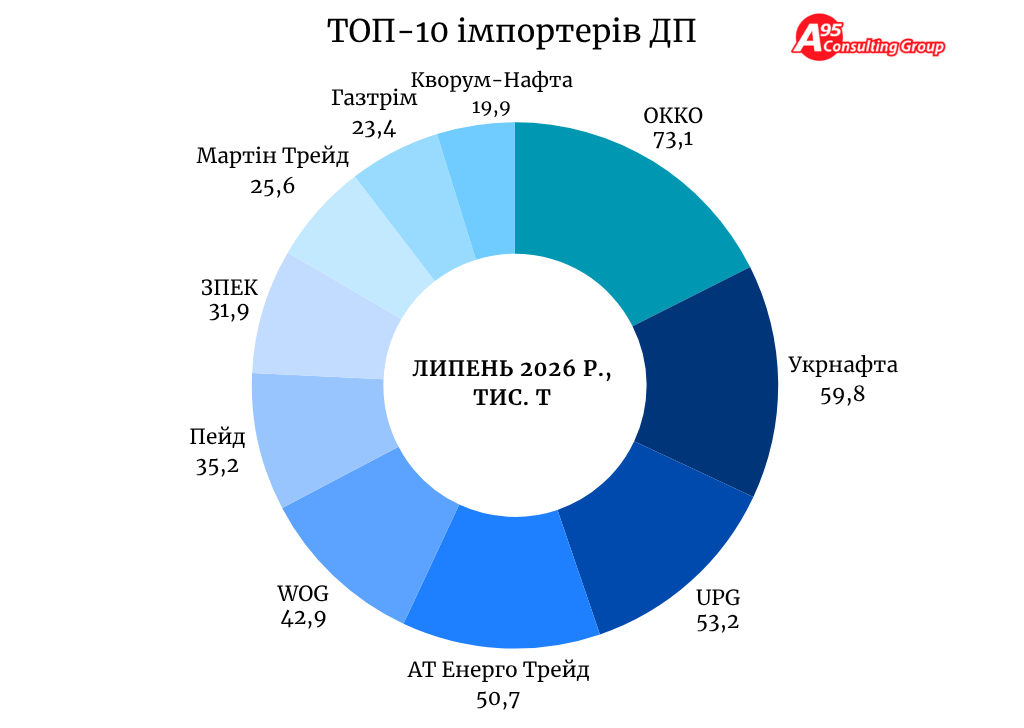
The OKKO Group was the largest importer, bringing in 73,100 tonnes of diesel fuel. Its supplies increased by 32% compared with July last year.
The state-owned Ukrnafta ranked second with 59,800 tonnes. The company demonstrated significantly stronger growth, increasing its imports 2.4-fold compared with July 2025.
UPG ranked third with a volume of 53,200 tonnes.
AT Energo Trade ranked fourth with 50,700 tonnes, while WOG placed fifth with 42,900 tonnes. These figures are presented in the A-95 infographic showing the top 10 diesel fuel importers for July.
Thus, OKKO and Ukrnafta alone accounted for almost 133,000 tonnes, or approximately 24% of total monthly imports.
At the same time, the highest growth rate among market participants was demonstrated not by a company in the top five, but by Zakhidna Palyvno-Enerhetychna Kompaniia (ZPEK). It increased its supplies 5.3-fold to 31,900 tonnes.
The ten largest importers also included companies with supply volumes ranging from approximately 20,000 to 35,000 tonnes.
The growing concentration of major suppliers is taking place against the backdrop of an overall increase in imports. In July, Ukraine imported 562,000 tonnes of diesel fuel, 5% more than a year earlier.
However, as A-95 Director Serhii Kuiun noted, even these volumes proved insufficient to meet the sharply increased demand. The market experienced a diesel fuel shortage due to a price-driven buying rush, increased activity among industrial and private buyers, and growing fuel consumption in the transport sector.
A-95 expects a more balanced situation in August as a result of increased supplies and lower global fuel prices.
Source: A-95 Consulting Group, Experts Club

The “TAS Agro” agricultural holding has completed the harvest of early grain and oilseed crops on a total area of 33,500 hectares, the company’s press service reported.
Winter wheat was harvested from 21,000 hectares with an average yield of 5.8 metric tons per hectare. Winter rapeseed was harvested from 12,500 hectares with an average yield of 3.6 metric tons per hectare.
“This year’s rapeseed harvest was one of the most impressive results of the season. The company used strip-till technology across all its fields, which—combined with precise planning, high-quality crop protection, and the team’s prompt decision-making—enabled us to achieve high yield figures,” the statement noted.
As the company clarified, part of the rapeseed harvest has already been sold in western markets, while another portion will be sent for processing and subsequent export. TAS Agro plans to sell wheat using a flexible model depending on the price ratio between crops and market conditions.
The company has already begun preparations for planting winter rapeseed.
The “TAS Agro” agricultural holding is part of the “TAS” Group, which was founded in 1998. Its business interests span the financial sector (banking and insurance segments) and the pharmaceutical industry, as well as manufacturing, real estate, and venture capital projects.
Serhiy Tihipko is the founder of “TAS” and the beneficial owner of the “TAS Agro” agricultural holding.
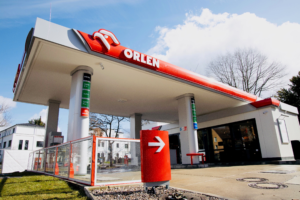
Polish company ORLEN S.A. supplied Ukraine with a total of 137,000 tonnes of diesel fuel from its refineries in Poland and Lithuania in July 2026, retaining its status as the largest corporate supplier of the resource to the Ukrainian market.
The company’s supply volume increased by 25% compared with July 2025 and by 61% compared with July 2024, according to data from the A-95 Consulting Group.
In total, Ukraine imported 562,000 tonnes of diesel fuel in July. Thus, ORLEN accounted for about 24.4% of total monthly imports, or virtually every fourth tonne of diesel imported into the country.
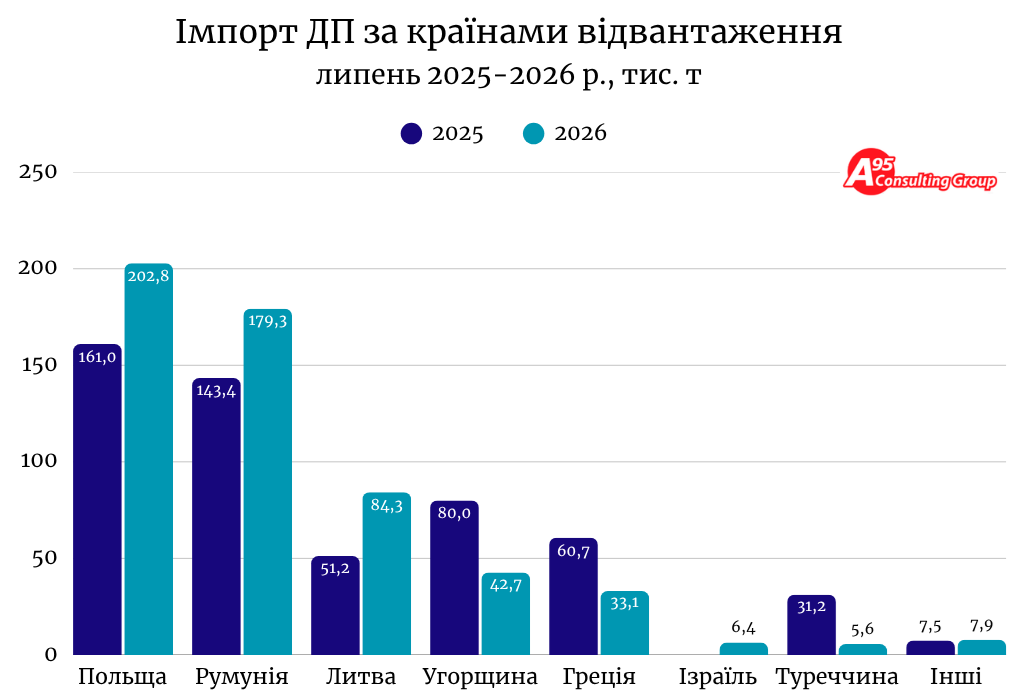
The growth in ORLEN’s supplies is taking place alongside the increasing role of the Polish and Lithuanian routes in Ukraine’s fuel logistics.
In July, 202,800 tonnes of diesel fuel were imported from Poland, compared with 161,000 tonnes a year earlier, representing growth of about 26%. Supplies from Lithuania increased even faster—by 65%, from 51,200 tonnes to 84,300 tonnes.
A-95 Director Serhii Kuiun attributes the increased pressure on the Polish route primarily to the record shallowing of the Danube and security risks that complicated traditional logistics via the southern route.
At the same time, despite a 5% year-on-year increase in total imports, the Ukrainian market faced a diesel fuel shortage in July. Among the reasons, A-95 cites rising global prices following a renewed escalation in the Middle East, increased demand from industrial and private buyers, and higher fuel consumption due to the rerouting of part of agricultural exports to road and rail transport.
In August, analysts expect the situation to normalise thanks to lower global prices for petroleum products and increased supplies.
Source: A-95 Consulting Group, Experts Club



