

The agricultural holding KSG Agro has completed the harvest of winter barley, winter wheat, and spring barley on a total area of 4,975 thousand hectares, the company’s press service reported.
According to the report, winter barley was harvested on 562 hectares, winter wheat on 3,700 hectares, and spring barley on 699 hectares.
“Excessive moisture negatively affected the quality of part of the wheat crop; however, thanks to the coordinated efforts of our production teams, we were able to organize the process in such a way as to make the most efficient use of every weather window for harvesting the grain,” the press service quoted Vitaliy Nekhay, head of the crop production division, as saying.
The company reported that 12 Claas Lexion 480 and 560 combine harvesters were used during the harvest, along with up to 30 trucks to transport the crop.
As previously reported, the agricultural holding KSG Agro intends to invest over 25 million UAH in creating an autonomous water supply system for one of its pig farms and plans to fully supply it with water from its own sources by the end of 2026.
KSG Agro is a vertically integrated holding company engaged in pig farming, as well as the production, storage, processing, and sale of grains and oilseeds. The company’s land bank in the Dnipropetrovsk and Kherson regions totals approximately 21,000 hectares. The agricultural holding is among the top five largest pork producers in Ukraine.
Serhiy Kasyanov remains the ultimate beneficiary of the holding company; through Olbis Investment LTD SA, he owns 47.83% of the shares, while 47.57% of the shares are freely traded on the Warsaw Stock Exchange.

Due to reduced availability of liquefied natural gas (LNG) on the European market, Belgium switched entirely to importing this fuel from Russia in July, a move driven by supply disruptions and high gas prices, according to Bloomberg.
Total LNG shipments to Belgium in July fell by more than 40% compared to the same period last year. At the same time, the country purchased about 0.4 million metric tons of this fuel from Russia, although the volume of Russian imports was lower than in early 2026.
One reason for the increased role of Russian LNG was disruptions in fuel supplies from the Middle East due to shipping problems in the Strait of Hormuz. At the same time, most European buyers were postponing LNG purchases for winter stockpiles due to high gas prices.
“Europe received 16% more Russian LNG in the first half of 2026 compared to the same period the previous year, paying a total of 5.96 billion euros ($6.9 billion). The largest buyers were France, Belgium, and Spain,” the publication reports, citing data from the German nongovernmental organization Urgewald.
Low gas storage levels ahead of the winter season posed an additional challenge for Europe—they are the lowest for this period since records began in 2009.
According to Bloomberg, the last time Russia was the sole supplier of LNG to Belgium was in early 2021—before Russia’s full-scale invasion of Ukraine and after European economies had begun to recover from the COVID-19 pandemic.
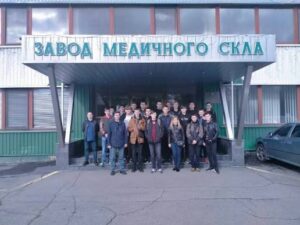
Poltava Medical Glass Plant JSC (PMGP, Poltava) saw its net profit decline by 19% in 2025 compared to 2024—to 105.564 million UAH—and by 30.5% in the January–June 2026 period compared to the same period in 2025, to 45.204 million UAH. As the company reported in the NSSMC’s disclosure system, its net sales revenue in 2025 decreased by 3.52% compared to 2024—to 364.281 million UAH, while in the first half of 2026, revenue grew by 31.76% compared to the same period in 2025, reaching 231.01 million UAH.
According to the company, the main export markets outside Ukraine in 2025 were Kazakhstan, to which products worth 51.503 million UAH were shipped; Georgia (3.732 million UAH); Turkey (3.233 million UAH); and Moldova (1.258 million UAH). In total, products worth 61.369 million UAH were exported during this period, which is 2.29% more than the previous year.
In the first three months of this year, the plant manufactured 89,488 million ampoules and shipped 150.923 million units worth 107.4 million UAH. Specifically, in January–March, ampoules were exported to Kazakhstan, Georgia, Turkey, Moldova, and Uzbekistan. The volume of exports increased by 32%. The company generated 5.402 million UAH from the sale of oxygen and nitrogen.
The cost of goods sold amounted to 70.333 million UAH; the company’s revenue from core and operating activities for the first quarter of 2026 totaled 120.232 million UAH, with net income of 21.154 million UAH.
As previously reported, in July 2025, Oleksandr Nekrasov, who owned nearly 53.7% of PZMS’s shares, gifted this stake to his relative, Leonid Oleksandrovych Nekrasov, who had previously held more than 6% of the company’s shares; following the gift, his stake exceeded 59.7% of the company’s authorized capital.
Alexander, Leonid, and Konstantin Alexandrovich Nekrasov, in particular, are co-owners of the pharmaceutical manufacturer “Lubnyfarm.”
According to information on its website, the Poltava Medical Glass Plant is Ukraine’s leading manufacturer of ampoules for pharmaceuticals.

Ukraine is beginning to implement mandatory IMEI declaration for mobile phones upon import; the relevant order has already been signed by the Ministry of Finance, according to Artem Shevchenko, CEO of “Citrus.”
“In my view, this is the most important decision for the Ukrainian mobile phone market in recent years. The order has already been signed by the Ministry of Finance of Ukraine and registered by the Ministry of Justice of Ukraine. This means that the decision has already been made and the practical implementation phase is beginning,” he said on LinkedIn.
Shevchenko added that, according to estimates by the Bureau of Economic Security (BES), this change in regulations could generate over 5 billion UAH in additional revenue for the state budget annually and significantly reduce opportunities for “gray market” smartphone imports. The “Citrus” team actively participated in consultations with the EBS regarding this initiative, discussing the technical aspects of implementation and mechanisms that will help make the new system as effective as possible.
Until now, the IMEI was not specified during customs clearance, which meant the state was unable to track the path of a specific mobile phone from the moment of its import to its sale to the end consumer.
“Now the foundation for such a system has been laid. The first stage is mandatory IMEI declaration upon import. The next step should be to include the IMEI on the fiscal receipt. The BEB is already working on this mechanism in collaboration with the Ministry of Finance of Ukraine and the State Tax Service of Ukraine. In effect, this means that every mobile phone will have a traceable path from the moment it crosses the border until it is sold. “Once this mechanism is fully implemented, the legal sale of mobile phones without a match between the IMEI declared at the time of import and the IMEI indicated on the fiscal receipt will become virtually impossible,” Shevchenko said.
On July 30, the Supervisory Board of Insurance Company “Euroins Ukraine” (Kyiv) terminated the powers of CEO Andriy Yakovenko based on his request to be transferred to the position of First Deputy CEO, the company reported via the NSSMC system.
It was also noted that Miroslav Boichin has been appointed CEO of the company. Previously, he served as chairman of the supervisory board of Euroins Ukraine from 2024 to 2026 and as CEO of PJSC “European Travel Insurance” (ETC Kyiv) from 2021 to 2026.
The company reports that, effective July 30, 2026, Andriy Yakovenko has been appointed first deputy chairman of the board of Euroins Ukraine Insurance Company.
By a resolution of the company’s extraordinary meeting on July 30, the powers of the entire supervisory board were terminated. Specifically, the terms of office of Supervisory Board Chair Miroslav Boichin and Supervisory Board members Todorka Georgieva and Ivan Hristov were terminated. Yanko Nikolov was appointed Chair of the Supervisory Board, and Todorka Georgieva and Ivan Hristov were appointed as members of the Supervisory Board.
Euroins Ukraine Insurance Company is a general insurance company. It has been operating in the Ukrainian market since 1992. It is part of the Bulgarian insurance group Euroins, one of the largest independent insurance groups in Central, Eastern, and Southeastern Europe.
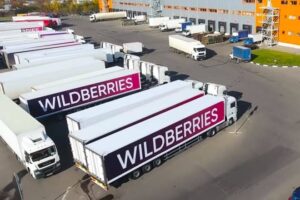
The Russian marketplace Wildberries plans to commission two large logistics complexes in Kazakhstan with a total area of over 260,000 square meters in the first quarter of 2027, according to Kazakhstan’s Minister of Trade and Integration Arman Shakkaliyev.
“In the first quarter of next year, the company is carrying out construction and installation work on a facility of about 160,000 square meters in Almaty. And in Astana, there will be a facility of about 100,000 square meters,” the minister said at a briefing at the Kazakh government on August 4.
According to him, these projects are part of the previously announced development program for Wildberries’ Kazakhstani division. Currently, the company leases approximately 46,000 square meters of warehouse space in the country.
Shakkaliyev also noted that Wildberries has not submitted any new requests to the Kazakhstani authorities regarding the search for or opening of additional warehouse facilities.
However, official data on the distribution of space among cities contradicts the minister’s statements. A statement published by the Kazakh government indicates that the Wildberries logistics hub currently under construction in Astana will have an area of 160,000 square meters, not 100,000 square meters.
Investments in the Astana complex are estimated at 47.7 billion tenge. The project is expected to create approximately 6,000 jobs, and construction is also scheduled for completion in the first quarter of 2027.
Representatives of the merged company RWB had previously reported that a 160,000-square-meter facility is under construction in Astana, and a complex covering more than 100,000 square meters is being built near Almaty. Thus, the total area of the two centers will indeed exceed 260,000 square meters, although the final distribution of space between the cities still needs to be clarified.
The cost of the Wildberries logistics center in Almaty was previously estimated by the Kazakhstani authorities at 43.2 billion tenge. The exact completion date for this facility was not specified in the relevant announcement.
The new centers are expected to expand the marketplace’s capacity for receiving, storing, sorting, and delivering goods within Kazakhstan. Expanding the local warehouse network may also reduce delivery times and increase the number of Kazakhstani entrepreneurs operating through the platform.
In 2025, the volume of retail e-commerce in Kazakhstan, including marketplaces, reached 3.769 trillion tenge. Sales through marketplaces accounted for 3.238 trillion tenge, or 86% of the total e-commerce market.
Wildberries is one of Kazakhstan’s largest e-commerce platforms. Previously, the Ministry of Trade reported on plans by Wildberries and Ozon to build three fulfillment centers in Astana and Almaty with a total area of 291,000 square meters and a combined investment of 101.3 billion tenge.



