
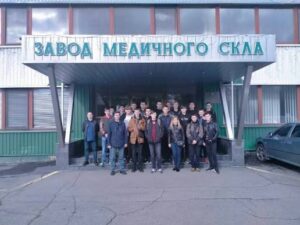
Poltava Medical Glass Plant JSC (PMGP, Poltava) saw its net profit decline by 19% in 2025 compared to 2024—to 105.564 million UAH—and by 30.5% in the January–June 2026 period compared to the same period in 2025, to 45.204 million UAH. As the company reported in the NSSMC’s disclosure system, its net sales revenue in 2025 decreased by 3.52% compared to 2024—to 364.281 million UAH, while in the first half of 2026, revenue grew by 31.76% compared to the same period in 2025, reaching 231.01 million UAH.
According to the company, the main export markets outside Ukraine in 2025 were Kazakhstan, to which products worth 51.503 million UAH were shipped; Georgia (3.732 million UAH); Turkey (3.233 million UAH); and Moldova (1.258 million UAH). In total, products worth 61.369 million UAH were exported during this period, which is 2.29% more than the previous year.
In the first three months of this year, the plant manufactured 89,488 million ampoules and shipped 150.923 million units worth 107.4 million UAH. Specifically, in January–March, ampoules were exported to Kazakhstan, Georgia, Turkey, Moldova, and Uzbekistan. The volume of exports increased by 32%. The company generated 5.402 million UAH from the sale of oxygen and nitrogen.
The cost of goods sold amounted to 70.333 million UAH; the company’s revenue from core and operating activities for the first quarter of 2026 totaled 120.232 million UAH, with net income of 21.154 million UAH.
As previously reported, in July 2025, Oleksandr Nekrasov, who owned nearly 53.7% of PZMS’s shares, gifted this stake to his relative, Leonid Oleksandrovych Nekrasov, who had previously held more than 6% of the company’s shares; following the gift, his stake exceeded 59.7% of the company’s authorized capital.
Alexander, Leonid, and Konstantin Alexandrovich Nekrasov, in particular, are co-owners of the pharmaceutical manufacturer “Lubnyfarm.”
According to information on its website, the Poltava Medical Glass Plant is Ukraine’s leading manufacturer of ampoules for pharmaceuticals.

Ukraine is beginning to implement mandatory IMEI declaration for mobile phones upon import; the relevant order has already been signed by the Ministry of Finance, according to Artem Shevchenko, CEO of “Citrus.”
“In my view, this is the most important decision for the Ukrainian mobile phone market in recent years. The order has already been signed by the Ministry of Finance of Ukraine and registered by the Ministry of Justice of Ukraine. This means that the decision has already been made and the practical implementation phase is beginning,” he said on LinkedIn.
Shevchenko added that, according to estimates by the Bureau of Economic Security (BES), this change in regulations could generate over 5 billion UAH in additional revenue for the state budget annually and significantly reduce opportunities for “gray market” smartphone imports. The “Citrus” team actively participated in consultations with the EBS regarding this initiative, discussing the technical aspects of implementation and mechanisms that will help make the new system as effective as possible.
Until now, the IMEI was not specified during customs clearance, which meant the state was unable to track the path of a specific mobile phone from the moment of its import to its sale to the end consumer.
“Now the foundation for such a system has been laid. The first stage is mandatory IMEI declaration upon import. The next step should be to include the IMEI on the fiscal receipt. The BEB is already working on this mechanism in collaboration with the Ministry of Finance of Ukraine and the State Tax Service of Ukraine. In effect, this means that every mobile phone will have a traceable path from the moment it crosses the border until it is sold. “Once this mechanism is fully implemented, the legal sale of mobile phones without a match between the IMEI declared at the time of import and the IMEI indicated on the fiscal receipt will become virtually impossible,” Shevchenko said.
On July 30, the Supervisory Board of Insurance Company “Euroins Ukraine” (Kyiv) terminated the powers of CEO Andriy Yakovenko based on his request to be transferred to the position of First Deputy CEO, the company reported via the NSSMC system.
It was also noted that Miroslav Boichin has been appointed CEO of the company. Previously, he served as chairman of the supervisory board of Euroins Ukraine from 2024 to 2026 and as CEO of PJSC “European Travel Insurance” (ETC Kyiv) from 2021 to 2026.
The company reports that, effective July 30, 2026, Andriy Yakovenko has been appointed first deputy chairman of the board of Euroins Ukraine Insurance Company.
By a resolution of the company’s extraordinary meeting on July 30, the powers of the entire supervisory board were terminated. Specifically, the terms of office of Supervisory Board Chair Miroslav Boichin and Supervisory Board members Todorka Georgieva and Ivan Hristov were terminated. Yanko Nikolov was appointed Chair of the Supervisory Board, and Todorka Georgieva and Ivan Hristov were appointed as members of the Supervisory Board.
Euroins Ukraine Insurance Company is a general insurance company. It has been operating in the Ukrainian market since 1992. It is part of the Bulgarian insurance group Euroins, one of the largest independent insurance groups in Central, Eastern, and Southeastern Europe.

The Russian marketplace Wildberries plans to commission two large logistics complexes in Kazakhstan with a total area of over 260,000 square meters in the first quarter of 2027, according to Kazakhstan’s Minister of Trade and Integration Arman Shakkaliyev.
“In the first quarter of next year, the company is carrying out construction and installation work on a facility of about 160,000 square meters in Almaty. And in Astana, there will be a facility of about 100,000 square meters,” the minister said at a briefing at the Kazakh government on August 4.
According to him, these projects are part of the previously announced development program for Wildberries’ Kazakhstani division. Currently, the company leases approximately 46,000 square meters of warehouse space in the country.
Shakkaliyev also noted that Wildberries has not submitted any new requests to the Kazakhstani authorities regarding the search for or opening of additional warehouse facilities.
However, official data on the distribution of space among cities contradicts the minister’s statements. A statement published by the Kazakh government indicates that the Wildberries logistics hub currently under construction in Astana will have an area of 160,000 square meters, not 100,000 square meters.
Investments in the Astana complex are estimated at 47.7 billion tenge. The project is expected to create approximately 6,000 jobs, and construction is also scheduled for completion in the first quarter of 2027.
Representatives of the merged company RWB had previously reported that a 160,000-square-meter facility is under construction in Astana, and a complex covering more than 100,000 square meters is being built near Almaty. Thus, the total area of the two centers will indeed exceed 260,000 square meters, although the final distribution of space between the cities still needs to be clarified.
The cost of the Wildberries logistics center in Almaty was previously estimated by the Kazakhstani authorities at 43.2 billion tenge. The exact completion date for this facility was not specified in the relevant announcement.
The new centers are expected to expand the marketplace’s capacity for receiving, storing, sorting, and delivering goods within Kazakhstan. Expanding the local warehouse network may also reduce delivery times and increase the number of Kazakhstani entrepreneurs operating through the platform.
In 2025, the volume of retail e-commerce in Kazakhstan, including marketplaces, reached 3.769 trillion tenge. Sales through marketplaces accounted for 3.238 trillion tenge, or 86% of the total e-commerce market.
Wildberries is one of Kazakhstan’s largest e-commerce platforms. Previously, the Ministry of Trade reported on plans by Wildberries and Ozon to build three fulfillment centers in Astana and Almaty with a total area of 291,000 square meters and a combined investment of 101.3 billion tenge.

Ukraine ranked 20th among Uzbekistan’s largest trading partners for the period from January through June 2026, according to data from the National Statistics Committee of Uzbekistan.
Foreign trade turnover between Ukraine and Uzbekistan over the six-month period totaled $206.1 million, compared to $151.9 million during the same period in 2025. Thus, bilateral trade increased by 35.7%.
Ukrainian exports to Uzbekistan totaled approximately $171.9 million, while Uzbek exports to Ukraine were estimated at $34.2 million. Ukraine’s trade surplus with Uzbekistan reached approximately $137.7 million.
Ukraine accounted for about 0.5% of Uzbekistan’s total foreign trade turnover.
Overall, Uzbekistan’s foreign trade turnover in January–June 2026 amounted to about $41 billion.
China remained the country’s largest trading partner, accounting for 23.1% of total trade, or about $9.5 billion. Russia ranked second with a share of 17.1%, corresponding to approximately $7 billion.
Uzbekistan’s top five trading partners also included Kazakhstan with a 6.8% share, Turkey with 3.4%, and Afghanistan with 2.6%.
Separately, Uzbekistan’s Ministry of Investment, Industry, and Trade reported that the country’s exports, excluding gold, totaled $14.4 billion in the first half of the year, an increase of 32.2%, or $3.5 billion, compared to the same period last year.
The main market for Uzbek goods and services was Russia, to which $2.4 billion worth of products were shipped. Exports to China totaled $2.18 billion, to Afghanistan – $961 million, to Kazakhstan – $715 million, to France – $707 million, to Turkey – $516 million, and to Kyrgyzstan – $453 million.
The main drivers of growth in Uzbek exports were services ($5.7 billion), light industrial goods ($1.66 billion), metallurgical and mining products ($1.3 billion), fruits and vegetables ($875 million), and construction materials ($714 million).
Uzbekistan’s export geography expanded to include seven additional countries and territories in the first half of the year, bringing the total to 211 countries and territories.
Sources: National Committee on Statistics of Uzbekistan and a press release from the Ministry of Investment, Industry, and Trade of Uzbekistan dated July 29, 2026.
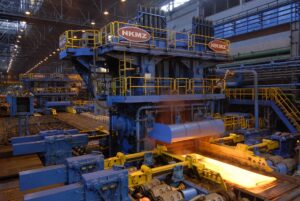
The Novokramatorsk Machine-Building Plant (NKMZ, Kramatorsk, Donetsk Oblast) ended the first half of 2026 with a loss of 228.2 million UAH, a 3.7-fold increase compared to January–June 2025
According to the financial report published on the plant’s website, net sales revenue for this period fell by more than half—to 371.4 million UAH.
The gross loss amounted to 63.4 million UAH, compared to a profit of 173.3 million UAH in January–June 2025, while the operating loss reached 275 million UAH (a 5.5-fold increase).
Products worth UAH 351.7 million, or 94.7% of total revenue, were exported during the reporting period, while the volume of exports fell by more than half.
Specifically, exports to the main export market, India, fell by 47.2% to 166.8 million UAH; exports to Slovakia dropped by nearly 20% to 45.5 million UAH; by a factor of 3.2 to Romania—to 3.7 million UAH—and there were no shipments to Bulgaria (63.4 million UAH in the first half of 2025), Lithuania (36.2 million UAH), or France (6.1 million UAH).
In contrast, shipments to Poland increased 3.6-fold—to 44.9 million UAH, and to Luxembourg by 47.5%—to 63.9 million UAH.
In the second quarter, the volume of products sold amounted to 194.6 million UAH, including 189.7 million UAH for export; the volume of marketable products was 99.9 million UAH, including 95.0 million UAH for export. The loss amounted to 112.7 million UAH (compared to 88.4 million UAH a year ago).
“Despite the difficult economic situation and martial law in Ukraine, NKMZ will continue to maintain its equipment and workforce and develop projects in the field of research and innovation,” the report states.
At the same time, the plant notes that operating amid Russia’s military aggression against Ukraine, the proximity of the front lines, logistical challenges, and disruptions in energy supply have led to a significant reduction in production volumes and irregular operations.
Under these conditions, the company has temporarily suspended production since June of this year. According to information on the company’s website, on June 12 of this year, it refuted media reports regarding the relocation of NKMZ to Perechyn (Zakarpattia Oblast).
“PJSC ‘NKMZ’ is not relocating the enterprise to the city of Perechyn, is not moving its production facilities, and is not implementing any projects related to the enterprise’s relocation to Zakarpattia Oblast,” reads a statement from the press service on the website.
NKMZ is a key employer in Kramatorsk and Ukraine’s largest manufacturer of rolled steel, metallurgical, forging and pressing, hydraulic, mining, hoisting and transport, and railway equipment.
The plant ended 2025 with a loss of 127 million UAH, whereas in 2024, net profit amounted to 36.3 million UAH, following a 29.6% increase in net revenue to 1.49 billion UAH.
As of July 1, 2026, the average headcount of full-time employees stood at 4,018—a decrease of 12.7%, or 587 people, compared to the previous year.



