

A delegation from the Japanese Red Cross and representatives of the National Committee of the Ukrainian Red Cross (URC) familiarized themselves with the implementation of joint humanitarian initiatives in the Ivano-Frankivsk region.
“As part of the visit, the delegation visited the Ivano-Frankivsk Regional Clinical Cardiology Center and the Pohonya Psychoneurological Residential Care Facility, where they observed the work of a mobile medical team operating as part of the ‘Comprehensive Support for Primary Health Care in the Ivano-Frankivsk Region’ program in collaboration with partner Medics Opika,” – the UCC reported on Facebook on Wednesday.
The guests paid particular attention to the mobile medical teams’ visits to geriatric facilities in the region. The purpose of these visits is to provide medical care to palliative care patients who require constant medical supervision due to chronic and severe illnesses. During these visits, patients receive primary medical care, necessary consultations, and support from specialized professionals.
The delegation also familiarized itself with the activities of the Ivano-Frankivsk Regional Organization of the Ukrainian Red Cross. During the meetings, they discussed the results of ongoing programs, experiences of cooperation, and prospects for the further development of joint humanitarian projects aimed at supporting the region’s population.
“Cooperation with the Japanese Red Cross is a vital component of the development of the Ukrainian Red Cross’s humanitarian and medical programs in the Ivano-Frankivsk region. Thanks to the support of our partners, we are able to expand access to quality primary health care, develop the work of mobile medical teams, and provide comprehensive support to people who, due to their health condition, require special attention and care,” the Ukrainian Red Cross noted.
JAPAN, MEDICINE, Prykarpattia, RED CROSS, Ukrainian Red Cross
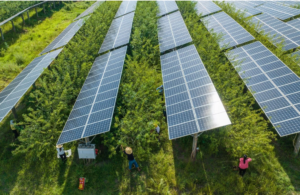
China will gradually introduce a consumption tax on lithium and lithium-ion batteries, as well as solar cells, which have been exempt from taxation since 2015, according to the Xinhua News Agency.
Mercury-free, nickel-metal hydride, lithium, and lithium-ion batteries, as well as vanadium flow batteries, will be taxed at a rate of 2% starting September 1, 2026. Starting in September 2027, the rate will increase to 4%.
For photovoltaic, or solar, cells, a 2% tax will take effect on April 1, 2027, and will also be raised to 4% starting in April 2028.
The new rules were announced by China’s Ministry of Finance, the General Administration of Customs, and the State Taxation Administration.
The introduction of the tax could increase the production costs of batteries and solar cells in China. If manufacturers pass on the additional costs entirely to buyers, selling prices could rise by approximately 2% in the initial phase and up to 4% once the rate is fully implemented.
However, the actual price increase will depend on competition, corporate profitability, and contracts with buyers. Chinese manufacturers may absorb part of the costs themselves to avoid losing market share in both domestic and foreign markets.
The changes will potentially affect the cost of electric vehicles, energy storage systems, and solar power plants, as batteries and photovoltaic modules are among the key components of such projects. At the same time, due to the high proportion of other costs, the price of a finished electric vehicle or solar power plant will not necessarily increase by the full 4%.
Some promising technologies will remain temporarily exempt from the tax until December 2028. These include sodium-ion and solid-state batteries, fuel cells, as well as perovskite, tandem, and gallium arsenide solar cells.
China currently levies a 4% consumption tax on most battery products. At the same time, lithium and lithium-ion batteries, as well as solar and fuel cells, have been exempt since 2015.
This policy has facilitated rapid expansion of production capacity and helped Chinese companies become global leaders. However, the excess supply has simultaneously intensified price competition and reduced profitability for some manufacturers.
Analysts at Citic Securities estimate that the tax changes could generate an additional 45 billion yuan, or about $6.6 billion, in revenue for the Chinese government.
Following the announcement of the new rules, shares of solar cell manufacturer Longi Green Energy Technology rose 2.1%, JinkoSolar’s rose 4%, and those of CATL, the world’s largest battery manufacturer, rose 4.6%.

Muğla Province, home to the popular resorts of Bodrum, Marmaris, and Fethiye, remains Turkey’s most expensive region for buying a home. As of June 2026, the average price per square meter there reached 85,182 thousand Turkish lira, or approximately $1,850.
The average price of a residential property in Muğla was 11.074 million lira, which is equivalent to approximately $240,000, according to the June report by Emlakjet and Endeksa.
Istanbul took second place in terms of price per square meter, with an average of 63,788 thousand lira. The average property in Turkey’s largest city is valued at approximately 7.017 million lira.
Antalya ranks third, where a square meter costs an average of 55,264 thousand lira, and a property costs about 6.079 million lira. Next are Izmir, with 52,677 thousand lira per square meter, and Çanakkale, with 52,634 thousand lira.
Aydın also made the list of regions with the highest average property prices. The average housing price in the province, which includes the resort towns of Kuşadası and Didim, reached 6.782 million lira, with a price per square meter of 50,238 thousand lira.
High prices in coastal regions are driven by the concentration of resort real estate, limited land supply in the most sought-after locations, the development of premium projects, and demand from buyers in other regions of Turkey and abroad.
Nationwide, the average price per square meter of housing at the end of June was 40,944 thousand lira, while a standard property with an area of approximately 125 square meters cost 5.118 million lira, or roughly $111 thousand. Over the past year, prices in the national currency rose by 22.3%.
However, when adjusted for inflation, Turkish housing became 7.6% cheaper over the year. A real decline was recorded in all 30 of the country’s largest provinces. In Istanbul, inflation-adjusted prices fell by 5.5%; in Antalya, by 4.1%; in Ankara, by 3.5%; and in Izmir, by 9.5%.
The average payback period for rental investments in Turkey is estimated at 13 years. In Muğla, it reaches 18 years; in Antalya, 16 years; in Istanbul, 12 years; and in Ankara, 11 years. The longer payback period for resort properties is due to the high purchase price relative to long-term rental income.
In June 2026, 129,979 residential properties were sold in Turkey, which is 15.8% more than a year earlier. The number of mortgage transactions increased by 72.1% to 25,993.

At the Farnborough International Airshow (United Kingdom), BAE Systems signed a licensing agreement to support local production of the Light Gun artillery system in Ukraine, according to the company’s press office.
“The licensing agreement will provide access to technical information and support from BAE Systems necessary for the manufacture of the first test gun. This strategic partnership will facilitate the development of a modified version of the L119 light gun for use by the Armed Forces of Ukraine,” the statement said.
It is noted that the L119 is a 105-mm light howitzer developed by BAE Systems—a highly effective and proven towed artillery system valued for its mobility and reliability.
The agreement is based on BAE Systems’ long-term support for Ukraine and its collaboration with Ukrainian industry to strengthen the country’s sovereign defense capabilities. It reflects a shared commitment to developing a sustainable industrial base capable of providing long-term support to the Armed Forces of Ukraine.
“A robust defense capability depends on reliable strategic partnerships in the industrial sector. This agreement combines BAE Systems’ expertise in artillery with our strategic defense partner’s knowledge of Ukraine’s operational needs to support the development of sovereign defense capabilities where they are most needed. Supporting Ukraine is not just about supplying equipment. It is also about working together to build the industrial resilience, skills, and capabilities needed to ensure long-term defense capabilities,” said Giles Ambrose, Director of Engineering, Technology, and Strategy at BAE Systems.

According to “Serbian Economist”, the Hungarian government plans to allocate 3.55 trillion forints, or about 9.8 billion euros, by 2035 for the modernization of the national railway network.
Hungarian Prime Minister Péter Magyar and Minister of Transport and Investment Dávid Vitézi presented the program on July 22 at the Rakospalota-Újpest station in Budapest. Authorities are calling it one of the largest railway projects in the country’s history.
The program is designed to be implemented in several phases. Its main objectives will be to improve the reliability of transportation, reduce travel times, reconstruct tracks and stations, modernize the rolling stock, and develop international rail routes.
The government intends to ensure competitive rail service to all administrative centers in Hungary, modernize regional lines, and expand commuter service around Budapest and other major cities. Specific areas of focus will include the development of freight transport, the establishment of a rail link to Budapest Airport, and the integration of national and urban transportation systems.
It is planned to allocate 1.1 trillion forints from EU Cohesion Funds and 700 billion forints from the European Recovery and Resilience Facility (RRF) to implement the program. An additional 400 billion forints is planned to be raised through loans from the European Investment Bank, with a similar amount to be secured through concession projects. Approximately 950 billion forints will be allocated to projects under the next EU budget cycle for 2028–2034.
The government plans to purchase at least 35 new InterCity trains and 42 commuter electric trains, as well as begin renovating the country’s ten busiest train stations. The average age of MÁV trains and HÉV commuter trains is currently about 43 years, and 42% of the rail network is subject to significant speed restrictions.
On major routes, the government aims to increase the average speed to 100 km/h. Certain sections are planned to be upgraded to accommodate trains traveling at speeds of 160–200 km/h.

In Ukraine, 73,292 thousand births and 259,853 thousand deaths were registered from January through June 2026. Thus, for every newborn, there were nearly four deaths, whereas in the first half of 2025, the ratio was one to three.
This was reported by OpenDataBot on July 22, citing data from the Ministry of Justice of Ukraine.
The number of births in the first half of the year fell by 16% compared to the same period in 2025, when 86,795 thousand newborns were registered in Ukraine. Compared to the pre-war period, the birth rate has nearly halved.
On average, about 12,000 children were born each month in Ukraine throughout 2026. Ten years ago, the average monthly figure was about 32,000.
Boys accounted for 51% of newborns, and girls for 49%.



