

In 2027, Ukraine may begin the process of gradually raising electricity and gas rates for households after developing appropriate protection programs.
This is stated in the updated memorandum on Ukraine’s economic and financial policies under the Extended Fund Facility (EFF) program with the International Monetary Fund (IMF), following the results of its first review.
“The government has committed to conducting an assessment by the end of February 2027 of utility support programs aimed at protecting vulnerable households. Once appropriate protection programs have been developed, household tariffs should be gradually increased—this process can begin in 2027,” the document’s authors state.
According to the text of the memorandum, the goal of this process is to meet the needs for recovery and debt reduction in the energy sector, while full price liberalization will eventually be necessary to attract post-war investment.
“The Ukrainian government (IF-U) emphasized that tariff increases should occur only after an assessment and, if necessary, reform of existing social protection systems,” the authors of the document noted, among other things.
It is noted that large-scale quasi-fiscal measures in the energy sector and the existing tariff structure pose serious risks to investment, reconstruction, and the development of a stable energy supply and power grid.
According to preliminary expert estimates—which will be refined during future technical assistance—fixed energy tariffs that are below market rates—in particular, due to moratoriums imposed since the start of the war—cost at least 2.2% of GDP annually in the form of off-target subsidies resulting from the quasi-fiscal activities of state-owned energy enterprises, while targeted transfers for public utilities account for about 0.6% of GDP in the budget.
“Significant fiscal risks arise from fixed utility rates for households, which currently amount to about 55% of comparable supply contracts,” the document states.
As a result, the energy sector is increasingly relying on in-kind contributions, grants, and preferential financing to meet its needs for repairs and imports. For example, Naftogaz took on additional debt to finance repairs and imports, causing its debt to rise by 63% year-over-year in 2025. The government is currently seeking donor support to ensure the timely completion of necessary repair work and the implementation of plans to strengthen resilience, the authors of the document noted.

Ukrainian farmers received over 137 million UAH in government aid for maintaining breeding herds of goats and sheep as part of the second phase of the first stage of the program to support the development of livestock farming and agricultural processing, according to a press release from the Ministry of Agrarian Policy and Food.
According to the report, in July, 536 farms and other agricultural producers received funds through the Ukrainian State Fund for Support of Farming Enterprises.
Support is provided to producers who maintain between 5 and 500 breeding goats and/or sheep. The budget subsidy amounts to 2,000 UAH per head.
The Ministry noted that the funds are intended to help agricultural producers maintain their herds, support economic activity in rural communities, and contribute to the recovery of sheep and goat farming, whose herds, according to the Ministry, have declined by nearly 30% compared to the pre-war period.
The program is funded as part of the World Bank’s ARISE project, aimed at revitalizing Ukraine’s agricultural sector.
Applications can be submitted through the State Agrarian Register (DAR).
As previously reported, in February, agricultural producers submitted 1,621 applications through the State Agrarian Register (DAR) within two days to receive subsidies for maintaining goats and sheep, totaling 203.6 million UAH.
In June, as part of the first phase of the program for the development of livestock farming and agricultural processing, farmers received over 93 million UAH in state support for maintaining breeding herds of goats and sheep.
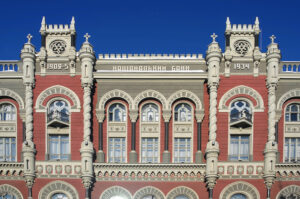
The National Bank of Ukraine has revoked the license of Prosto Leasing LLC to operate as a financial company authorized to engage in financial leasing, according to a statement on the regulator’s website.
The basis for this decision was the second violation within a single year of the mandatory requirement for “Prosto Leasing” to submit to the NBU an assurance report on its annual financial statements (reporting data), namely, a violation of the requirements of the Regulation on the Authorization of Financial Service Providers and the Conditions for Their Operation, approved by NBU Resolution No. 199.
As previously reported, on July 7, 2025, a corrective measure was imposed on the company in the form of a requirement to take steps to eliminate (correct) the violations identified during the supervisory review. The violation was rectified.
In 2026, “Prosto Leasing” committed a repeat violation (its second within a single year): it failed to submit to the National Bank an assurance report on its annual financial statements for 2025.
The decision to impose a corrective measure in the form of license revocation was adopted by the National Bank’s Committee on Supervision and Regulation of Non-Bank Financial Services Markets on July 20, 2026. It takes effect on the date the company is notified of the decision.
Prosto Leasing LLC is a Ukrainian financial company that has been operating in the operating and financial leasing market since August 2021. On February 19, 2024, the National Bank of Ukraine renewed the company’s license to provide financial leasing services and made the corresponding changes to the Register of Financial Institutions.

According to Serbian Economist, the Ukrainian documentary “Night Shift,” directed by Megumi Lim, has been selected for the competition program of the 39th Herceg Novi Film Festival, which will take place in Montenegro from August 22 to 28, 2026.
The festival’s documentary section will feature 26 films by filmmakers from various countries. Of these, 24 films will compete for the “Golden Mimosa” award, while two others will be screened out of competition. Screenings of the documentary program will take place from August 23 to 27 in the courtyard of writer Ivo Andrić’s house.
Ukraine will be represented by the film *Night Shift*, shot in 2025. Its director is Megumi Lim, a documentary filmmaker and journalist based in Kyiv who previously worked with international media outlets in Japan and China.
The 29-minute film tells the story of people who continue to work in Kharkiv during the nighttime curfew. The film’s protagonists are employees of public services and businesses who keep the city functioning amid regular Russian attacks. The filmmakers show how the war has changed Kharkiv’s nightlife and how residents maintain their usual rhythm despite the threats.
“Night Shift” marks Megumi Lim’s debut short documentary. In 2025, the film won the Audience Choice Award at the Kyiv International Short Film Festival and was also screened at several international film festivals.
The festival program in Herceg Novi also features documentaries from the United States, Norway, Greenland, Chad, Palestine, Slovenia, Bosnia and Herzegovina, Germany, Iran, the United Kingdom, Azerbaijan, Finland, France, Spain, Switzerland, Portugal, Colombia, Serbia, Georgia, Sweden, and Montenegro.
Vladimir Perović, the documentary program’s selector, noted that this year’s program focuses on the war in Ukraine, the situations in Palestine and Bosnia, climate change, the legacy of colonialism, historical memory, the status of women, and the challenges of coming of age.
The festival will take place under the slogan “All the Colors of Cinema” at several venues in Herceg Novi. In addition to the documentary section, the program includes regional feature-length films, European cinema, student films, television series, and events for film industry professionals.

Drinking up to five cups of caffeinated coffee a day is generally safe for most adults and may be associated with a reduced risk of several cardiovascular diseases, according to a new scientific statement from the American Heart Association (AHA).
The document was published on July 20, 2026, in the scientific journal Circulation. Its authors analyzed the results of studies on the effects of caffeine on blood pressure, cholesterol levels, heart rhythm, and the risk of stroke, coronary heart disease, heart failure, and type 2 diabetes.
For most adults, consuming up to 400 mg of caffeine per day is considered safe. This corresponds to approximately three to five standard cups of black coffee, each about 240 ml. However, the actual caffeine content can vary significantly depending on the type of coffee beans and the method of preparation.
According to the AHA, drinking two to four cups of coffee a day is associated with a lower risk of heart disease, stroke, and heart failure. In some studies, the lowest risk of coronary heart disease was observed in people who drank two to three cups a day.
Regular consumption of coffee without sugar, syrups, or cream is also associated with a reduced risk of developing type 2 diabetes. However, researchers emphasize that the benefits may be due not only to caffeine but also to other bioactive compounds in coffee that possess antioxidant and anti-inflammatory properties.
Adding large amounts of sugar, sweet syrups, cream, and other additives can reduce the beverage’s potential benefits. The authors of the review also do not recommend extending the findings about coffee to energy drinks. High doses of caffeine and the additional ingredients in energy drinks can raise blood pressure and increase the risk of heart rhythm disturbances.
The method of coffee preparation also matters. Unfiltered coffee—including espresso, French press coffee, and Turkish coffee—contains cafestol, which may contribute to an increase in levels of so-called “bad” cholesterol. When a paper filter is used, the content of this substance is significantly reduced.
However, experts do not consider five cups to be a one-size-fits-all recommendation for everyone. The response to caffeine depends on age, genetics, metabolic rate, medications taken, and overall health. For some people, even a small amount of coffee can cause a rapid heartbeat, anxiety, high blood pressure, or sleep disturbances.
Most of the data analyzed comes from observational studies, so while they show an association, they do not prove that coffee itself directly prevents disease. The American Heart Association notes the need for additional randomized controlled trials.
Source: ScienceAlert
In the “Medium- and Long-Term Market” section of the UEB, trading continued for July and August 2026 resources. In total, nine companies placed bids to buy or sell natural gas: Ukrnafta, GPK Naftogaz Trading, the Ukrainian Gas Transmission System Operator, LTK Electrum, and others. In total, 4,350 thousand cubic meters of natural gas—for July and August 2026—were sold in the section via the GTS and UGS facilities.
In the UEB’s short-term natural gas market, participants submitted bids on the intraday market and the “day-ahead” market. A total of 56 trades were concluded, with a combined volume of 1,551 thousand cubic meters.
This week, European gas contracts rose in price again. The M+1 TTF rose in every session: from 48.8 euros/MWh at the close of the previous Friday to about 57 euros/MWh on the morning of July 17 (+15%). The main drivers were the resumption of hostilities between the U.S. and Iran and new risks to shipping through the Strait of Hormuz. The status of the strait and differences in interpretation remain highly contentious. The market is once again assessing not only the actual availability of Qatari LNG, but also freight rates, insurance, and shipowners’ willingness to call at ports in the region.
Natural gas imports from Europe stood at 1.6 million cubic meters per day.



