

In 2024, nearly 31.6 million jobs in European Union countries were supported by final demand for European goods and services from non-EU countries, Eurostat reported on July 20, 2026.
This figure represents 14.4% of total employment in the European Union. In 2010, external demand supported 22.6 million jobs, or 11.5% of employment. Thus, over the course of 14 years, the number of jobs linked to foreign consumers increased by approximately 9 million.
Gross value added generated in the EU as a result of final consumption and investment outside its borders rose from EUR1.3 trillion in 2010 to EUR2.788 trillion in 2024. Its share of the EU economy’s total value added rose from 13.3% to 17.2%.
The United States remains the largest external market for the European economy. U.S. demand supported approximately 6 million jobs in the EU, or 19.1% of all employment linked to final demand outside the bloc. The United States also accounted for EUR585.8 billion in value added—21% of the total.
The United Kingdom generated demand that supported 3.4 million jobs in the European Union, or 10.6% of the corresponding employment. China ranked third with 3.1 million jobs and a 9.8% share. However, in terms of value added generated, China, at EUR289.8 billion, outpaced the United Kingdom, which stood at EUR276 billion.
Swiss demand supported approximately 1.5 million jobs in the EU and generated EUR126.6 billion in value added.
Eurostat’s calculations are based on the FIGARO cross-country tables and take into account not only employees of companies that directly export products but also employment across the entire production chain—including suppliers of raw materials, components, and services. External final demand refers to goods and services purchased outside the EU for consumption or investment.
Eurostat also provides a broader measure of the impact of exports, which includes intermediate goods and services: in 2024, exports to countries outside the EU supported 32.9 million jobs, or 15% of total employment, and generated EUR2.905 trillion in value added.
The growing dependence of European employment on external markets highlights the importance of the EU’s trade relations with the United States, the United Kingdom, and China. Potential tariffs, trade restrictions, or a decline in demand in these countries could affect not only European exporters but also companies operating within their associated supply chains.
EMPLOYMENT, EUROPEAN UNION, Eurostat, EXPORTS, UNITED STATES

According to Serbian Economist, Serbia has extended tariff quotas on imports of cement and certain types of steel products through the end of 2026. Once the established import volumes are exhausted, additional duties of 50% will be imposed.
The restrictions were originally introduced from January 1 through June 30, 2026, based on a government decree aimed at protecting industries of strategic importance to Serbia’s economy. However, the measure’s validity has been extended through December 31, with a simultaneous revision of some quotas and the list of commodity codes.
The quotas apply to Portland cement, hot-rolled and cold-rolled steel, rebar, hot-rolled wire rod, and certain other iron and steel products.
Quotas have also been established for certain categories of nails and wire, welded pipes, reinforcing mesh, and lattice structures. Goods that are not produced in Serbia have, in certain cases, been exempted from the restrictions.
The additional duty is added to the standard customs rate. For example, if the standard duty is 10%, once the quota is exhausted, the total burden on the importer can reach 60%.
In the first phase, the total quota volume was 421,1 thousand metric tons. Of this, 250,35 thousand metric tons were allocated to cement, 44,7 thousand metric tons to hot-rolled steel, and approximately 7,2 thousand metric tons to cold-rolled products.
Another 67,85 thousand metric tons consisted of quotas for rebar and wire rod in coils, and 51 thousand metric tons—for rebar in bars.
The quotas are allocated among countries based on their share of shipments to the Serbian market in 2020–2024. The largest volumes are allocated to the European Union, Turkey, Bosnia and Herzegovina, North Macedonia, and Albania.
Ukraine also received a separate country quota; in previous years, it supplied Serbia with rolled steel, rebar, wire, and other iron and steel products.
For hot-rolled steel, the total quarterly quota is approximately 22,000 metric tons. Products of Ukrainian origin account for just over 1,000 metric tons per quarter.
An additional 600 metric tons per quarter is allocated for shipments of rebar and hot-rolled wire rod in coils from Ukraine. Once these volumes are exhausted, the relevant products may be subject to an additional 50% duty.
In 2024, Serbia imported $23.15 million worth of iron and steel from Ukraine, as well as an additional $9.55 million worth of finished iron and steel products.
However, not all Ukrainian exports are subject to the new restrictions. The application of quotas depends on the specific customs code of the product.
For Ukrainian metallurgical and metalworking enterprises, Serbia’s decision means that small, regular shipments will be eligible for preferential terms only within the established quotas.
Larger shipments or goods cleared after the quota has been exhausted may become uncompetitive due to a sharp increase in customs costs.
The Serbian government explains the restrictions as necessary to preserve domestic cement and steel production, support traditional trade flows, and ensure the stability of the domestic market.
Additional factors include the tightening of European protective measures against steel imports and the rising costs Serbian companies face for energy and compliance with environmental requirements.
For Serbian manufacturers, the decision may provide additional protection against foreign competition. At the same time, the quotas pose a risk of rising raw material costs for construction companies, manufacturers of metal structures, pipes, wire mesh, and other businesses that rely on imported rolled steel and wire.
https://t.me/relocationrs/3280

According to Experts.news, on July 20, U.S. President Donald Trump signed three executive orders imposing additional 50% tariffs on certain goods from Canada. The new rates are set to take effect on August 19, 2026, and will cover Canadian imports worth approximately $20 billion, or about 5.2% of all goods shipped from Canada to the U.S. in 2025.
Washington justifies this decision by citing discrimination against American automobiles, alcoholic beverages, and dairy products in the Canadian market. However, the U.S. tariffs are not limited to these specific goods. The White House has compiled three broad lists of Canadian products intended to exert economic pressure on various sectors of the country.
Which Products Will Be Affected by the Tariffs
The first group includes virtually all major types of Canadian-produced alcoholic beverages: beer, wine, vermouth, cider, other fermented beverages, ethyl alcohol, whiskey, rum, gin, vodka, liqueurs, and other spirits. The tariff will be levied in addition to standard customs duties.
The alcohol proclamation is a response to the decision by most Canadian provinces to halt the purchase and sale of American alcohol. According to the White House, imports of alcoholic beverages from the U.S. to Canada fell by 81% between March 2025 and February 2026—from $718 million to $137 million.
The second group covers dairy products and ingredients for the food industry. The list includes dry and concentrated milk, cream, whey, lactose, milk proteins, casein, and certain mixtures based on dairy components. These products are used not only in retail but also in the production of confectionery, baby food, sports nutrition, baked goods, and ready-to-eat food mixes.
Washington cites Canada’s tariff quota system for cheese as the reason for this decision. The U.S. argues that the terms of access for American suppliers to the Canadian market are less favorable than those granted to European Union producers under the CETA agreement.
The third and broadest list includes products not directly related to the automotive sector. Among them are cement, seeds and planting material, flowers, honey, certain food ingredients, essential oils, cosmetics, plastic products, packaging, paper products, wood panels, and furniture.
The list also includes clothing, textiles, footwear, leather goods, headwear, wigs, tools, fishing rods, swimming pools, and some sports equipment, including hockey sticks and other hockey gear.
Thus, the U.S. measures could affect both large industrial enterprises and small manufacturers of wine, furniture, clothing, cosmetics, sporting goods, and gardening products.
Which goods will not be subject to the new measures
The White House has excluded Canadian energy products, potash fertilizers, fish, and critical minerals from the new regime. Goods already subject to U.S. Section 232 sector-specific tariffs—including many types of steel, aluminum, copper, wood, cars, trucks, and pharmaceutical products—will not be subject to additional tariffs.
This limits the immediate scope of the decision. The U.S. is not imposing a 50% tariff on all Canadian imports, as a sharp rise in the prices of oil, gas, electricity, fertilizers, and industrial metals would cause serious harm to U.S. companies themselves.
At the same time, the new tariffs even apply to goods that meet the rules of origin under the United States-Mexico-Canada Agreement (USMCA). Previously, such goods could move between the three countries duty-free.
What Will Change for American Consumers
Formally, the tariff is paid by the American company importing the goods. It may require the Canadian supplier to lower the price, partially reduce its own margin, or pass the additional costs on to the buyer.
A 50% tariff does not necessarily mean an automatic 50% increase in the retail price, since the import cost is only part of the final price. However, for goods with a small markup, shipments from Canada may become economically unviable.
The most noticeable price increases may occur in the northern U.S. states, which have close ties to Canadian suppliers. This primarily applies to cement, building materials, furniture, beverages, and certain food products.
Higher tariffs on cement could increase costs for residential and infrastructure construction. Cement is difficult and expensive to transport over long distances, so not all regions will be able to quickly replace Canadian supplies with products from other parts of the world.
In the alcohol sector, some Canadian brands may disappear from U.S. stores and restaurants or move into a higher price category. A similar situation is possible in the hockey equipment market, where Canada is not only a major consumer but also an important manufacturer of specialized products.
What Lies Ahead for Canadian Manufacturers
For Canadian exporters, the U.S. is the primary and closest market. A 50% tariff could lead to a decline in orders, reduced capacity utilization, and pressure on manufacturers’ profits—especially if they are unable to quickly find buyers in other countries.
The most vulnerable will be companies located near the U.S. border and focused primarily on the U.S. market. Small wineries, furniture factories, and manufacturers of clothing and sports equipment will find it more difficult to redirect their products than large international corporations.
Canada will likely try to accelerate the reorientation of its exports toward the European Union, the United Kingdom, Asian countries, and other markets. However, transportation costs, differences in standards, and the need to rebuild distribution networks will limit the speed of this transition.
Who stands to gain from the trade realignment
The market share vacated by Canadian suppliers in the U.S. market could be filled by manufacturers from Mexico, the European Union, Latin America, and Asia.
European, Chilean, Argentine, and Australian companies may gain additional opportunities in the wine market. Manufacturers of clothing, furniture, and consumer goods from Mexico and Asian countries will also be able to increase their shipments to the U.S.
A similar process has already been observed in the Canadian market following restrictions on imports of U.S. alcohol. The White House notes that Canada has increased imports of beverages from the EU, Chile, Japan, Argentina, Ireland, New Zealand, and Australia.
However, such a shift does not always lower prices. Replacing a nearby Canadian supplier with a more distant producer increases transportation costs and complicates logistics.
The Risk of a New Round of the Trade War
Canadian Prime Minister Mark Carney expressed a willingness to continue negotiations but emphasized that the trade conflict is already increasing costs for families, particularly in the U.S. Ontario Premier Doug Ford called for retaliatory tariffs on a comparable volume of goods should the U.S. measures take effect.
If Ottawa introduces new retaliatory measures, they could target U.S. food products, alcohol, automobiles, industrial equipment, and goods from states that are politically significant to the Trump administration.
The conflict would then begin to affect not only specific product categories but also companies’ investment decisions. Businesses would be more cautious about locating new production facilities on both sides of the border, and inventories of components could increase as a safeguard against further restrictions.
Why This Decision Is Important for Global Trade
The legal basis for the tariffs is particularly significant. Trump invoked Section 338 of the Tariff Act of 1930, which allows for the imposition of up to 50% in additional duties against a country that discriminates against U.S. trade. According to Reuters, this is the first known instance of this provision being invoked in nearly a century.
The precedent set allows Washington to use a similar mechanism against other trading partners if their taxes, quotas, licensing requirements, or government procurement practices are deemed discriminatory toward U.S. companies.
This increases uncertainty for global business. Even the existence of a free trade agreement no longer guarantees that goods will be protected from additional U.S. tariffs.
The immediate impact of the new measures on the global economy will be limited, as they cover about $20 billion in imports.
However, the consequences could be significantly greater if Canada responds in kind and the U.S. begins to invoke Section 338 against other countries.
In that case, companies will more actively shift production closer to their main markets, create alternative supply chains, and reduce their dependence on any single country. This could increase trade resilience but, at the same time, raise the cost of goods and fuel inflation.
The new tariffs are not scheduled to take effect until August 19, so Washington and Ottawa have about a month left to negotiate. The ultimate outcome will depend on whether the parties can reach an agreement on automobiles, U.S. alcohol, and access for U.S. dairy producers to the Canadian market.

On July 7, Shavkat Mirziyoyev, President of the Republic of Uzbekistan, met with Adebayo Ogunlesi, a member of the board of directors and senior managing director of “BlackRock.”
They discussed current issues related to further strengthening the strategic partnership, particularly in the fuel and energy sector. Progress on the company’s ongoing projects in Uzbekistan was noted with satisfaction.
The President outlined the priorities for cooperation with BlackRock. These include, in particular, expanding the partnership in the area of privatization, enhancing the country’s investment attractiveness, developing the financial market, promoting projects in the petrochemical sector, and joint investments in artificial intelligence technologies.
“BlackRock” is a major investment firm specializing in asset and fund management, as well as the provision of financial services. In 2026, the company’s assets under management reached 14 trillion U.S. dollars.
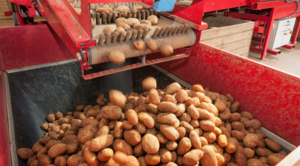
The first phase of Ukraine’s largest potato processing plant, located in the “Biosens” industrial park (Cherkasy region) with a capacity of 25,000 metric tons per year, is scheduled to begin operations in late 2026 or early 2027, according to Dmytro Kysilevsky, deputy chairman of the parliamentary committee on economic development.
“At the Biosens Industrial Park, installation of the steel structures for the walls and roof of the first phase of Ukraine’s largest potato processing plant has begun. The investment in the first phase of the plant, which will produce potato flour, amounts to 960 million hryvnias,” he wrote on Facebook on Tuesday.
Kysilevsky added that the construction of the 6,500-square-meter production building is utilizing weldless joining technology for high-strength steel components, and the production equipment has already been delivered.
“Ukraine currently imports 100% of its potato flour needs, which is brought in from abroad for use in the baking, confectionery, and meat-processing industries, as well as in the production of sauces and instant food mixes. But starting next year, our country will not only meet its own needs but will also become an exporter of potato flour,” the MP noted.
He emphasized that, with the help of state funding, work is currently underway at the “Biosens” industrial park to expand the access road and connect to the gas networks. In December 2025, the government allocated 24.7 million UAH for these projects on a 50:50 co-financing basis.
Kysilevsky noted that a mandatory condition for receiving state funding is the construction of at least 5,000 square meters of industrial space within the industrial park and the involvement of at least two participants.
“Biosens is currently preparing an additional application for further state funding to continue developing the industrial park’s engineering and transportation infrastructure,” he added.
According to Kysilevsky, construction of the plant’s second phase is scheduled for 2027—a French fries production facility with a capacity of 60,000–150,000 metric tons per year, requiring an investment of 2.5 billion hryvnias.
“McDonald’s and KFC currently import french fries for their Ukrainian chains due to the lack of specialized cultivation and processing technologies in our country. But such technologies will be available very soon,” he emphasized.
The plant’s third phase, which will also produce French fries, will require approximately 3 billion UAH in investment. In addition, the IP’s development plan calls for the construction of a 20,000-metric-ton potato storage complex, a facility for processing potato peels into protein and starch, and a greenhouse complex equipped with a cogeneration plant.
To accommodate the future facilities, the industrial park has already initiated the expansion of its existing area from 29.6 hectares to 40 hectares. Another 60-hectare plot located nearby is being considered as a reserve.
As previously reported, the “Biosens” Industrial Park was registered in August 2025 for a term of 30 years. The initiative to create the park came from the local company “Fitolan,” LLC, which is part of the “Mais” group of companies that is building a plant within the “Biosens” Industrial Park.
The agricultural company “Mais” is one of the largest producers of hybrid corn, hybrid sunflower, and soybean seeds in Ukraine and is the main asset of the “Mais” group of companies.
The co-owners of “APK Mais” LLC are Serhiy Tereshchuk, a member of the Ukrainian Parliament in the 4th and 6th convocations, and his wife, Maryna Cherednychenko; “Field-Group” is responsible for potato preservation and processing within the group.

As of July 1, 2026, the number of pensioners in Ukraine stood at 9,976,600, a decrease of 190,500 since the beginning of the year, according to Opendatabot, citing data from the Pension Fund of Ukraine.
In the second quarter alone, the number of pension recipients decreased by 74,400 people. The total decline for the first half of the year has already exceeded the figure for all of 2025.
The average monthly pension payment as of early July was 7,272.68 UAH. At the same time, the actual amount of payments varies significantly depending on the region, length of insurance coverage, earnings, and type of pension.
The Pension Fund’s data does not cover the temporarily occupied territories, where Ukrainian authorities are unable to maintain a complete registry of benefit recipients.
Ukraine, pensioner, pension, demographics: The number of pensioners in Ukraine has fallen below 10 million
As of July 1, 2026, the number of pensioners in Ukraine stood at 9,976,600, a decrease of 190,500 since the beginning of the year, according to Opendatabot, citing data from the Pension Fund of Ukraine.
In the second quarter alone, the number of pension recipients decreased by 74,400 people. The total decline for the first half of the year has already exceeded the figure for all of 2025.
The average monthly pension payment as of early July was 7,272.68 UAH. At the same time, the actual amount of payments varies significantly depending on the region, length of service, earnings, and type of pension.
The Pension Fund’s data does not cover temporarily occupied territories, where Ukrainian authorities are unable to maintain a complete record of benefit recipients.



