

About 99% of gold jewelry that undergoes state hallmarking in Ukraine is manufactured by Ukrainian companies. Imported products account for only about 1% of this segment.
At the same time, the silver jewelry market is significantly more dependent on foreign suppliers. Nearly one in three silver items that undergo assay testing in Ukraine is manufactured abroad.
Overall, in the first quarter of 2026, 14% of all jewelry that received a state hallmark was imported. The average for 2020–2026 is 16%.
Virtually all imported jewelry must undergo state hallmarking before being sold in Ukraine. The hallmark confirms that the actual precious metal content matches the fineness declared by the manufacturer.
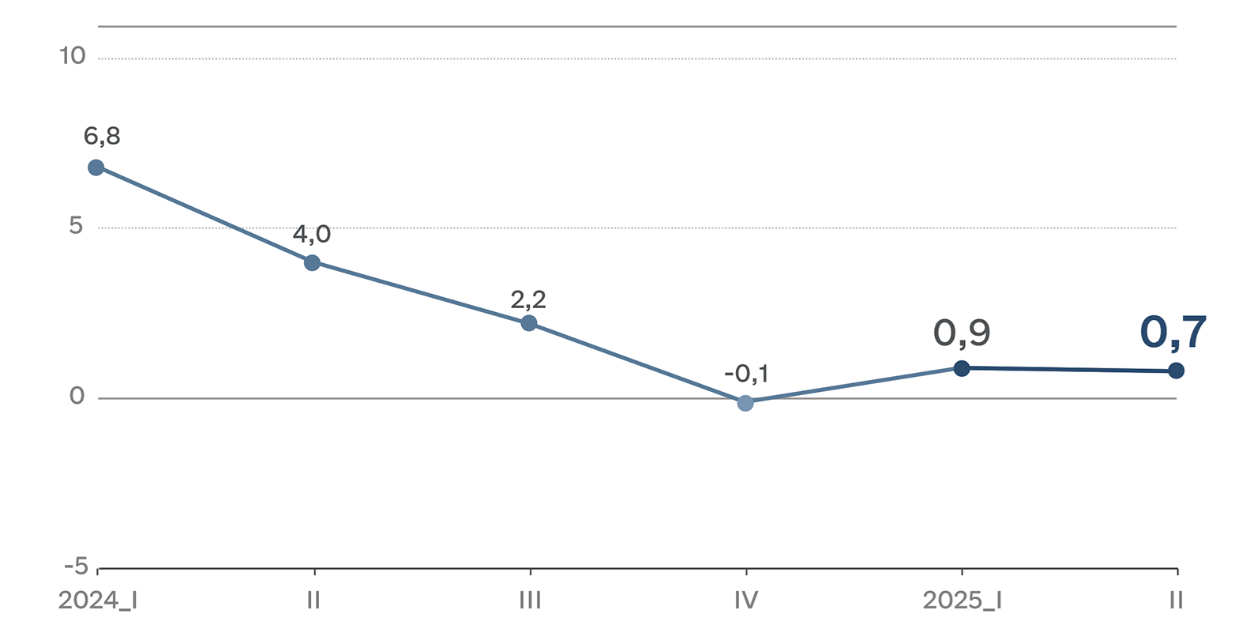
Real GDP percentage changes over previous period in 2024-2025

In January–June of this year, Ukraine reduced its imports of aluminum ores and concentrates (bauxite) by 47.1% in volume terms compared to the same period last year—down to 7,198 thousand metric tons from 13,606 thousand metric tons.
According to statistics released by the State Customs Service (SCS), bauxite imports in monetary terms decreased to $1.402 million from $1.569 million in January–June 2026.
Imports came from China (65.62% of shipments in monetary terms) and Turkey (34.38%).
In addition, Ukraine shipped 45 metric tons of bauxite worth $10,000 to Poland in May, while Ukraine did not re-export any bauxite in 2025.
As previously reported, in 2025, Ukraine increased its imports of aluminum ores and concentrates by 23.7% in volume compared to the previous year—to 43.5 thousand metric tons—and by 15.8% in value, to $4.754 million. These imports came primarily from Turkey (81.84% of shipments in monetary terms), China (15.97%), and Guyana (2.19%).
Ukraine did not re-export bauxite in 2025, just as it did not in 2024 and 2023.
In 2024, Ukraine increased its imports of bauxite by 77.4% in volume terms compared to 2023—to 35,173 thousand metric tons—and by 74% in value terms—to $4.107 million. Imports came primarily from Turkey (78.48% of shipments in monetary terms), China (19.48%), and Spain (1.9%).
Bauxite is an aluminum ore used as a raw material for producing alumina, which is then used to produce aluminum. They are also used as fluxes in ferrous metallurgy.
Bauxite is imported into Ukraine, in particular, by the Mykolaiv Alumina Plant (MGP), which is currently idle.
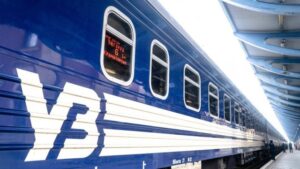
JSC “Ukrzaliznytsia” (“UZ”) and Spain’s national railway operator Renfe have agreed on a strategic partnership aimed at developing freight and passenger transportation, according to a company statement released on Friday.
“Ukrzaliznytsia and Renfe—Spain’s national railway operator, with over 80 years of experience in passenger transport and more than 30 years of operating high-speed trains—have agreed on a strategic partnership,” UZ wrote on its Telegram channel.
The agreement is expected to cover the implementation of technologies for automatic gauge change, the establishment of interconnection points between different systems, and the planning of the development of the European gauge.
Among other things, the companies will explore opportunities to develop and organize passenger routes on the 1,435 mm gauge in Ukraine, both on existing lines and on sections that are under construction or planned for construction.
Furthermore, the memorandum provides for cooperation in the field of freight transport and intermodal logistics between Ukraine and the countries of the European Union.
“Ukrzaliznytsia, for its part, will share its unique experience in ensuring the continuity of transportation, the rapid restoration of infrastructure, and the resilience of the railway system amid a full-scale war,” the statement reads.
As part of this collaboration, technical teams will exchange expertise in modern traffic control and safety systems, as well as in increasing capacity and improving service quality for passengers and shippers.
The parties will also work on further developing barrier-free infrastructure and rolling stock for people with disabilities and other mobility-impaired groups.
Ukrzaliznytsia clarified that the cooperation is formalized by a memorandum with Renfe’s subsidiary, Renfe Proyectos Internacionales Sociedad Mercantil Estatal (RPI).

According to Serbian Economist, passenger service on the high-speed rail line between Belgrade and Budapest is scheduled to begin within the next one to two months, Hungarian Prime Minister Péter Magyar announced at a press conference on July 16. Thus, provided the new deadlines are met, the first trains could begin running in August or September. However, Hungarian authorities have not yet specified an exact launch date.
In the coming days, Hungarian Minister of Transport and Investment David Vitézi is scheduled to visit Serbia. During talks with representatives of the Serbian government, the parties plan to coordinate the operation of signaling systems and equipment that ensure traffic safety on the cross-border section.
The launch of passenger trains has already been postponed several times. The main issue has been the certification of the European Train Control System (ETCS) installed on the Hungarian section of the line. Inspections conducted in the spring revealed malfunctions that could have compromised train safety at speeds of up to 160 km/h.
The reconstruction of the railway line has already been completed, and on February 27, 2026, freight traffic began on the Hungarian section. The first cross-border freight train traveled from Budapest through Kelebia and Subotica toward Novi Sad. Passenger service has been postponed until the testing and certification of the signaling systems are completed.
The Belgrade–Budapest high-speed rail line is one of the largest joint infrastructure projects between Serbia, Hungary, and China. Once fully operational, it is expected to significantly reduce travel time between the two capitals and strengthen Serbia’s transport links with Central Europe.
https://t.me/relocationrs/3252

Schneider Electric has implemented a large-scale infrastructure project: 26 Ukrainian cities have received state-of-the-art equipment to improve the energy efficiency and operational reliability of their district heating systems.
Completing the project before the start of the 2025/2026 heating season allowed heating utilities to better prepare for peak loads. Thanks to the equipment provided, the cities were able to navigate the heating season more smoothly, reducing the risk of unscheduled outages and improving the overall efficiency of their systems.
As part of the project, Schneider Electric supplied control cabinets for pumps and blower mechanisms, equipped with state-of-the-art variable-frequency drives, to 26 cities in Ukraine across the Chernihiv, Cherkasy, Lviv, Ivano-Frankivsk, Ternopil, Rivne, Vinnytsia, Khmelnytskyi, Zhytomyr, Odesa, Kirovohrad, Kherson, Sumy, Poltava, and Kyiv regions.
A key element of the project was the implementation of variable-frequency drives to regulate the operation of pumping equipment at heat supply companies, which significantly improved the energy efficiency of the systems, reduced electricity consumption, optimized operating costs, and extended the service life of the equipment.
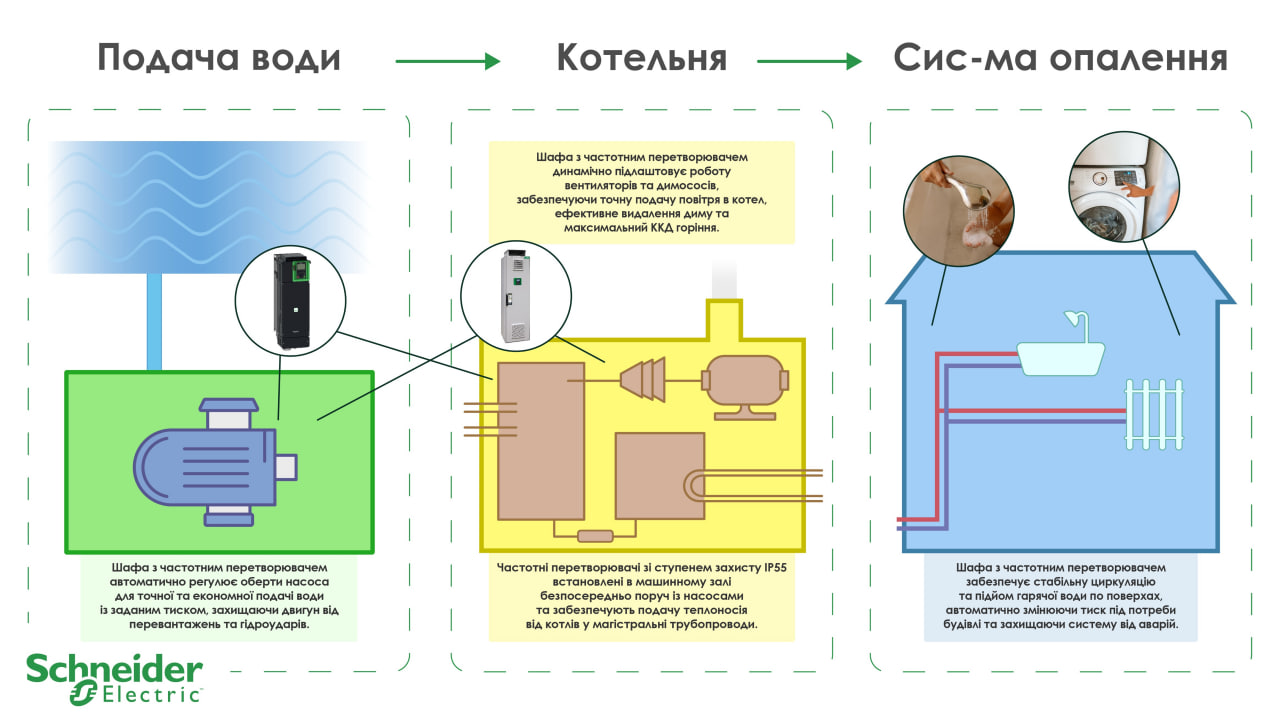
The solutions, based on Schneider Electric technologies, include fully equipped control cabinets for pumping equipment. The cabinets are protected against moisture and dust, allowing them to be installed directly in machine rooms, thereby reducing costs and simplifying installation.
The companies have gained tools for more flexible equipment management, reducing the load on the power grid, and improving the quality of heat supply services for consumers.
“This is not just about supplying equipment, but about a long-term investment in energy efficiency and the stability of heat supply in Ukraine. Already today, we are seeing how the implemented solutions are helping enterprises optimize energy consumption, improve system reliability, and lay the foundation for further modernization of the industry,” said Mykhailo Bubnov, CEO of Schneider Electric Ukraine.
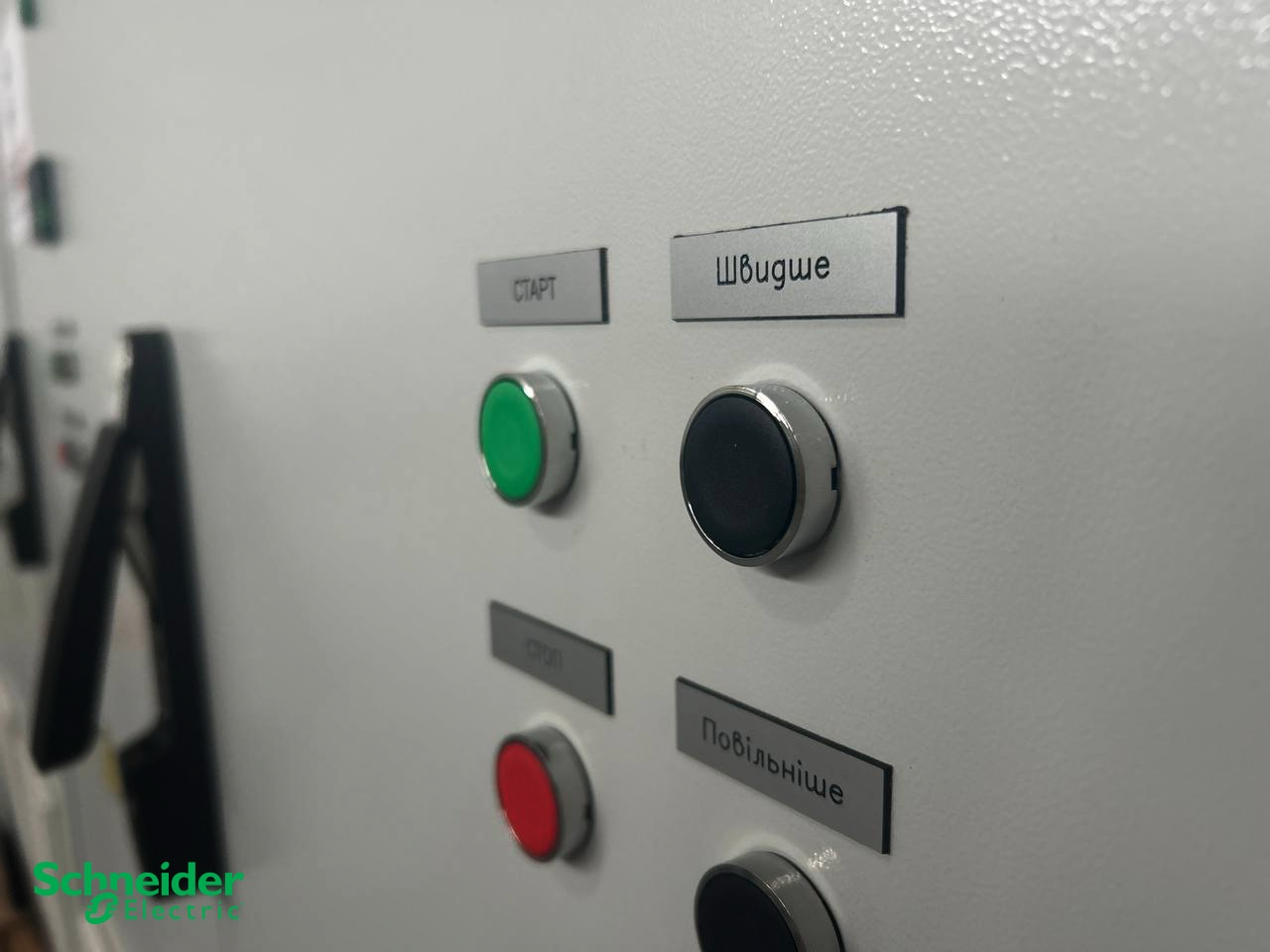
The completed project serves as an example of collaboration aimed at implementing modern energy-efficient technologies and improving the operational efficiency of Ukraine’s utility companies.
Schneider Electric is a global leader in energy technologies that enhances efficiency and promotes sustainable development through the electrification, automation, and digitalization of industry, business, and residential spaces. The company’s technologies enable buildings, data centers, factories, infrastructure, and power grids to function as open, interconnected ecosystems, increasing productivity, resilience, and environmental sustainability. The company’s portfolio includes smart devices, software-defined architectures, artificial intelligence-based systems, digital services, and professional consulting services. With 160,000 employees and 1 million partners in over 100 countries, Schneider Electric consistently ranks among the world’s most sustainable companies.
ENERGY EFFICIENCY, EQUIPMENT, HEATING, MODERNIZATION, Schneider Electric



