

Cherkasy Bus JSC will supply 23 school buses to the Transcarpathian Regional State Administration (RSA) for 98.265 million UAH (including VAT) or 81.89 million UAH (excluding VAT), with an expected procurement amount of 82.46 million UAH (excluding VAT).
According to information on Prozorro, the parties signed the relevant contract on July 14.
The plant was the sole bidder, offering 19 buses with two seats for students with limited mobility at a price of nearly 3.613 million UAH each, and four standard buses at a price of nearly 3.313 million UAH each (excluding VAT).
The buses were manufactured this year and comply with the Euro 5 emissions standard. The standard buses have 28 seats for students, while the specialized buses have 19. The localization rates are 68.4% and 70.66%, respectively.
As previously reported, the Transcarpathian Regional State Administration initially announced a tender to purchase the same number of buses for 97.202 million UAH (including VAT), but it was automatically canceled on July 6.
Transcarpathia subsequently announced a new tender for 82.46 million UAH (excluding VAT).
“Cherkasy Bus” recently signed a contract to supply 27 school buses to the Ivano-Frankivsk Regional State Administration for 113.45 million UAH (including VAT), including 17 buses with two seats for students with limited mobility for nearly 73.7 million UAH.
As previously reported, the sources of funding for Transcarpathia’s bus purchases include a state budget subsidy to the local budget in the amount of 88.097 million UAH (the full amount for the current year) and co-financing from the local budget in the amount of 10.858 million UAH, whereas in the previous tender, these amounts were 84.95 million UAH and 12.25 million UAH, respectively.
The “School Bus” program has been implemented since 2024 thanks to financial cooperation between the EU and Ukraine as part of the Ukraine Facility.
The state budget subvention for the program this year amounts to 2 billion UAH, and the purchase of over 540 buses is planned through the Prozorro Market electronic catalog.
The school bus market in Ukraine includes “Cherkasy Bus,” the Chernihiv Automobile Plant of the “Etalon” Corporation, the Zaporizhzhia Automobile Plant, and “Bas Motor” LLC (manufacturer of “Bogdan” buses). They manufacture small-class buses using imported components, with capacities ranging from 21 seats (the “Ataman” bus, which includes two seats for students with mobility impairments) to 40.
At the same time, as part of adapting the school transportation system to wartime conditions and the actual needs of communities, the Ministry of Education and Science is exploring the possibility of communities purchasing small-capacity buses (category M2) equipped for the safe transportation of children.
There is already an offer on Prozorro Market for a bus of this class from the company “Avtosnab,” which has developed and begun production of a school bus based on the Peugeot Boxer commercial van with 17 seats.
Cherkasy Bus, PROCUREMENT, Prozorro, School bus, ZAKARPATTIA
The top three operators in Ukraine by revenue from telecommunications services for January–March 2026 were, by a wide margin, mobile operators: Kyivstar PJSC – 12.08 billion UAH, VF Ukraine PJSC (Vodafone-Ukraine brand) – 6.69 billion UAH, and lifecell LLC (lifecell brand) of the DVL Group – 4.18 billion UAH.
According to data from the National Commission for the Regulation of Electronic Communications and Postal Services (NCREC) published on its website, compared to 2025 figures, Kyivstar’s revenue increased by 15.1%, Vodafone-Ukraine’s by 10%, and lifecell’s by 13.9%.
As previously reported, for 2025 as a whole, these growth rates were 20.3%, 13.1%, and 19.1%, respectively.
The top five operators by revenue in the first quarter of 2026 also included the fixed-line operator PJSC “Ukrtelecom,” which saw its revenue decline by 6.3% compared to the same period in 2025, to 1.10 billion UAH.
Kyivstar’s “sister” company, LLC “Ukraine Tower Company” (UTC), rounded out the top five in terms of revenue in the first quarter of 2026, increasing its revenue by 20.7% to 0.86 billion UAH.
According to the report, in the second group of five by telecommunications revenue, the fixed-line operator PJSC “Datagroup” from the DVL Group leads the way, having increased its revenue by 37.9% compared to the same period last year—to 0.58 billion UAH—thereby moving up from 7th to 6th place.
Next is the fixed-line operator PJSC “Farlep-Invest,” controlled by “VF Ukraine,” which increased its revenue by 52.8%—to 0.27 billion UAH—and moved from 9th place in 2025 to 7th in 2026.
LLC “Ukrainian Network Solutions,” the holding company for “Vodafone Ukraine,” increased its telecommunications revenue 2.5-fold in the first quarter of 2026—to 0.27 billion UAH—ranking 8th.
Rounding out the top five was “Home-Net” Scientific and Industrial Company LLC, which managed to increase its revenue by 24.1%—to 0.21 billion UAH—moving up from 10th to 9th place.
For its part, the Radio Broadcasting, Radio Communications, and Television Concern increased its revenue in the first quarter of 2026 by 7.2% compared to the same period in 2025—to 0.17 billion UAH—ranking 10th.
According to the regulator’s data, the top three mobile operators also led in terms of capital investments in the telecommunications sector during the first quarter of 2026: “Kyivstar” increased its investments by 49.7% compared to 2025—to 3.17 billion UAH, “Vodafone-Ukraine” by 6.3% to 1.33 billion UAH, and lifecell by 23.3% to 1.27 billion UAH.
At the same time, Ukraine Tower Company LLC reduced its capital investments in the first quarter of 2026 by 18.3% compared to the first quarter of 2025, down to 0.29 billion UAH, while Farlep-Invest PJSC increased this figure by 18.3% to 0.28 billion UAH.
“Ukrtelecom” also reduced its investment volume by 28.2% in the first quarter of 2026 compared to the same period last year—to 61.9 million UAH, while “Datagroup” reduced its investment by 17.2%—to 47.9 million UAH, thus securing 7th and 8th places, respectively.
In turn, Ukrainian Network Solutions LLC, which ranked 6th in investment volume in the first quarter, also reduced its investment by 50.9% compared to the same period last year—to 94.9 million UAH.

Global smartphone shipments in the second quarter of 2026 decreased by 6.7% compared to the same period last year—to 277.5 million units, according to preliminary estimates by the International Data Corporation (IDC). This marks the second consecutive quarter of decline.
The decline in shipments is due to a shortage of memory chips and record-high prices for them.
“The cost of memory chips has risen by nearly 300% over the past year; it now accounts for more than 65% of the cost of goods sold in the low-end price segment, making it increasingly difficult for manufacturers with budget-friendly product lines to survive,” said Nabila Popal, senior research director at IDC. “The memory crisis favors premium players and works against vendors operating in the low-end price segment.”
For the second quarter in a row, Apple Inc. and Samsung have demonstrated stability, remaining the only vendors in the top five to report sales growth, she noted. Apple achieved record results in the second quarter thanks to the success of the iPhone 17 and concerns about future price increases.
“This crisis has split the smartphone market into two parts,” said Francisco Geronimo, vice president of global client devices at IDC. “At the top are Apple and Samsung.”
They are pulling ahead of other companies, in part because they sell devices in which memory chips account for a smaller share of the cost. “At the bottom, manufacturers focused on low-cost, mass-produced devices are suffering—and so are their customers,” the expert said.
IDC, memory, SHIPMENT, smartphone, ЧИП
In Ukraine, 1.1 million pieces of jewelry made of precious metals received the state hallmark during the first quarter of 2026, OpenDataBot reported on July 17, citing data from the Ministry of Finance of Ukraine.
The average monthly number of hallmarked jewelry items was 18% lower than in 2025. Last year, 5.4 million items passed state hallmarking inspections, which was 26% less than in 2024.
The largest decline in 2025 was in the hallmarking of silver items—down 32%. The number of gold jewelry items that passed inspection decreased by 20%.
After the outbreak of full-scale war, the market contracted sharply, but in 2023–2024 it rebounded to levels above pre-war levels. In 2023, 6.4 million pieces of jewelry received the state hallmark, and in 2024 a record was set at 7.3 million items.
The state hallmark certifies that a piece of jewelry meets the declared fineness of the precious metal. Ukrainian law prohibits the sale of jewelry without such a hallmark.
Gold jewelry surpassed silver for the first time in terms of the number of hallmarks in Ukraine
In 2025, gold jewelry surpassed silver for the first time in terms of the number of items passing state hallmarking inspections, according to data from the Ministry of Finance of Ukraine published by “OpenDataBot” on July 17.
In the first quarter of 2026, the share of gold jewelry among all hallmarked items rose to 57%, while silver accounted for 43%. By comparison, in 2020, silver jewelry accounted for 72% of the market, and gold for only 28%.
In total, since 2020, 20.8 million silver items and 15 million gold items have undergone state hallmarking. Thus, in the cumulative six-year statistics, silver still holds first place with a 58% share.
The shift in market structure is partly due to the rising price of silver and growing industrial demand for the metal. Silver is widely used in the production of solar panels, electric vehicles, electronics, and semiconductors, leading jewelry companies to compete increasingly with the industrial sector for raw materials.
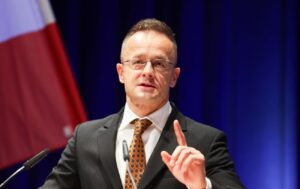
The Hungarian government has launched an investigation into former Foreign Minister Péter Szijjártó’s contacts with Russian authorities, Prime Minister Péter Magyar announced on July 16.
According to him, the case file contains classified documents from the Ministry of Foreign Affairs and other agencies. However, it is not yet known which agency is conducting the investigation, whether a criminal case has been opened, or whether Szijjártó is considered a suspect.
The investigation was prompted by reports that the former minister may have briefed Russian Foreign Minister Sergey Lavrov on the progress of negotiations within the EU. Szijjártó denied the allegations and stated that he had not passed on classified information to Moscow.
The investigation coincided with his departure from politics. On July 15, Szijjártó announced that he was resigning his parliamentary seat to take a leadership position at the Chinese company BYD. The prime minister called this a conflict of interest, since while serving as minister, Szijjártó had been involved in providing state support to the company.
According to Fixygen, the cryptocurrency market is ending the week of July 13–17 at a level close to where it started: Bitcoin is trading at around $63,000, while the total market capitalization of digital assets stands at approximately $2.2 trillion.
As of Friday, Bitcoin was trading at around $63,020, down approximately 1.7% over the past 24 hours. The leading cryptocurrency’s share of the total market capitalization is estimated at 56–58%. Ethereum, Solana, and most other major digital assets were also under pressure. SOL was trading at around $78, and XRP at around $1.06.
On Monday, Bitcoin fell below $62,000 amid a new escalation of the conflict between the U.S. and Iran, rising oil prices, and an exodus of investors from risky assets. After the release of U.S. inflation data, which came in weaker than expected, the cryptocurrency rebounded and rose above $65,500 on July 15, but was unable to sustain the gains.
By the end of the week, pressure on the crypto market intensified due to a sell-off in tech and semiconductor stocks, rising oil prices, and new geopolitical risks in the Middle East. On Friday, Bitcoin lost about 2% over the course of the day and returned to the $63,000 level.
Capital flows in U.S. spot Bitcoin ETFs remained volatile. On Monday, the funds recorded a net outflow of $424.7 million, followed by inflows of $181.1 million on Tuesday, $107.7 million on Wednesday, and $79.1 million on Thursday. As a result, the cumulative outflow over the four trading days totaled approximately $56.8 million. Data for Friday had not yet been published at the time of writing.
An additional source of uncertainty was the debate in the U.S. over the Clarity Act, a bill intended to establish regulations for the cryptocurrency market and delineate the powers of financial regulators. Progress on the bill has slowed due to disagreements in the Senate and concerns about a potential conflict of interest related to President Donald Trump’s cryptocurrency holdings.
In the corporate sector, the week’s main event was Citadel Securities’ investment in the cryptocurrency exchange Crypto.com. The market maker invested $400 million, valuing the platform at $20 billion. This is Crypto.com’s first round of institutional funding. The funds raised are planned to be directed toward the development of operations involving tokenized securities and derivatives.
At the same time, pressure remains on public companies that have built up large Bitcoin reserves. Strategy has already sold approximately $218 million worth of digital assets in 2026 to fund dividends and maintain its dollar reserves. The decline in cryptocurrency prices has led to the shares of a number of similar companies trading below the value of the digital assets they hold.
Thus, softer U.S. inflation data and the resumption of capital inflows into ETFs have failed to ensure a sustained market recovery. Next week’s market dynamics will depend on developments in the Middle East, oil prices, capital flows into cryptocurrency funds, and further progress on U.S. legislation regarding digital assets.



