

State-owned Oschadbank (Kyiv) has launched a preferential lending program for agrarians for the 2023 sowing season to purchase seeds, plant protection products, microfertilizers and machinery from Spectrum-Agro LLC (Obukhiv, Kyiv region).
According to the press service of Oschadbank, farmers will be able to purchase agricultural machinery on credit at 5% and 9% per annum for working capital replenishment of up to UAH 90 million under the government program “Affordable Loans 5-7-9%”.
Microfertilizers, plant protection products and soybean seeds produced by Spectrum-Agro can be purchased at a rate of 0.01% per annum for up to UAH 20 million with a seasonally adapted repayment schedule, the release said.
According to Oschadbank, to obtain such a loan, it is enough to provide a simplified package of documents to obtain a decision on it. In addition to priority consideration of applications, all those who have taken advantage of the loan will be able to quickly receive a preliminary decision to replenish working capital through the online platform Agroapp.
The State Bank also reported that since February 24, 2022, it has provided about UAH 10 billion to agricultural enterprises under the Affordable Loans 5-7-9% program. The share of agricultural loans in the total portfolio of this program issued by Oschadbank during the war is 72%. The second place is occupied by trade enterprises, to which the bank issued 16% of loans under the affordable loan program.
“Spectr-Agro is a distributor of plant protection products, fertilizers and agricultural machinery from leading global and Ukrainian manufacturers (Deutz-Fahr, HARDI, Kockerling, Dieci, SOLA).
According to opendatabot, Spectrum-Agro increased its revenue by 1.2% to UAH 6 billion 262.6 million in 2022, while its net profit decreased by 20% to UAH 209.84 million.
State-owned Oschadbank, according to the National Bank, ranked 2nd in terms of total assets (UAH 311.19 billion) among 65 banks in the country as of March 1, 2023.

The attempt to regulate intellectual property rights issues during the war, undertaken after the full-scale invasion of Ukraine by Russia, has led to problems in the pharmaceutical market, the inability to introduce to the market and launch production of new drugs.
Such opinions were expressed by lawyers interviewed by Interfax-Ukraine, commenting on the consequences for the pharmaceutical market in Ukraine of the law on the protection of individuals’ interests in intellectual property during martial law, imposed in connection with the armed aggression of Russia against Ukraine, adopted in March 2022. The document extends the validity of all intellectual property rights without exception until the day following the day of termination or cancellation of martial law.
Partner and Co-Head of the Intellectual Property Practice at Arzinger Law Firm Taras Kisliy noted that the law was adopted at one of the most dramatic stages of military aggression, when many citizens were forced to leave their homes and could not fully work, “including those who work in the field of intellectual property – for example, submit documents for renewal of trademark certificates or patents for inventions”.
“In order to prevent this from leading to mass miss deadlines for filing all sorts of documents with the Patent Office, this law was basically passed. But its wording, unfortunately, was not clear enough and was perceived differently, primarily in relation to the pharmaceutical market, “- he said.
The lawyer explained that the originator pharmaceutical companies (owners of active drug patents – IF) “saw in this law that their patents, which should expire during the war, now will not actually expire and will remain in force as long as the war lasts”. As a result, after the law was passed, there was a discussion among intellectual property professionals. Some of their colleagues (including the authors of the law) believed that the patents had not been extended, while others insisted that the vague wording of the law could be interpreted as carte blanche for the originator pharmaceutical companies, which would hold a monopoly on their drugs throughout the war.
Kislyy specified that this led to dozens of lawsuits, disruption of entry into the market of cheaper generic drugs, state budget losses on more expensive drug purchases, reduced access to treatment for patients and many other negative consequences”.
The lawyer also stressed that in terms of extending the monopoly on pharmaceuticals, the adopted law directly contradicts the European commitments of Ukraine, in particular the provisions of the EU-Ukraine Association Agreement. At the same time, only international generic pharmaceutical companies that received an open-date monopoly benefited from the law.
“International generic pharmaceutical companies, which release cheaper analogues of drugs on the market after the end of patent protection, suffer greatly in this situation. Now they are deprived of the possibility to plan to enter the market with new drugs at all. All they have to do is to sue and hope that the court will make a legal decision in this situation of direct conflict with the provisions of the EU-Ukraine Association Agreement. However, trials are ongoing and the Supreme Court has not yet put a final point in this category of cases,” he said.
At the same time, Kislyy noted that the situation with domestic pharmaceutical manufacturers is even worse.
“The current interpretation of the law actually closes them to foreign markets due to the peculiarities of registration procedures, necessary for the sale of medicines,” – said the lawyer.
In turn, a lawyer of the law firm “Legal Alliance” Alexander Tsurkan said that the risks of losing intellectual property rights at the beginning of the war were indeed high and in some cases the law justifiably allowed to retain these rights to trademarks and patents, which expired during the martial law.
“An example can be given where a company owned trademarks and patents on drugs that expired after February 24, 2022. The company was relocated, the employees were outside of Ukraine and at the beginning of the war no one was physically able to file for renewal of IP rights. Thanks to this law all IP rights of the company were preserved, competitors were not able to take advantage of the expiration of trademark certificates and register identical trademarks. The loss of intellectual property rights for business is sometimes equal to the loss of business itself”, he said.
At the same time Tsurkan agrees that this law has a number of drawbacks. In particular, he called the extension of patents beyond their maximum possible term of legal protection one of its problems.
“The term of a patent in Ukraine is 20 years, and at the end of that term, legal protection is usually cancelled, and everyone can use the present invention. However, because of the law, patents that should have lost legal protection since the beginning of martial law continue to operate, and as a consequence some of the patents are already in effect for 21 years instead of the maximum term of 20 years,” he said.
In particular, the case of the drug “Caspofungin-Teva”, whose patent expired during martial law, is currently pending before the Cassation Economic Court. Plaintiff was the patent holder for the active ingredient “caspofungin,” and the patent expired on April 16, 2022, and after that date other pharmaceutical companies could use the substance in medicinal products without infringement.
The defendant, in turn, knowing of the termination of legal protection, applied for registration of a drug using the compound “caspofungin” and intended to begin selling such a drug after the termination of the plaintiff’s patent.
The trial and appellate courts found that the law extends the term of the patent, the defendant is prohibited from using the compound “caspofungin” and from selling the drug “Caspofungin-Teva” protected by such patent.
“Thus, the problematic aspect of the law is to provide the patent owner with an additional term of legal protection beyond the maximum possible, so other players in the market cannot produce an identical product,” Tsurkan explained.
At the same time, the lawyer noted that “Ukrpatent” has repeatedly pointed out in its letters that the continuation of patents, under the law, applies only to patents that could have been extended (and not to those that have been terminated – IF), but the courts did not agree with this position.
As an example, the lawyer cited a court case on the drug Exib, for which the patent was expiring during the war and another pharmaceutical company began using the chemical formula of the invention in its drugs. The court did not agree with the position of “Ukrpatent” and prohibited the use of the patent’s formulation, valid beyond the maximum possible period, in the drug “Exib.
“Thus, the courts now formally apply the law without deep analysis for compliance with international law and the arguments of “Ukrpatent”, which adds additional term of protection to patent owners, turning such patents into evergreen,” – said Tsurkan.
According to him, pharmaceutical companies very carefully monitor the validity of their competitors’ patents and in the last months of the patents they start preparatory actions to bring new drugs to the market.
“Because of this law, after the end of 20 years of patent protection, the companies that expected to bring the product to market cannot do so, because the IP rights of the patent owner formally continue to operate even in cases where they should no longer. In this situation, on the one hand, there is a positive effect for pharmaceutical companies, which are owners of patents, because they have received an additional period of legal protection, but on the other hand pharmaceutical companies, having made pre-sale preparation and waiting for the end of the patent, cannot sell their medicinal product,” he said.
“The law was passed at a difficult time and was intended to protect and equitably preserve intellectual property rights in every possible way. However, the creation of legislative opportunities to provide additional term of legal protection contrary to the provisions of international conventions is a negative effect for many players in the market, “- said the lawyer.
For her part, partner of the law firm Asters Yulia Semenii also believes that the need for this law was due to the war, and its purpose was to prevent the applicants and right holders from losing their rights due to noncompliance with the terms. However, the situation with patents in the pharmaceutical market was a side effect of this document.
To resolve the problem, according to Semenya, could be the position of the Supreme Court in this category of cases, where it will be determined that the law does not extend the patents for medicines or to amend it.
“All bona fide pharmaceutical players always strive for transparent and clear rules of the game. Now the said law has created chaos, the elimination of which is waiting for the whole pharmaceutical market”, – stressed the lawyer.

The net inflow to Ukraine in the week of April 1-7 rose to a record 97,000 people from 18,000 a week earlier, which can be explained by Easter holidays and school vacations in Europe.
According to the State Border Service in Facebook, the flow to leave Ukraine in that week decreased from 247 thousand to 241 thousand people, while the flow to enter jumped from 265 thousand to 338 thousand people.
According to the Ministry, the number of cars crossed the western Ukrainian border, in the 14th week of the year also increased, but not so significantly – from 127 thousand to 132 thousand, and the number of vehicles with humanitarian cargoes declined – from 688 to 522.
The largest net inflow to Ukraine – from 15 to 27 thousand people per day – was fixed on April 1-3, when 47-58 thousand people daily entered the country, which resulted in queues at the border, especially from Poland.
Polish Border Guard Service also recorded a significant net inflow to Ukraine for the last seven days – 87.7 thousand people compared to 18.6 thousand a week earlier.
According to the Polish Ministry, the weekly flow from Ukraine to Poland reduced from 165.8 thousand people to 155.3 thousand, whereas the return flow from Poland to Ukraine increased from 184.4 thousand people to 243.0 thousand.
In total, since the beginning of the war, by April 7, 2023, 10.95 million people had arrived in Poland from Ukraine, while in the opposite direction 9.17 million people were transported.
As it was reported, since May 10, 2022, the outflow of refugees from Ukraine was replaced by an inflow, which lasted until September 23 and amounted to 409 thousand people.
However, during the last week of September, the net outflow was 28 thousand people at once, and one of the possible reasons was a reaction to mobilization in Russia and “pseudo-referendums” in the occupied territories, and then the probable reason for the continued net outflow was the massive shelling of the energy infrastructure. It temporarily stopped in the second half of December and early January for the period of the holidays, but from the second week of January it resumed again and cumulatively since late September by the anniversary of the full-scale war reached 223 thousand people.
However, since that moment 130 thousand more people entered Ukraine than left.
As Deputy Economy Minister Sergei Sobolev noted in early March, the return of every 100,000 Ukrainians home gives a 0.5% increase in GDP.
According to UNHCR data as of April 4, a total of 20.19 million people left Ukraine since the war began (not including the flow of people into the country), of which 10.61 million left for Poland, 2.85 million for Russia (data as of October 3), 2.45 million for Hungary, 2.19 million for Romania, 1.28 million for Slovakia, 0.80 million for Moldova and 0.02 million for Belarus.
At the same time, according to the UN data, 11.63 million people arrived in Ukraine from February 28, 2022 to April 4, 2023 (excluding the data of Hungary, Russia and Belarus).
The number of Ukrainians registered in Europe with temporary protection status or similar reached 5.027 million on April 4, increasing by 19 thousand during the week.
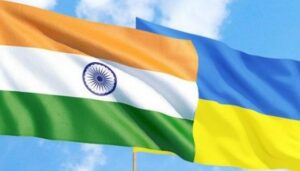
Ukraine’s First Deputy Foreign Minister Emine Japarova will visit New Delhi next week to discuss, among other things, providing additional humanitarian aid, The Hindu reported, citing diplomatic sources.
“Ukraine has requested additional humanitarian aid from India, including pharmaceuticals, medical equipment and energy equipment to repair energy infrastructure damaged during the war, and both sides are expected to discuss providing such support,” the report said.
Japarova is also expected to extend an invitation to Indian Prime Minister Narendra Modi to visit Kiev.
Diplomatic sources said final arrangements are still being discussed, but confirmed that Emine Japarova, the first deputy foreign minister, is expected to arrive in Delhi on Monday and hold an interagency dialogue and meet with media and think tanks in the capital to enlist Ukraine’s support in India,” the report noted.
YouTube today is a competitive environment where to be successful, it is necessary not only to create high-quality content, but also to master the art of promotion. At the same time, it is very important to keep up with the times and use the latest strategies to promote your YouTube channels. Let’s take a look at the top 5 YouTube channel promotion tips for 2023, focusing on increasing YouTube views, likes and subscribers, as well as using best practices for YouTube channel promotion and YouTube advertising.
TIP 1: Create engaging content to increase views and likes on YouTube
The key to increasing views and likes on YouTube is to create content that captures the attention of your target audience. In order to properly develop your YouTube channel and always be on trend, you should first of all define your niche and take into account the interests and needs of your target audience. Stick to a consistent posting schedule to attract subscribers and increase your YouTube views. You can also use attention-grabbing video icons, titles and descriptions to attract more viewers and increase the number of likes on YouTube. By including stories and strong visuals in your videos, you can create shareable and memorable content.
TIP 2: Use the power of other social media to promote your YouTube channels
Social media is an indispensable tool for promoting YouTube channels because it helps you reach a wider audience and attract more views, likes and subscribers to YouTube. Share your videos on platforms like Facebook, Twitter, Instagram, LinkedIn and Telegram, encouraging your subscribers to watch, like and in turn share your content. Respond to comments by soliciting feedback and starting conversations. Using hashtags, keywords and targeted ad campaigns will help increase your visibility and drive traffic to your YouTube channel.
TIP 3: Collaborate with other authors to increase your YouTube subscribers
Collaborating with popular authors in your niche can help you attract their audience and get more subscribers. It’s important to keep in mind that you don’t just need to identify authors with similar target audiences, as they may perceive you as a competitor and refuse to collaborate. To avoid the negative experience of finding partner YouTube channels, stick to the principle of complementary content, develop mutually beneficial collaboration projects such as guest appearances, joint live broadcasts or shared video series. Invite other creators to promote their channels on their social networks, websites and email newsletters.
TIP 4: Optimize your videos for search and advertising on YouTube
Effective search engine optimization (SEO) and advertising on YouTube are critical to increasing views, likes and subscribers. First and foremost, conduct a keyword analysis and include relevant search terms in your video titles, descriptions and tags. Use compelling titles and detailed descriptions that accurately describe the video content and include targeted keywords, but don’t go overboard with clickbait. Add subtitles and translations to your videos to make them more accessible and searchable. It’s important to learn how to properly use advertising opportunities like Google Ads and TrueView ads to reach a larger audience and increase views on YouTube.
TIP 5: Analyze your channel metrics to refine your promotional strategies
To ensure the success of your YouTube channel, you need to constantly analyze its metrics and adjust your promotional strategies accordingly. Use YouTube Analytics to track key metrics such as YouTube views, viewing time, and audience retention. This will help you determine which videos resonate the most with your viewers. Don’t forget that your YouTube subscribers have a number of unique characteristics, such as gender, age, language background and other demographics. To understand your audience and tailor your content, you need to understand their preferences. Also track traffic sources and search queries to determine how viewers find your content and optimize your SEO strategy, as well as engagement metrics such as youtube likes and comments to gauge your audience’s level of interest and interaction with the content on offer.
Use this data to make data-driven decisions and improve your channel, promotion and advertising strategies on YouTube. Constantly improve your approach based on your channel metrics to maximize YouTube views, likes and subscribers.
So, promoting YouTube channels in 2023 requires a comprehensive approach that focuses on creating engaging content, using social media to promote, collaborating with other creators, optimizing your videos for search and advertising, and constantly analyzing effectiveness. By applying these tips from us, you can increase the success of your channel and make a lasting impression on your audience.
Ukraine will temporarily refrain from exporting grain and sunflower to Poland until the new season in order to solve the problem of overstocking the Polish market and protests of Polish farmers, the Polish Ministry of Agriculture and Rural Development reported, citing Ukrainian Minister of Agricultural Policy and Food Nicholas Solski.
“We all understand who is to blame for this situation, but we must solve the problem. Therefore, Ukraine will refrain from exporting wheat, corn, rapeseed and sunflowers to Poland (until the new season),” the Polish agency quoted Solsky from a joint press conference on Friday with his Polish colleague Robert Telus at the border with Ukraine in Dorohusk.
“The Ukrainian side made a proposal to very much limit for some time, and at the moment even stop the flow of grain to Poland,” Telus said, in turn.
As reported, April 5, Ukrainian President Vladimir Zelensky at a meeting with Polish Prime Minister Mateusz Morawiecki in Warsaw said that the parties have found a way out of the problem of Ukrainian grain exports to Poland.
“We discussed the issues of our farmers – Polish and Ukrainian. We have found a way out. I believe that in the coming days, weeks we will finally solve all the issues, because there cannot be any difficulties between such close partners and real friends as Poland and Ukraine,” Zelenski said.
Earlier, the governments of Poland and Romania announced their intention to ask the European Commission to develop mechanisms that would help avoid price dumping to the detriment of local farmers.
Polish farmers threatened to disrupt the events during Zelenski’s visit to Warsaw, and Polish Minister of Agricultural Policy Henryk Kowalczyk resigned.
If the international community had been able to “push” Russia to increase ship inspections in the Bosporus, Ukraine would have been able to reduce the flow of grain traffic through European countries, Solsky said then, in turn.



