
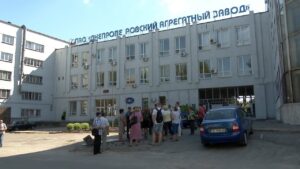
JSC “Dnipropetrovsk Aggregate Plant” (DAZ, Dnipro) plans to allocate its 2025 net profit to production development and does not plan to pay dividends.
This information is contained in the published draft resolutions of the company’s general meeting of shareholders, scheduled for July 1.
As reported, in 2025, DAZ increased its net profit by 15.3% compared to the previous year, reaching UAH 84.5 million.
The plant also did not pay dividends from the 2024 net profit of UAH 73.3 million, instead directing it toward development.
At the meeting, shareholders plan, in particular, to appoint Audit-Invest LLC as the auditor of the company’s financial statements for the 2021–2025 period.
DAZ is a company with many years of experience in manufacturing aviation equipment, as well as hydraulic equipment for mines and general-purpose products (fuel and other liquid pumps).
According to data from the National Securities and Stock Market Commission for the first quarter of 2026, Supervisory Board Chairman Yevhen Morozhenko owns nearly 37.95% of the company’s authorized capital, while Board member Andriy Yatsuba and shareholder Volodymyr Yatsuba each own nearly 19.185%.
Last year, the plant increased its net sales revenue by 77% to UAH 491.5 million. As of April 2026, the plant employed 338 people.
DIVIDENDS, DNIPROPETROVSK AGGREGATE PLANT, PRODUCTION, PROFIT, ДАЗ

In 2025, Ukraine nearly doubled its exports of organic walnuts compared to the previous year—from 2,600 to 4,900 tons— and their value more than doubled—from EUR7.9 million to EUR16.6 million, according to a study on organic berry and nut exports in 2024–2025, which was presented at the forum “Development of Ukraine’s Berry and Nut Export Sector” on June 10 in Kyiv.
“Demand is stable. Organic walnuts from Ukraine are exported to nine countries, including the Netherlands, Austria, Romania, France, Germany, and Italy,“ said Iryna Fedorchenko, a leading export specialist at the organic production certification body ”Organic Standard,” during the study’s presentation.
At the same time, she emphasized that Ukraine is not yet fully utilizing the potential for exporting value-added products, as organic walnuts are supplied to foreign markets primarily as raw materials.
“All organic walnuts are exported in their raw form. We have an open niche for exporting finished products,” she noted.
According to Fedorchenko, importing countries purchase Ukrainian raw materials and then process, refine, and repackage them at their own facilities.
The Netherlands was the largest importer of Ukrainian organic walnuts in 2025, purchasing 1,950 tons of product worth EUR6 million. The top three buyers also included Austria—986 tons worth EUR2.6 million—and Romania—724 tons worth EUR3.6 million. In addition, Ukrainian organic walnuts were supplied to France, Germany, Italy, Moldova, Poland, and the United Kingdom.
Fedorchenko also noted that Ukraine exports three types of organic nuts—walnuts, almonds, and hazelnuts. At the same time, walnuts account for the lion’s share of exports, with most of the organic walnuts shipped abroad coming from wild-growing orchards.
According to the study, in 2025 the total area of certified organic nut orchards in Ukraine was 469 hectares, compared to 556 hectares the previous year. Of this, 383 hectares were planted with organic walnuts (470 hectares in 2024), 84.9 hectares with hazelnuts, and 1 hectare with almonds. The number of organic nut producers decreased to 17 from 19 the previous year.
The study was conducted by the certification body “Organic Standard” in collaboration with the Office for Entrepreneurship and Export Development and the national project “Dія.Бізнес” with support from Switzerland as part of the Global Quality and Standards Program in Ukraine (GQSP Ukraine), implemented by the United Nations Industrial Development Organization (UNIDO).
The violations identified during the inspection of VUSO Insurance Company (Kyiv) are not systemic in nature, do not affect the insurer’s overall business practices, and the payment of the fine will in no way affect compliance with solvency requirements.
The company announced this on its website. It also noted that in determining the amount of the fine, the National Bank relied on available information regarding VUSO’s total annual turnover for 2025, amounting to UAH 5.794 billion, and the maximum fine limit established in accordance with the requirements of the relevant law.
“VUSO remains true to its tradition of strictly fulfilling its obligations and is using the recommendations provided by the Regulator to improve internal procedures, bringing them into line with best practices and regulatory requirements in the field of financial monitoring,” the insurer emphasizes.
As reported, the National Bank of Ukraine fined VUSO Insurance Company a total of UAH 40.71 million for violating anti-money laundering (AML/CFT) legislation.
The fine was imposed for violating AML/CFT requirements regarding the failure to fulfill the obligation to ensure the proper organization and conduct of initial financial monitoring.
As noted by the NBU, the violation led to the institution’s failure to properly fulfill its obligations, specifically to develop, implement, and update internal AML/CFT documents in accordance with legal requirements and the results of the national risk assessment; to conduct proper customer due diligence; comply with the prohibition on establishing business relationships with persons included in the list of individuals associated with terrorist activities or subject to international sanctions.
VUSO Insurance Company was founded in 2001. It is a member of the MTIBU and the UFS, a participant in the Direct Loss Settlement Agreement, and a member of the Nuclear Insurance Pool.
According to the NBU, the company ranked third in terms of premiums written among non-life insurers in Ukraine as of the end of 2025.
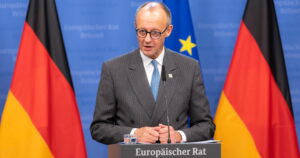
Peace in Russia’s war against Ukraine can only be achieved through negotiations involving Ukraine, Russia, Europe, and the United States, according to a government statement delivered by German Chancellor Friedrich Merz in the Bundestag on Thursday.
“Our goal for Ukraine remains a just and long-term peace that also takes our security interests into account. For this reason, we support Ukraine. That is the truth. We are doing this today and will continue to do so tomorrow, for as long as necessary,” Deutsche Welle quotes Merz as saying.
Merz stated that support for Ukraine includes a 90 billion euro loan approved by the EU and increased sanctions pressure on Russia; the German government supports efforts aimed at ending the war through negotiations.
“To counter Russia’s open willingness to escalate, we are strengthening NATO’s eastern flank. At the same time, we support efforts aimed at ending this aggressive war by Russia through negotiations. Lasting peace will only be achieved through negotiations involving Ukraine, Russia, the U.S., and Europe. There will be no other option,” the German chancellor noted.
“By waging a defensive war against Russia, Ukraine is also defending our freedom, as well as freedom and security throughout Europe,” Merz added. “After all, Ukraine is part of Europe. In the long term, it will also become part of the European Union,” he emphasized.
Assessing Ukraine’s path toward European integration, the chancellor noted that the country has made significant progress on the path of reforms.
“That is precisely why, a few days ago, I proposed granting Ukraine associate membership in the EU. This would mean Ukraine’s regular participation in EU Council meetings and meetings of the relevant ministerial councils. A Ukrainian commissioner, for now without a portfolio or voting rights, would become Kyiv’s representative in Brussels,” Merz once again explained the essence of his proposal.

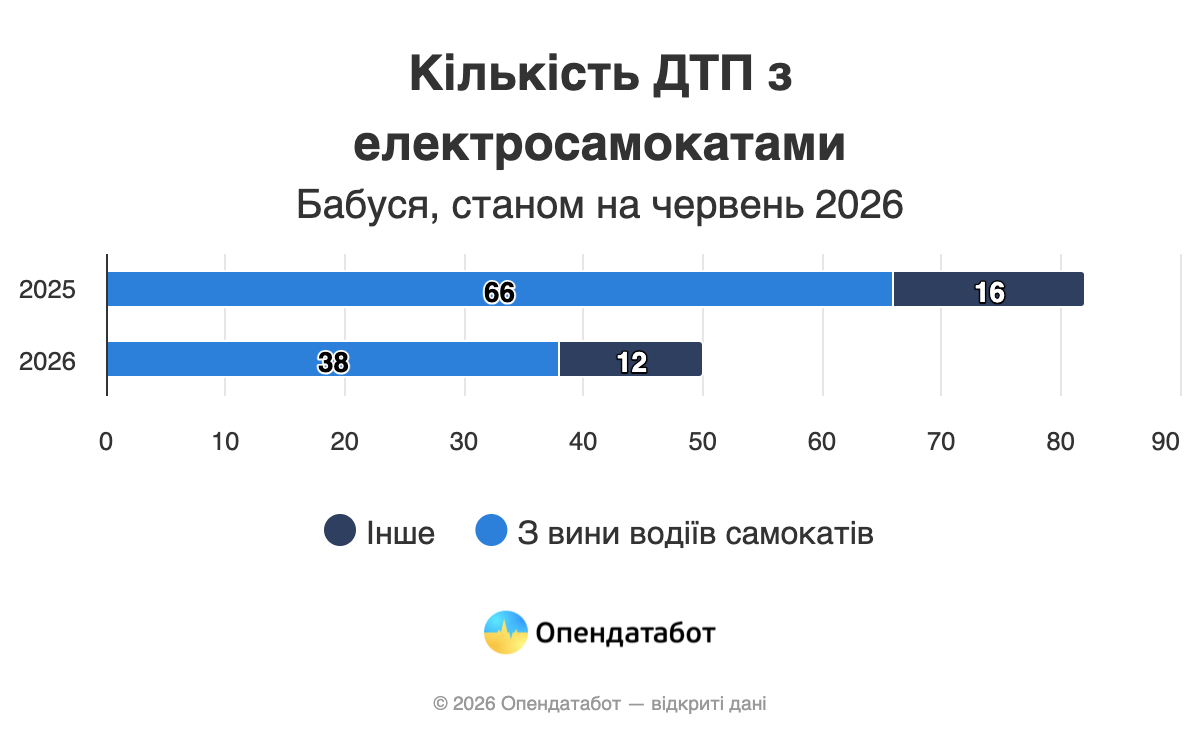
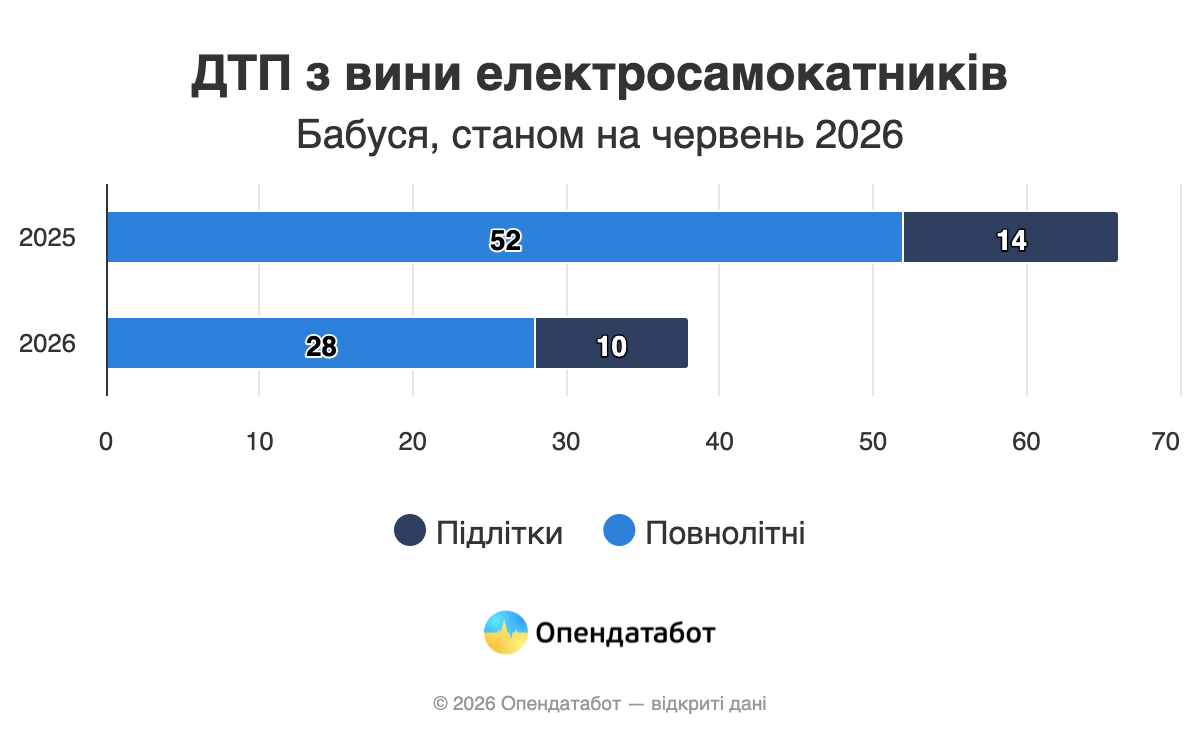
At least 132 cases of traffic accidents involving electric scooters have been recorded over the past year and a half in Ukraine, according to the Babusia court registry search engine. 79% of these accidents were caused by the electric scooter riders. The highest number of such accidents over the past 1.5 years occurred in the Odesa, Lviv, and Vinnytsia regions. Most often, scooter riders are prosecuted for hitting pedestrians, colliding with cars, or driving under the influence. Teenagers are involved in 29% of these cases.
At least 132 cases involving accidents with electric scooters have been heard by courts over the past year and a half, according to data from the Babusia court registry search engine. In 79% of these accidents, the drivers of electric scooters were at fault—104 cases. In nearly one in three such cases, minors were involved in the accident: 38 accidents, or 29% of the cases that went to court.
In 66 court cases last year and 38 this year, electric scooter riders were found at fault for the accidents.
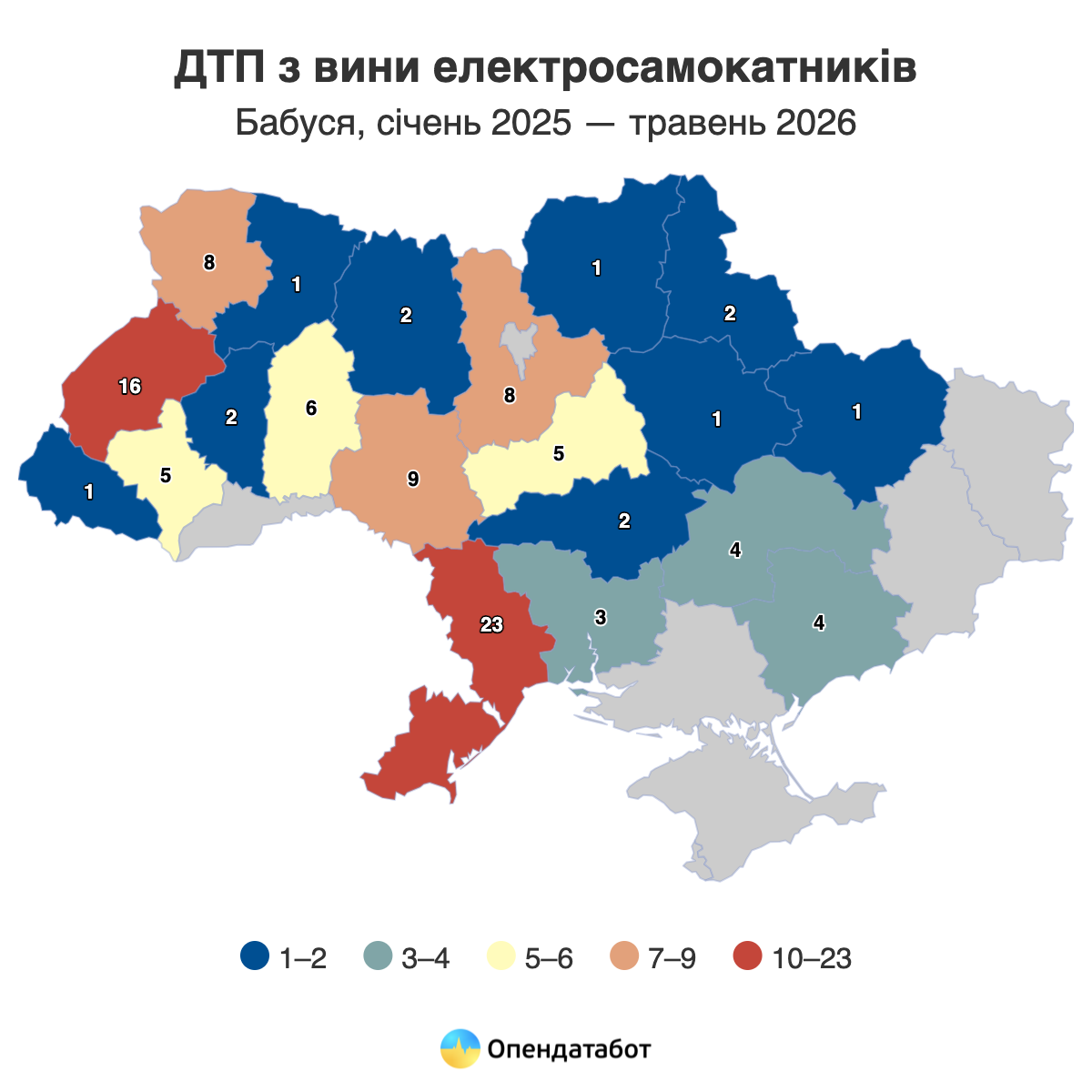
The highest number of traffic accidents caused by electric scooter riders was recorded in the Odesa region—11 in 2025 and 12 in the first five months of this year. Next are Lviv Oblast (11 and 5 cases, respectively) and Vinnytsia Oblast (5 and 4). The top five also include Volyn Oblast (5 and 3 cases) and Kyiv Oblast (7 and 1 case).
It is worth noting that, apart from regions with active hostilities, Chernivtsi Oblast is the only region where no court cases involving traffic accidents caused by electric scooter drivers have been recorded over the past 1.5 years.
Mostly, courts hear cases involving traffic violations that led to accidents (Article 124 of the Code of Administrative Offenses)—57 cases over the past 1.5 years.
Typical cases include collisions with cars, hitting pedestrians, and fleeing the scene of an accident. For example, in Lviv, a user of a rented JET scooter damaged two parked cars at once—an Audi and a Mazda—and left the scene of the accident. The court fined him 3,400 UAH.
In Dnipro, a driver of a Magura electric scooter ran a red light and struck a boy at a crosswalk. In court, the man explained that the scooter’s brakes had failed in the winter. Ultimately, the court fined him as much as 850 UAH.
The second most common category involves cases of driving a vehicle while under the influence of alcohol or drugs (Article 130 of the Code of Administrative Offenses)—47 cases during the period under review. The penalty in most cases is standard—a fine of 17,000 hryvnias. For example, in Odesa, police stopped an electric scooter rider whose blood tested positive for 0.65 �
It should be noted that the law also provides for the revocation of a driver’s license and restrictions on driving privileges for drivers; however, this sanction cannot always be applied to scooter riders—after all, a driver’s license is not required to operate a scooter.
For example, this also happened in another case—also in Odesa. There, the court not only fined the intoxicated driver 17
thousand UAH but also revoked his right to operate vehicles for one year. This decision is currently being appealed.
However, if the violation is repeated within a year, the punishment becomes significantly harsher. For instance, in Odesa, patrol officers stopped a driver of a JET electric scooter who showed clear signs of intoxication. During the check, the man refused to undergo a breathalyzer test and later fled the scene. In court, it was revealed that less than a year prior, he had already been punished for a similar violation. The court found the driver guilty and imposed a fine of 34,000 UAH and revoked his license for three years.
There are also cases where intoxicated drivers caused traffic accidents resulting in injuries. In Kyiv, a user of a Bikenow rental scooter with a blood alcohol level of 0.56 �
If the violation results in the victims sustaining moderate bodily injuries, the case may be elevated to a criminal matter. This is exactly what happened in Vinnytsia, where an intoxicated driver of a Bolt electric scooter was riding on the sidewalk and struck an elderly woman. She suffered a broken shoulder. The court found the man guilty and imposed a fine of 34,000 UAH. Additionally, he had to pay over 6,000 UAH in expert examination fees. In doing so, the court took into account that the defendant admitted guilt, expressed remorse, and compensated the victim for material and moral damages.
In total, minors were involved in 38 out of 132 cases—nearly a third of the cases heard by the courts. Looking specifically at traffic accidents caused by scooter riders, teenagers were involved in 24 cases—about a quarter of such proceedings. The highest number of such cases over the past 1.5 years was recorded in Vinnytsia (4), Lviv (3), and Cherkasy (3) regions.
It is worth noting that individuals under the age of 16 are not subject to administrative liability; reports are filed against parents for improper fulfillment of parental duties (Article 184 of the Code of Administrative Offenses).
For example, in Ivano-Frankivsk, a 15-year-old electric scooter rider drove onto a crosswalk, where she collided with a car. The girl’s mother was held liable and fined 850 UAH. At the same time, not all cases result in punishment: in Khmelnytskyi, a 12-year-old driver of a VEVI rental scooter was riding across a crosswalk when he collided with a Toyota Yaris. The young driver did not admit guilt, but the court ruled that the electric scooter driver’s guilt had been proven, although the case was closed due to the statute of limitations.
In many rulings, courts specifically emphasize that electric scooter drivers are road users and must comply with traffic rules. In particular, they must cross pedestrian crossings on foot.
It should be noted that the amount of fines in cases involving electric scooters varies significantly depending on the violation. For certain administrative offenses and cases involving the parents of minors, courts impose a fine of 850 hryvnias. For driving under the influence—from 17,000 hryvnias. In addition, violators pay a court fee—about 665 hryvnias in 2026—and may also be required to compensate the owners of damaged property or the victims.
https://opendatabot.ua/analytics/scooter-dtp-2026

Cherkasy Bus JSC may supply 27 school buses to the Ivano-Frankivsk Regional State Administration (RSA) for 113.45 million UAH, including 17 units with two seats for students with limited mobility for nearly 73.7 million UAH.
According to information on Prozorro, the plant was the sole participant in two relevant tenders held by the Ivano-Frankivsk Regional State Administration. It offered 17 buses for 73.7 million UAH against an expected amount of 73.909 million UAH, and in the second tender—10 standard school buses for 39.75 million UAH against an expected purchase amount of 40 million UAH.
The delivery deadline for the buses is September 30, 2026.
The Euro 5-compliant buses were manufactured this year, with a localization rate of over 68–70%.
As noted in the announcement, a state budget subsidy of 67.173 million UAH is allocated for the purchase of 17 buses, with co-financing from the local budget amounting to 6.736 million UAH. Accordingly, UAH 35.92 million and UAH 4.08 million have been allocated for the purchase of 10 buses.
As previously reported, starting in 2024, the “School Bus” program is being implemented thanks to financial cooperation between the EU and Ukraine as part of the Ukraine Facility.
For the program’s implementation, the state budget subsidy for the current year amounts to 2 billion UAH, with plans to purchase over 540 buses. The Ivano-Frankivsk region has been allocated 103.09 million UAH in state subsidies.
Founded in 1994, the “Cherkasy Bus” plant manufactures Ataman small-class buses (including city, suburban, school, and specialized models), as well as other wheeled vehicles based on Japanese Isuzu components.
The plant ended 2025 with a net profit of nearly 83 million UAH—32% less than in 2024—amid a slight decline in net revenue to 1.733 billion UAH.
Cherkasy Bus, Ivano-Frankivsk region, Prozorro, school buses, Ukraine Facility



