

The eurozone economy is projected to grow by 0.8% in 2026 and by 1.2% next year, according to a statement from the European Central Bank (ECB) following its June meeting.
Three months ago, the regulator had forecast growth of 0.9% and 1.3%, respectively.
Economic growth in 2028 is now expected to reach 1.5%, up from the previous forecast of 1.4%.
Consumer prices will rise by 3% this year, up from the previously projected 2.6%, the report states. The forecast for 2027 has been revised to 2.3% from 2%.
The ECB also expects inflation in 2028 to be 2%, rather than 2.1%.
Consumer prices excluding energy and food (core inflation) will rise by 2.5% in 2026 (previously expected to be 2.3%), by 2.5% next year (2.2%), and by 2.2% in 2028 (2.1%).
The revision of inflation forecasts is due to a more significant increase in energy prices. At the same time, the deterioration in economic growth estimates “reflects the more pronounced impact of the war in the Middle East on commodity markets, real incomes, and confidence,” the ECB noted in its statement.

The National Bank of Ukraine fined Avangard Bank JSC 2 million UAH for violating financial monitoring regulations, the regulator announced on its website.
According to the NBU’s statement, the bank was fined for improper application of a risk-based approach, failure to identify a financial transaction subject to financial monitoring, and improper analysis of customer transactions for indicators of suspicious activity.
In addition, the regulator issued written warnings to the bank. These warnings concern the improper development and implementation of internal documents on financial monitoring, as well as the submission of erroneous information on foreign exchange transactions to the NBU.
As previously reported, in May, the NBU imposed sanctions on one bank and nine non-bank financial institutions for violations in the areas of financial monitoring and foreign exchange legislation.
Bank Avangard JSC operates in the Ukrainian banking market and provides services to corporate and private clients.

On June 10, Antonov JSC (Kyiv) opened bids from tender participants for civil aviation risk insurance services (under insurance classes 1, 5, and 11), according to the Prozorro e-procurement system.
The price proposal from the sole tender participant, ASK “INGO,” amounted to €5.158 million, with an expected cost of €5.452 million.
As reported, insurance classes 1, 5, and 11 cover: aircraft insurance; air carrier liability insurance for damage caused to passengers, baggage, cargo, and mail; and civil commercial aircraft operator liability insurance for damage caused to third parties.
The company was the winner of a similar tender a year earlier.
INGO Insurance Company JSC has been providing insurance services for 30 years. Since 2017, the Ukrainian business group DCH has been the majority shareholder.
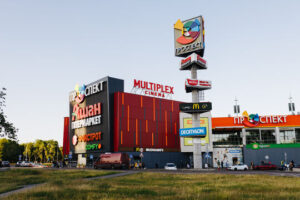
The Arricano Group plans to upgrade the generators at all of its shopping malls in Ukraine, with investments in the project totaling over UAH 50 million, according to Anna Chubotina, CEO of Arricano Real Estate LLC.
“We understand that each facility must have several generators—in case one fails, another must be able to meet the significant power needs of all tenants. Currently, our confirmed investments in generator upgrades will total over UAH 50 million across all projects, including those in Zaporizhzhia and Kryvyi Rih,” she said at the RAU Expo 2026 conference in Kyiv on Thursday.
According to Chubotina, Arricano is considering the possibility of installing a solar power plant at one of its shopping centers in Kyiv. The company plans to implement this project with its own investments next year.
She emphasized that it is important to increase both energy independence and energy efficiency of facilities, which will reduce the burden on shopping center tenants.
“On the one hand, we must ensure the uninterrupted operation of the shopping center, and on the other, reduce the burden on our tenants. Whoever can find this balance will continue to operate successfully,” explained the company’s CEO.
Arricano expects to resume active construction of the Lukianivka shopping and entertainment center in Kyiv after the full-scale war ends, Chubotina noted.
“Currently, our facility is undamaged. It is a priority to resume this project and our plans for the reconstruction of regional facilities once the war ends,” she said.
Arricano Real Estate PLC (Cyprus), through its Ukrainian subsidiaries, owns four shopping centers in Ukraine: the Prospekt shopping center and the RayON shopping center in Kyiv, the CITY MALL shopping center in Zaporizhzhia, and the Soniachna Galereya shopping center in Kryvyi Rih. The company also owns a 49.9% stake in the Sky Mall shopping center (Kyiv) and land plots for the future construction of three properties currently in the design phase. The company is also constructing the Lukianivka shopping center in Kyiv.
ARRICANO, ENERGY INDEPENDENCE, generators, REAL ESTATE, SHOPPING CENTERS

The third meeting of the Joint Ukrainian-Croatian Commission on Economic Cooperation took place on June 9, 2026, in Zagreb, according to the Embassy of Ukraine in the Republic of Croatia.
The Ukrainian delegation, which included representatives from several ministries, was led by Ukraine’s Minister for Veterans Affairs, Nataliia Kalmykova. The Croatian side was represented by Croatia’s Minister of Economy, Ante Šušnjar.
Following the meeting, the parties signed a final protocol. A Memorandum of Understanding on physical activity and sports was also signed as part of the commission’s work.
During her visit, Kalmykova held working meetings with Croatian Minister of Economy Ante Šušnjar and Deputy Prime Minister and Minister for Croatian Veterans Tomo Medved, and paid tribute to the fallen defenders of Croatia in the 1991–1995 war.
The parties discussed the implementation of joint projects in the areas of veteran policy, energy, education and science, tourism and sports, as well as the preservation of cultural heritage in the face of external aggression.
For Ukraine, Croatia’s experience is of particular importance in the context of veteran policy, post-war recovery, and the reintegration of defenders into civilian life. Following the 1991–1995 war, Croatia established its own system of support for veterans, and this experience could be useful for Ukrainian government programs.
Ukrainian-Croatian economic cooperation also holds potential in the energy sector, infrastructure, tourism, humanitarian projects, and reconstruction.

Total drug sales at gas stations accounted for less than 0.1% of the retail market; experts surveyed by Interfax-Ukraine believe this segment has a negligible impact on the retail pharmaceutical market.
“As of today, 260 licenses have been issued, with more than a third of them in Kyiv and the surrounding region. This accounts for 1% of the total number of pharmacies on the market. These are more like pharmacy kiosks than pharmacies at gas stations,” said Iryna Horlova, CEO of the analytical and consulting firm Support in Market Development (SMD).
She noted that the law permits these retail outlets to sell only a specific list of limited over-the-counter medications, primarily pain relievers, nasal drops, and cold remedies.
“Since this accounts for 1% of the total number of pharmacies and potentially about 0.05% of the pharmaceutical market’s turnover, the opening of these pharmacies has had no impact and will have no impact on the country’s pharmaceutical market,” she said.
At the same time, Gorlova noted that “prices are regulated by law.”
“Last year, the National Price Catalog was introduced, which sets a price cap for each registered drug item; pharmacies are not allowed to sell it for more than that. Therefore, prices at gas station pharmacies cannot be higher than at regular pharmacies and will not affect price changes in any way,” she said.
At the same time, according to Gorlova, despite the fact that “this initiative brings Ukraine closer to other developed countries where the sale of medicines at gas stations is permitted, unfortunately, these initiatives will not help make medicines more accessible to rural regions, as was intended, but will increase their accessibility and convenience for drivers and their passengers.”
For his part, Dr. Serhiy Sur, a pharmaceutical scientist, also noted that “the authorization to sell medicines at gas stations has not yet had any impact on the market.”
“According to results from April 2026, medicines were sold at only 260 gas stations, and the total volume of sales amounted to just 354,000 UAH. The average turnover per location was 4,700 UAH per month. For comparison, sales of over-the-counter medicines in the retail market (across 18,000 pharmacies) totaled 5.167 billion UAH as of April 2026. Accordingly, the average turnover for this category of drugs per pharmacy was approximately 283,000 UAH per month. In other words, sales of over-the-counter drugs at gas stations as of April 2026 accounted for less than 0.007% of their sales in pharmacies,” he said.
According to Sura’s estimates, the sale of medicines at gas stations also did not affect pharmaceutical manufacturers’ product ranges due to insignificant sales volumes. “Drug manufacturers have no need to change their product ranges for this sales channel,” he said.
At the same time, he noted that there is currently no available analytical data on price differences for the same drugs at gas stations and in pharmacies, but the cost of drugs at gas stations, just as in pharmacies, must not exceed the maximum retail prices listed in the National Price Catalog.
“Theoretically, expanding the channel for selling medicines at gas stations could create additional opportunities for patients to access over-the-counter drugs, especially in certain situations—while traveling or outside standard pharmacy hours. At the same time, from a practical standpoint, one should not expect this channel to drive significant sales growth compared to volumes sold through the pharmacy network. Gas stations will remain a niche channel with a limited product range and a specific consumption model. Thus, this can only be seen as a selective addition to the existing sales structure, rather than a significant transformation of it,” he concluded.
Sur also noted that “there is no uniform approach to the sale of medicines at gas stations across EU countries”: in some countries, their sale is permitted only through pharmacies, while others allow sales outside of pharmacies, specifically at gas stations. However, this applies exclusively to a limited list of over-the-counter medications, typically intended for treating mild conditions that do not require complex diagnosis and pose a low risk to the patient’s health. Furthermore, such activities are accompanied by regulatory safeguards: the establishment of special lists, requirements for storage conditions, as well as personnel standards.
International experience, particularly in EU countries such as France and Austria, shows that the range of permitted over-the-counter medications at gas stations is quite limited—approximately 30–50 items. These are medications in small packages (2–4–6 tablets or capsules) and in standard but low dosages, for example, ibuprofen 200 mg.
GAS STATIONS, MEDICINES, over-the-counter drugs, PHARMACEUTICAL MARKET, PHARMACIES



