
Independent audits for the years 2022–2025 have confirmed the accuracy of the key financial indicators of State Enterprise “Forests of Ukraine.” This was reported by the company’s press service.
In particular, the independent audit confirmed the company’s revenue growth from UAH 22.7 billion in 2023 and UAH 23 billion in 2024 to a record UAH 29.9 billion in 2025. The growth in net profit was also confirmed, rising from UAH 3 billion in 2023 and UAH 2.8 billion in 2024 to UAH 6.9 billion in 2025.
As noted, in late May 2025, the supervisory board of the state-owned enterprise “Forests of Ukraine” initiated independent audits of the company’s annual financial statements and approved the criteria for selecting an auditor. Board members justified their decision by stating that “the public must be convinced that the company’s performance results correspond to the reported data.” In addition, conducting an independent audit is part of the process of corporatizing the state-owned enterprise “Forests of Ukraine.” Currently, the audits have been completed, and the reports have been published on the company’s website.
The financial statements for 2022–2024, prepared in accordance with national accounting regulations (standards)—NP(S)BO—were audited by Grant Thornton Legis, which is part of the international Grant Thornton network—one of the world’s leaders in audit, tax, and business consulting.
The independent audit of the 2025 financial statements was conducted by Crowe Erfolg Ukraine, a member of Crowe Global—the eighth-largest international network in the field of accounting, auditing, and consulting. Since January 1, 2025, SE “Lisy Ukrainy” has adopted International Financial Reporting Standards (IFRS), and the audit for this period was conducted in accordance with IFRS requirements.
“The report states that the financial statements of the State Enterprise ‘Forests of Ukraine’ present fairly, in all material respects, the financial position of the enterprise, its financial performance, and its cash flows. The auditors made specific observations related, in particular, to the limited information regarding the historical cost of assets. Some of the assets transferred to the enterprise from state forestry enterprises were acquired back in Soviet times, and the original documentation has been lost in some cases. However, this did not prevent the State Enterprise “Forests of Ukraine” from successfully passing an independent audit of its financial statements for all four years of operation,” reports the State Enterprise “Forests of Ukraine.”
Earlier, the company reported record volumes of timber deliveries to the front lines. In May, the State Enterprise “Forests of Ukraine” shipped 31,400 m³ of forest products to the Armed Forces of Ukraine. This was the highest figure since the company’s inception.
AUDIT, CORPORATIZATION, financial statements, Forests of Ukraine, PROFIT
According to The Serbian Economist, the European Commission believes that Serbia’s granting of citizenship to Russian citizens poses potential security risks to the EU, as holders of Serbian passports are entitled to visa-free entry into EU countries.
Guillaume Mercier, the European Commission’s Enlargement Commissioner, stated that this issue had already been raised in the 2025 Enlargement Report. In that report, the European Commission recommended that Serbia continue to align with EU visa policy and ensure more thorough screening of third-country nationals, particularly those from countries that may pose security risks or contribute to illegal migration.
At the same time, the scale of Serbia’s naturalization of Russians remains incomparably lower than in EU countries. According to Serbia’s Migration Profile, 191 former Russian citizens received Serbian citizenship in 2024. In 2023, there were 532 such cases, and in 2022, 275.
By comparison, Germany alone granted citizenship to 12,980 former or current Russian citizens in 2024. That is nearly 68 times more than Serbia granted in the same year. Spain granted citizenship to 2,588 Russians, Finland to about 1,600, Switzerland to 815, Norway to 782, and the United Kingdom to over 2,300.
According to Eurostat, in 2024, approximately 31,000 Russians received citizenship in EU countries.
Estimated data on the granting of citizenship to Russians in Europe in 2024:
EU total – about 31,000 people
Germany – 12,980
Spain – 2,588
United Kingdom – over 2,300
Finland – about 1,600
Switzerland – 815
Norway – 782
Serbia – 191
For Belgrade, this issue is part of a broader dialogue with Brussels regarding visa policy, migration, and European integration.
For Serbia itself, the situation is ambiguous. On the one hand, the country is interested in maintaining relations with Russia, attracting capital and migrants, and supporting a visa-free regime for Russians. On the other hand, visa and migration policy could become an additional source of friction in relations with the EU.
https://t.me/relocationrs/3012
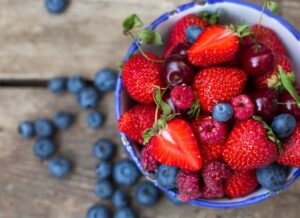
In 2025, Ukraine reduced the physical volume of organic berry exports by 12.5% compared to 2024—to 15,400 tons—but increased its value by 8.5%—to EUR39.8 million.
“Over the past two years, organic raspberries, strawberries, currants, and blueberries have remained the main export items,” said Iryna Fedorchenko, a leading export specialist at the organic production certification body “Organic Standard,” during a presentation of a study on the export of organic berries and nuts in 2024–2025 at the forum “Development of Exports in Ukraine’s Berry and Nut Sector” on June 10 in Kyiv.
She noted that Ukraine accounts for a significant share of organic berry exports to the EU. The largest buyers of Ukrainian products were Poland, the Czech Republic, Italy, Germany, and Austria.
“We are second only to Serbia in raspberries. Ukraine accounts for about 20% of organic raspberry imports, and 30% for blackberries. Blueberries are our trump card, because almost all organic blueberries exported to the EU come from Ukraine,” said Fedorchenko.
Currently, there are 55 companies in Ukraine exporting organic berries to 18 countries worldwide.
According to the study, wild berries continued to form the bulk of last year’s shipments—11,800 tons worth EUR27.1 million—while 3,600 tons of cultivated berries were exported for EUR12.7 million.
The cultivated berry segment saw an increase in export value despite a decline in volume. For example, organic raspberry exports fell by 18.7% to 2,230 tons, but their value rose by 31% to EUR8 million.
Organic strawberry shipments decreased by 13% to 1,290 tons, while revenue rose from EUR3.4 million to EUR4.2 million. Exports of organic blueberries, on the other hand, increased more than 11-fold—from 8.1 tons to 91.8 tons—and their value rose from EUR0.1 million to EUR0.5 million.
According to Fedorchenko, the vast majority of Ukrainian organic berries are exported in frozen form. “It is very difficult for us to export fresh berries, especially when they are organic and untreated,” she emphasized.
Separately, the representative of “Organic Standard” noted changes in the structure of organic berry farming. The area under organic raspberries in 2025 increased to 842 hectares from 768 hectares a year earlier, and under blueberries—to 353 hectares from 337 hectares. In contrast, the area under strawberries decreased to 210 hectares from 309 hectares, and under cherries—to 54 hectares from 146 hectares. The total area of organic berry plantations decreased from 1,700 hectares to 1,600 hectares.
The study was conducted by the certification body “Organic Standard” in collaboration with the Office for Entrepreneurship and Export Development and the national project “Dія.Бізнес” with support from Switzerland as part of the Global Quality and Standards Program (GQSP Ukraine), implemented by UNIDO.
EXPORTS, organic berries, Organic Standard, RASPBERRIES, UKRAINE

The National Bank of Ukraine fined FC “MBK” LLC 799,000 UAH for violations of financial monitoring regulations, the regulator announced on its website.
According to the NBU’s statement, the violations involved the improper provision of information and documents in response to the regulator’s requests, failure to fulfill the obligation to conduct proper customer due diligence, and the improper application of a risk-based approach.
In addition, the National Bank pointed to violations of procedures for storing documents in client files and preparing statistical reports on the prevention and countering of money laundering, terrorist financing, and the proliferation of weapons of mass destruction.
The company also received a written warning for the improper development and implementation of internal documents on financial monitoring, deficiencies in the automation system for continuous monitoring of client transactions, and failure to include verified information in client questionnaires.
MBK Financial Company LLC operates in the non-bank financial services market.

Suspilne has announced its participation in the “Junior Eurovision 2026” song contest and will soon begin accepting applications.
“Singer and songwriter Svitlana Tarabarova will serve as the music producer for the national selection for the fourth time. This will be Ukraine’s 20th appearance at the international contest, which will take place this October in Malta,” according to a statement from “Suspilne.”
“Junior Eurovision 2026” will take place in Malta on October 24 at the MFCC in Ta’ Qali.
As previously reported, Ukraine’s representative Anastasia Dymyd placed 5th at the “Junior Eurovision Song Contest 2023” in Nice (France), Artem Kotenko placed 3rd at the “Junior Eurovision Song Contest 2024” in Madrid (Spain), and Sofia Nersesyan, with the song “Motanka,” took 2nd place at the “Junior Eurovision Song Contest 2025” in Tbilisi (Georgia).
Junior Eurovision, MALTA, national selection, UKRAINE, Суспільне
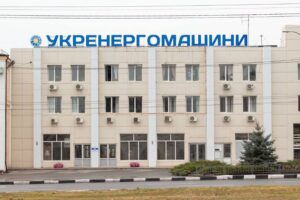
JSC “Ukrenergomashiny” (Kharkiv), more than 75.22% of which is owned by the state, will pay out nearly UAH 2,305,000 (or 75% of its net profit) between October 1 and 29 of this year based on its 2025 performance.
According to a notice published in the disclosure system of the National Securities and Stock Market Commission, the relevant decision was adopted by the general meeting of shareholders on April 29, and on June 10, a list of persons entitled to receive dividends, as well as the procedure and deadline for their payment, was drawn up.
Dividends will be paid at a rate of 0.0055 UAH per share with a par value of 0.25 UAH.
As reported, UAH 1.73 million in dividends will be paid to the state-owned share.
JSC “Ukrenergomashiny” (formerly JSC ‘Turboatom’ and “Elektrovazhmash”) is Ukraine’s sole manufacturer of turbine equipment for hydroelectric, thermal, and nuclear power plants. It also manufactures, among other things, electric motors for rail and urban transport (the “Elektrovazhmash” product line).
In 2025, the company increased its net sales revenue by 32.9% compared to 2024—to UAH 1.06 billion, while net profit increased 3.5-fold—to UAH 3.07 million.
In addition to the state, the company’s shareholders (according to the NSSMC as of the first quarter of 2026) include the “Seventh” investment fund—managed by the asset management company “Svarog Asset Management” and linked to entrepreneur Kostyantyn Hryhoryshyn—holding 15.3416% of the shares, non-resident Valery Valandin – 5.598% of shares.
DIVIDENDS, KHARKIV, power machinery manufacturing, STATE, Укрэнергомашины



