
The Ministry of Youth and Sports of Ukraine is developing a project for the construction of an ice arena in Kyiv on the grounds of the Ivan Poddubny Olympic Professional College—a separate structural unit of the National University of Physical Education and Sports of Ukraine.
“Equipment salvaged from Kherson, which was previously purchased with 70 million hryvnias from the state budget, has already been transferred for the future arena. It has been preserved, is in working condition, and can be used once the necessary infrastructure is in place. The next step should be the construction of a frame-type arena. The relevant project has already been developed and is currently undergoing expert review, which is scheduled to be completed by August 1 of this year,” the ministry stated in a report following a visit to the college by representatives of the Ministry of Sports and the State Agency “Ukrsportobezpechennia.”
It is noted that the launch of the ice arena will allow the college to open two new winter sports departments—short track and figure skating.
“This approach will improve the training of winter sports athletes, taking into account, in particular, the lessons learned from the current Winter Olympic Games,” the ministry noted.
The ministry notes that this is not just about a single facility, but about introducing a more systematic approach to restoring sports infrastructure in Ukraine.
In particular, a mechanism for attracting additional funding through the Sports Recovery Foundation is being developed for this purpose.
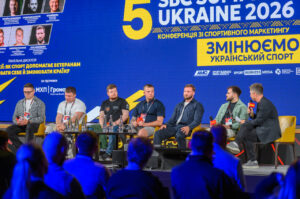
On Wednesday, May 27, the capital’s Parkovy Exhibition and Convention Center hosted the SBC Summit Ukraine, the All-Ukrainian conference on sports marketing, for the first time. This year’s summit marked the fifth anniversary of the event and was the largest in the history of the Sport&Business Club. It brought together nearly 1,500 participants from across the country, including athletes, presidents of federations and clubs, brand representatives, media professionals, entrepreneurs, marketers, investors, and managers. Throughout the day, guests networked, discussed future projects, exchanged experiences, and agreed on collaborations that are sure to continue after the summit.
The summit was co-organized by the Ukrainian Mass Sports Agency, the Kyiv City State Administration’s Department of Youth and Sports, the Sports Committee of Ukraine, and the Donetsk Regional Branch of the National Olympic Committee of Ukraine.
The event was hosted by Maria Skiba, a journalist for the “We Are Ukraine” TV channel, and Dmytro Yegorov, a radio host for “Autoradio.”
In a festive atmosphere, Alexei Braga, CEO of the Sport&Business Club, presented a certificate for 100,000 hryvnias to Artem Goncharenko, head of the “Architecture of Resilience” Institute for Veterans at KNUBA. The funds were raised through donations from participants in the Club’s events and will be used to purchase necessary rehabilitation equipment.
The summit took place simultaneously on two stages, featuring over 60 leading experts in the fields of sports, business, and media who are driving the industry forward today. The event served as a platform for candid dialogue on reforms, major investments, the survival of sports during wartime, attracting sponsors, integrating new technologies, rehabilitating veterans, and building athletes’ personal brands off the field.
Speakers on the main stage included: Matvii Bidnyi, Minister of Youth and Sports of Ukraine; Vadym Guttsait, President of the National Olympic Committee of Ukraine; Olga Saladukha, President of the Ukrainian Athletics Federation; Yulia Khan, Director of the Department of Youth and Sports at the Kyiv City State Administration; Ukrainian soccer legend Oleksandr Shovkovskyi; Ihor Marynych, Director of Adidas Ukraine; sports blogger and founder of Trendets Camp Dmytro Povooznyuk, CEO of Lenovo in Ukraine Taras Dzhamalov, President of the Ukrainian Premier League Yevhen Dykyi, Ukrainian and Turkish soccer champion and creator of a YouTube project Denys Boiko, MEGOGO journalist Oleksandra Kucherenko, Vice President of the NOC of Ukraine and President of the Ukrainian Padel Federation Oleksiy Dniprov, Olympic fencing champion Olena Kravatska, 6-time Ukrainian track and field champion and Biopell ambassador Daria Stavnycha, FC Shakhtar goalkeeper coach Andriy Pyatov, Olympic judo medalist Daria Bilodid, founder of the rhythmic gymnastics academy and Olympic bronze medalist Anna Rizatdinova, WowBody App owner Anita Lutsenko, three-time Olympic canoeing medalist Lyudmila Luzan, and others.
At the same time, practical discussions on the development of sports projects, audience engagement, and modern communication tools took place on the Best Practices Stage for three hours. Speakers included: European fencing champion Roman Svichkar, DuelDuck founder Stanislav Horuna, Spartan Ukraine director Oleksiy Vovk, X-Park founder Yuriy Zozulia, Red Foxes director Olena Rozhkova, and others.
“Holding the summit at the Parkovy Exhibition and Convention Center was our big dream, and I am truly proud that we managed to make it happen, even amid the war. This event has become the largest in our history, as we have broken absolutely all of our own records for the number of speakers, guests, and partners. When you see how this powerful synergy of sports, business, and media is working at full capacity on such a platform, you realize that nothing is impossible for our industry.
Our goal remains unchanged—to create a space for open dialogue, major investments, the emergence of new technological use cases, and collaborations that drive the industry forward. In today’s environment, maintaining this momentum and uniting sports and business is of the utmost importance. But, of course, we wouldn’t have achieved such an impressive scale without our reliable partners, the Club’s large community, and our strong team. Thank you to everyone who has been a part of this story—and see you soon!” – Alexey Braga, CEO of Sport&Business Club.
KYIV, MARKETING, SBC Summit Ukraine, Sport&Business Club, SPORTS

A petition is currently being circulated in Kyiv calling on authorities to prevent the closure of the Family Medicine Center located at 14-B Sribnokilska Street in the Poznyaki neighborhood.
Petition No. 14210 has been registered on the Kyiv City Council website. Its authors are asking city officials to keep the clinic open and ensure the continued operation of the medical facility at this address.
At the time of writing, the petition had gathered 2,700 signatures out of the required 6,000. Another 3,300 signatures are needed for the petition to be considered.
You can support the petition at the following link: https://petition.kyivcity.gov.ua/petition/?pid=14210
For residents of Poznyaky, this center is a vital primary care facility. According to local media, the clinic serves approximately 15,000 patients. This includes, in particular, children, the elderly, and residents with limited mobility, for whom access to medical care close to home is of particular importance.
Supporting the petition is important because closing or repurposing the clinic could make it harder to see family doctors, increase the burden on other healthcare facilities in the Darnytskyi district, and create additional difficulties for patients who regularly seek primary care.
The authors of the petition also urge that no decision regarding the future of the facility be made without open discussion with the community and without a clear alternative for district residents.

“Nova Poshta,” Ukraine’s leading express delivery service, has about 2,000 open positions, including 1,000 branch operators, 600 installers, 300 couriers and drivers, and another 100 in the support office, according to Anna-Maria Sabov, the company’s HR director.
“If we gain an additional platform as another recruitment channel, especially given that it will allow us to select candidates not only based on resumes but also on skills… I am confident that we will speed up the time it takes to fill vacancies,“ Sabov noted during the presentation of the launch of the first phase of the ”Obriy” digital labor market ecosystem in Kyiv earlier this week.
According to Nova Poshta’s management report, the total number of its employees in 2025 was 33,640, compared to 34,110 the previous year, while the average number of employees in 2025 was 27,570.
According to the director, the company’s current total time from the actual search to a trained candidate is about 30–35 calendar days, which includes a training phase lasting from three days to two weeks. Excluding this phase, the process would take 15–20 days.
“That’s a decent pace, but I want us to be even more productive,” Sabov emphasized.
She added that “Obriy” would provide additional value to employers if it allowed for the automation of paperwork when hiring employees, as this still requires a significant amount of time and resources.
The HR Director clarified that, overall, the recruitment department at Nova Poshta fills more than 1,000 vacancies each month, with 55 recruiters working to recruit employees for operational positions in the regions. According to her, the company plans to ensure staffing levels of about 95% during the summer to prepare for the seasonal increase in workload in September.
Sabov also reported that the company is launching a project to attract young specialists who will work on the architecture and modeling of Nova Poshta’s logistics. According to her, the company aims to make shipping cheaper and faster without compromising reliability and quality. To find such specialists, Nova Poshta plans to announce a separate campaign targeting a young audience in the near future.
“We will announce a major campaign to find such people. We want to start with five people first, so if “Obriy” can also provide, for example, a graduate’s GPA and their participation in extracurricular activities, such as academic competitions, this would be very valuable to us at “Nova Poshta” because we want to work with young people,” the director noted.
As reported, the Ministry of Economy, Environment, and Agriculture of Ukraine, in collaboration with the Ministry of Digital Transformation, has launched a closed registration for beta testing of the first tools of the new digital labor market ecosystem “Obriy,” the development and integration of which is estimated at $5–10 million for the current and next years.
The “Obriy” system will integrate information from existing job portals such as Work.ua, Robota.ua, Jooble, and others.
During the beta testing phase, “Diya” is launching its first two services: grants for professional training (reskilling and certification) of up to 15,000 UAH, as well as the option to remotely terminate employment contracts for individuals who remain formally employed in temporarily occupied territories (TOT). The launch of services for all citizens on the “Dii” platform is scheduled for July 2026.
The main activity of “Nova Poshta” is express delivery of documents, parcels, and palletized oversized cargo. Its ultimate beneficial owners are Volodymyr Poperechnyuk and Vyacheslav Klimov.
Oschadbank has increased the loan portfolio of the MHP Group by 500 million hryvnias by providing a revolving credit line to replenish working capital, the bank’s press service reported.
The new financing marks the latest stage in the strategic partnership between Oschadbank and MHP, which has been ongoing since 2022. Taking into account the expanded limit under the general credit agreement between the bank and the MHP Group, the total amount of financing provided exceeds UAH 2.66 billion.
According to Oschadbank, the new credit line will help the company flexibly finance its current operations, maintain production cycles, fulfill obligations to partners, and strengthen the export potential of Ukraine’s agro-industrial complex.
“MHP is one of Oschadbank’s key clients, a leader in the Ukrainian agro-industrial complex, and a company with high-quality financial reporting and stable operations. For companies demonstrating such a high level of financial management as the MHP Group, Oschadbank is ready to offer not only large credit lines but also flexible financing instruments without collateral,” noted Serhiy Chernikov, Director of Oschadbank’s Corporate Business Department.
He added that for a state-owned bank, the decision to provide unsecured financing is based on in-depth analysis of the borrower and a detailed assessment of potential credit risk.
Nadiya Zherebnyuk, Director of the Corporate Finance and Treasury Department at MHP, noted that Oschadbank is a key financial partner of the group, and the expansion of cooperation through unsecured financing instruments has become a new stage in strengthening MHP’s financial stability.
Oschadbank systematically supports large Ukrainian businesses, the agro-industrial complex, and exporters, which provide foreign currency inflows, jobs, tax revenues, and stability to Ukraine’s economy.
Oschadbank is one of Ukraine’s largest state-owned banks. According to the National Bank of Ukraine, as of May 1, 2026, the bank’s assets exceeded UAH 510 billion, with capital amounting to approximately UAH 44.7 billion. The bank serves individuals, small and medium-sized businesses, corporate clients, and the public sector.
MHP is an international food and agrotechnology company with production assets in Ukraine and Europe. The company is expanding its export operations and supplies products to over 70 countries worldwide. In 2019, Perutnina Ptuj—one of the leading producers of chicken and meat products in Southeast Europe—joined the MHP Group.
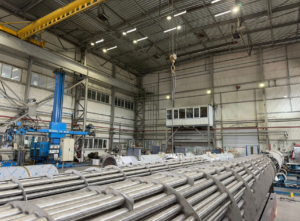
“ORION.GROUP,” a manufacturer of stainless steel equipment and containers (Kyiv Oblast), has launched a mobile production complex that is unique in Ukraine. It allows for the bending, welding, and grinding of metal structures outside the factory—on the customer’s premises. The mobile production complex is used to manufacture and assemble tanks with a diameter of over 5 meters, the transportation of which in assembled form is difficult, expensive, or impossible. The investment in this project amounts to 35 million UAH.
This was announced by Dmytro Kysilevsky, Deputy Chairman of the Verkhovna Rada Committee on Economic Development.
“ORION.GROUP” products for farmers and the food industry are sold with a 25% cost reimbursement to buyers from the state. This program is part of the “Made in Ukraine” policy for the development of Ukrainian manufacturers.
Currently, the ORION.GROUP mobile production complex is being used in the construction of a bioethanol plant in the Ternopil region. After that, the plan is to use this equipment to build an agricultural processing complex in an industrial park in the Khmelnytskyi region.
“ORION.GROUP” manufactures stainless steel tanks for the beer, juice, dairy, bioethanol, confectionery, pharmaceutical, and chemical industries. In addition to Ukraine, the company has built plants and production lines in 65 countries worldwide. In 2011–2013, “ORION.GROUP” was engaged by the French consortium NOVARKA to construct the confinement (arch) over the Chernobyl Nuclear Power Plant.
In 2025, the company’s sales volume amounted to 440 million UAH. During this period, the company paid 97 million UAH in taxes. The company employs 127 people.
INVESTMENTS, Kysilevsky, machine building, ORION.GROUP, STAINLESS STEEL



