
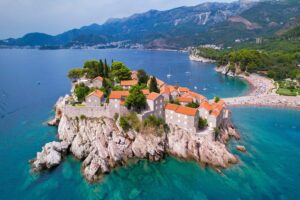
According to Serbian Economist, tourist arrivals to Montenegro in the first quarter of 2026 fell by nearly 4% amid a sharp drop in the number of visitors from Turkey and a continuing decline in the Russian segment, according to the statistical office Monstat.
In January–March 2026, Montenegro welcomed 169,419 tourists, who accounted for 1.079 million overnight stays across all types of accommodation. Compared to the same period last year, the number of tourists decreased by 6,400, or 3.8%, and the number of overnight stays by 41,000, or 3.7%.
The main factor behind the decline was the Turkish market. According to Vijesti, in the first quarter, Turkish citizens accounted for 60,359 overnight stays, compared to 114,477 a year earlier. Thus, the figure fell by 54,000 overnight stays, or 47%. A particularly sharp decline was recorded in private accommodations: the number of overnight stays by Turkish citizens fell from 95,043 to 44,744.
Tour operators attribute the decline to events in late October 2025, when, following an incident in Podgorica involving foreign workers from Turkey and Azerbaijan, attacks occurred on the property and businesses of Turkish citizens. Following this, the Montenegrin government temporarily introduced a visa requirement for Turkish citizens. In December 2025, the visa-free regime was restored, but in a reduced format: the length of stay without a visa was reduced from 90 to 30 days.
The Russian segment also continued to shrink. In private accommodations alone, Russian citizens recorded 317,000 overnight stays in the first quarter of 2026, compared to 370,000 a year earlier. The decline amounted to 53,000 overnight stays, or 14%. Over the past two years, Russian tourist arrivals to Montenegro have already declined significantly: in 2023, tourists from Russia accounted for approximately 3.7 million overnight stays, while in 2025, the figure was approximately 2.4 million.
Part of the decline was offset by other markets, primarily Serbia. According to Vijesti, the number of overnight stays by visitors from Serbia in the first quarter increased by nearly 50,000 compared to the same period last year. The number of overnight stays by tourists from Albania, Germany, and Bosnia and Herzegovina also increased, but this was not enough to offset the decline in Turkish and Russian tourist flows.
Serbia remains one of Montenegro’s key tourist markets. According to the National Tourism Organization of Montenegro, in 2025, Serbian citizens accounted for 18.1% of foreign tourist arrivals, ranking first among external markets. In private accommodation, the share of Serbian tourists by overnight stays in 2025 was 25.6%, which also makes Serbia one of the main sources of demand for the Montenegrin tourism sector.
Ukrainian tourists also constitute a significant group of visitors to Montenegro, particularly in private accommodations. According to Monstat data for 2025, tourists from Ukraine accounted for 4.7% of overnight stays by foreign tourists in private accommodations, compared to Turkey’s share in this segment of 4.9%.
Official monthly statistics show that in March 2026, Montenegro’s collective accommodation facilities recorded 56,306 thousand arrivals and 123,913 thousand overnight stays. Foreigners accounted for 71.9% of all overnight stays, with the majority occurring at seaside resorts—72.4%.
Among foreign tourists in March, visitors from Serbia led the way with 5,980 thousand arrivals, followed by Albania, Germany, China, Turkey, Russia, and Ukraine.
https://t.me/relocationrs/2901

Ukrainian brand Sleeper is opening its first store in Kyiv, the company announced.
According to the brand’s social media pages, the boutique at 3 Rylskyi Lane is scheduled to open on Kyiv Day, May 31.
“This boutique expands the Sleeper ethos: each piece is made from start to finish in 6–12 hours by a single tailor, honoring the legacy of Kyiv’s light industry schools,” the brand announced on Facebook.
Sleeper, a premium-quality women’s clothing brand, was founded in Kyiv in 2014 by Katya Zubareva and Asya Varetsa, starting with a collection of everyday pajamas.

The Verkhovna Rada approved, in its second reading and as a whole, draft law No. 15206 establishing the third Saturday in September as an annual public holiday—Ukrainian Music Day.
According to a correspondent for the “Interfax-Ukraine” agency, during the plenary session on Wednesday, June 27, the decision was supported by 292 members of parliament, with no votes against.
As reported, draft resolution No. 15053 was registered in the Verkhovna Rada on March 3.
As noted in the explanatory memorandum, the choice of this date has historical and symbolic significance. The date is linked to the events of the 1989 “Chervona Ruta” festival in Chernivtsi, when on September 24, at the festival’s closing ceremony, the then-banned anthem “Shche ne vmerla Ukraina” was performed publicly for the first time. The festival’s events were widely covered by Western radio stations, which helped draw the international community’s attention to the aspirations of the Ukrainian people. The initiative to establish Ukrainian Music Day was proposed by representatives of the music industry during a meeting with the leadership of the Verkhovna Rada on September 18, 2025.
Among the authors of the draft resolution were Oleksandr Sanchenko (Servant of the People faction), Mykola Knyazhytskyi (European Solidarity), and Verkhovna Rada Chairman Ruslan Stefanchuk.
The 1st All-Ukrainian Festival of Contemporary Song and Popular Music “Chervona Ruta” took place on September 17–24, 1989, in Chernivtsi.

According to Serbian Economist, Serbia and a number of leading Chinese companies have signed new investment agreements that are expected to bring the country over €940 million in investments and 1,650 new jobs, Chinese media reported.
The documents were signed in the Chinese city of Jiaxing in the presence of Serbian President Aleksandar Vučić. The agreements cover auto parts, high-tech manufacturing, components for electric vehicles, tires, lighting systems, and precision plastic parts.
The largest block of agreements involves the Mint Group. The company, a global player in the production of exterior automotive parts, structural components, and aluminum battery cases for electric vehicles, is implementing two projects in Serbia. The first involves an investment of €135 million and the creation of 600 jobs in Loznica, while the second involves an investment of €91 million and 220 jobs in Šabac.
An agreement has been signed with the Chinese company SHAK for a €33.5 million project in Novi Sad, which is expected to create 50 new jobs. The company specializes in the production of high-quality automotive chassis and structural components.
An investment agreement will also be signed with BMTS Technology, a manufacturer of turbochargers and electrical auxiliary systems for passenger and commercial vehicles. The project focuses on automation and is estimated to cost €13.3 million.
Another project involves Xingyu Automotive, one of China’s leading manufacturers of automotive lighting systems, including LED headlights, taillights, and lighting modules. The company plans to invest €77 million in Niš and create 100 jobs.
Separately, a new €566 million investment by Linglong Tire in Zrenjanin was announced, which is expected to create 400 new jobs. Linglong has been operating in Serbia since 2019; it is China’s largest tire manufacturer and ranks among the world’s top ten manufacturers of passenger, truck, and specialty tires.
A planned investment by Yusei in Niš was also announced, amounting to €27 million and creating 280 jobs. Yusei is a Chinese manufacturer of high-precision plastic automotive parts, injection molds, and chrome-plated components.
A memorandum of understanding was also signed at the ceremony between Mint Holding Group and China Construction Fourth Engineering Division Corp. Ltd. Southeast Branch. The document is intended to support the implementation of Mint’s investments in Serbia.
For Serbia, these agreements are important not only for creating new jobs but also for deepening China’s presence in the country’s automotive and technology industries. The new projects involve electric vehicles, battery casings, lighting, tires, turbo systems, and plastic components—that is, the segments where Serbia is seeking to integrate into European and global automotive supply chains.
https://t.me/relocationrs/2899
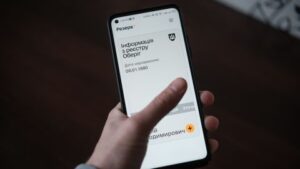
Researchers at higher education institutions and scientific organizations can now apply for a mobilization deferment entirely online through the “Reserve+” app, according to the Ministry of Defense of Ukraine.
According to the ministry, the online deferment feature in “Reserve+” has been expanded to include researchers. Previously, online deferments were already available for certain categories of employees at institutions of higher, pre-higher vocational, and professional education.
To obtain a deferment online, the employee’s data must be up-to-date and correctly entered into the Unified State Electronic Database on Education (USEDE). Key requirements include a primary place of employment, employment of at least 0.75 FTE, eligibility for deferment based on a position in higher education or research, and holding a position included in the list of research positions.
The Ministry of Education and Science clarifies that the new category in “Reserve+” applies to scientific, scientific-pedagogical, and pedagogical staff at institutions of higher, pre-higher vocational, and professional education, as well as scientific institutions and organizations.
If the system does not confirm the right to deferment or issues a denial, the employee must contact their employer to verify and update the data in the Unified State Electronic Database on Military Service (USEDMS). The accuracy of the data in the database is crucial for the automatic confirmation of the right to deferment.
The expansion of online deferrals in “Reserve+” is part of the digitization of military registration and reduces the need for in-person visits to territorial recruitment centers. For research institutions and educational institutions, this also means greater responsibility for the timely and accurate entry of personnel data into the EDBO.

Imagine the situation.
You’re sitting in a doctor’s office somewhere in Poland, Canada, or Germany. Your head is already pounding from a fever or stress, and then you hear:
— “Can you describe your symptoms?”
— “How long have you had this pain?”
And at that moment, your brain seems to shut down.
Even though at home you could easily watch TV shows in English, read messages, or even work with foreign clients, everything becomes much more difficult in the doctor’s office. You start to fear saying something wrong. Not understanding important information. Mixing up your medications. Describing your symptoms incorrectly.
And that’s completely normal.
For many Ukrainians abroad, medical situations are precisely when the language barrier is felt most acutely.
There’s a big difference between:
● “ordering coffee”;
● “talking about the weather”;
● and explaining to a doctor that you’ve had a strange pain in your chest for the past three days.
Medical conversations are stressful even in your native language. And in a foreign language—even more so.
People start to worry about several things at once:
● fear of making a mistake;
● feeling physically unwell;
● unfamiliar words;
● accent;
● the other person speaking too fast;
● fear of looking “stupid.”
It’s especially hard for people at the A2–B1 level. They already know something, but they don’t feel confident yet. And it’s this group that most often says:
“I understand everything… but when I have to speak—I get lost.”
This is one of the strongest fears.
People are afraid of missing something important:
● the name of the illness;
● recommendations;
● how to take medication;
● test results.
Especially when the doctor speaks quickly or has a strong accent.
Many people think they need to speak in a complex and grammatically perfect way.
In reality, it’s much more important for the doctor to understand the basic information:
● where it hurts;
● how long it’s been going on;
● how severe the pain is;
● if there’s a fever;
● if there are any allergies.
Even very simple English can solve the problem.
This is another common fear.
But the truth is that doctors in most countries interact daily with people from all over the world:
● Ukrainians;
● Poles;
● Indians;
● Chinese;
● Arabs;
● French.
For them, accents are nothing out of the ordinary.
Their main goal is to help you, not to judge your pronunciation.
Here’s what often surprises people:
You don’t need an Advanced level to see a doctor.
Seriously.
In most situations, all you need is:
● a basic vocabulary;
● a few ready-made phrases;
● the ability to calmly explain the problem in simple words.
For example:
“I have a headache.”
“My throat hurts.”
“I feel dizzy.”
“I have a fever.”
These are simple sentences. But they work.
Don’t try to learn complex medical terminology right away.
Start with the essentials.
● I have a headache — I have a headache
● I have a sore throat — I have a sore throat
● I have a fever — I have a fever
● I feel weak — I feel weak
● I feel dizzy — I feel dizzy
● I have a cough — I have a cough
● I have stomach pain — I have stomach pain
● It hurts here — It hurts here
● The pain is severe — The pain is severe
● It started yesterday — It started yesterday
● It gets worse at night — It gets worse at night
● I’m allergic to penicillin
● I take these medications
● Can I buy this without a prescription?
● Could you repeat that, please?
● Could you speak more slowly?
● Can you write it down?
● What does this word mean?
These phrases may seem simple. But they are often what save the day in real-life situations.
This is a highly underrated tip.
Before your doctor’s visit, you can write down in advance:
● your symptoms;
● when they started;
● your temperature;
● the names of any medications;
● allergies;
● questions for the doctor.
Then, when you’re stressed, you won’t have to come up with the right words on the spot.
What’s more, you can simply show your notes to the doctor.
And that’s perfectly normal.
This is one of the main mistakes adults make.
People start:
● constructing complex sentences;
● translating everything word for word;
● worrying about grammar.
The result is panic and silence.
Instead, it’s better to:
● keep it short;
● use simple words;
● explain step by step.
For example:
❌ “I have been experiencing some uncomfortable sensations…”
✅ “My chest hurts.”
Simplicity isn’t weak English.
Simplicity is effective communication.
Many people study English for years, but:
● can’t make a doctor’s appointment;
● are afraid of phone calls;
● get lost at the pharmacy;
● panic in stressful situations.
Why is that?
Because traditional learning is often built around:
● abstract grammar;
● exercises;
● tests;
● “ideal” dialogues from textbooks.
But real life sounds completely different.
That’s exactly why adults often need practical classes that include:
● speaking;
● real-life dialogues;
● role-playing real-life situations;
● psychological comfort;
● working through the fear of speaking.
For example, many students notice that after classes and practice in the <a href=”https://www.english.kh.ua/”>Business Language courses</a>, it becomes much easier for them to speak not only about work but also in everyday situations—from calling a doctor to communicating at a bank or pharmacy.
First of all—don’t panic.
Even people with good English sometimes don’t understand medical terms.
And that’s normal.
A simple phrase:
“Could you speak more slowly, please?”
— is perfectly normal.
Especially:
● medication names;
● dosages;
● recommendations.
For example:
“So I should take this twice a day?”
This helps ensure you’ve understood everything correctly.
One important thing that many people realize too late:
The goal of language isn’t to sound like a native speaker.
The goal of language is to be understood.
And when a person can:
● explain a problem;
● ask a question;
● understand the answer;
● get help —
that’s English that works.
Even if there are mistakes.
Even if there’s an accent.
Even if you speak slowly.
It’s important to remember this.
Stress in medical situations is universal.
Even English speakers:
● forget words;
● get nervous;
● ask for clarification;
● get confused.
So don’t expect yourself to give a “perfect performance.”
You’re not taking an exam.
You’re just trying to take care of your health.
Here’s what really works for adults:
Even 10–15 minutes of active practice is better than hours of passively watching videos.
Under stress, the brain loves patterns.
That’s why it’s helpful to have:
● set phrases;
● prepared answers;
● familiar sentence structures.
Not just:
● Present Perfect;
● conditional sentences;
● test exercises.
A:
● phone calls;
● the pharmacy;
● the doctor;
● work;
● renting an apartment;
● small talk.
This is exactly what gives you a sense of confidence abroad.
They stop waiting for the moment when they’ll “be ready.”
Because that moment hardly ever comes.
At first, a person:
● gets nervous;
● gets lost;
● speaks slowly;
● makes mistakes.
And that’s normal.
Confidence doesn’t come BEFORE speaking.
It comes AFTER many attempts.
When people talk about English, they usually mention:
● career;
● salary;
● job interviews;
● international companies.
But for many adults, the true value of the language lies elsewhere.
When you can:
● talk to a doctor on your own;
● call for help;
● explain a problem;
● understand recommendations;
● not feel helpless.
In moments like these, English ceases to be just a “subject.”
It becomes a sense of control over your own life.
And perhaps that is what matters most.
english_for_emigration, language_barrier, medical_english, online_english, speaking_english



