
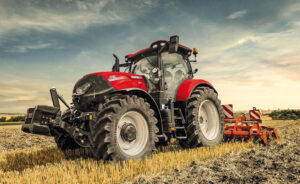
Over the two years of the updated state support program, Ukrainian agricultural producers have purchased domestic agricultural machinery and equipment totaling over 10.5 billion UAH (including VAT), according to the press service of the Ministry of Economy, Environment, and Agriculture.
According to the ministry’s report, between April 2024 and February 2026, 8,982 enterprises took advantage of the opportunity for partial reimbursement of costs (25%). During this period, farmers purchased 14,611 units of equipment, and the total amount of funds disbursed by the state reached $2.2 billion.
“For farmers, this is a beneficial tool for modernizing their equipment fleet, and for manufacturers, it means an increase in orders. Since April 2024, the list of equipment eligible for state compensation has grown more than 14-fold. Funding for the program has already been allocated for 2026,” noted Minister of Economy, Environment, and Agriculture Oleksiy Sobolev.
The 2026 budget allocates $1.8 billion for the implementation of the state program. The first $126.1 million has already been disbursed to 382 manufacturers who submitted applications this winter. Farms in the Ternopil, Poltava, Cherkasy, Kirovohrad, and Vinnytsia regions were the most active buyers of equipment.
The official list of eligible equipment currently includes 14,425 items from 166 Ukrainian manufacturers. The ministry also noted that, starting in April 2026, the compensation rate for farmers in frontline areas has been increased to 40%.
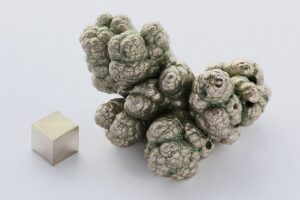
Global primary nickel production is projected to decline by 4.3% in 2026, reaching 3.715 million tons, according to the International Nickel Study Group (INSG).
By the end of 2025, it had grown by 8.1% to 3.88 million tons.
These estimates do not account for the possibility of any significant disruptions in operations, the INSG report notes.
Indonesia, the world’s leading nickel producer, introduced additional measures in 2026 to tighten regulation of the mining sector. The approved nickel ore production quota for this year was set at a significantly lower level than in 2025. However, it may be revised upward, depending on the government’s assessment of supply and demand.
Global consumption of primary nickel is expected to increase by 4.2% this year, reaching 3.747 million tons. Last year, it rose by 3.5% to 3.473 million tons.
As a result, the global nickel market will face a shortage in 2026. The deficit will amount to 32,000 tons, whereas in 2025 a surplus of 283,000 tons was recorded, in 2024 – 226,000 tons, and in 2023 – 175,000 tons.
Uncertainty regarding production volumes in Indonesia and the conflict in the Middle East could lead to a revision of forecasts. “The consequences (of the war in Iran – ed.) for metal markets—both in terms of production and final demand—have not yet been adequately assessed,” the INSG report notes.
The INSG is an independent intergovernmental organization founded in 1990 and based in Lisbon, Portugal. The group’s members include nickel-producing and consuming countries: Australia, Brazil, the United Kingdom, Germany, India, Italy, Cuba, Norway, Portugal, Russia, Finland, France, Sweden, Japan, and the European Union.
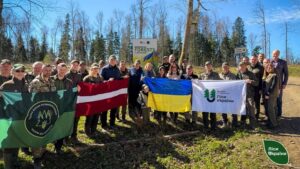
The state-owned enterprise “Forests of Ukraine,” together with Latvian partners, has launched a project to create living memorials in the EU, under which 2,000 pine trees were planted in Latvia in honor of nearly 200 Ukrainian foresters who lost their lives, the enterprise’s press service reported on Facebook on Monday.
“The memory of the fallen must be transformed into the world’s determination to stop aggression,” said Ukrainian President Volodymyr Zelenskyy during the presentation of the 2026 Four Freedoms Award.
The event in the Talsi region near Kamparkalns marked the first step in the international expansion of the “Forests of Memory” project, under which nearly 50 memorial groves have already been planted in Ukraine. On April 23, a memorial plaque was installed and trees were planted on the Latvian site in honor of the Ukrainian heroes.
“Today, here on Latvian soil, we are creating a living monument to Ukrainian foresters who defended their homeland with weapons in hand. These trees will remind everyone of the courage of the Ukrainian people and the price paid for independence,” emphasized Maris Lopa, Chairman of the Latvian Forest Certification Council.
The event was organized by the Latvian Ministry of Agriculture, the Latvian Forest Certification Council, and the companies Latvijas valsts meži and Latvijas Finieris.
The State Enterprise “Forests of Ukraine” predicts that this year such memorial forests will also appear in other European Union countries to strengthen international support and honor the heroic deeds of Ukrainian soldiers.
In addition, on April 19, Latvian volunteers delivered another batch of aid to the Armed Forces of Ukraine: seven buses, including two minibuses for units where foresters from Volyn and Rivne regions serve.
The state-owned enterprise “Boryspil International Airport” (Kyiv) announced a tender on April 27 for the procurement of compulsory civil liability insurance for owners of land vehicles (OSAGO), according to the Prozorro electronic public procurement system.
The estimated cost of the services is 543,600 UAH.
The deadline for submitting bids is May 5.
The winner of a similar tender in April of this year was Guardian Insurance Company.
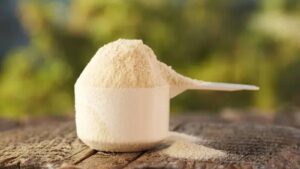
The global rise in skim milk powder prices has stimulated demand for Ukrainian products and led to unusually strong dynamics in the domestic market, the industry analytical agency “Infagro” reported on Monday.
According to the agency, the export geography of skim milk powder (SMP) in February was unusual. Syria became the main buyer with a 30% share, followed by Malaysia (14%), Japan (13%), Georgia (7%), and Israel (6%). The remaining 29% of shipments went to other markets.
“This distribution seems unexpected, given that just six months ago, Syria was hardly considered by exporters. It is expected that in the near future, suppliers will begin to reorient themselves more actively toward the European market,” analysts noted.
Experts predict that, under favorable conditions, the EU quota of 7,500 tons could be utilized in the first half of the year. At the same time, traders are in no hurry to completely abandon alternative markets that have already proven their effectiveness.
In the whole milk powder (WMP) segment, export activity is currently limited, but the supply structure is clearly concentrated: Israel accounts for 57% of exports, and Poland for 43%, Infagro noted.

According to Fixygen, JSC “Sumy Plant of Pump and Power Engineering ‘Nasosenergomash’” intends to hold an extraordinary general meeting of shareholders via remote participation on May 21, 2026. Information regarding the convening of the meeting was published by the State Property Fund of Ukraine, which acts as the body managing the state’s corporate rights in the company.
The company is one of Ukraine’s largest manufacturers of pumping equipment and power machinery. According to public registries, the plant is registered in Sumy, with EDRPOU code 05785448.
According to SMIDA data for the fourth quarter of 2025, the Ukrainian state, represented by the State Property Fund, owns 90.6065% of the company’s shares.
According to Opendatabot, the company’s revenue in 2024 amounted to UAH 275.942 million, its net loss was UAH 167.06 million, its assets totaled UAH 2.089 billion, and its liabilities amounted to UAH 1.571 billion. In the quarterly report for the first nine months of 2025, revenue amounted to UAH 340.764 million, and the net loss was UAH 27.154 million.
Nasosenergomash specializes in the production of pumps and equipment for the energy sector, the oil and gas sector, water supply, and industry. The company remains one of the key machine-building assets in the Sumy region, and the controlling stake is managed by the state through the State Property Fund of Ukraine.



