
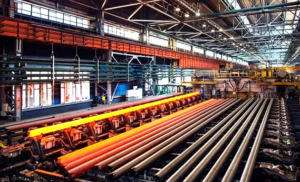
The Experts Club analytical center has analyzed the latest trends in the metallurgical sector and the data of the industry’s largest association, the World Steel Association. In 2026, according to the World Steel Association, the global steel market will move from a phase of prolonged adjustment to weak growth: global demand will increase by 0.3%, to 1.724 billion tons, and in 2027 it will accelerate to 1.762 billion tons, or by 2.2%. The association itself believes that the market is passing through the bottom of the 2025–2026 cycle after the structural pressures that had restrained demand since 2022. This means that the global steel industry is gradually emerging from its downturn, but it is doing so very unevenly across regions.
The key conclusion for Ukraine is that the external environment for metallurgy is, on the whole, no longer deteriorating. Worldsteel expects that in 2027 all major developed economies, including the EU, the US, Canada, Japan, and Korea, will already show positive steel demand dynamics. For the EU and the UK, steel consumption is forecast to grow by 1.3% in 2026 and by 3% in 2027, while for the US the figures are 1.7% and 2% respectively. This is important for Ukraine because the European market remains its main external reference point, both in terms of steel product sales and future industrial cooperation.
At the same time, the recovery in global demand will be asymmetric. China, which still determines the global market environment, will continue to reduce steel demand in 2026, though only by 1.5%, and in 2027, according to the association, will move to almost flat dynamics. The main driver of growth among major markets remains India, where demand is expected to increase by 7.4% in 2026 and by 9.2% in 2027. In the developing world excluding China, growth, on the contrary, will slow to 2.5% in 2026 because of the conflict in the Middle East, but will then recover.
For Ukraine, this means that the global market does not promise a sharp price or volume breakthrough, but neither does it create a scenario of a new collapse. In other words, over the next two years the decisive factor for Ukrainian metallurgy will no longer be so much global demand as Ukraine’s own ability to maintain and expand steelmaking, ensure energy supply, logistics, and access to export routes. In this sense, the external market environment is becoming moderately favorable rather than deteriorating, but it is not a saving grace.
Against this background, Ukraine’s own indicator looks restrained. At the end of 2025, the country produced 7.409 million tons of steel, which was 2.2% lower than the 2024 level, and ranked 21st in the world. This figure is significantly lower not only than pre-war levels, but also below the scale that once allowed Ukraine to influence the regional market as one of the major European players.
If the global market is indeed entering a phase of moderate recovery, then the window of opportunity for Ukraine will be determined not so much by whether global demand grows by 0.3% or 2.2%, but by whether the country can restore production volumes at least to a stable double-digit level in millions of tons. Worldsteel’s positive outlook for the EU, growing infrastructure and defense spending in Europe, as well as stabilizing demand in the developed world create the basis for higher consumption of Ukrainian steel in the future. But this opportunity will be realized only if Ukraine restores its own industrial capacity, not automatically.
In a broader sense, the Worldsteel forecast shows that steel is once again becoming an indicator of industrial policy. Where infrastructure investment, railways, defense budgets, and machine-building are growing, demand for metal returns. Ukraine’s post-war recovery strategy should consider metallurgy not as a separate export sector, but as a foundation for construction, machine-building, transport infrastructure, and defense production. Only in this case can even moderate global growth translate into a more tangible internal industrial effect for the country.
The World Steel Association (Worldsteel) brings together steel producers, industry associations, and research institutes from all key steel-producing countries. The association’s members account for around 85% of global steel output.
The path to the EU, border closures, changes in export structures, and new customs regulations—this is the reality in which “the art of defending” one’s own trade interests has become a key skill for business survival. How are the rules of the game changing for Ukrainian businesses in global markets? What can be expected from trade with the EU in the coming years? And how can businesses protect their interests amid increasingly fierce competition and the emergence of new barriers?
Interfax-Ukraine, in partnership with the law firm “Ilyashev & Partners,” DONE®, and the publishing house “Legal Practice,” invites you to discuss the most pressing issues in international trade at the conference “Trade Wars: The Art of Defense”.
Program and registration: https://tradewar2026.ticketforevent.com
Date: May 20, 2026.
Time: 10:00 a.m.–1:00 p.m. (registration begins at 9:30 a.m.).
Venue: Kyiv (the venue will be communicated to registered participants the day before the event)
Owners, top managers, and heads of legal and foreign economic departments of major Ukrainian and international companies are invited to participate.
Participation in the event is free of charge, subject to additional confirmation of registration from the organizers. Space is limited. The organizers reserve the right to refuse registration if the capacity limit is reached.
According to Fixygen, PJSC ASC “Skarbnytsia” plans to hold a shareholders’ meeting on April 30, 2026. The company regularly publishes materials on corporate procedures and meeting minutes on its website in the relevant section for shareholders. Previously, the insurer has already held annual and extraordinary shareholder meetings, including on April 30, 2025, and has also published separate announcements regarding subsequent corporate decisions. This indicates that the standard schedule for corporate governance and reporting remains in place.
ASC “Skarbnytsia” is a Lviv-based insurance company operating as a private joint-stock company. According to its official website, the company was founded in 1991, with Ruslan Kozakevych listed as its CEO. According to Opendatabot data, the company’s revenue in 2025 amounted to 47.694 million UAH compared to 35.284 million UAH in 2024, and its authorized capital was 48 million UAH. Its primary business activity is other types of insurance, excluding life insurance.
The insurer’s website also publishes its ownership structure. As of January 1, 2026, the ownership chart includes, among others, Iryna Popovych, Maria Pasternak, Volodymyr Pasternak, Roman Pasternak, and the LLC “Asset Management Company ‘Western Investment Group.’” In 2024, the National Bank of Ukraine renewed the company’s existing licenses to conduct insurance activities across the full range of direct insurance classes that were in effect at the beginning of the year.

Agro-Region, which became part of the Enselco group following its acquisition by the Kernel agricultural holding, plans to sow nearly 27,000 hectares during the current spring planting season, the company’s agronomic service reported on its Facebook page.
According to the report, half of the planned acreage will be allocated to corn. Compared to last year, the company has significantly increased the share of this crop in its planting mix: while in 2025, 4,600 hectares (43.4%) were allocated to it in the Kyiv cluster and 3,500 hectares (36%) in the Western cluster, corn now accounts for 50% of the spring crop (about 13,500 hectares).
The company specified that 10 seeding complexes are being used for the work. Due to weather conditions, farmers have to carry out sowing on a tight schedule, taking advantage of every favorable temperature “window.”
“Yes, the weather dictates its own rules, and we have to seize every window of warmth. However, we all know the value of time: what is being sown now is not just seeds, but the result for the entire coming year, or, as the saying goes, the time when ‘one day feeds the whole year,’” emphasized Agro-Region.
As reported, in March 2026, the Enselco agricultural group completed the integration of Agro-Region’s operations, resulting in its land bank growing to 190,000 hectares. According to the plans of company owner Andriy Verevsky, this year’s spring campaign marks the first stage of the unified structure’s operations under common technological standards.
The Agro-Region group of companies operates in the Kyiv, Chernihiv, Zhytomyr, and Khmelnytskyi regions. It specializes in crop production, dairy farming, and grain storage. The consolidated Enselco group plans to harvest 1.4 million tons in the 2026 season.

You’ve just closed the tab with your test results. On the screen are the numbers you’ve been dreaming of. Euphoria mixes with relief: hours of studying with textbooks, endless listening exercises, and attempts to squeeze complex thoughts into 45 seconds of Speaking are now behind you. You’ve earned your “ticket” to the world of international education.
But this is where the real fun begins. Many people view the TOEFL as the final boss level, after which their English automatically becomes “perfect.” In reality, a high score is just the entry threshold. Real academic English in the lecture halls of Harvard, Oxford, or the Sorbonne operates by slightly different rules than exam templates.
In this article, we’ll explore how to keep your enthusiasm alive after the exam and reach a level where you don’t just “understand lectures,” but become a full-fledged participant in academic discourse.
Of course, high-quality TOEFL preparation is the foundation without which you can’t even dream of admission, but the real game begins after you receive your certificate. Why do even students with scores of 100+ sometimes feel helpless during their first month of study?
The exam tests your ability to use the language in a controlled environment. In real university life, you’ll face:
● Professors with different accents and speaking speeds.
● Slang and professional jargon not found in dictionaries.
● The need to synthesize information from five different sources simultaneously.
The next level is the transition from “reproducing knowledge” to “critical analysis.”
On the exam, you’re taught to write using the structure: Introduction – Body 1 – Body 2 – Conclusion. This works for a test, but in a 15-page academic essay, this template becomes your cage.
Situation: Student Andriy enrolled in a master’s program in economics. He writes his essay using standard TOEFL transitions: “Firstly,” “Secondly,” “In conclusion”. The professor returns the paper with the comment: “Too mechanical. Where is your position?”
Solution: The next level involves using Hedges (qualifiers) and Boosters (reinforcements).
Instead of confidently stating “This is true,” academic English requires nuance: “The evidence suggests that…” or “It is highly probable that…”. The ability to use degrees of certainty is what distinguishes a student from a scholar.
On the TOEFL, you listen to a clearly structured lecture. In reality, a professor may stray from the topic, make jokes, or answer questions from the audience, completely changing the train of thought.
Situation: Elena understands podcasts brilliantly, but in a seminar in London, she can’t get a word in. By the time she formulates a grammatically correct sentence, the discussion has moved on.
Solution: You need to master the strategies of Interrupting & Interjecting. An academic environment is not a monologue, but a battle of ideas. Learn to use icebreaker phrases:
● “Building on what Mark said…”
● “I see your point, however, have we considered…?”
● “I’d like to challenge that assumption…”
This isn’t just about speaking—it’s a skill in rapid critical thinking in real time.
If you had to read 700 words in 18 minutes for an exam, at university you’ll have to process 200–300 pages every week. Reading “everything in a row” is a path to burnout.
Pro strategies:
A high level of English after the TOEFL is the ability to convey a complex idea in your own words without losing the meaning or falling into plagiarism. This is much more difficult than simply replacing “big” with “enormous.”
Practical tip: Practice summarizing academic articles in a single sentence. If you can condense 10 pages of text into one concise thesis statement—you’ve mastered the language at an expert level.
Academic life isn’t limited to the library. It involves coffee with colleagues, conferences, and informal conversations with advisors. Often, students who write perfectly struggle with “small talk.”
The next level is Professional Sociability. The ability to politely ask for help, discuss the latest industry news, or simply keep a conversation about the weather going without feeling uncomfortable.
If you’ve already taken the TOEFL, here’s your action plan for the next three months:
● Listen to “unpolished” English. Forget about educational audio.
Switch to debates on the Intelligence Squared platform or lectures from leading universities on Coursera (without subtitles).
● Write critical reviews. Pick any news story and write a 300-word review of it using academic vocabulary.
● Expand your vocabulary through collocations. Don’t just learn the word “effect.” Learn “exert an effect,” “adverse effect,” “negligible effect.” This will make your speech sound natural to a native speaker.
Language is a muscle. The TOEFL is a measure of your current strength, but not the limit of your potential. The academic environment demands flexibility, intellectual courage, and the ability to continuously improve.
Remember that you are studying not to impress an exam committee, but to become a professional respected anywhere in the world.
We understand that earning a certificate is just the beginning of your great journey. Our English courses are designed specifically for those who aspire to more than just a “passing grade.” We help you bridge the gap between theory and real-world practice, preparing you for lively discussions, writing complex essays, and professional networking. With us, you’re not just learning a language—you’re mastering a tool to conquer top universities and international markets. Our teachers will be your guides into the world of authentic, vibrant, and intellectual English, where you will always feel confident. Are you ready for the next step? We’ll help you take it!
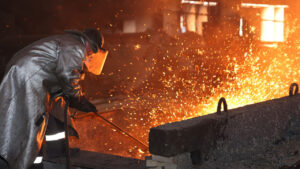
The Kametstal plant, part of Metinvest’s mining and metallurgical group and established at the facilities of the Dniprovsky Metallurgical Plant (Kamenskoye, Dnipropetrovsk Oblast), is carrying out a third-class overhaul of blast furnace No. 9 in the plant’s blast furnace shop.
According to the company, the upgrades are being carried out in “blitz” mode, which will ensure long-term reliable operation of the equipment and stable fulfillment of production targets.
It is noted that among the key tasks of the overhaul is the replacement of equipment that can only be repaired or replaced while the blast furnace is shut down. Specifically, this involves replacing the small cone of the rotating charge distributor of the furnace charging device, manufactured by Metinvest Machinery’s partners. The assembly and installation of the unit are being carried out by specialists from the Kametstal metallurgical equipment repair shop.
Repairs are also being carried out in the casting yard, where components and parts of the cast iron tap gate opening and closing mechanisms, charging equipment, the air heater and dust collector units are being replaced, and where electrical and power equipment in all furnace sections is being inspected and repaired by specialists from the equipment repair shop.
“The overhaul of DP-9 is a crucial stage of this year’s maintenance program for the blast furnace shop. It is aimed at maintaining reliable and stable furnace performance, upon which the fulfillment of production plans and the operational efficiency of the entire division directly depend,” the company’s statement notes.
“Kametstal” was established on the basis of PJSC “Dniprovsky Coke Chemical Plant” (DKHP) and PJSC “Dniprovsky Metallurgical Plant” (DMP). The plant is part of the “Metinvest” group.
Metinvest is a vertically integrated group of mining and metallurgical enterprises. Its facilities are located in Ukraine—in the Donetsk, Luhansk, Zaporizhzhia, and Dnipropetrovsk regions—as well as in European countries. The holding’s main shareholders are the SCM Group (71.24%) and Smart Holding (23.76%). Metinvest Holding LLC is the management company of the Metinvest Group.



