

According to Experts.news, Ukrainian citizens planning to travel abroad or return to the country with their pets must prepare veterinary documents in advance, verify that the animal has a microchip and a valid rabies vaccination, and in some cases, also provide the results of an antibody test, the Embassy of Ukraine in the Slovak Republic reported.
As diplomats note, the movement of an animal is considered non-commercial if it is not for the purpose of sale or transfer to another owner. For such trips, the main requirements include identification of the animal via a microchip, a valid rabies vaccination, an international veterinary certificate, and a veterinary passport of the prescribed format. Typically, no more than five animals may be transported as part of a non-commercial movement.
Additional requirements must be taken into account for trips from Ukraine to EU countries. As of April 22, 2026, updated rules for the non-commercial movement of pets from third countries will be in effect in the European Union. For Ukraine, the basic requirements have not changed significantly: a dog, cat, or ferret must be microchipped, have a valid rabies vaccination, and, as a rule, a test result confirming sufficient levels of antibodies to the rabies virus.
An important detail concerns the sequence of procedures. The microchip must be implanted before the rabies vaccination or on the day of vaccination. At the time of the initial vaccination, the animal must be at least 12 weeks old, and such a vaccination typically becomes valid for travel no earlier than 21 days afterward.
For Ukrainian animals entering the EU, a rabies antibody titer test is required. The State Service of Ukraine for Food Safety and Consumer Protection recommends drawing blood for analysis no earlier than 30 days after vaccination and taking into account the mandatory waiting period of at least 90 days before obtaining the necessary travel documents. The test itself must be conducted in an EU-approved laboratory.
If the test has already yielded a positive result, it does not need to be repeated for each trip, provided that the animal is revaccinated in a timely manner before the previous vaccination expires.
An international veterinary certificate must be obtained before crossing the border. For entry into the EU from a third country, it is valid for 10 days from the date of issuance until the document and identification checks are completed at an official point of entry. After passing inspection, the certificate may be used for further travel within the EU for up to six months or until the rabies vaccination expires—whichever comes first.
When crossing the EU’s external border with an animal, you must do so through state-designated Travellers’ Points of Entry, where authorized services can verify the animal’s documents and identification. Before traveling through Slovakia, Poland, Hungary, or Romania, it is advisable to check in advance whether the chosen border crossing is authorized for entry with pets.
Starting in 2026, another important detail has been introduced. If the animal is accompanied not by the owner but by a person authorized by the owner, the trip may be considered non-commercial only if the owner crosses the border no more than five days before or after the animal. A written declaration must be attached to the documents. Otherwise, stricter rules governing the commercial transport of animals may apply.
Ukraine has also changed the format of the veterinary passport. A new template, approved by Order No. 1366 of the Ministry of Agrarian Policy dated February 28, 2025, has been in effect since March 1, 2026. However, previously issued veterinary passports remain valid and do not need to be replaced.
The veterinary passport is issued by a state or authorized veterinarian after examining the animal and entering information regarding its identification, vaccinations, and other necessary preventive measures. For now, this document is issued in paper form in Ukraine.
Specific requirements may vary depending on the country of destination. For example, to import dogs into Finland, Ireland, Malta, Northern Ireland, and Norway, additional treatment against the tapeworm Echinococcus multilocularis is required, administered by a veterinarian within the specified time frame prior to entry.
A veterinary inspection is also conducted when the animal returns to Ukraine. Only clinically healthy animals accompanied by the owner or an authorized person and meeting the established requirements are permitted for import. Requirements regarding identification, vaccination, and veterinary documentation apply to dogs, cats, and ferrets. Separate rules apply to animals under 16 weeks of age.
If more than five dogs, cats, or ferrets are being transported, such a trip may be considered non-commercial only in certain cases—for example, to participate in exhibitions, competitions, or training sessions. In such cases, the animals must be older than six months, and the owner must confirm their registration for the relevant event.
The State Service of Ukraine for Food Safety and Consumer Protection recommends starting to prepare for travel with a pet several months in advance, especially if the animal has not yet received a rabies vaccination or undergone a laboratory antibody test. It is essential to check the specific rules for both the country of first entry and the final destination, as they may vary depending on the route, species, and age of the animal.
Source: Embassy of Ukraine in the Slovak Republic, State Service of Ukraine for Food Safety and Consumer Protection, European Commission.

Passenger traffic across Ukraine’s western border fell by 9.3%—to 685,000—during the week of August 29 through September 4, coinciding with the start of the new school year, according to daily statistics from the State Border Guard Service monitored by the Interfax-Ukraine news agency.
According to the data, the number of outbound border crossings this week decreased to 344,000 from 364,000 the previous week, while the number of inbound crossings fell to 341,000 from 391,000.
The number of vehicles passing through border checkpoints also decreased to 137,000 from 145,000, while the number of vehicles carrying humanitarian cargo fell to 416 from 433.
The highest outbound traffic was recorded on Saturday (56,000 per day), and the highest inbound traffic on Sunday (68,000), while the lowest outbound traffic was on Tuesday (42,000), and the lowest inbound traffic was on Tuesday and Thursday (39,000 each).
According to the State Border Guard Service, as of 12:00 p.m. on Sunday, the largest number of passenger cars waiting to cross the border with Poland were at the “Ustyluh” border crossing point—50. Shorter lines were observed at the “Ugryniv” checkpoint—20 vehicles—and the “Krakivets” checkpoint—10 vehicles, where 4 buses had also accumulated.
At the border with Slovakia, the line at the “Maly Berezny” checkpoint consisted of 20 cars, and at the “Uzhhorod” checkpoint—30.
The largest number of passenger cars was waiting to exit at the border with Hungary: at the “Luzhanka” border crossing – 40, at the “Tisa” border crossing – 25, at “Kosyno” – 20, and at the “Dzvinkove” and “Vilok” border crossings – 10 each.
At the border with Romania, 15 cars had accumulated at the “Porubne” checkpoint, while there were no lines at the border with Moldova.
Last year, passenger traffic across the border during this week fell by 10%, but was slightly higher—692,000; however, outbound traffic significantly exceeded inbound traffic—by 32,000 compared to 3,000 this year.
The following week last year, passenger traffic fell by another 12.4%, and then remained at around 600,000 for two weeks.
As reported, starting May 10, 2022, the outflow of refugees from Ukraine—which began with the start of the war—was replaced by an inflow that lasted until September 23, 2022, totaling 409,000 people. However, starting in late September—possibly influenced by news of mobilization in Russia and “pseudo-referendums” in the occupied territories, followed by massive shelling of energy infrastructure—the number of people leaving exceeded the number of those entering. In total, from the end of September 2022 until the first anniversary of the full-scale war, this figure reached 223,000 people.
In the second year of the full-scale war, the number of border crossings out of Ukraine, according to the State Border Guard Service, exceeded the number of crossings into the country by 25,000; in the third year, by 187,000; in the fourth year, by 221,000; and by 44,000 since the start of the fifth year—31,000 of which have occurred since the beginning of summer.
In its July inflation report, the National Bank maintained its estimate of 0.3 million people migrating from Ukraine last year due to the deterioration of the security situation at the end of the year and the easing of exit rules for young people, but noted that this figure would be less than 0.5 million in 2024. The NBU continues to forecast a net outflow of 0.2 million in 2026, while net returns, according to its forecast, will begin in 2027 and amount to about 0.1 million people, increasing to 0.5 million people in 2028.
According to UNHCR data, the number of Ukrainian refugees in Europe as of June 30, 2026, stood at 5.159 million, and globally at 5.687 million, compared to 5.213 million and 5.687 million, respectively, as of April 30.
In Ukraine itself, according to the latest UN data for July 2026, there were 3.80 million internally displaced persons (IDPs), compared to 3.70 million in January of this year and 3.34 million in July 2025.
BORDER, MIGRATION, PASSENGER TRAFFIC, State Border Guard Service of Ukraine, UKRAINE
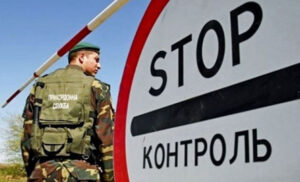
As the new school year approached, passenger traffic across Ukraine’s western border during the last full week of summer—August 22–28—fell by 4.6% from last week’s record high to 755,000, according to daily statistics from the State Border Guard Service, as tracked by the “Interfax-Ukraine” agency.
According to the State Border Service, the number of outbound border crossings this week fell to 364,000 from 391,000 the week before, while the number of inbound crossings fell to 391,000 from 400,000.
The number of vehicles passing through border crossing points remained at 145,000, while the number of vehicles carrying humanitarian cargo fell to 433 from 466.
The highest outbound traffic was recorded on Saturday (60,000 per day), and the highest inbound traffic on Sunday (62,000), while the lowest outbound traffic was on Monday (46,000) and the lowest inbound traffic on Thursday (50,000).
According to the State Border Guard Service, as of 6:00 p.m. on Saturday, the largest number of passenger cars were waiting to cross the border with Poland at the “Krakivets” border crossing point (BCP)—80—and the “Ustyluh” BCP—65. Smaller lines were observed at the “Shehyni” checkpoint (45 vehicles), the “Hrushiv” checkpoint (30), the “Nyzhankovychi” checkpoint (20), and the “Ugryniv” checkpoint (10).
In addition, 12 buses had accumulated at the “Krakivets” checkpoint, and at the “Shehyni” checkpoint, 170 pedestrians were also waiting in line, which is very rare.
At the border with Slovakia, there was a line of 20 cars at the “Maly Berezny” checkpoint, 15 cars and 2 buses at the “Uzhhorod” checkpoint.
At the border with Hungary, 20 passenger cars each were waiting to cross at the “Tisa” and “Vylok” border checkpoints, while 15 were waiting at the “Luzhanka” checkpoint and 10 at the “Kosyno” checkpoint.
At the border with Romania, 40 cars had accumulated at the “Dyakivtsi” checkpoint and another 6 at the “Krasnoilsk” checkpoint, while at the border with Moldova, there was a line of 25 cars at the “Mamalyga” checkpoint.
Last year, passenger traffic across the border during this week was still at its peak at the time—769,000—though the number of people entering the country significantly exceeded the number leaving—by 33,000 compared to 27,000 this year.
The following week last year, passenger traffic dropped immediately by 10%, and over the course of the week—by another 12.4%.
As previously reported, starting May 10, 2022, the outflow of refugees from Ukraine—which had begun with the start of the war—turned into an inflow that lasted until September 23, 2022, totaling 409,000 people. However, since the end of September—possibly influenced by news of mobilization in Russia and “pseudo-referendums” in the occupied territories, followed by massive shelling of energy infrastructure—the number of people leaving has exceeded the number of those entering. In total, from the end of September 2022 until the first anniversary of the full-scale war, this figure reached 223,000 people.
In the second year of the full-scale war, the number of border crossings out of Ukraine, according to the State Border Guard Service, exceeded the number of border crossings into the country by 25,000; in the third year—by 187,000; in the fourth year—by 221,000; and since the start of the fifth year by 44,000, of which 31,000 have occurred since the beginning of summer.
In its July inflation report, the National Bank maintained its estimate of 0.3 million people migrating from Ukraine last year due to the deterioration of the security situation at the end of the year and the easing of exit rules for young people, but noted that this figure will be less than 0.5 million in 2024. The NBU continues to forecast a net outflow of 0.2 million in 2026, while net returns, according to its forecast, will begin in 2027 and amount to about 0.1 million people, increasing to 0.5 million people in 2028.
According to UNHCR data, the number of Ukrainian refugees in Europe as of June 30, 2026, stood at 5.159 million, and globally at 5.687 million, compared to 5.213 million and 5.687 million, respectively, as of April 30.
In Ukraine itself, according to the latest UN data for July 2026, there were 3.80 million internally displaced persons (IDPs), compared to 3.70 million in January of this year and 3.34 million in July 2025.
BORDER, MIGRATION, PASSENGER TRAFFIC, State Border Guard Service, UKRAINE

Chernivtsi and Transcarpathian regions accounted for 67% of all reports for illegal crossings or attempted illegal crossings of Ukraine’s state border in the first half of 2026.
According to data from the State Border Guard Service cited by OpenDataBot, 2,834 reports were filed in Bukovina over the six-month period, or 38% of the total. Another 2,170 reports, or 29%, were filed in Zakarpattia Oblast.
The Odesa region ranks third, with 997 reports, or 13%.
Thus, the Chernivtsi, Zakarpattia, and Odesa regions alone account for 80% of all recorded violations.
The situation has changed particularly significantly in the Chernivtsi region. The number of reports there is now approximately 30 times higher than it was before the start of the full-scale war. For the past two years, Bukovina has ranked first in the country in terms of the number of such violations.
Until 2022, the Odesa and Zakarpattia regions were the main leaders in this regard.
A significant increase has also been recorded in the Ivano-Frankivsk region. Before the full-scale war, not a single such report was filed there; in 2022, there were only five, but by 2024, that number had risen to 1,209.
In 2025, 1,109 reports were filed in the Ivano-Frankivsk region, and in the first half of 2026 alone—there were already 377.
Across Ukraine, border guards filed 7,523 reports from January through June, which is about one-third fewer than during the same period last year.
Despite the decline, the frequency of such violations remains nearly ten times higher than pre-war levels. Before the full-scale war in Ukraine, approximately 2,700 reports were filed annually, whereas now an average of about 1,250 are filed per month.
However, the filing of a report does not automatically mean that a person is found guilty. Such cases are heard by the courts.
In 2025, the courts heard 24,519 cases under Article 204-1 of the Code of Ukraine on Administrative Offenses. Fines were imposed on 12,628 individuals, while 10,493 cases—or 43%—were dismissed due to the absence of an incident or the elements of an administrative offense.
The total amount of fines imposed was 85.97 million UAH, but only 24 million UAH—or 28%—was paid voluntarily.
Source: OpenDataBot, based on data from the State Border Guard Service and the State Judicial Administration, published on August 28, 2026.

According to Experts.news, the decline in the number of recorded attempts to illegally cross the state border has not yet been accompanied by a corresponding decrease in migration outflow from Ukraine through official border crossing points.
In the first half of 2026, border guards issued 7,523 citations for illegal border crossings or attempted illegal border crossings—approximately one-third fewer than a year earlier.
At the same time, official border statistics show that over the six-month period, Ukrainians left the country 7.13 million times and returned 6.89 million times.
Thus, the net difference between departures and returns amounted to 244,300 people. A year earlier, during the same period, it was comparable—about 251,000.
At first glance, these figures demonstrate a significant gap between illegal attempts to leave the country and the overall migration outflow. However, these are fundamentally different statistical categories.
244,300 is not the number of detected emigrants, but the arithmetic difference between official departures and arrivals of citizens during the first half of the year. Some of these people may return to Ukraine later.
Furthermore, this figure includes all citizens with legal grounds for crossing the border, specifically women, children, men in relevant categories, and other individuals.
The figure of 7,523, in turn, does not represent the number of Ukrainians who managed to leave the country illegally, but rather the number of administrative reports filed by border guards for detected illegal border crossings or attempts to do so.
However, the aggregate data show that the main demographic risk for Ukraine today is linked not only to illegal border crossings but also to the number of citizens who legally leave the country and subsequently do not return.
For the full year of 2025, the difference between the number of departures and returns of citizens amounted to 290,300 people. This was 1.5 times less than in 2024, when the negative balance reached nearly 443,000 people. Over the four years of full-scale war, according to OpenDataBot’s calculations, the cumulative difference between official departures and returns amounted to approximately 3.1 million citizens.
At the same time, in the first half of 2026 alone, the negative balance had already reached 244,300 people, which is about 84% of the figure for all of 2025.
June accounted for the bulk of this year’s difference: during that month, the number of people leaving Ukraine exceeded the number of returnees by 210,900. “OpenDataBot” attributes this, in part, to a seasonal increase in travel during the vacation period; therefore, final conclusions regarding annual migration can only be drawn based on the results for the whole of 2026.
Thus, the decline in the number of illegal attempts to cross the border represents a notable change compared to the peak year of 2024; however, this alone does not signify an end to the demographic outflow.
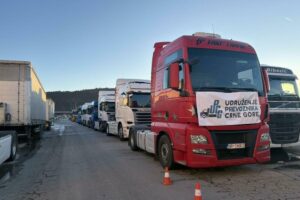
According to The Serbian Economist, Serbian truckers, together with their colleagues from Montenegro, Bosnia and Herzegovina, and North Macedonia have announced their intention to begin blocking freight border crossings into the European Union starting September 14, 2026, if a solution to the issue of professional drivers’ stay in the Schengen Area has not been found by that time.
This was reported by the Serbian association of international carriers, “Međunarodni transport.” According to the association, drivers from the Western Balkan countries continue to be detained, deported, and turned back at the borders for exceeding the permitted length of stay in the Schengen Area. The association claims that several dozen Serbian drivers are turned back at the borders every day, and there have been more than 50 such cases in the past week alone.
Before the blockade begins, the carriers intend to make one more attempt to reach an agreement with European authorities. On August 31, from 12:00 p.m. to 2:00 p.m., a peaceful protest will take place in Belgrade in front of the EU delegation at 40/V Vladimira Popovića Street. Similar protests are planned in front of the EU delegations in Montenegro, Bosnia and Herzegovina, and North Macedonia.
In addition, another meeting between representatives of the transport companies and the European Commission is scheduled for September 1. If it does not lead to a concrete decision, starting September 14, transport companies from the four countries intend to begin protests at border crossings.
The cause of the conflict is the 90/180 rule in effect in the Schengen Area, under which a third-country national may stay in the Schengen Area for no more than 90 days within any 180-day period. This is sufficient for the average tourist, but international carriers argue that professional drivers are physically unable to make regular trips to the EU under such a restriction.
The rule itself existed previously, but with the introduction of the Electronic Entry/Exit System (EES), enforcement has become significantly stricter. The system automatically records the entries and exits of third-country nationals and, as of April 10, 2026, is fully operational at the external borders of the Schengen Area, with the exception of Ireland and Cyprus. The possibility of “losing” some days between passport stamps has effectively disappeared.
At the same time, the European Commission officially acknowledges the existence of the problem. The EU Visa Policy Strategy, adopted on January 29, 2026, states that a number of mobile professions, particularly truck drivers serving European businesses, may need to stay in several Schengen countries for more than 90 days within a 180-day period.
The European Commission has stated that it will seek a solution, including the possibility of introducing special EU-wide rules regarding extended short-term stays. However, a specific mechanism has not yet been approved.
For Serbia, this issue is particularly acute due to the significant dependence of its exports on road transport to the EU. Carriers warn that some drivers are already refusing to make trips to EU countries.
This will be the second major regional protest by carriers in 2026. Starting on January 26, drivers from Serbia, Montenegro, Bosnia and Herzegovina, and North Macedonia simultaneously blocked freight terminals at the borders with the EU. In Serbia, the protest lasted five days and was called off on January 30 after the European Commission included the issue of professional drivers in its new visa strategy.
The economic impact of the previous blockade was significant. According to estimates by the Serbian Chamber of Commerce and Industry, the restrictions affected about 93% of exports from the four Western Balkan countries, and potential business losses were estimated at up to 92 million euros per day.
For Ukraine, a potential blockade is also significant, although its impact will be considerably less than for Serbia and other Western Balkan countries. The main truck traffic between Ukraine and the EU passes directly through Poland, Slovakia, Hungary, and Romania, so a blockade of the Serbian borders will not halt Ukrainian-European trade.
However, the issue could directly affect Ukrainian trucks traveling to Serbia, Bosnia and Herzegovina, Montenegro, North Macedonia, Albania, and Greece, as well as carriers that use Serbia as a transit country. If the protest follows the January scenario and the Batrovci freight terminal on the border with Croatia, the Horgos terminal on the border with Hungary, the border crossings with Romania, and the Gradina terminal on the border with Bulgaria are blocked, Ukrainian carriers will find themselves in the same lines as other international trucks.
The most vulnerable routes may be those from Ukraine through Hungary or Romania to Serbia and onward to Montenegro, Bosnia, and North Macedonia, as well as transit toward the Adriatic and the southern Balkans. Rerouting cargo through Romania and Bulgaria or other border crossings is not always possible and entails additional mileage, fuel costs, and longer delivery times.
This is a particularly sensitive issue for Ukrainian logistics due to the economy’s heavy reliance on land transport corridors. According to the European Commission, in July 2026, the “Solidarity Lanes”—established after the start of the full-scale war—accounted for approximately 90% of Ukraine’s imports and 95% of its non-agricultural exports, although only a portion of these shipments is related to the Balkan route. Therefore, a strike in the Western Balkans alone is not capable of paralyzing Ukrainian foreign trade, but for companies that work specifically with the Balkans, it could significantly increase logistics costs.
A separate issue concerns Ukrainian professional drivers themselves. Ukraine has a special agreement with the EU on road transport, which has been extended until March 31, 2027. It liberalizes bilateral and transit freight transport and allows Ukrainian carriers to operate within the EU without some of the former licensing restrictions.
However, this agreement primarily regulates carriers’ access to the market, not the length of stay of a specific driver in the Schengen Area. Therefore, a Ukrainian driver entering the Schengen Area as a third-country national on a short-term stay and who does not hold a long-term visa, residence permit, or other relevant status must generally also comply with the 90-day limit within a 180-day period. The European Commission notes that holders of long-term visas and residence permits are not subject to this restriction.
https://t.me/relocationrs/3545



