
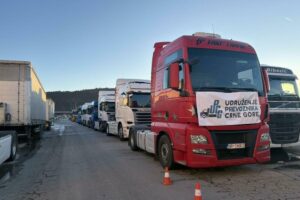
According to The Serbian Economist, Serbian truckers, together with their colleagues from Montenegro, Bosnia and Herzegovina, and North Macedonia have announced their intention to begin blocking freight border crossings into the European Union starting September 14, 2026, if a solution to the issue of professional drivers’ stay in the Schengen Area has not been found by that time.
This was reported by the Serbian association of international carriers, “Međunarodni transport.” According to the association, drivers from the Western Balkan countries continue to be detained, deported, and turned back at the borders for exceeding the permitted length of stay in the Schengen Area. The association claims that several dozen Serbian drivers are turned back at the borders every day, and there have been more than 50 such cases in the past week alone.
Before the blockade begins, the carriers intend to make one more attempt to reach an agreement with European authorities. On August 31, from 12:00 p.m. to 2:00 p.m., a peaceful protest will take place in Belgrade in front of the EU delegation at 40/V Vladimira Popovića Street. Similar protests are planned in front of the EU delegations in Montenegro, Bosnia and Herzegovina, and North Macedonia.
In addition, another meeting between representatives of the transport companies and the European Commission is scheduled for September 1. If it does not lead to a concrete decision, starting September 14, transport companies from the four countries intend to begin protests at border crossings.
The cause of the conflict is the 90/180 rule in effect in the Schengen Area, under which a third-country national may stay in the Schengen Area for no more than 90 days within any 180-day period. This is sufficient for the average tourist, but international carriers argue that professional drivers are physically unable to make regular trips to the EU under such a restriction.
The rule itself existed previously, but with the introduction of the Electronic Entry/Exit System (EES), enforcement has become significantly stricter. The system automatically records the entries and exits of third-country nationals and, as of April 10, 2026, is fully operational at the external borders of the Schengen Area, with the exception of Ireland and Cyprus. The possibility of “losing” some days between passport stamps has effectively disappeared.
At the same time, the European Commission officially acknowledges the existence of the problem. The EU Visa Policy Strategy, adopted on January 29, 2026, states that a number of mobile professions, particularly truck drivers serving European businesses, may need to stay in several Schengen countries for more than 90 days within a 180-day period.
The European Commission has stated that it will seek a solution, including the possibility of introducing special EU-wide rules regarding extended short-term stays. However, a specific mechanism has not yet been approved.
For Serbia, this issue is particularly acute due to the significant dependence of its exports on road transport to the EU. Carriers warn that some drivers are already refusing to make trips to EU countries.
This will be the second major regional protest by carriers in 2026. Starting on January 26, drivers from Serbia, Montenegro, Bosnia and Herzegovina, and North Macedonia simultaneously blocked freight terminals at the borders with the EU. In Serbia, the protest lasted five days and was called off on January 30 after the European Commission included the issue of professional drivers in its new visa strategy.
The economic impact of the previous blockade was significant. According to estimates by the Serbian Chamber of Commerce and Industry, the restrictions affected about 93% of exports from the four Western Balkan countries, and potential business losses were estimated at up to 92 million euros per day.
For Ukraine, a potential blockade is also significant, although its impact will be considerably less than for Serbia and other Western Balkan countries. The main truck traffic between Ukraine and the EU passes directly through Poland, Slovakia, Hungary, and Romania, so a blockade of the Serbian borders will not halt Ukrainian-European trade.
However, the issue could directly affect Ukrainian trucks traveling to Serbia, Bosnia and Herzegovina, Montenegro, North Macedonia, Albania, and Greece, as well as carriers that use Serbia as a transit country. If the protest follows the January scenario and the Batrovci freight terminal on the border with Croatia, the Horgos terminal on the border with Hungary, the border crossings with Romania, and the Gradina terminal on the border with Bulgaria are blocked, Ukrainian carriers will find themselves in the same lines as other international trucks.
The most vulnerable routes may be those from Ukraine through Hungary or Romania to Serbia and onward to Montenegro, Bosnia, and North Macedonia, as well as transit toward the Adriatic and the southern Balkans. Rerouting cargo through Romania and Bulgaria or other border crossings is not always possible and entails additional mileage, fuel costs, and longer delivery times.
This is a particularly sensitive issue for Ukrainian logistics due to the economy’s heavy reliance on land transport corridors. According to the European Commission, in July 2026, the “Solidarity Lanes”—established after the start of the full-scale war—accounted for approximately 90% of Ukraine’s imports and 95% of its non-agricultural exports, although only a portion of these shipments is related to the Balkan route. Therefore, a strike in the Western Balkans alone is not capable of paralyzing Ukrainian foreign trade, but for companies that work specifically with the Balkans, it could significantly increase logistics costs.
A separate issue concerns Ukrainian professional drivers themselves. Ukraine has a special agreement with the EU on road transport, which has been extended until March 31, 2027. It liberalizes bilateral and transit freight transport and allows Ukrainian carriers to operate within the EU without some of the former licensing restrictions.
However, this agreement primarily regulates carriers’ access to the market, not the length of stay of a specific driver in the Schengen Area. Therefore, a Ukrainian driver entering the Schengen Area as a third-country national on a short-term stay and who does not hold a long-term visa, residence permit, or other relevant status must generally also comply with the 90-day limit within a 180-day period. The European Commission notes that holders of long-term visas and residence permits are not subject to this restriction.
https://t.me/relocationrs/3545
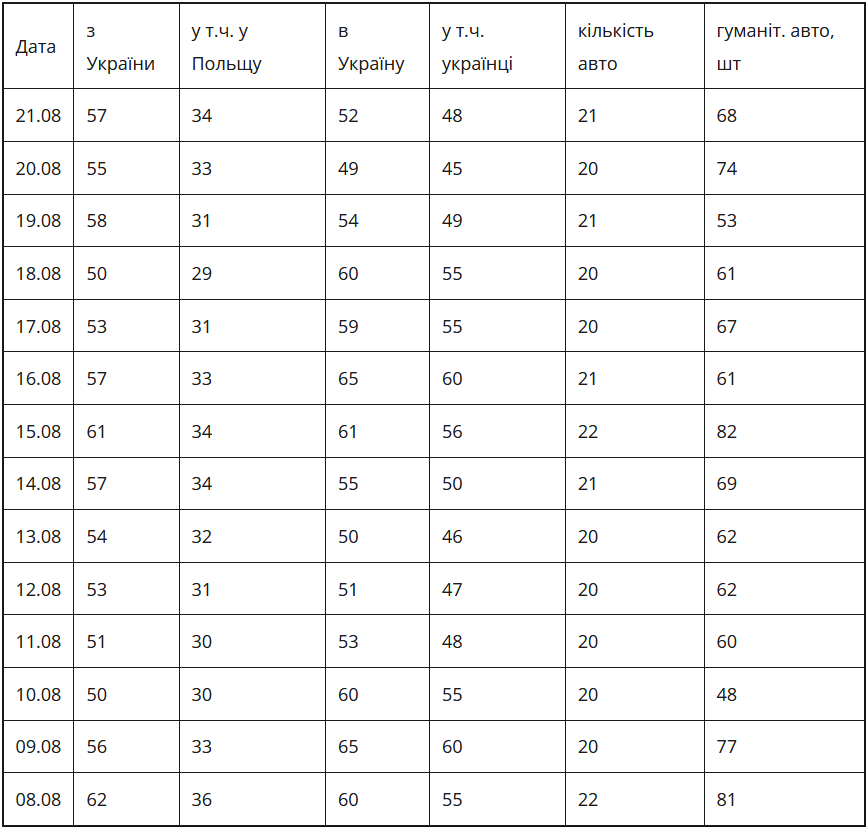
Passenger traffic across Ukraine’s western border during the week of August 15–21 increased by 1.8%—to 791,000 — a record high since the start of Russia’s full-scale aggression, excluding the first few days of the conflict, according to daily statistics from the State Border Guard Service monitored by the Interfax-Ukraine news agency.
The previous record was set in mid-August 2025 at 778,000, but last year during this same week, passenger traffic had already begun to gradually decline.
According to data from the State Border Guard Service, the number of outbound border crossings this week increased to 391,000 from 383,000 the week before, while inbound crossings rose to 400,000 from 394,000.
The number of vehicles passing through checkpoints also increased slightly—to 145,000 from 143,000 last week—as did the number of vehicles carrying humanitarian cargo—to 466 from 459—but these figures are not record-breaking.
The heaviest outbound traffic was recorded on Saturday (61,000 per day), and the heaviest inbound traffic on Sunday (65,000), while the lightest outbound traffic was on Tuesday (50,000), and the lightest inbound traffic on Thursday (45,000).
According to the State Border Guard Service, as of 9:00 p.m. on Saturday, the largest number of passenger cars were waiting to cross the border with Poland at the “Krakovets” border crossing point (BCP)—100, “Ustyluh”—60, and “Shehyni”—50. Shorter lines were observed at the “Hrushev” checkpoint (40 vehicles), the “Nyzhankovychi” checkpoint (20), and the “Rava-Ruska” checkpoint (15).
In addition, 15 buses had accumulated at the “Krakovets” checkpoint, 5 at the “Smelnitsa” checkpoint, and 90 pedestrians were also waiting in line at the “Shehyni” checkpoint, which is very rare.
At the border with Slovakia, there was a line of 25 vehicles at the “Maly Berezny” border crossing point and 10 at the “Uzhhorod” border crossing point.
At the border with Hungary, 30 passenger cars were waiting to cross at the “Luzhanka” checkpoint, 25 at the “Tisa” checkpoint, and another 20 at the “Vylok” checkpoint.
At the border with Romania, 20 vehicles had accumulated at the “Dyakivtsi” checkpoint and another 10 at the “Porubne” checkpoint.
Last year, passenger traffic across the border this week had already decreased by 1.3% compared to the peak figure—to 768,000—with outbound traffic exceeding inbound traffic by 2,000.
It remained at this level during the last week of August but then dropped sharply in the first half of September with the start of the new school year.
As reported, starting May 10, 2022, the outflow of refugees from Ukraine—which began with the start of the war—turned into an inflow that lasted until September 23, 2022, totaling 409,000 people. However, starting in late September—possibly influenced by news of mobilization in Russia and “pseudo-referendums” in the occupied territories, followed by massive shelling of energy infrastructure—the number of people leaving exceeded the number of those entering. In total, from the end of September 2022 until the first anniversary of the full-scale war, this figure reached 223,000 people.
In the second year of the full-scale war, the number of border crossings for departure from Ukraine, according to the State Border Guard Service, exceeded the number of crossings for entry by 25,000; in the third year—by 187,000; in the fourth year—by 221,000; and by 77,000 since the start of the fifth year—64,000 of which occurred since the beginning of summer.
In its July inflation report, the National Bank maintained its estimate of last year’s migration from Ukraine at 0.3 million people due to the deterioration of the security situation at the end of the year and the easing of exit rules for young people, but noted that in 2024 this figure will be less than 0.5 million. The NBU continues to forecast a net outflow of 0.2 million in 2026,
while net returns, according to its forecast, will begin in 2027 and amount to about 0.1 million people, increasing to 0.5 million people in 2028.
According to UNHCR data, the number of Ukrainian refugees in Europe as of June 30, 2026, stood at 5.159 million, and globally at 5.687 million, compared to 5.213 million and 5.687 million, respectively, as of April 30.
In Ukraine itself, according to the latest UN data for July 2026, there are 3.80 million internally displaced persons (IDPs), compared to 3.70 million in January of this year and 3.34 million in July 2025.
Crossings at Ukraine’s western border, in thousands:
BORDER, MIGRATION, PASSENGER TRAFFIC, State Border Guard Service of Ukraine, UKRAINE

Moldova is preparing proposals regarding the possible transfer of 20 locomotives to Ukraine; the parties are also working on opening a new joint border crossing and ensuring the unimpeded transit of Ukrainian cargo, said Mykola Kalashnyk, Ukraine’s Minister of Recovery, Infrastructure, and Transport.
“Our priority is unimpeded traffic from Odesa to the Danube region,” Kalashnik wrote following a working meeting in the Odesa region with Moldova’s Deputy Prime Minister and Minister of Infrastructure and Regional Development, Vladimir Bolea.
According to him, to ensure transit, it is necessary to guarantee free and safe passage along a 7-kilometer section of the M-15 highway near Palanka. The parties are also preparing to open a new joint border crossing point.
In the field of rail transport, Moldova is preparing proposals regarding the possibility of providing Ukraine with 20 locomotives. The parties are also working to ensure competitive freight rates and additional routes for Ukrainian cargo through Moldova to the Romanian port of Constanța.
Kalashnik noted that the agreements are expected to result in an increase in the number of routes, faster border crossings, and strengthened logistics links between Ukraine, Moldova, and the European Union.
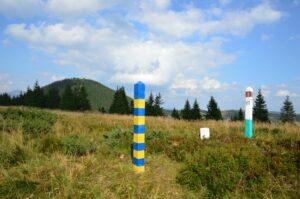
Nearly 2,500 Ukrainian citizens were detected by Romanian border guards while illegally crossing the border from Ukraine into Romania in the first half of 2026, according to the Romanian Border Police.
According to the Territorial Inspectorate of the Border Police in Sighetu Marmației, between January 1 and June 30, 2026, approximately 1,200 Ukrainians were detected in Maramureș County, about 1,000 in Suceava County, and more than 300 along the section of the border between Satu Mare County and Ukraine.
Compared to the same period in 2025, the number of such cases decreased by approximately 33%. At that time, Romanian border guards detected more than 3,700 Ukrainian citizens who had crossed the border illegally.
The Romanian Border Police note that most of those detained claim they left Ukraine because of the war and are applying to the Romanian authorities for one of the forms of protection provided for under the country’s legislation.
The most dangerous routes remain the Tisa River and the mountainous regions of Maramureș. According to Romanian authorities, the challenging terrain, unpredictable weather, and lack of proper equipment make such crossings life-threatening.
During the first six months of 2026, Romanian border guards, in collaboration with the Salvamont Maramureș mountain rescue team, conducted 22 search-and-rescue operations, during which 38 Ukrainian citizens who found themselves in distress in the mountainous border area were rescued.
Since the start of the full-scale war, the Inspectorate in Sighetu Marmației has identified more than 34,000 Ukrainian citizens along Romania’s northern border. During this period, border guards, together with rescue teams, conducted more than 230 search-and-rescue operations in the Maramureș Mountains and rescued more than 430 Ukrainians.
The Romanian side emphasizes that it continues to secure the 366 km of the Romanian-Ukrainian border within the Inspectorate’s area of responsibility, using modern surveillance equipment and in coordination with other units of the Ministry of Internal Affairs and institutional partners.
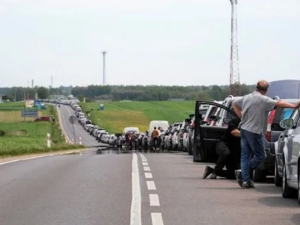
As of Sunday evening, a buildup of vehicles heading to Ukraine is observed on the Ukrainian-Polish border, the Western Regional Directorate of the State Border Guard Service of Ukraine reports.
Thus, at the Hrushev checkpoint, a queue of 30 cars and 6 buses has formed for entry into Ukraine; at the Krakivets checkpoint – 70 cars and 11 buses; at Shehyni – 45 cars and 15 buses; and at Nyzhankovychi – 20 cars.
“At present, the Ugryniv, Rava-Ruska and Smilnytsia checkpoints are not overloaded for entry into Ukraine,” the State Border Guard Service noted.
A buildup of passenger cars leaving Ukraine was recorded only at the Hrushev checkpoint – 30 cars; there is no buildup of passenger cars at the other checkpoints.
At the same time, in bus traffic leaving Ukraine, a buildup is recorded at the Krakivets checkpoint – 4 buses, at the Smilnytsia checkpoint – 8 buses, and at the Nyzhankovychi checkpoint – 1 bus.
“To avoid long waits in front of the checkpoint, we recommend choosing less congested checkpoints, as well as crossing the border early in the morning or late in the evening,” the border guards urged.

On June 29 and 30, Romania will temporarily restrict the movement of trucks weighing more than 7.5 metric tons on a number of roads due to a severe heat wave, according to Romania’s National Road Infrastructure Management Company (CNAIR).
The restrictions will be in effect on Monday and Tuesday from 12:00 p.m. to 8:00 p.m. on sections of national roads, expressways, and highways in 35 counties across the country, including Suceava, where border crossing points with Ukraine are located.
As a result, temporary restrictions on freight traffic may be imposed at the Ukrainian-Romanian border through the “Krasnoilsk–Vicovu de Sus” and “Porubne–Siret” border crossing points. According to preliminary information, the restrictions will apply to trucks, including those traveling without cargo.
The Romanian side explains this decision by the need to protect the road surface from damage under conditions of extremely high temperatures. During intense heat, heavy vehicle traffic can deform the asphalt, especially during the daytime hours when temperatures are at their highest.
The duration of the ban may be adjusted depending on weather conditions and decisions by Romanian authorities. Carriers planning to cross the border through the Chernivtsi region are advised to factor in possible delays in advance and monitor announcements from border and road authorities.



