
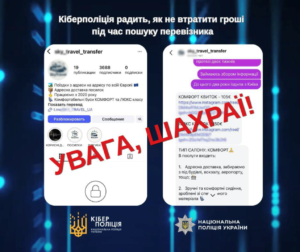
Scammers in Ukraine use ads for passenger and freight transportation to obtain advance payments by creating fake pages for private carriers and logistics companies.
To build trust, the scammers use photos of real buses and trucks, logos of well-known companies, reviews from other people, and other copied materials. Potential customers are usually lured in by lower travel or delivery costs compared to market rates.
Once a customer contacts them, the scammers try to get the money as quickly as possible. In particular, they may claim that there are almost no seats left or that an advance payment must be made immediately to confirm the reservation.
When arranging freight transportation, scammers may demand full payment in advance via a credit card or to an individual’s bank account. After receiving the money, the fake carrier stops responding, and the ad or page is deleted. In some cases, after the first transfer, the customer is asked to make additional payments supposedly for insurance, documents, customs clearance, or other services.
Experts cite the following as signs of potential fraud: a significantly low price, a demand for an urgent prepayment, communication exclusively via messaging apps, recently created carrier pages, and a lack of operational history. The risk also increases if the carrier refuses to provide detailed information about the route, vehicle, and terms of transport, or demands new payments after an agreement has been reached.
Links for booking and payment pose a particular danger. They may lead to phishing sites that mimic the appearance of banking and payment services. Their purpose is to obtain bank card details and other payment information.
Users are advised to verify the company name and phone number through several independent sources before making a payment, review the carrier’s reviews and track record, and avoid sharing CVV codes, passwords, or one-time transaction confirmation codes.
If money has already been transferred to scammers, it is recommended to save the correspondence, screenshots of the ad, and payment confirmation. If you have disclosed your banking information, you should contact your bank as soon as possible. You can also report cases of fraud to the Cyber Police or by calling 102 or 112.
You can learn more about current fraud schemes and ways to protect yourself on the StopFraud platform.
Ukrainian transport companies may receive compensation amounting to 10–15% of their investments in the modernization of vehicles and equipment to meet European Union standards, according to Gabriel Blanc, head of the working group on Ukraine’s reconstruction at the European Commission’s Directorate-General for Enlargement and Eastern Neighborhood.
According to “Interfax-Ukraine”, this mechanism applies to companies that take out loans from Ukrainian banks and invest in technologies that meet EU standards.
“We have what is known as a cashback mechanism: if a company takes out a loan from a Ukrainian bank and invests in technologies that meet EU standards, we can offer a refund of 10–15% of the investment amount,” Blanc noted during the event “Regional Business Dialogues on European Integration: The Transportation Sector” in Lviv.
According to him, Ukraine has currently fully implemented less than 10% of EU transport rules and standards, and has partially implemented less than half. Key tasks include harmonizing social and market regulations in the road transport sector, strengthening enforcement of compliance, and developing inspection and investigation bodies for rail and water transport.
Among the investments that Ukrainian carriers may need to make in order to operate according to European standards, Blanc cited the installation of second-generation smart tachographs, the purchase of Euro 6-compliant vehicles, and compliance with driver working time requirements. He noted that for small and medium-sized enterprises, such costs can be substantial, especially during wartime.
At the same time, the European Commission views this modernization as an investment in Ukrainian businesses’ future access to the EU transport market and their long-term competitiveness.
Support for transportation companies can be provided both directly to large Ukrainian enterprises and through banks. Currently, the ten largest Ukrainian banks are utilizing risk-sharing mechanisms, which helps reduce credit risks, particularly for small businesses, enterprises in frontline regions, and relocated companies.
The total portfolio under the risk-sharing mechanism already exceeds EUR 6 billion. The EU plans to further scale up financing programs for Ukrainian companies that are investing in bringing their operations into compliance with European standards.
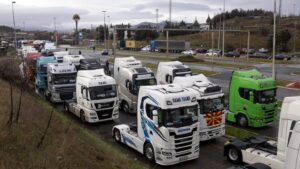
According to the Serbian business publication Parametar, trucking companies in Serbia, Bosnia and Herzegovina, Montenegro, and North Macedonia are demanding that the European Union propose a concrete solution by September 1, 2026, to the problem of restrictions on professional drivers’ stays in the Schengen Area. Otherwise, the carriers are prepared to stage coordinated protests again and block freight terminals at the borders with the EU.
The decision was agreed upon by representatives of transport associations from the four countries at a regional meeting in Skopje. However, September 1 is not automatically the start date for the blockade. The carriers intend to wait for negotiations with the European Commission and discussions on the EU’s new visa strategy, after which they will decide on further actions.
The carriers’ main complaint concerns the 90/180 rule. Third-country nationals who benefit from the visa-free regime may stay in the Schengen Area for no more than 90 days within any 180-day period. This restriction also applies to professional drivers from the Western Balkans.
Carriers consider this approach unfair, since drivers do not enter the EU as tourists but regularly cross the border while delivering international cargo and return to their home countries after their trips.
“Our drivers leave every two, three, or five days, depending on the route, and then return. They don’t want to leave their home countries; they want to work for our companies. But 90 days isn’t enough for professional work,” said Nejo Mandić, president of the Serbian Association of International Carriers.
According to estimates by regional transport organizations, the problem affects about 100,000 professional drivers in four countries. Stricter enforcement of the limit has become particularly noticeable following the introduction of the European Entry/Exit System (EES), which automatically records the entry and exit of third-country nationals.
There is already a precedent for this threat to carriers. In late January 2026, drivers from Serbia, Bosnia and Herzegovina, Montenegro, and North Macedonia simultaneously blocked more than 20 freight crossings into the Schengen Area. The borders between Serbia and Bosnia and Herzegovina with Croatia, between North Macedonia and Greece and Bulgaria, as well as the port of Bar in Montenegro, were blocked.
The economic impact was significant. Marko Čadež, president of the Serbian Chamber of Commerce and Industry, estimated at the time that the blockade affected about 93% of the four countries’ exports, with total losses amounting to approximately 92 million euros per day.
According to his assessment, individual companies faced fines and losses of 10,000–50,000 euros per day per company due to their inability to fulfill contractual obligations. Moreover, the problems were not limited to Balkan manufacturers—European companies with factories, suppliers, and customers in the region also suffered from the delays.
If a new regional blockade were to occur on a similar scale, economic losses could again amount to tens of millions of euros daily.
For Serbia, the most vulnerable sector is the industry oriented toward European supply chains. Automotive components, electrical equipment, rubber products, metal products, food, and other goods are often transported by truck on a scheduled basis and must reach the customer at a strictly defined time.
Even a brief halt in traffic leads to a buildup of cargo in warehouses, disruptions to production cycles, and the risk of penalties from European buyers.
A prolonged blockade is particularly dangerous for manufacturers of perishable goods. During the January protests, carriers reported that Lidl alone had planned to deliver approximately 120 truckloads of meat, dairy products, fruits, and vegetables from Europe to Serbia within a single week. The traffic blockade directly threatened these deliveries.
The transport companies themselves are suffering double losses: while a truck is idle, it continues to incur costs for leasing, driver salaries, insurance, and other payments, but generates no revenue. Industry associations also warn that the inability to fully utilize drivers on EU routes could lead to the loss of contracts to carriers from EU countries.
The economic damage will not be limited to the Western Balkans. A significant portion of businesses in Serbia, North Macedonia, and Bosnia and Herzegovina are directly integrated into the production chains of EU companies.
Delays in the supply of components could affect factories in Germany, Italy, Austria, Slovenia, Hungary, and other countries. The reverse flow of European goods to the Balkans is also coming to a halt.
In addition, an important land transport corridor connecting Central Europe, Turkey, and onward to the Middle East runs through Serbia and North Macedonia. During the January protests, Reuters noted that the blockade was disrupting traffic along precisely this strategic route.
Following the January protests, the European Commission acknowledged that the established regime creates problems for highly mobile professions, particularly international drivers, artists, and athletes. The EU’s new visa strategy, adopted in January, provides for the possibility of finding a more flexible mechanism for these categories of workers.
However, an automatic exemption for professional drivers from the 90/180 rule has not yet been implemented.
Carriers are insisting on either special status for international drivers or a system of professional visas or other permits that would allow them to stay in the Schengen Area for more than 90 days without the risk of detention, deportation, or a travel ban.
Thus, September 1 becomes a key date for the Western Balkans’ transport market. If Brussels proposes a workable mechanism for professional drivers, a new blockade can be avoided. If an agreement cannot be reached, carriers from the four countries have already agreed on the possibility of joint action.
The issue of restrictions on professional drivers’ stays in the Schengen Area also affects Ukraine.
Ukrainian long-haul truck drivers employed by carriers registered in Ukraine, when entering the Schengen Area under the visa-free regime, are also generally subject to the 90-day rule within an 180-day period, unless they hold a separate long-term status or a residence permit. In its visa strategy dated January 29, 2026, the European Commission explicitly acknowledged that the current system creates problems for mobile professions, specifically mentioning truck drivers who serve EU businesses.
At the same time, the EU-Ukraine Road Transport Agreement, in effect until March 31, 2027, simplifies access for Ukrainian carriers to the EU market and eliminates the need for a number of permits for bilateral and transit transport, but does not in itself constitute an exception to Schengen migration rules.
Therefore, Ukraine has a genuine interest in the very same solution demanded by carriers in the Western Balkans: to distinguish between a professional driver’s working hours on an international route and a regular tourist stay, or to establish a special regime for such drivers.
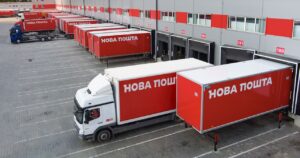
“Nova Poshta,” Ukraine’s leading express delivery service and part of the NOVA Group, has announced an additional search for private carriers to collaborate with for future partnerships in various delivery segments—from pickup truck deliveries to parcel lockers to intercity transport, according to a company statement.
According to the company’s press release, “Nova Poshta” is interested in new partners for intercity transportation using BDF chassis trucks with a capacity of up to 20 tons that meet Euro 5 or Euro 6 environmental standards, as well as for regional transportation using vehicles with a capacity of 3–20 tons equipped with an all-metal body and a hydraulic tailgate for parcel delivery.
In addition, the company is looking for couriers, carriers, and lessors of vans or trucks with a payload capacity of 3–10 tons for door-to-door parcel delivery to customers.
Separately, the company is seeking couriers, carriers, and lessors of pickup trucks or vans for delivering shipments to parcel lockers.
The NOVA Group’s website states that it currently operates a fleet of over 9,000 vehicles.
As reported, in the first quarter of 2026, Nova Poshta increased its revenue by 26.9% compared to the same period in 2025—to UAH 14.98 billion—and its net profit by 4.4 times, to UAH 1.28 billion.
In 2025, the company increased revenue by 21.6%—to 54.2 billion UAH—and net profit by 4.4%, to 2.6 billion UAH.

Ukrnafta JSC announces a commercial procurement for the provision of road transport services for light petroleum products to supply its network of filling stations.
Due to the expansion of its network and increased sales of petroleum products, the company invites qualified suppliers of oil and gas products to submit commercial proposals.
The procurement will take place on the platform https://zakupivli.pro/ in two stages; proposals submitted by other means will not be considered.
For more detailed information on participation in commercial procurement and the selection process, please contact us by email: Dmytro.Sles@Ukrnafta.com or follow this link.
Commercial proposals will be accepted until January 27, 2026, inclusive.
We are looking forward to working with reliable partners!
JSC Ukrnafta is Ukraine’s largest oil production company and the operator of the largest national network of gas stations, UKRNAFTA. In 2024, the company entered into asset management with Glusco. In 2025, it completed an agreement with Shell Overseas Investments BV to purchase the Shell network in Ukraine. In total, it operates 663 gas stations.
The company is implementing a comprehensive program to restore operations and update the format of its network of gas stations. Since February 2023, it has been issuing its own fuel vouchers and NAFTAKarta cards, which are sold to legal entities and individuals through Ukrnafta-Postach LLC.
The largest shareholder of Ukrnafta is Naftogaz of Ukraine with a 50%+1 share.
In November 2022, the Supreme Commander-in-Chief of the Armed Forces of Ukraine decided to transfer the company’s corporate rights, which belonged to private owners, to the state, and they are now managed by the Ministry of Defense.
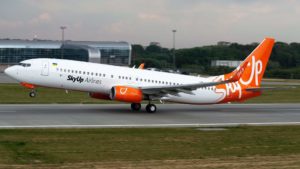
Ukrainian low-cost carrier SkyUp Airlines (Kyiv) in January-June 2019 carried 668,500 passengers, including 484,900 (72%) transported on charter flights and 183,700 (28%) – on regular. The airline currently operates flights to 47 destinations, the company’s press service told Interfax-Ukraine. Among them, 31 destinations are regular routes and 16 are charter flights.
The most popular destinations of regular flights for the six months of 2019 were: Barcelona (Spain), Tbilisi, Batumi (both in Georgia), Alicante (Spain), Larnaca (Cyprus).
Popular charter flights were Sharm el-Sheikh, Hurghada, Marsa Alam (all in Egypt), Antalya (Turkey), Monastir (Tunisia).



