

The most vivid list of the “worst” is compiled by Pintu News – “10 Altcoins that Crashed During the Month of November 2025.” According to the publication, a number of tokens lost between 58% and more than 97% of their value in 30 days (as of November 23).
Top 10 declines in November 2025 according to Pintu
1. LooksRare (LOOKS) – NFT marketplace
– approximately −79% over the month
– decline in NFT trading volumes (down 41% since Q3 according to Cryptoslam), 30% decline in staking, and liquidity outflow.
2. Fwog (FWOG) – Solana meme token
– approximately −69% in 30 days
– profit-taking by large holders after a previous sharp rally, high volatility.
3. Perpetual Protocol (PERP) – DeFi derivatives
– approximately −67%
– a drop in DeFi derivatives trading volume by more than 28%, a decrease in open interest by approximately 35%, competition with dYdX and GMX.
4. Clearpool (CPOOL) – on-chain lending for institutions
– approximately −61%
– decline in demand for uncollateralized loans, increase in credit risks, and outflow of liquidity from pools by almost 45%.
5. Synthetix (SNX) – synthetic assets and perpetuals
– −60% over the month
– a reduction in trading activity on Synthetix Perps by almost 38%, a 27% drop in protocol revenue, and the exit of market makers.
6. Story Protocol (IP) – intellectual property tokenization
– approximately −58.5%
– cooling hype around Web3-IP, a drop in content token issuance activity by approximately 50%.
7. Metaplex (MPLX) – NFT infrastructure on Solana
– approximately −58%
– a drop in NFT volumes on Solana by approximately 32%, controversial tokenomics, and discussions about fees increased pressure on the token.
8. Jito (JTO) – liquid staking on Solana
– approximately −58%
– decline in staking yields (from ~8.1% to ~6.4% per annum), increased competition from other LST protocols.
9. Drift (DRIFT) – derivative DEX on Solana
– approximately −57%
– reduction in derivatives volumes on Solana by approximately 35%, liquidation of leveraged positions.
10. Pixelverse (PIXFI) – Web3 game
– approximately −97% over the month
– a collapse in in-game transactions by more than 90% and the failure to update the roadmap effectively destroyed the project’s capitalization.
Pintu’s overall conclusion: the vast majority of altcoins lost more than 50% in 30 days in November, and the risks in the low-liquidity and micro-cap project segment have increased sharply.

Fixygen analyzed the importance of regulators and their role in the crypto asset market. The cryptocurrency market is becoming increasingly sensitive to the rhetoric of central banks and the actions of financial regulators. Against the backdrop of expectations of interest rate changes and tighter rules for stablecoins and exchanges, the regulatory agenda is becoming one of the main drivers of price movements.
In its latest comments, the US Federal Reserve has allowed for the possibility of lowering the key rate in 2025, provided that inflation is under control. For cryptocurrencies, this is a signal of a potential increase in risk appetite and growth in liquidity in financial markets. The Fed’s policy easing traditionally supports interest in Bitcoin, Ether, and major altcoins, as investors are more actively engaging in strategies in the high-yield asset segment.
The European Central Bank maintains a more hawkish rhetoric, emphasizing the need to keep rates high to combat inflation, but at the same time notes a slowdown in the eurozone economy. This situation limits the inflow of European institutional capital into the crypto market in the short term, but reinforces expectations of future easing, which could be an additional stimulus for digital assets in the medium term.
The UK, through the Financial Conduct Authority, is tightening rules for stablecoins and crypto exchanges. The regulator is introducing stricter requirements for issuers’ reserves, transaction transparency, and investor protection. This increases the reliability of large stablecoins and infrastructure players, but may drive some smaller and less transparent projects out of the market.
Japan and South Korea are continuing their policy of tightening control over the crypto market with a focus on protecting retail investors. This includes stricter token listing rules, increased requirements for proven reserves, and exchange liability for fraudulent schemes. At the same time, these countries remain among the most technologically advanced markets, where digital finance and trading platforms are actively developing.
China officially maintains a tough stance on cryptocurrency trading, but at the same time promotes state blockchain solutions and the digital yuan. Through Hong Kong and special regimes for fintech companies, projects in the field of Web3 and tokenization are supported. Any easing or new pilot regimes in Hong Kong quickly affect regional liquidity and activity on Asian platforms.
Taken together, the statements and actions of regulators are creating a complex but gradually more structured environment for the cryptocurrency market. The easing of US monetary policy, stricter requirements for stablecoins and exchanges in Europe and Asia, and experimental regimes in China and Hong Kong will remain key factors for price dynamics and investor sentiment in the coming months.

Fixygen has prepared a summary of the week (October 27-31) for the cryptocurrency market. For the first time since 2018, Bitcoin ended October with a loss of almost 5%. Ethereum fell 8% over the month, while maintaining an annual growth of about 14%. Activity in altcoin options has risen sharply: traders are increasingly betting on calls for VIRTUAL, AAVE, ADA, and other tokens.
It should be noted that macroeconomics has given a weak impetus to market development: the Federal Reserve has again postponed its forecast for further rate cuts, and delays in economic data due to the shutdown have increased uncertainty.
Risk appetite in the market has declined: after record growth in October to ~$126,000 per Bitcoin, concerns about US-China tariffs and the liquidation of more than $400 billion in cryptocurrency-related positions have returned the market to a state of caution.
Bitcoin retains its status as the “global reserve cryptocurrency,” but volatility is becoming more pronounced: the price broke through the ~$104,000 mark at the beginning of the week, but support remained in the ~$106,000–109,000 range.
Altcoins and options: interest is shifting towards altcoins and derivatives on them. The growth in open interest and the prevalence of call options indicate attempts by market participants to capture momentum in less liquid assets. This could create spikes with strong corrections.
Macro conditions remain the main risk factor: the Fed’s decision, delays in key data, trade friction between the US and China — all this limits the inflow of capital into risky assets, including cryptocurrencies. It also strengthens the correlation between crypto assets and traditional markets.
In the coming weeks, the crypto market may be in a consolidation phase: volatility will remain, but without a clear upward or downward trend until a clear macro signal appears.
If the Fed or another major regulator delivers a positive surprise, a rapid rebound is possible. If the news is negative or absent, another correction to around $100,000 for Bitcoin is possible.
The week of October 27–31 served as a reminder that cryptocurrencies continue to adapt to “big politics” and global economic risks. The market has emerged from record growth at a high price, and now the key words for participants are “careful risk assessment + strategy flexibility.”
Source: https://www.fixygen.ua/news/20251102/pidsumki-tizhnya-na-rinku-kriptovalyut-oglyad-fixygen.html

The cryptocurrency market showed signs of cautious recovery between October 20 and 25, 2025, after sharp fluctuations at the beginning of the month. According to CoinDesk, Binance, and CryptoRank, against the backdrop of macroeconomic stabilization, leading crypto assets showed moderate growth but remained highly volatile.
Bitcoin strengthened by about 2-3% over the week, rising above the $110,000 mark again. Experts note that maintaining this level could be a key signal of a recovery in investor confidence. Ethereum also rose 2-3% and consolidated above $4,000, reflecting continued interest in smart contract ecosystems and decentralized applications.
Among altcoins, XRP stood out, gaining about 5% and becoming one of the growth leaders in the top ten of the market. Solana and Binance Coin (BNB) showed minimal changes — from zero to one percent — remaining stable but without noticeable momentum. Cardano rose about 2%, continuing to develop its own ecosystem. Dogecoin gained about 3% amid renewed interest from retail investors.
Chainlink and the HYPE token grew the most during the week, by 10–14% and 30–40%, respectively. Analysts attribute this to increased interest in infrastructure projects and niche solutions that can offer new technologies for interaction in the blockchain environment. Avalanche ended the week with a slight increase of about 2%.
According to experts, the main factor of the week was the gradual return of liquidity to the market. Despite the high outflow of funds from cryptocurrency ETFs, investors began to cautiously build up positions in large assets. Increased expectations of a softening of US Federal Reserve policy and a slowdown in the growth of government bond yields provided additional stimulus for the market.
At the same time, the regulatory environment remains tense: the Financial Stability Board (FSB) reiterated the need to unify the rules for trading cryptocurrencies in different countries. This caused a temporary decline in interest in risky assets, but by the end of the week, the market had partially recovered.
Among the key trends, analysts note the continued dominance of Bitcoin, which accounts for more than 58% of market capitalization. At the same time, a moderate increase in interest in certain altcoins may signal the beginning of a phase of capital rotation and a gradual shift in focus towards technology projects.
Overall, the week ended on a positive note for the market, with the total capitalization of cryptocurrencies remaining close to $3.8 trillion. Experts warn that new correction waves are possible amid continuing uncertainty and weak liquidity, but the fundamentals of market leaders remain stable.
Source: https://www.fixygen.ua/news/20251026/analysis-of-best-cryptocurrencies-from-fixygen.html

The volatile global cryptocurrency market saw key changes between October 20 and 25, 2025, indicating a shift in participant sentiment and increased regulatory risks.
Bitcoin (BTC) surpassed the ~$111,000 mark, signaling a recovery after a recent decline.
Ethereum (ETH) broke through the ~$4,000 level, which was also perceived as positive by the market.
However, the growth was accompanied by caution: the Crypto Fear & Greed Index stood at 30 (“fear”).
Funds withdrawn from Bitcoin-tracking funds amounted to approximately $1.23 billion in a week — one of the largest outflows since their launch.
Amid weak liquidity and regulatory uncertainty, the overall cryptocurrency market came under pressure again, despite attempts at recovery.
Expectations are growing around a possible change in US Federal Reserve policy — investors are counting on easing, which is creating short bursts of demand.
New initiatives to regulate the crypto market have emerged from international bodies: the Financial Stability Board (FSB) has warned of “significant gaps” in the global legal framework.
Technical factor: increased volatility and large outflows from ETF funds are exacerbating cycles of correction and recovery.
Cryptocurrency is a digital asset based on blockchain technology that is used as a means of saving, payment, or speculation. The crypto asset market is characterized by high volatility, insufficient regulation, and significant influence from external factors: central bank decisions, new regulations, and technological breakthroughs.
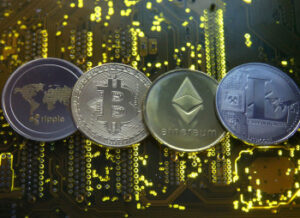
On the night of October 10–11, the cryptocurrency market experienced its largest one-day crash: approximately $19 billion in positions were liquidated in 24 hours. Bitcoin plummeted from record highs (around $122–126 thousand) to the $104–110 thousand range. Ethereum also lost a significant portion of its growth, falling more than 10% from its peak values.
Altcoins were particularly hard hit, with some falling by 20-30% or more.
The reasons for this collapse are linked to geopolitical shock (Trump’s announcement of 100% tariffs on Chinese technology), a cascade of liquidations in the leveraged sector, and panic among participants.
After the collapse, there has been an attempt at recovery: Bitcoin rose above $114,000 on the wave of a partial return of liquidity. However, the dynamics remain turbulent: resistance and support levels are constantly being tested. The total capitalization of the crypto market has fallen below $3.8 trillion. The decline has affected almost the entire market — most of the top 100 assets are trading in negative territory.
From the analysts’ point of view, the current correction is more controlled than panicked — market participants are taking profits and clearing overbought positions rather than fleeing the asset.
The US Federal Reserve (Fed) has expressed concern about the stability of the financial system and the risks associated with the growth of the stablecoin sector. The G20 Financial Stability Board (FSB) has highlighted “significant gaps” in the regulation of cryptocurrencies, especially in the cross-border aspect. The PYUSD/Paxos/PayPal case, where $300 trillion in tokens were accidentally issued due to a technical error, served as a reminder of how much centralized issuers control the mechanism of creating/destroying balances.
These facts reinforce the argument that market maturity and trust go hand in hand with regulatory development.
Source: https://www.fixygen.ua/news/20251020/obzor-rynka-kriptovalyut-ot-fixygen.html



