

According to Fixygen, the cryptocurrency market is ending the first week of September on an uptrend after significant volatility at the start of the week: Bitcoin has returned above the $81,000 mark, Ethereum has approached $2,500, and the total market capitalization has risen to approximately $2.81 trillion. The main driver of this movement was a shift in expectations regarding the U.S. Federal Reserve’s future monetary policy.
According to CoinGecko, as of midday on September 4, Bitcoin was trading at around $81,000, Ethereum at around $2,500, XRP at $1.44–1.45, and Solana at around $104. The total market capitalization of the cryptocurrency market stood at approximately $2.81 trillion, having increased by about 4.5% over the past 24 hours. Bitcoin accounted for about 58% of the market capitalization, while Ethereum accounted for about 11%.
The week started off much weaker. On August 31, Bitcoin was trading at around $78,600; on September 1–2, it fell to $77,000, but then rebounded sharply. On the night of September 4, the price rose to approximately $82,200—a high not seen in more than three months. Thus, compared to the start of the week, BTC has risen in price by about 3%, although the change over the past seven days remains significantly more modest—about 1%. (CoinGecko)
The main reason for the new surge was statements by Federal Reserve Board member Christopher Waller. Speaking on September 3, he said he was prepared to support keeping the interest rate at its current level if incoming data confirmed a further slowdown in inflation. At the same time, Waller did not rule out a rate hike if August inflation accelerates again. Following his remarks, pressure on the dollar and U.S. Treasury yields eased, which supported risk assets, particularly cryptocurrencies.
Ethereum showed more subdued price action throughout the week. After reaching a level of around $2,470 on August 31, ETH fell below $2,400, then recovered to approximately $2,500. XRP, after falling to $1.35, rose again to about $1.45, while Solana climbed above $100. On a seven-day basis, Ethereum and XRP are roughly flat, while Solana is down about 3%.
U.S. spot ETFs remain a key support factor for Bitcoin. Following a net outflow of about $236.5 million on September 1, the funds received about $101 million on September 2, and preliminary data for September 3 already indicates approximately $277 million in inflows.
In August, the total inflow into spot Bitcoin ETFs was estimated at approximately $3.52 billion. However, capital flows remain volatile and do not yet indicate a return to a sustained series of daily purchases.
The situation in the Ethereum market is less clear-cut. On September 2, U.S. spot Ethereum ETFs recorded a net outflow of about $48 million, breaking a streak of 12 trading sessions with inflows, during which the funds attracted about $1.62 billion. This partly explains ETH’s weaker performance compared to Bitcoin in early September.
Among large and mid-cap cryptocurrencies, Zcash stood out as the most notable exception this week: according to CoinDesk, as of September 4, the coin had risen by approximately 20% over seven days and about 15% over the past 24 hours. Hyperliquid also significantly outperformed most major crypto assets.
In the coming days, the market will remain primarily dependent on U.S. macroeconomic data. On September 4, the U.S. Department of Labor is set to release the August employment report, and the Consumer Price Index (CPI) will be released on September 11. These figures will be particularly important ahead of the Fed meeting on September 15–16. The official BLS calendar confirms the release of August labor market data on September 4 and the Consumer Price Index (CPI) on September 11.
The base case scenario for Bitcoin in the near term is that it will remain within a range of approximately $76,000–$83,000. The $76,000–$77,000 zone acted as support several times earlier this week, while the $82,000 level has already become the nearest resistance. A sustained move above $82,000–$83,000, coupled with continued capital inflows into Bitcoin ETFs, could pave the way toward the $85,000–$88,000 level. In the event of strong U.S. inflation or labor market data that once again increases the likelihood of a Fed rate hike, a return to the $76,000–78,000 range becomes the most likely scenario. A break below this support level would significantly worsen the short-term technical picture.
For Ethereum, the $2,400–$2,550 range remains key. A confident break above $2,550 could allow the market to test $2,700–$2,800; however, this would require not only a rise in Bitcoin but also a resumption of a steady inflow of capital into the Ethereum ETF. If sentiment deteriorates, a pullback below $2,400 will once again bring the $2,250–2,300 zone into focus.
Thus, the first week of September has not yet become a full-fledged continuation of August’s strong rally. Rather, the market has entered a phase of testing the levels reached: Bitcoin appears stronger than most major altcoins, institutional demand remains steady, but capital flows through ETFs are volatile. The main drivers for the crypto market over the next two weeks will be U.S. inflation, the Fed’s decision, and Bitcoin’s ability to hold above $82,000.
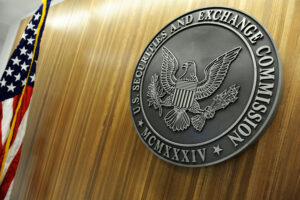
According to Fixygen, the U.S. Securities and Exchange Commission has proposed a new framework called “Regulation Crypto Assets,” specifically designed to facilitate capital raising by cryptocurrency projects.
The proposal provides for two frameworks.
Small projects will be able to raise up to $5 million over four years, while larger ones can raise up to $75 million every 12 months without going through the full standard securities offering registration process.
At the same time, issuers must disclose information to investors and will continue to be subject to laws regarding fraud and market manipulation.
The SEC is also proposing a safe harbor mechanism that, provided certain requirements are met, allows the crypto asset itself to be separated from the initial investment contract.
Comments on the draft are being accepted through October 20, 2026.
If the rules are adopted, the U.S. will, for the first time, have a separate, full-fledged capital-raising procedure specifically for crypto startups.

According to Fixygen, the spread of stablecoins is becoming not only a technological issue but also a geopolitical one. Virtually the entire global market for stablecoins is denominated in dollars. The largest token, USDT, already has a market capitalization of about $183 billion, while the amount of USDC in circulation reached $73.3 billion in the second quarter.
For the U.S., this reinforces the international use of the dollar.
For Europe, the opposite risk arises: even as traditional payments migrate to the blockchain, they continue to flow primarily through the dollar-based system.
This is precisely why the European Central Bank is accelerating its work on digital payment instruments and central bank digital currency.
British authorities have also proposed assigning the Bank of England a separate mandate to support innovation in the payments sector, including stablecoins.
As a result, competition surrounding stablecoins is gradually becoming an extension of the currency competition between the dollar and the euro.

According to Fixygen, public companies worldwide control approximately 1.264 million BTC worth nearly $99 billion, as reported by The Block’s Bitcoin Treasury Tracker as of the end of August.
The largest holders:
Strategy — 840,447 BTC
Twenty One Capital — 43,514 BTC
Metaplanet — 43,000 BTC
MARA — 35,303 BTC
Cantor Equity Partners I / future BSTR — 30,021 BTC
Galaxy Digital — 25,723 BTC
Bullish — 24,400 BTC
Strive — 19,999 BTC
SpaceX — 18,712 BTC
Riot Platforms — 15,680 BTC.
Separately, Coinbase holds 15,389 BTC, Tesla — 11,509 BTC, and Block — 9,032 BTC.
The main feature of the ranking is its extreme concentration. A single strategy accounts for about two-thirds of all BTC held by the tracked public companies.

According to Fixygen, U.S. banks—which until recently were warning about the threat stablecoins pose to the deposit system—are now exploring the possibility of issuing digital dollars themselves.
JPMorgan views a stablecoin as a complement to its existing JPM Coin tokenized bank deposit system, according to the Wall Street Journal.
At the same time, more than a dozen banks are discussing a shared infrastructure for issuing digital currencies. Bank of America and Wells Fargo are among the participants.
The reason is simple: if a portion of payments and corporate settlements shifts to USDT, USDC, and other blockchain-based instruments, traditional banks risk losing a portion of their deposits and fee-based business.
Therefore, they are trying to offer their own alternative.
In fact, three competing models are currently taking shape: private stablecoins such as USDT and USDC, bank-issued stablecoins and tokenized deposits, as well as future central bank digital currencies.
The winner of this race could capture a significant share of the new market for round-the-clock international payments and settlements involving tokenized assets.

According to Fixygen, stablecoins are gradually evolving from a primarily exchange-based instrument into a means of everyday payments.
In July, spending via stablecoin-linked payment cards exceeded $1 billion per month for the first time, according to Paymentscan data cited by Reuters.
RedotPay forecasts that by 2028, the volume of direct card payments in stablecoins could reach $50 billion per year.
The technology is spreading particularly rapidly in Latin America and Africa, where dollar-pegged stablecoins are used as a means of savings, international remittances, and access to the dollar payment system.
RedotPay already serves over 8 million users, and its clients’ annual transaction volume exceeds $14 billion, including account top-ups and card payments.
The main change is that users no longer need to view USDT or USDC as cryptocurrencies. They can hold digital dollars and make payments with a regular Visa or Mastercard, while the conversion takes place within the payment infrastructure.
However, the Bank for International Settlements (BIS) remains skeptical. On August 28, BIS Governor Pablo Hernández de Cos stated that stablecoins are not yet a sufficiently reliable global payment system due to risks related to financial stability, anti-money laundering (AML), and the fragmentation of the monetary system.



