

In August 2026, the volume of foreign currency purchases by Ukrainian households exceeded the volume of sales by $0.45 billion in dollar terms, compared to $0.5 billion in July of this year and $0.36 billion in August 2025.
According to data from the National Bank, in August, compared to July, cash currency purchases decreased by $68.8 million—to $1.9327 billion—while sales decreased by $17.0 million, to $1.4846 billion.
The volume of cash dollar purchases by the public in August increased by $28.9 million to $1,352.1 million, while sales decreased by $56.1 million to $1,034.6 million.
In the cash euro market in August, purchases by the public, in dollar terms, decreased by $108.1 million to $499.8 million, while sales increased by $26 million to $367.6 million.
As for bank customers’ non-cash foreign exchange transactions, both purchases and sales increased in August compared to July: purchases rose by $164.9 million to $11.1925 billion, and sales rose by $144.6 million to $7.6579 billion. At the same time, the volume of interbank transactions decreased by $409.9 million to $8,183 million.
On an annual basis, the volume of non-cash foreign currency purchases by bank customers increased by $2,904.0 million, sales by $998.2 million, and interbank transactions by $2,000 million.
In August, the official hryvnia-to-dollar exchange rate strengthened by nearly 14 kopecks compared to July—to 44.55 UAH/$1—while against the euro, the hryvnia weakened by nearly 61 kopecks—to 51.88 UAH/EUR1.
The National Bank’s net foreign exchange interventions in August rose to $4 billion 815.7 million, an increase of $24.7 million compared to July and $2 billion 119.8 million compared to August 2025.
According to Fixygen, USDT and USDC reserves are largely invested in short-term U.S. Treasury bonds (US Treasuries) and repo transactions backed by them.
The market capitalization of USDT reached approximately $183 billion, while the amount of USDC in circulation in the second quarter totaled $73.3 billion.
Circle explicitly states that USDC reserves include short-term Treasury bonds and overnight repos backed by Treasury bonds, notably through a BlackRock fund.
As a result, the growing use of digital dollars automatically increases demand for U.S. government debt.
This is precisely why the U.S. administration views the proliferation of stablecoins not only as a fintech project but also as a way to boost international demand for the dollar and Treasury bonds.
BIS Chairman Pablo Hernández de Cos also acknowledged that stablecoins have the potential to lower the cost of U.S. government financing, although they may simultaneously increase the cost of bank financing.
bond, DOLLAR, stablecoin, U.S., USDT

According to Fixygen, the spread of stablecoins is becoming not only a technological issue but also a geopolitical one. Virtually the entire global market for stablecoins is denominated in dollars. The largest token, USDT, already has a market capitalization of about $183 billion, while the amount of USDC in circulation reached $73.3 billion in the second quarter.
For the U.S., this reinforces the international use of the dollar.
For Europe, the opposite risk arises: even as traditional payments migrate to the blockchain, they continue to flow primarily through the dollar-based system.
This is precisely why the European Central Bank is accelerating its work on digital payment instruments and central bank digital currency.
British authorities have also proposed assigning the Bank of England a separate mandate to support innovation in the payments sector, including stablecoins.
As a result, competition surrounding stablecoins is gradually becoming an extension of the currency competition between the dollar and the euro.

Foreign exchange interventions by the National Bank of Ukraine (NBU) on the interbank market in August remained close to July’s level, increasing by $24.7 million, or 0.5 percent, to $4.82 billion, according to data from the regulator’s website.
At the same time, the official hryvnia-to-dollar exchange rate strengthened by 0.3%, or 14 kopecks, in August, reaching 44.5505 UAH/$1 at the end of the month.
The volume of the National Bank’s interventions in the interbank market last week increased by 6.5%, or $77.9 million, compared to the previous week, reaching $1.27 billion.
According to the NBU, net interventions in August rose by 78.6%, or $2.12 billion, year-over-year.
From January through August, the regulator sold nearly $33.0 billion in foreign currency, which is 39.0%, or $9.25 billion, more than during the same period last year.
Over the 28 days of August, the average daily negative balance of legal entities’ currency purchase and sale transactions increased to $169.5 million from $151.8 million in July.
In the retail foreign exchange market, this figure rose from $19.4 million in July to $25.9 million in August.
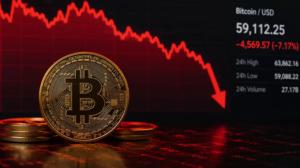
According to Fixygen, the cryptocurrency market is ending the week on a down note: Bitcoin has once again fallen below the psychological $60,000 level, Ether has approached $1,550, and most major altcoins are trading under pressure amid capital outflows from crypto ETFs, harsher expectations regarding Fed interest rates, and a strengthening dollar.
As of Thursday and Friday, Bitcoin was trading around $59,200, down approximately 3% over the past 24 hours.
The intraday low was around $58,200. Ether fell to $1,550, losing about 5.5% over the day, while Solana held steady around $68–69.
The week marked a continuation of June’s weak performance. Earlier this month, Bitcoin was trading above $70,000, but the market then faced a series of negative factors: record or near-record outflows from U.S. spot Bitcoin ETFs, growing investor interest in stocks of companies related to artificial intelligence, a strengthening U.S. dollar, and deteriorating sentiment surrounding major corporate Bitcoin holders.
This week, the pressure intensified after Bitcoin once again fell below $60,000. CoinDesk noted that the cryptocurrency’s decline is occurring even amid periodic gains in other risky assets, as capital continues to flow into the technology and AI segments of the stock market. According to CoinDesk, Deutsche Bank attributed Bitcoin’s drop below $60,000 to the Fed’s hawkish rhetoric, outflows from ETFs, and concerns surrounding companies with high Bitcoin exposure.
Ethereum has also failed to serve as a safe-haven asset within the crypto market. Trading at around $1,550, the second-largest cryptocurrency by market capitalization remains under pressure alongside the broader market. The decline in ether indicates that investors are currently reducing their exposure to crypto assets in general, not just bitcoin.
Solana appeared slightly more resilient intraday, but the overall sentiment for altcoins remains weak. When Bitcoin falls below key levels, investors typically reduce their positions in riskier tokens faster than in the market’s core assets.
The dynamics of spot Bitcoin ETFs in the U.S. remain a separate factor. In June, the market already experienced several waves of outflows from funds that had previously been one of the main sources of demand for Bitcoin. When ETFs stop supporting the market with inflows, Bitcoin becomes more sensitive to macroeconomic data, yields, the dollar, and overall risk appetite.
Globally, cryptocurrencies are now competing for capital not only with traditional assets but also with the AI sector. Reuters previously noted that investors are increasingly shifting funds toward AI-related stocks and anticipated major IPOs, while bitcoin is experiencing one of its weakest starts to the year in the past decade.
Through the end of the week, the key technical level for Bitcoin remains the $58,000–$60,000 range. Holding this range could give the market a chance to stabilize, but a sustained move below $58,000 would reinforce expectations of a further decline. In this case, the next area of focus could be $55,000, which some analysts view as a potential level for a local bottom to form.
The base case scenario for the coming days is heightened volatility and cautious attempts at stabilization following the sharp decline. For a sustained recovery, the market will need a combination of several factors: an end to outflows from ETFs, a weaker dollar, softer expectations regarding Fed interest rates, and a return of risk appetite for crypto assets.
For now, the crypto market remains in defensive trade mode: investors prefer to reduce their exposure, cut their losses, or wait for new signals from ETF flows and the U.S. macroeconomy.



