
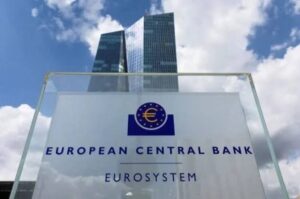
The energy shock caused by the U.S.-Iran war is likely to last longer than previously anticipated and extend beyond the oil sector, said Isabel Schnabel, a member of the Executive Board of the European Central Bank (ECB).
“At first, one might have assumed this was a short-term phenomenon, but, unfortunately, we have had to conclude that it is much more persistent,” Schnabel said at an event in Salsomaggiore Terme, Italy, on Thursday. “We’re not just talking about oil, but also diesel and natural gas.”
Her remarks reflect the ECB leadership’s ongoing concern about the consequences of the Middle East conflict, which has already caused inflation in the region to accelerate to a level significantly above the 2% target.
The year-over-year rate of consumer price inflation in the eurozone reached 3.2% in August, and analysts do not rule out it rising to 4% later this year, according to Bloomberg.
Expectations for further tightening of the ECB’s monetary policy have recently increased, with traders factoring in the likelihood of four interest rate hikes of 25 basis points (bp) by the regulator by the end of 2027.
“We’ve raised interest rates twice this year—first in June, then again in September—because we’re concerned about inflation. That’s why we had to act,” Schnabel said on Thursday.
The ECB raised all three key interest rates by 25 bps at its September meeting; the deposit rate now stands at 2.5% per annum.

According to Fixygen, the European Central Bank must begin working with blockchain infrastructure itself in order to preserve the role of central bank money in the new financial system, said ECB Executive Board member Isabel Schnabel.
According to her, central banks must effectively “go on-chain” by providing tokenized central bank money for settlements involving assets on distributed ledgers.
The ECB is already developing the Pontes and Appia projects.
Pontes is intended to connect the existing European payment infrastructure with blockchain platforms, while Appia is exploring a longer-term architecture for a tokenized financial market.
This is a separate project from the retail digital euro.
The main target audience consists of banks, funds, and financial companies that need to settle transactions involving tokenized bonds, funds, and other assets using real central bank money.
If such an infrastructure becomes operational, blockchain will cease to be exclusively a cryptocurrency technology and will, in fact, become one of the settlement layers of the traditional capital market.

According to Fixygen, the spread of stablecoins is becoming not only a technological issue but also a geopolitical one. Virtually the entire global market for stablecoins is denominated in dollars. The largest token, USDT, already has a market capitalization of about $183 billion, while the amount of USDC in circulation reached $73.3 billion in the second quarter.
For the U.S., this reinforces the international use of the dollar.
For Europe, the opposite risk arises: even as traditional payments migrate to the blockchain, they continue to flow primarily through the dollar-based system.
This is precisely why the European Central Bank is accelerating its work on digital payment instruments and central bank digital currency.
British authorities have also proposed assigning the Bank of England a separate mandate to support innovation in the payments sector, including stablecoins.
As a result, competition surrounding stablecoins is gradually becoming an extension of the currency competition between the dollar and the euro.

The European Central Bank (ECB) considers the current level of key interest rates to be justified and remains committed to the goal of maintaining inflation in the euro area at 2% in the long term, ECB President Christine Lagarde said.
“Our aspiration, commitment and duty is to ensure price stability, and this corresponds to inflation in the region of 2%,” she said in an interview with the German newspaper ARD. “We have succeeded, inflation is already at 2%, and we will continue to work in this direction.
“We will do everything necessary to ensure that inflation remains at this level,” Lagarde added. “Uncertainty is high, we are surrounded by unpredictability, but there is confidence and stability in terms of prices.
Meanwhile, François Villeroy de Galo, Governor of the Bank of France and member of the ECB Governing Council, warned that the 14% strengthening of the euro since the beginning of the year poses a risk of too low inflation.
In his opinion, a 10% rise in the euro reduces inflation by 0.2 percentage points over the next three years.
“This may increase the risks that inflation will be below our target, and we cannot ignore this,” de Galo said.
Earlier, ECB Vice President Luis de Guindos noted that the rise of the euro/dollar pair above $1.2 could complicate the central bank’s task of achieving the target inflation rate.
The ECB has cut rates eight times over the past year, and now the key deposit rate is 2%. Analysts and market participants generally expect that the regulator will not change rates at the July meeting in order to assess the impact of the measures already taken on the eurozone economy.

Wage growth in the eurozone slowed to 4.12% in annual terms in the fourth quarter of 2024 after the highest growth since 1993 a quarter earlier, the European Central Bank (ECB) said on Tuesday.
In the third quarter, the increase in wages agreed by employers and trade unions was 5.43%. The data was revised up slightly – previously it was reported an increase of 5.42%.
The new data support the ECB’s assumption that wage growth will slow down after its pace matches the dynamics of consumer price growth. Ultimately, this should lead to a weakening of inflation in the service sector, which has been hovering around 4% for several months.
Eurozone companies also expect wage growth to slow to 3.6% in 2025 and 2.7% in 2026, according to a survey conducted by the ECB in mid-February. In 2024, wages grew by 4.3%.
Since June last year, the ECB has lowered key interest rates five times, and experts expect the central bank to cut borrowing costs again at its March 6 meeting.

The European Central Bank (ECB) upgraded its inflation forecasts for the euro zone from 2023 to 2025, worsening its estimate of GDP growth in the next two years.
According to new forecasts released by the ECB at its meeting on Thursday, consumer price growth in the euro zone will be 5.4% this year, 3% next year and 2.2% in 2025. In March, inflation was expected to be 5.3%, 2.9% and 2.1%, respectively.
Core inflation, which excludes food and energy costs, is expected to be 5.1% this year before slowing to 3% in 2024 and 2.3% in 2025.
The forecast for euro area GDP growth for 2023 has been lowered to 0.9% from the previously assumed 1%, and for next year to 1.5% from 1.6%. The estimate of the economic growth rate in 2025 remained unchanged at 1.6%.



