

In January–August 2026, Ukraine increased poultry meat exports by 12.5% compared to the same period last year—to 330,200 metric tons—while foreign exchange revenue from these exports decreased by 2.6%—to $697.9 million, according to the Ukrainian Poultry Farmers’ Union.
In August 2026, poultry meat exports totaled 40,600 metric tons, which is 1.5% less than in July (41,200 metric tons).
In monetary terms, August exports fell by 7.9% compared to July, to $82.2 million. The average export price for poultry meat in August was $2.02/kg, which is 20.9% lower than in August of last year. According to the Association, this is due to changes in the range of exported products and a decline in export prices on foreign markets.
The main buyers of Ukrainian poultry meat during the first eight months of 2026 were the Netherlands (20% of exports), the United Kingdom (11.7%), Slovakia (10.6%), and the UAE (6.4%).
EU countries accounted for 36% of total poultry meat exports during this period, or 118,900 metric tons. In monetary terms, the EU’s share amounted to nearly half of foreign exchange earnings—47%.

In January–August 2026, Ukraine increased imports of nickel and nickel products by 8.9% compared to the same period last year, reaching $15.811 million.
According to statistics released by the State Customs Service of Ukraine, nickel and nickel product imports totaled $1.967 million in August.
Exports of nickel and nickel products in January–August 2026 totaled $404,000, and in August, $34,000, compared to $746,000 for the first eight months of 2025.
As previously reported, Ukraine reduced imports of nickel and nickel products by 2.7% in 2025 compared to 2024, down to $26.011 million. Exports of nickel and nickel products totaled $1.420 million, compared to $602 thousand in 2024.
Nickel is used in the production of stainless steel and for nickel plating. It is also used in battery manufacturing, powder metallurgy, and chemical reagents.

In January–August 2026, Ukraine increased imports of aluminum and aluminum products by 31.7% compared with the same period last year, reaching $453.439 million.
According to statistics released by the State Customs Service of Ukraine, aluminum and aluminum product imports totaled $64.792 million in August.
Exports of aluminum and aluminum products in January–August of this year rose by 25.3% compared to the same period last year, reaching $123.934 million; in August, they totaled $14.369 million.
As previously reported, in 2025 Ukraine increased imports of aluminum and aluminum products by 15.3% compared to 2024, reaching $514.098 million. Exports of aluminum and aluminum products in 2025 rose by 22.9% to $152.919 million.
Aluminum is widely used as a structural material. The main advantages of aluminum are its light weight, formability, corrosion resistance, high thermal conductivity, and the non-toxic nature of its compounds. In particular, these properties have made aluminum extremely popular in the production of cookware, aluminum foil in the food industry, and for packaging. The first three properties have made aluminum the primary raw material in the aviation and aerospace industries (though it has recently been displaced by composite materials, primarily carbon fiber). After construction and packaging production—aluminum cans and foil—the energy sector is the largest consumer of this metal.
For a more detailed overview of global aluminum production from 1970 to 2024, watch the video on the Experts Club YouTube channel.
ALUMINUM, EXPERTS CLUB, EXPORTS, IMPORTS, METALLURGY, UKRAINE

In January–August of this year, Ukrainian companies increased their imports of copper and copper products by 13.3% in monetary terms compared to the same period last year—to $139.044 million.
According to statistics released by the State Customs Service of Ukraine, exports of copper and copper products rose by 22.7% over the eight-month period, reaching $75.529 million.
In August, copper imports totaled $15.771 million, while exports totaled $9.646 million.
As previously reported, in 2025, Ukrainian companies increased imports of copper and copper products by 23.2% in monetary terms compared to 2024—to $173.453 million—while exports of copper and copper products rose by 17.7%—to $103.848 million.
Copper is widely used in electrical engineering, in the manufacture of pipes, for creating alloys, in medicine, and in other industries.
Previously, the Experts Club information and analytical center released a video on global copper production and leading producing countries – https://youtube.com/shorts/_h8iU50z8C0?si=a-XkgGEfeUxseQNa
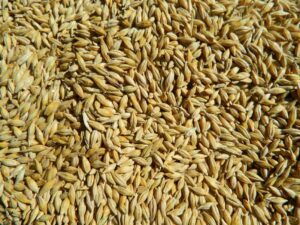
In September, the U.S. Department of Agriculture raised its forecast for feed grain production in Ukraine for the 2026/27 marketing year by 0.5 million metric tons—to 39.09 million metric tons, according to data from the WASDE report.
The USDA includes corn, barley, sorghum, oats, rye, millet, and mixed grains in this category. Since the corn production forecast for Ukraine remained unchanged at 31.8 million metric tons, production of other feed grains is estimated at approximately 7.29 million metric tons, compared with about 6.79 million metric tons in the August forecast.
The USDA explicitly states that in September it raised its estimate for barley production in Ukraine, as well as in Australia and Kazakhstan.
At the same time, the forecast for total feed grain exports from Ukraine has been lowered from 24.27 million metric tons to 23.77 million metric tons. Since corn exports are still estimated at 22 million metric tons, other feed grains account for about 1.77 million metric tons of exports, which is 0.5 million metric tons less than the August estimate.
Total domestic consumption of feed grains in Ukraine has been raised from 11.24 million metric tons to 11.34 million metric tons, while the forecast for ending stocks has been raised from 7.13 million metric tons to 8.63 million metric tons.
This figure of 8.63 million metric tons includes corn, for which the USDA estimates ending stocks at 5.46 million metric tons. Consequently, the remaining feed crops account for approximately 3.17 million metric tons of ending stocks.
The increase in production, coupled with a downward revision of the export forecast, suggests that grain supply in Ukraine’s domestic market is likely to rise in the 2026/27 marketing year.
Source: USDA WASDE-675, published on September 11, 2026: official USDA report
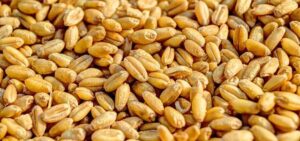
In its September forecast, the U.S. Department of Agriculture (USDA) raised its estimate for wheat production in Ukraine in the 2026/27 marketing year by 0.6 million metric tons compared to August—to 26 million metric tons—but at the same time lowered its forecast for Ukrainian exports by 1 million metric tons—to 12.5 million metric tons.
According to the September World Agricultural Supply and Demand Estimates (WASDE) report, published by the USDA on September 11, 2026, the upward revision of the harvest forecast is due to record-high yields of Ukrainian wheat as the harvest nears completion. In August, the agency had estimated production at 25.4 million metric tons.
The forecast for domestic consumption of Ukrainian wheat has been raised from 9.2 million metric tons to 9.5 million metric tons, including feed consumption—from 4.2 million metric tons to 4.5 million metric tons.
At the same time, the USDA significantly raised its forecast for Ukraine’s ending wheat stocks—from 4.8 million metric tons in the August forecast to 6.1 million metric tons in September. Imports are expected to total 0.1 million metric tons.
Thus, despite the improved harvest estimate, the additional production is not translating into a corresponding increase in exports and is largely contributing to a buildup in domestic stocks.
The USDA attributes the downward revision of Ukraine’s export estimate—as well as Russia’s—to slow shipment rates in August and logistical challenges in the Black Sea region due to the ongoing war.
Ukraine remains one of the largest suppliers of wheat to the global market. According to the USDA forecast, global wheat trade in the 2026/27 marketing year will total approximately 211.8 million metric tons.
Source: USDA WASDE-675 report dated September 11, 2026: USDA WASDE September 2026



