

The European Business Association (EBA) calls for maintaining a zero quota on ferrous scrap exports, which would effectively ban scrap metal exports in 2027, Alternatively, should the quota be abolished, member companies propose imposing an export duty of EUR 180 per metric ton for all export destinations, taking into account Ukraine’s international obligations.
“Domestic processing of scrap metal in Ukraine allows for the creation of added value, the preservation of jobs and tax revenues, and the provision of raw materials for the production of steel and finished metal products. The use of scrap also helps reduce energy consumption and CO₂ emissions in steel production, which takes on additional significance in light of the EU’s Carbon Border Adjustment Mechanism (CBAM),” the publication states.
According to the publication, EBA member companies have appealed to the Cabinet of Ministers and the Ministry of Economy.
Recently, following the shutdown of most Ukrainian steel mills due to massive Russian shelling, scrap metal collection companies have called on the government to review restrictions on scrap exports. Previously, scrap collectors had advocated for lifting the de facto ban on scrap exports from Ukraine and introducing quotas for shipments of this raw material to EU countries in the amount of 200,000 metric tons per year.
As reported, the Cabinet of Ministers of Ukraine established a zero quota on scrap metal exports effective January 1, 2026, to ensure Ukrainian enterprises have access to this raw material.
The EBA noted that, according to 2025 figures, exports of ferrous scrap from Ukraine increased by 53% compared to 2024—reaching 448,680 metric tons. The business community believes that easing the current restrictions could lead to a rise in exports and a shortage of raw materials for Ukrainian manufacturers.
According to data from “UAVtormet,” 4.3 million metric tons of steel were produced in the first 8 months of 2026 (compared to 7.41 million metric tons in 2025), 925,400 metric tons of scrap were delivered to steel mills (1.56 million metric tons), and scrap procurement totaled 971,700 metric tons (2.11 million metric tons). According to preliminary forecasts, 6.4–6.5 million metric tons of steel will be produced in 2026, 1.2–1.25 million metric tons of scrap will be delivered to steel mills, and scrap procurement will total 1.22–1.25 million metric tons.
In January–August of this year, Ukrainian companies reduced exports of ferrous scrap by more than 20 times compared to the same period last year—to 13,86 thousand metric tons from 283,06 thousand metric tons, and in monetary terms—to $3.930 million from $85.4 million. At the same time, 9.31 thousand metric tons were exported in January due to the completion of last year’s contracts, compared to 68.52 thousand metric tons in December 2025. There were no exports in February through May of this year; 4.08 thousand metric tons were exported in June, 315 metric tons in July, and 157 metric tons in August.
On April 29, 2026, the Cabinet of Ministers, by its Resolution No. 563, amended Annex 1 to its Resolution No. 1795 of December 31, 2025, permitting the export of scrap metal on the basis of licenses issued by the Ministry of Economy to to foreign economic activity entities that were the winners of electronic auctions held in December 2025 for the sale of such goods in accordance with the Procedure for the Alienation and Lease of Property of Business Entities in which more than 50% of the shares in the authorized capital are owned by the state or by another legal entity whose sole participant is the state.
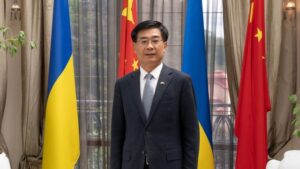
According to Experts.news, China’s foreign trade in goods reached 45.47 trillion yuan in 2025, up 3.8% from the previous year, said Ma Shengkun, China’s ambassador to Ukraine.
“In 2025, the total volume of China’s imports and exports of goods reached 45.47 trillion yuan, an increase of 3.8% year-over-year.
Imports totaled a record 18.48 trillion yuan,” the diplomat wrote in his column on the Interfax-Ukraine website.
According to him, China has remained the world’s second-largest import market for the 17th consecutive year and is the main trading partner for more than 160 countries and regions.
The ambassador also noted that in 2025, China’s imports from the least developed countries increased by 9%, while imports from Asia rose by 3.9%, from Latin America by 4.9%, and from Africa by 6%.
Ma Shengkun highlighted the growth of the high-tech segment of Chinese exports. According to the data he cited, exports of high-tech products reached 5.25 trillion yuan in 2025, an increase of 13.2%.
In particular, total exports of electric vehicles, photovoltaic products, and lithium batteries—referred to in China as the “new trio” of export goods—rose by 27.1%.
As previously reported, China remains Ukraine’s largest trading partner. According to a study by the Experts Club information and analytical center, Ukraine’s trade turnover with China reached $14.68 billion in the first half of 2026, including $13.9 billion in imports of Chinese goods and $778.4 million in exports of Ukrainian goods to China. China accounted for 21.9% of Ukraine’s total trade with its 50 largest trading partners.
According to the latest data from the State Customs Service of Ukraine, in January–August 2026, China retained its top position among suppliers of goods to Ukraine, with imports exceeding $19.6 billion. Ukraine’s total imports during this period amounted to nearly $66.3 billion, while exports totaled over $26.6 billion.
A joint study by Experts Club and Active Group published on September 18 also noted that China remains Ukraine’s largest trading partner; however, Ukrainian exports to the Chinese market lag significantly behind imports from China.
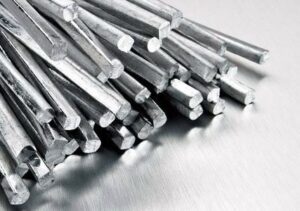
In January–August 2026, Ukraine increased its imports of tin and tin products 2.4-fold compared to the same period last year, reaching $6.352 million.
According to statistics released by the State Customs Service of Ukraine, imports of tin and tin products in August totaled $830,000.
Exports of tin and tin products in January–August 2026 totaled $740,000, and in August—$45,000, compared to $104,000 in January–August 2025.
As previously reported, Ukraine increased its imports of tin and tin products by 36.5% in 2025 compared to 2024, reaching $4.352 million. Exports of tin and tin products totaled $241,000, compared to $389,000 for the 12 months of 2024.
Tin is used primarily as a safe, non-toxic, corrosion-resistant coating, either in its pure form or in alloys with other metals. The main industrial applications of tin are in tinplate (tinned iron) for the manufacture of food packaging, in solders for electronics, in plumbing pipes, in bearing alloys, and in coatings made of tin and its alloys. The most important tin alloy is bronze (with copper).
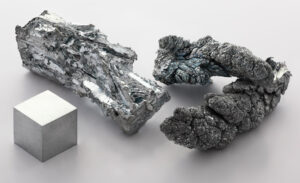
In January–August 2026, Ukraine reduced imports of zinc and zinc products by 35% compared to the same period last year, down to $24.126 million.
According to statistics released by the State Customs Service of Ukraine, imports of zinc and zinc products in August totaled $3.306 million.
Zinc exports for the eight-month period totaled $1,108 million; in August, they amounted to $189,000, compared to $888,000 in January–August 2025.
As previously reported, Ukraine reduced its imports of zinc and zinc products by 9.6% in 2025 compared to 2024, down to $52.982 million. Zinc exports last year reached $1.234 million, whereas in 2024 they totaled $563,000.
Pure metallic zinc is used to recover precious metals, protect steel from corrosion, and for other purposes.

Yevgen Osipov, CEO of the agricultural holding “Kernel,” anticipates—in a stress scenario—a 12-million-metric-ton decline in grain production in Ukraine next year due to a possible reduction in planted acreage by farmers, if no solution is found within the next six months to resume exports, according to a correspondent for the Interfax-Ukraine news agency.
“It is difficult to make such forecasts today. We hope that some solutions will be found in the next six months. If no practical solution is found, then, objectively speaking, the area under cultivation will be reduced. In such a stress scenario, we estimated this would result in a shortfall of 12 million metric tons of grain next year,” he said at the “Forbes Ukraine” Economic Resilience Forum in Kyiv on Wednesday.
According to Osipov, with seaports closed, Ukraine will be able to export only about 20 million metric tons of the 50 million metric tons of agricultural products needed—that is, 40% of the required volume—so companies are having to pivot to other business models.
“Based on our own experience with the most recent export corridors, about 50% of the operations were inefficient; we need to find new ways. Because right now, for businesses, it’s a matter of building a new business model. In other words, the old business model doesn’t work there anymore. That’s why, for our part, we’re focusing on processing and exporting processed products,” Osipov noted.
According to him, under its new business model, “Kernel” is focusing on exporting smaller volumes of products with higher added value, while retaining the ability to purchase oilseeds from Ukrainian farmers, pay them, and export processed products.
Osipov also added that, due to security and logistical constraints as well as external factors, it is currently not realistic to expect that the Danube ports will be able to handle the same volume of shipments that Ukraine had in 2022–2023.
As previously reported, in its September report, the U.S. Department of Agriculture (USDA) raised its estimate for this year’s wheat production in Ukraine by 0.6 million metric tons compared to the August forecast—to 26 million metric tons—and its estimate for other grains (excluding wheat and corn) by 0.5 million metric tons, to 7.29 million metric tons, and maintained its corn production forecast at 31.8 million metric tons. Thus, the USDA estimates Ukraine’s total grain production this year at 65.09 million metric tons.

Electricity exports from Ukraine on September 14–20 decreased by 17.3% compared to the previous week, to 109.3 thousand MWh, while imports increased by 12.2%—to 18.6 thousand MWh.
“Overall, electricity sales were nearly six times higher than purchases,” the DIXI Group analytical center reported on Wednesday, citing data from Energy Map.
As the center noted, weather conditions had the greatest impact on electricity trade during the reporting period. A cloudy start to the week, combined with a gradual seasonal decline in solar power generation, reduced the daytime power surplus, and the largest decline in exports occurred during daylight hours. At the same time, comfortable temperatures, mostly without precipitation, did not create peak loads on the power grid. Industrial consumption remained low due to Russian attacks.
According to Energy Map, Hungary accounted for the largest share of last week’s exports—53.8 thousand MWh, or 49.2%. Moldova accounted for 36,2 thousand MWh (33.1%), Romania for 19,0 thousand MWh (17.4%), and Poland for 0,3 thousand MWh (0.3%).
Compared to the previous week, exports declined across all destinations: to Poland by 72% (due to insignificant supply volumes), to Romania by 28%, to Moldova by 22%, and to Hungary by 8%. Exports to Slovakia remained at zero.
Hungary also remained the main source of imports, accounting for 8,900 MWh (47.8%). Poland accounted for 5,900 MWh (31.4%), Romania for 3,800 MWh (20.6%), and Moldova for 0.04 thousand MWh (0.2%).
As previously reported, in August 2026, electricity imports to Ukraine increased by 5% compared to July—to 184,000 MWh—while exports jumped by 63.8% to 380,900 MWh, marking the highest monthly export volume since September 2025. As a result, Ukraine maintained its status as a net exporter for the second consecutive month: sales exceeded purchases by nearly double.



