

An outbreak of foot-and-mouth disease has been reported in Hungary, which has led to emergency measures in a number of countries. The authorities of the UK, Russia and Ukraine have already announced restrictions on imports of animals and animal products from Hungary to prevent the spread of the dangerous virus.
Today, Ukraine has imposed a ban on the import of animals susceptible to the foot-and-mouth disease virus, as well as raw materials and animal products from such animals. The State Service of Ukraine for Food Safety and Consumer Protection (SSUFSCP) explained that the measures were taken to avoid the introduction of the virus into the country. According to the agency, the source of infection can be not only infected animals, but also those in the incubation period. In addition, the virus is transmitted through products obtained from infected animals.
The competent authorities in each country continue to monitor the epizootic situation and are ready to introduce additional measures if necessary.
Foot-and-mouth disease is a highly contagious viral disease that affects farm animals such as cattle, pigs, sheep and goats. It is characterized by the appearance of ulcers and blisters in the mouth, hooves and udders of animals, accompanied by fever and a sharp decline in productivity.
The disease is spread by airborne droplets, through feed, water, clothing and equipment, and can also be transmitted through animal products. Although foot-and-mouth disease is rarely transmitted to humans, it causes significant damage to agriculture, leading to massive livestock losses, strict quarantine measures, and serious economic losses. Due to the high contagiousness of the disease, international veterinary services closely monitor outbreaks and take strict measures to prevent its spread.

Hungarian Foreign Minister Peter Szijjarto and Serbian Energy Minister Dubravka Jedovic-Handanovic agreed on Wednesday to intensify investment policy in the energy security sector and speed up the construction of the first oil pipeline between the two countries, the Hungarian foreign minister said.
“We have agreed to expand joint investments in energy and energy security, including the construction of the first interconnecting oil pipeline,” Szijjarto wrote on Facebook (Meta Platforms Inc.).
In addition, Sijarto and Jedovic-Handanovic agreed to step up funding for “a new power line connecting the networks of the two countries.”
“For our country, Serbia is a strategic partner, without Serbia there will be no energy security for Hungary, and vice versa,” the Hungarian Foreign Minister added.
As reported, the construction of the oil pipeline between Hungary and Serbia is expected to be completed by 2026. The new branch will be connected to the Druzhba pipeline and will allow Serbia to diversify its oil supplies and not depend on Croatia.
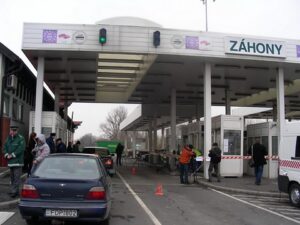
For the next two weeks, the traffic of cars and trucks leaving Ukraine will be partially restricted at the Chop-Záhony checkpoint on the Ukrainian-Hungarian border.
Due to the repair of the road surface in the customs control zone of the checkpoint, vehicles will be able to use only two lanes out of five available. Accordingly, this will affect their clearance and passage across the border. The repair work is being carried out as part of the Customs and Border Infrastructure Modernization Project with the support of the United States Agency for International Development (USAID).

Ukraine and Hungary have agreed to open the Velyka Palad-Nagyhodos checkpoint for passenger vehicles, the press service of the Ministry of Community Development, Territorial and Infrastructure Development (MinRestore) reported on Monday.
In addition, the countries agreed to allow the movement of empty trucks weighing more than 7.5 tons at the Luzhanka-Beregsurany checkpoint.
The relevant amendments to the Agreement between the governments of the countries on border traffic control were signed by the Deputy Prime Minister for the Reconstruction of Ukraine – Minister of Community Development, Territories and Infrastructure Oleksandr Kubrakov and the Ambassador of Hungary to Ukraine Heizer Antala.
It is specified that the agreements reached with Hungary require ratification to come into force.
“The signed amendments to the Agreement with Hungary allow us to start planning design and infrastructure works to launch the new Velyka Palad-Nagyhodos checkpoint and ensure the movement of empty trucks at Luzhanka,” Kubrakov said.
According to him, the possibility of building a new cargo checkpoint “Dyida-Berehdaroc” is also being considered to increase the capacity of the Ukrainian-Hungarian border.
Kubrakov also noted that Ukraine is working to start negotiations on the introduction of joint customs and border control with Hungary.
“This will allow us to speed up control procedures and reduce the time for crossing the border,” emphasized Kubrakov.
There are 5 automobile checkpoints on the border with Hungary. Only the Chop-Záhony checkpoint can handle trucks weighing more than 7.5 tons. Both loaded and empty vehicles go there. Every day, about 220 trucks cross the Chop-Zahony border crossing to leave Ukraine.
The Hungarian government has removed cane and beet sugar from the list of banned Ukrainian products for import after September 15, 2023, Agroinform.hu reported.
According to the report, the Hungarian government’s resolution on measures related to the transportation of certain agricultural products from Ukraine, which restricted the import of 24 Ukrainian agricultural products after September 15, removed the line referring to cane and beet sugar, as well as hard sucrose.
The decision came into force on October 10.
As reported, the European Commission announced on September 15 that it would not extend restrictions on imports of agricultural products from Ukraine to five neighboring EU countries (Poland, Bulgaria, Hungary, Romania and Slovakia) with some conditions to avoid a new surge in supplies.
The restrictions were imposed on May 2, 2023 and concerned imports of wheat, rapeseed, sunflower and corn. These five Eastern European member states argued that Ukrainian agricultural products, when imported duty-free into the EU, were settling with them and harming the local agribusiness sector.
After the restrictions were lifted, Poland, Hungary and Slovakia introduced unilateral bans. Poland expanded the list of products banned for import with rapeseed cake and meal, as well as corn bran, wheat flour and derivatives. Hungary brought the list to 24 commodity items.
Ukraine has filed a lawsuit with the WTO, accusing Poland, Hungary and Slovakia of discriminating against its agro-products.
Ukraine is currently negotiating the introduction of a licensing mechanism for exports of Ukrainian agro-commodities with mandatory verification in each of the five countries.

Ukraine will file a lawsuit with the World Trade Organization (WTO) against Poland, Hungary and Slovakia over their refusal to lift the ban on Ukrainian agricultural products, Taras Kachka, Deputy Minister of Economy and Trade and Ukraine’s trade representative, told Politico.
“It is important to prove that these actions are legally unlawful. That’s why tomorrow we will start the court proceedings,” Kachka said last Sunday, adding that Kyiv is preparing to take retaliatory measures against Polish fruit and vegetable exports.
Commenting on the introduction of unilateral bans by Poland, Hungary and Slovakia on Ukrainian grain after the European Commission’s decision to lift the restrictions, Kachka said that “in our opinion, these measures by Hungary and Poland are a statement of total distrust of the European Commission.”
Ukraine’s trade representative believes that the open defiance of Brussels by Poland, Hungary and Slovakia was not just an internal EU matter, but caused what he called “the biggest systemic problem” – whether international trading partners can trust what Brussels says on behalf of the EU.
“For many years, the European Commission has been the mediator in trade negotiations and the trade policy institution for the entire EU. And we are used to working on this basis,” Kachka said, adding that, in his opinion, “the systematic approach of Budapest and Warsaw to ignore the position of the EU institutions in trade policy will be a problem for the EU as a whole, because there is no unity here.”
Kyiv plans to sue the three countries at the World Trade Organization rather than through its own trade agreement with the EU. “I think the whole world needs to see how EU member states behave toward their trading partners and their Union, because it can affect other states,” he emphasized.
While Slovakia simply extended the EU’s previous ban on four types of grain, Poland over the weekend introduced additional bans on Ukrainian flour and feed. Hungary, according to Kaczka, is going even further and banning 25 more products that were not previously discussed, including meat.
“These arbitrary bans are ridiculous. I think that Hungary is making a political statement here that it wants to block trade with Ukraine and completely ignore Brussels. And that’s why I think this is a very bold move against both of us by Budapest,” Kachka emphasized.
While Hungary’s additional bans are mostly symbolic, given that Ukraine does not export much beef and pork to the country, Poland’s measures will affect a significant portion of Ukraine’s exports, Kachka said. If Warsaw does not lift these additional bans, “we will be forced to take measures in response to additional products and ban imports of fruits and vegetables from Poland.”
The governments in Budapest and Warsaw have said they are acting to protect their farmers from a surge of Ukrainian produce that has led to lower prices, but Kaczka denied that reasoning is flawed: “The Polish ban will not help farmers, it will not affect prices because prices are global – what they do is based on public opinion.”
An EU official told the publication that Brussels hopes to solve this problem by forcing Kyiv to impose its own export restrictions in the event of a sudden surge in exports.
When asked about this potential agreement, Kachka said that Kyiv is ready to “take responsibility for ensuring that exports from Ukraine do not cause a tsunami in neighboring countries” and will introduce a system of “real-time” grain export licenses for both countries, which will slow down exports to neighboring countries and allow Ukraine to “react quickly” if a surge is detected.
As reported, the ban on the export of wheat, barley, rapeseed and sunflower seeds from Ukraine to Poland, Hungary, Slovakia, Romania and Bulgaria, introduced on May 2 for the period until June 5, was extended until September 15.
On Friday, September 15, the EU allowed the ban to be lifted after Ukraine promised to take measures to tighten export controls to neighboring countries. On the same day, Poland, Hungary, and Slovakia imposed unilateral bans on imports of Ukrainian agricultural products. In addition to wheat, rapeseed, sunflower, and corn, Poland banned imports of cereals and flour, while Hungary expanded the list to 25 items.



