
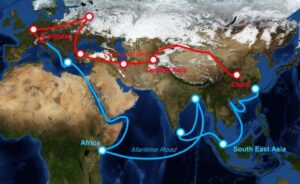
Direct non-financial investments by Chinese companies in countries participating in the “Belt and Road” initiative reached $39.67 billion in 2025, a 17.6% increase from the previous year, according to Ma Shengkun, China’s ambassador to Ukraine.
“Through direct investment, project contracting, and development financing, China has contributed to improving local infrastructure, modernizing industry, and raising the standard of living,” the diplomat wrote in a column on the Interfax-Ukraine website.
According to the data he cited, Chinese investment in Africa grew by 41% in 2025.
Chinese companies have established overseas trade and economic cooperation zones in 46 countries, with total investment in these zones approaching $80 billion.
As an example of industrial cooperation, Ma Shenkun cited a project by the Chinese battery manufacturer CATL in Indonesia. It involves establishing a complete production cycle for traction batteries—from the extraction and processing of nickel and the production of battery materials to the manufacturing and assembly of finished batteries.
According to data cited by the ambassador, the total volume of China’s direct non-financial foreign investment in 2025 reached $145.66 billion.
Ma Shengkun also cited World Bank estimates, according to which the full implementation of transportation projects under the “Belt and Road” initiative has the potential to reduce transit times along the relevant corridors by up to 12% and increase trade among countries located along them by 2.8–9.7%.
As previously reported, China is Ukraine’s largest trading partner. According to calculations by the Experts Club information and analytical center, trade between the two countries in the first half of 2026 totaled $14.68 billion. At the same time, Ukraine imported $13.9 billion worth of Chinese goods and exported $778.4 million worth of goods to China, resulting in a trade deficit of $13.12 billion.
China accounted for 21.9% of Ukraine’s trade with its 50 largest partners and 29.4% of imports from this group of countries. Trade with China accounted for approximately 47.3% of Ukraine’s total trade deficit with its top 50 partners.
According to the State Customs Service, from January through August 2026, imports of goods from China to Ukraine had already exceeded $19.6 billion, maintaining China’s position as the top supplier to the Ukrainian market.
China’s role in Ukraine’s foreign trade is analyzed in more detail in a study by Experts Club and Active Group, published on September 18, 2026.
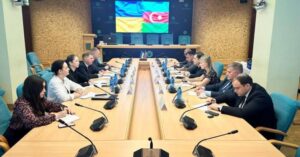
UkraineInvest, Ukraine’s agency for attracting and supporting investment, and Azerbaijan’s Agency for the Promotion of Exports and Investments (AZPROMO) have signed a memorandum of understanding aimed at expanding investment cooperation between the two countries, according to the Ukrainian Embassy in Azerbaijan.
The document was signed in Baku during the 2nd Azerbaijan International Investment Forum by AZPROMO Executive Director Yusif Abdullayev and UkraineInvest Executive Director Marina Khlistun, according to the Ukrainian Embassy in Azerbaijan.
The parties intend to foster direct contacts between businesses in both countries and create conditions for the implementation of joint investment projects.
Ukraine, in particular, is interested in attracting Azerbaijani capital to the country’s reconstruction projects. Potential areas of cooperation include infrastructure, energy, transportation and logistics, the agricultural sector, industry, and technology.
Yuriy Gusev, Ukraine’s ambassador to Azerbaijan, praised the efforts of the leadership and teams at AZPROMO and UkraineInvest in translating the two countries’ strategic partnership into concrete joint investment projects.
AZPROMO also confirmed the signing of the memorandum. According to the Azerbaijani agency, the document between AZPROMO and UkraineInvest was part of a package of 11 agreements signed during the international investment forum.
In total, the agreements concluded during the forum cover construction and development, the digital economy, renewable energy, industry, agriculture, pharmaceuticals, finance, water management, sports, and investment promotion.
The II Azerbaijan International Investment Forum took place in Baku on September 25–26, 2026, under the patronage of Azerbaijani President Ilham Aliyev. The event was organized by the Ministry of Economy of Azerbaijan and AZPROMO in strategic partnership with The European House – Ambrosetti.
UkraineInvest is the state agency responsible for attracting and supporting investment. The organization assists foreign and Ukrainian investors, provides consulting, analytical, and informational support, and participates in promoting Ukraine’s investment projects in international markets.

Around $680 billion in financing annually is needed to transform global agrifood systems by 2030, but the effectiveness of international programs will depend not only on the amount of funding, but also on farmers’ and agribusinesses’ access to finance, markets and economic incentives.
According to SEEDS, financing issues were discussed in Rome during the FAO Global Conference “Actions in One Health in Agrifood Systems,” which took place on September 21–23 and was dedicated to implementing the One Health approach in agrifood systems.
According to FAO estimates, the annual financing requirement for the transformation of agrifood systems in low- and middle-income countries amounts to around $680 billion. Of this amount, approximately $425–426 billion should go directly to investments, with another approximately $255 billion allocated to social protection systems.
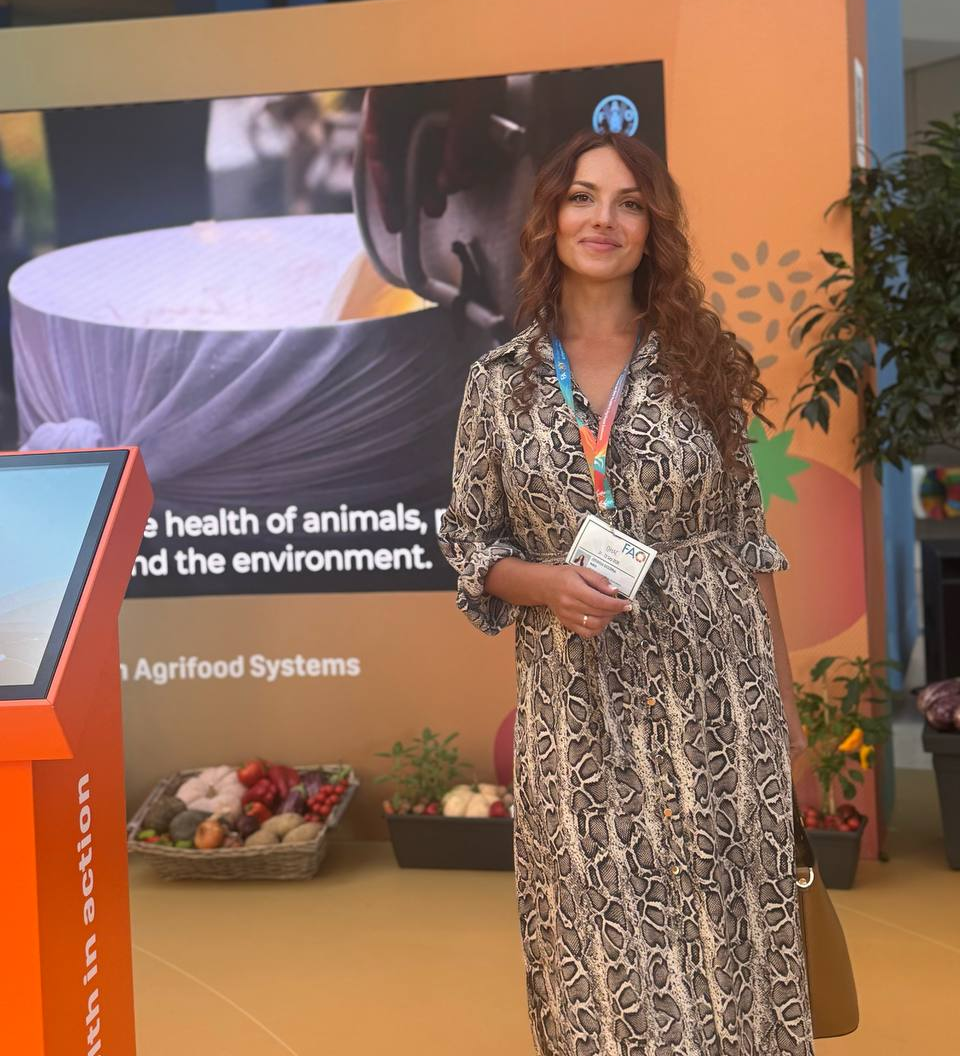
International expert on sustainable agriculture and agrifood systems and founder of Sapienza.media Kateryna Zvierieva, who participated in the conference, stressed that the volume of international financing alone does not guarantee results if resources do not reach direct producers.
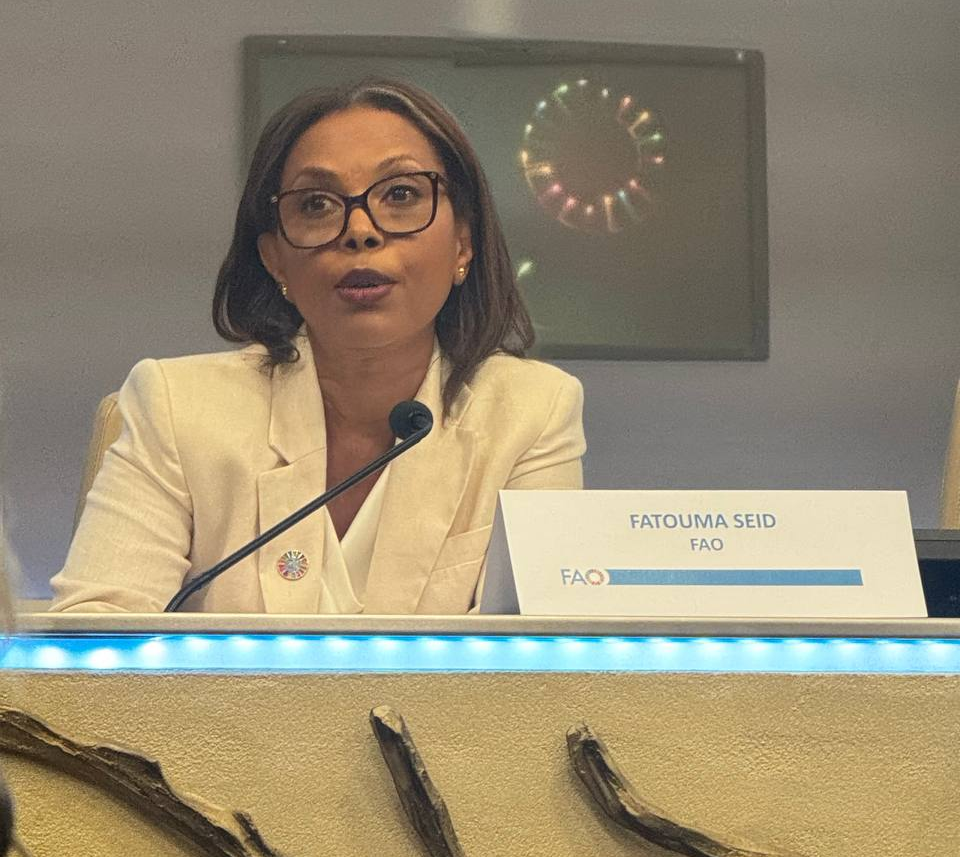
“We can develop effective environmental and veterinary solutions, but they will not become widespread practice if the farmer does not have access to financing, sales markets and economic incentives for their implementation,” she said in a comment to SEEDS.
Rwanda became one example of effective fundraising. About $25 million in financing from the Pandemic Fund was accompanied by the mobilization of approximately another $160 million in additional resources and related investments. The program is aimed at strengthening epidemiological surveillance, early warning systems and coordination between human and animal health services. FAO, WHO and UNICEF are involved in its implementation.
During the conference, programs in Zimbabwe and Afghanistan were also discussed, where the One Health approach is used to combine veterinary safety, healthcare, food security and support for agricultural production. Participants stressed that animal diseases, climate risks and water-related problems often extend beyond individual states and require regional investment programs.
The reduction of international assistance remains a separate problem. Representatives of the European Commission drew attention to the need to involve the World Bank, IFC, the International Fund for Agricultural Development and private capital more broadly in financing, since grant resources are insufficient for a large-scale transformation of the agricultural sector.
For Ukraine, these approaches are particularly important due to the need to simultaneously restore agricultural production, infrastructure, the veterinary system and water resources, as well as adapt the sector to EU standards.
According to Zvierieva, international programs should be accessible not only to large institutions, but also directly to agricultural enterprises, cooperatives and small producers. Farmers, in her opinion, should be involved in the development of such programs already at the planning stage, since it is they who can assess the real cost of introducing new technologies and the economic risks for farms.
FAO also emphasizes that without the involvement of the private sector, financial institutions and direct producers, it will be impossible to overcome the global financing gap in agrifood systems.
Source: SEEDS — “$680 billion for the transformation of agrifood systems”
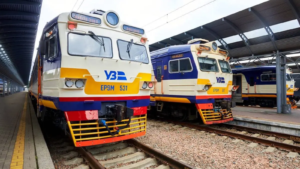
Ukrainian transport companies may receive compensation amounting to 10–15% of their investments in the modernization of vehicles and equipment to meet European Union standards, according to Gabriel Blanc, head of the working group on Ukraine’s reconstruction at the European Commission’s Directorate-General for Enlargement and Eastern Neighborhood.
According to “Interfax-Ukraine”, this mechanism applies to companies that take out loans from Ukrainian banks and invest in technologies that meet EU standards.
“We have what is known as a cashback mechanism: if a company takes out a loan from a Ukrainian bank and invests in technologies that meet EU standards, we can offer a refund of 10–15% of the investment amount,” Blanc noted during the event “Regional Business Dialogues on European Integration: The Transportation Sector” in Lviv.
According to him, Ukraine has currently fully implemented less than 10% of EU transport rules and standards, and has partially implemented less than half. Key tasks include harmonizing social and market regulations in the road transport sector, strengthening enforcement of compliance, and developing inspection and investigation bodies for rail and water transport.
Among the investments that Ukrainian carriers may need to make in order to operate according to European standards, Blanc cited the installation of second-generation smart tachographs, the purchase of Euro 6-compliant vehicles, and compliance with driver working time requirements. He noted that for small and medium-sized enterprises, such costs can be substantial, especially during wartime.
At the same time, the European Commission views this modernization as an investment in Ukrainian businesses’ future access to the EU transport market and their long-term competitiveness.
Support for transportation companies can be provided both directly to large Ukrainian enterprises and through banks. Currently, the ten largest Ukrainian banks are utilizing risk-sharing mechanisms, which helps reduce credit risks, particularly for small businesses, enterprises in frontline regions, and relocated companies.
The total portfolio under the risk-sharing mechanism already exceeds EUR 6 billion. The EU plans to further scale up financing programs for Ukrainian companies that are investing in bringing their operations into compliance with European standards.

Kuyalnik Salt Works LLC plans to invest over $20 million in a project to extract excess salt from the Kuyalnik Estuary and process it into table salt, according to the publication SEEDS.
The Odesa Regional Military Administration and the company signed a memorandum of cooperation on the implementation of investment and environmental projects in the Kuyalnik Estuary area. The Odesa Regional Military Administration officially confirmed the investor’s intention to invest over $20 million in the project.
According to SEEDS, Kuyalnik Salt Works LLC was established in 2026. The company plans to extract excess salt from the estuary and process it into food products. The estimated production capacity is approximately 300,000 metric tons of salt per year.
This volume accounts for about three-quarters of Ukraine’s salt imports in 2025. According to the State Customs Service, last year Ukraine imported about 415,000 metric tons of salt worth $49.6 million.
Thus, the implementation of this project could significantly reduce Ukraine’s dependence on imported table salt, and once production reaches full capacity, it could lay the groundwork for resuming salt exports.
The need to develop new salt sources increased sharply after the Artemsil plant in Soledar shut down in 2022. Prior to the full-scale invasion, Ukraine was a major producer and exporter of salt; however, after losing access to its key production facilities, it became heavily dependent on supplies from abroad.
The project on the Kuyalnik Estuary also has an environmental component. According to the Odesa Regional State Administration, the memorandum provides for the development of environmental protection infrastructure, the implementation of modern environmental solutions, and the execution of “green” projects. The issue of utilizing the estuary’s salt resources has been under consideration for over a year, with the participation of the Cabinet of Ministers, scientists, and relevant experts.
Before commencing industrial extraction, the company must still complete the procedures required by law, including an environmental impact assessment and obtaining the necessary permits for the use of natural resources. The Kuyalnik Estuary has special environmental protection and resort status.
Original source of the article: SEEDS – “Investor Plans to Invest Over $20 Million in Processing Salt from the Kuyalnik Estuary for Food Use”.
this)
INVESTMENT, Kuyalnik Estuary, ODESA REGION, PROCESSING, SALT

Hong Kong remains the least affordable metropolis for homebuyers among the cities surveyed by UBS: a skilled service sector worker needs about 15 years’ worth of annual income to purchase a 60-square-meter apartment near the city center.
These figures are contained in the UBS Global Real Estate Bubble Index 2026, published on September 22.
More than ten years’ income is also required to purchase a similar apartment in Tokyo, Paris, London, and Seoul.
UBS also notes a high burden on buyers’ incomes in Singapore, Lisbon, Zurich, Geneva, São Paulo, Munich, Sydney, Milan, and New York.
At the other end of the ranking are Miami and Dubai. A 60-square-meter apartment there costs roughly five times the annual income of a skilled worker.
However, a relatively lower ratio of real estate prices to wages does not necessarily mean affordable housing. In the U.S. and Canada, affordability is further limited by high mortgage rates, bank requirements, and other costs of homeownership.
According to UBS’s calculations, compared to 2021, the average skilled worker in the cities surveyed can now afford about one-third less living space on their income.
Separately, UBS compared real estate prices to rent. The highest ratio was recorded in Zurich: the cost of an apartment is equivalent to approximately 46 years of rent. In Geneva, the ratio is about 40 years, while in Munich, Frankfurt, and Hong Kong, it exceeds 30 years.
A high ratio of purchase price to rent may indicate that investors are anticipating further significant price increases. If such expectations wane, the risk of property value losses increases, notes UBS.
Kyiv was not included in this study.



