
According to Experts Club, on September 10, the Israeli newspaper The Jerusalem Post published its annual list of the 50 Most Influential Jews of 2026. The editorial board awarded first place to Jared Kushner and Ivanka Trump, second place to Israeli Prime Minister Benjamin Netanyahu, and third place to former Israeli Chief of Staff Gadi Eizenkot. Ukrainian President Volodymyr Zelenskyy took 21st place, with the publication describing him as “the Jewish face of Ukrainian resistance.” (Jerusalem Post)
The Experts Club think tank notes that the term “Top 50” in this case refers to 50 ranking positions, not 50 individual people. In 2026, these 50 positions featured 109 individuals, as the editorial board allocated 27 spots to groups of two or more people. When determining national affiliations, Experts Club primarily considered the country where a person’s political, civic, or business activities are centered, rather than just their place of birth or possession of dual citizenship. The complete official ranking was published in The Jerusalem Post.
From the Experts Club’s perspective, the 2026 ranking demonstrates, first and foremost, the bipolar geography of global Jewish influence—Israel and the United States. These two countries make up virtually the entire top twenty and the majority of the remaining positions. Israel is particularly well represented by politicians, military officials, diplomats, and leaders of civil society organizations, while the U.S. is represented by business, technology, finance, media, and federal politics. Outside these two centers, Ukraine, Mexico, the United Kingdom, Australia, and Canada stand out as notable independent representatives.
Another notable feature of the ranking is the sharp increase in the influence of the technology sector. It includes executives and founders of OpenAI, Meta, Wiz, Anthropic, Google, Oracle, Dell, Mobileye, Palantir, Thrive Capital, and Playrix. In other words, the editorial team now associates influence not only with government power, capital, and civil society organizations, but also with control over key technologies—primarily artificial intelligence, cloud infrastructure, and defense technologies.
Volodymyr Zelenskyy’s position remains particularly telling for Ukraine. In 2022, he ranked first in The Jerusalem Post’s list following the start of the Russian invasion. In 2023, Zelenskyy did not make the top 50. In 2024, he returned to 22nd place, and the publication itself explicitly noted his return after a year-long absence. Zelenskyy was again absent from the 2025 ranking, and in 2026, he ranked 21st—one spot higher than during his previous inclusion on the list.
Source: The Jerusalem Post’s full “50 Most Influential Jews of 2026” ranking.
https://www.experts.news/posts/the-jerusalem-post-nazvav-50-nayvplyvovishykh-yevreyiv-2026-roku
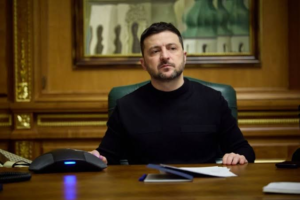
Ukrainian President Volodymyr Zelensky ranked 21st in the 2026 ranking of the 50 most influential Jews in the world, compiled by the Israeli newspaper The Jerusalem Post.
In the overall table, The Jerusalem Post calls Zelensky “the Jewish face of Ukrainian resistance,” while a separate article about the Ukrainian president is titled: “The Jewish president who became the face of Ukraine’s resistance.”
The authors of the ranking note Zelensky’s role in leading the country during the full-scale war with Russia, advancing Ukraine toward membership in the European Union, and developing new approaches to warfare, in particular drone technologies.
The Jerusalem Post also draws attention to the Jewish origins of the Ukrainian president and repeated attempts by the Russian authorities to combine accusations of “Nazism” against Ukraine with the fact that its president is Jewish.
The publication recalls that Zelensky’s relatives were killed during the Holocaust, while his paternal grandfather fought against Nazi Germany during World War II. Zelensky himself has repeatedly said that his Jewish background is part of his biography but does not define his political activity.
Zelensky has repeatedly appeared in The Jerusalem Post’s annual ranking. In 2022, after the start of Russia’s full-scale invasion, he took first place, and the publication then named him the most influential Jew of the year. In the 2024 ranking, the Ukrainian president was in 23rd place. Thus, in 2026 he rose by two positions compared with the ranking two years earlier.
The Jerusalem Post gave first place in its 2026 ranking to Jared Kushner and Ivanka Trump. Every year, the publication includes politicians, entrepreneurs, scientists, public figures, representatives of the technology industry, culture and religious organizations who, in the editorial board’s assessment, exert significant influence on global processes.
Primary source — The Jerusalem Post, 50 Most Influential Jews of 2026 ranking.
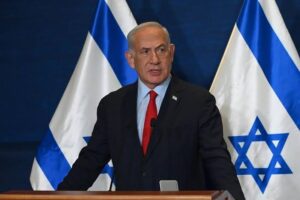
Israeli Prime Minister Benjamin Netanyahu called the United Kingdom an “Islamic republic” and reiterated his claim that it could become “the first Islamic republic with nuclear weapons.” The British government called his statements “absolutely unacceptable” and said it had raised the issue with Israeli authorities.
This statement was made on an Israeli Army Radio podcast, an episode of which was published on August 13, 2026. Speaking about the shift in attitudes toward Israel in the United Kingdom, Netanyahu used the phrase “Islamic Republic of Britain.” The host then asked him whether something similar was happening throughout Europe. The prime minister answered in the affirmative and cited a phrase previously used by someone else describing Britain as the future “first Islamic republic with nuclear weapons.”
However, the widely held interpretation that Netanyahu himself predicted Britain’s transformation into an Islamic nuclear republic is not entirely accurate. He did not present this phrase as his own prediction but explicitly stated that “someone had said” it. Israeli government spokesperson David Mencer later told the BBC that Netanyahu was referring to current U.S. Vice President J.D. Vance, who made a similar statement back in 2024.
Vance said at the time that the United Kingdom could become the first “truly Islamist country with nuclear weapons.” However, he himself made a caveat regarding Pakistan.
The very claim about the “first Islamic republic with nuclear weapons” is historically inaccurate. Pakistan is officially known as the Islamic Republic of Pakistan and has possessed nuclear weapons since the late 1990s.
London’s reaction was harsh. A British government spokesperson stated that Netanyahu’s comments were unacceptable and that this issue had already been raised during discussions with the Israeli side.
The remarks came amid deteriorating relations between Israel and a number of European countries. In the interview itself, the host broadened the question to include Europe as a whole, to which Netanyahu responded in the affirmative.
According to the latest assessment by the Stockholm International Peace Research Institute (SIPRI) Yearbook 2026, as of January 2026, nine states possessed or, as in the case of Israel, were considered to possess a total of approximately 12,187 nuclear warheads. About 9,745 of these were in military stockpiles and could potentially be used.
In order from the largest arsenal to the smallest:
Russia — about 5,459 warheads
United States — about 5,083
China—about 620
France—about 290
United Kingdom—about 225
India—about 190
Pakistan—about 170
Israel—about 90
North Korea—about 60
These are estimates of the total number of nuclear warheads, not just those deployed. The exact sizes of the arsenals are state secrets, so SIPRI emphasizes that the figures are approximate. Russia and the U.S. together continue to control about 86% of all nuclear warheads in the world.
China’s arsenal is growing particularly rapidly at the moment: SIPRI estimates it at approximately 620 warheads, up from 600 a year earlier. India has increased its estimated stockpile to 190, and North Korea, according to the institute’s assessment, may have assembled about 60 warheads and possesses fissile material for at least several dozen more.
The United Kingdom, at the center of the current diplomatic scandal, is estimated by SIPRI to have approximately 225 nuclear warheads. London has stopped publishing detailed data on the size of its operational nuclear stockpile, and British strategy provides for the possibility of increasing it.
ISRAEL, Netanyahu, nuclear weapons, PAKISTAN, UNITED KINGDOM
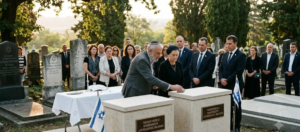
According to The Serbian Economist, the remains of Shimon and Rivka Herzl, the grandparents of Theodor Herzl, the founder of modern political Zionism, have been transported from Serbia to Israel for reburial on Mount Herzl in Jerusalem.
The reburial in Jerusalem is scheduled for August 5—the 77th anniversary of the transfer of Herzl’s own remains to Jerusalem. Israeli President Isaac Herzog and Prime Minister Benjamin Netanyahu are expected to attend the ceremony.
Shimon and Rivka Herzl were buried for nearly a century and a half at the Jewish cemetery in Zemun, which is now part of Belgrade.
According to Jacob Hagoel, chairman of the World Zionist Organization, the reburial fulfills Herzl’s last wish, as he wanted his family to be laid to rest within the borders of the Jewish state once it was established.
Following the reburial of his grandparents, the graves of nearly all of Herzl’s closest family members will be located next to his. The remains of Herzl himself, his parents, and his sister were transported from Vienna to Jerusalem in 1949. His two children were reburied there in 2006, and his only grandson in 2007.
Theodor Herzl was born in Budapest in 1860. In 1878, his family moved to Vienna, where he studied law but later turned to journalism and literature.
In 1896, Herzl published the book *The Jewish State*, in which he outlined a political program for the creation of an independent state for the Jewish people. In August 1897, he convened the First Zionist Congress in Basel, at which the World Zionist Organization was founded. Herzl led the organization until his death in 1904.
Herzl died 44 years before the proclamation of the State of Israel in 1948. In accordance with his will, he was initially buried next to his father in Vienna, but on the condition that, once a Jewish state was established, the family’s remains would be transferred to its territory. In August 1949, Herzl was reburied in Jerusalem on a mountain that was later named after him.
https://t.me/relocationrs/3376
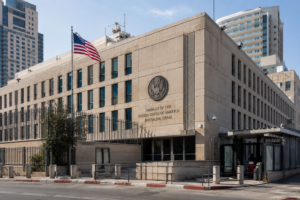
The US embassies in Israel and a number of other Middle Eastern countries have advised US citizens to consider leaving the region due to the risk of unforeseen escalation and possible disruptions to air travel.
“Due to heightened tensions in the Middle East, the security situation remains challenging, and the possibility of an unforeseen escalation persists,” according to warnings issued on 1 August by US diplomatic missions.
US citizens already in the region are advised to exercise increased caution and be prepared for flight cancellations, periodic airspace closures and other travel restrictions.
“Americans in the region should consider leaving or be prepared to leave in the event of an escalation,” the statement notes. Americans outside the Middle East are advised to seriously reconsider any plans to travel to or transit through the region.
Similar warnings have been issued by US embassies and diplomatic missions in Israel, Egypt, Jordan, Lebanon, Saudi Arabia, Qatar, Bahrain, Oman and Iraq. The diplomatic missions continue to provide routine consular and visa services.
The US Embassy in Jordan has additionally advised Americans to stay away from military bases in the country. The advisory also states that Iran and groups it supports may attack US interests and facilities abroad.
On 22 July, the US State Department issued a global travel advisory, urging Americans to exercise increased caution due to tensions in the Middle East. At that time, the department also warned of possible flight cancellations, airspace closures and disruptions at airports.
In other words, the US authorities have not ordered the mandatory evacuation of all citizens from Israel and other countries in the region. The advice is to make use of available commercial transport routes or to prepare an exit plan in advance in case the situation deteriorates further.
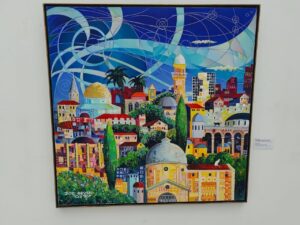
An exhibition titled “WHERE HOME IS” by Zoe Sever, an Israeli artist of Ukrainian descent, has opened at the Taras Shevchenko National Museum in Kyiv with the support of the Embassy of the State of Israel in Ukraine.
“Zoya Sever’s exhibition shows Israel as we know and love it—vibrant, colorful, warm, and full of life. I encourage everyone to visit this exhibition and experience the atmosphere of Israel,” said Michael Brodsky, Ambassador Extraordinary and Plenipotentiary of the State of Israel to Ukraine, during the exhibition’s opening.
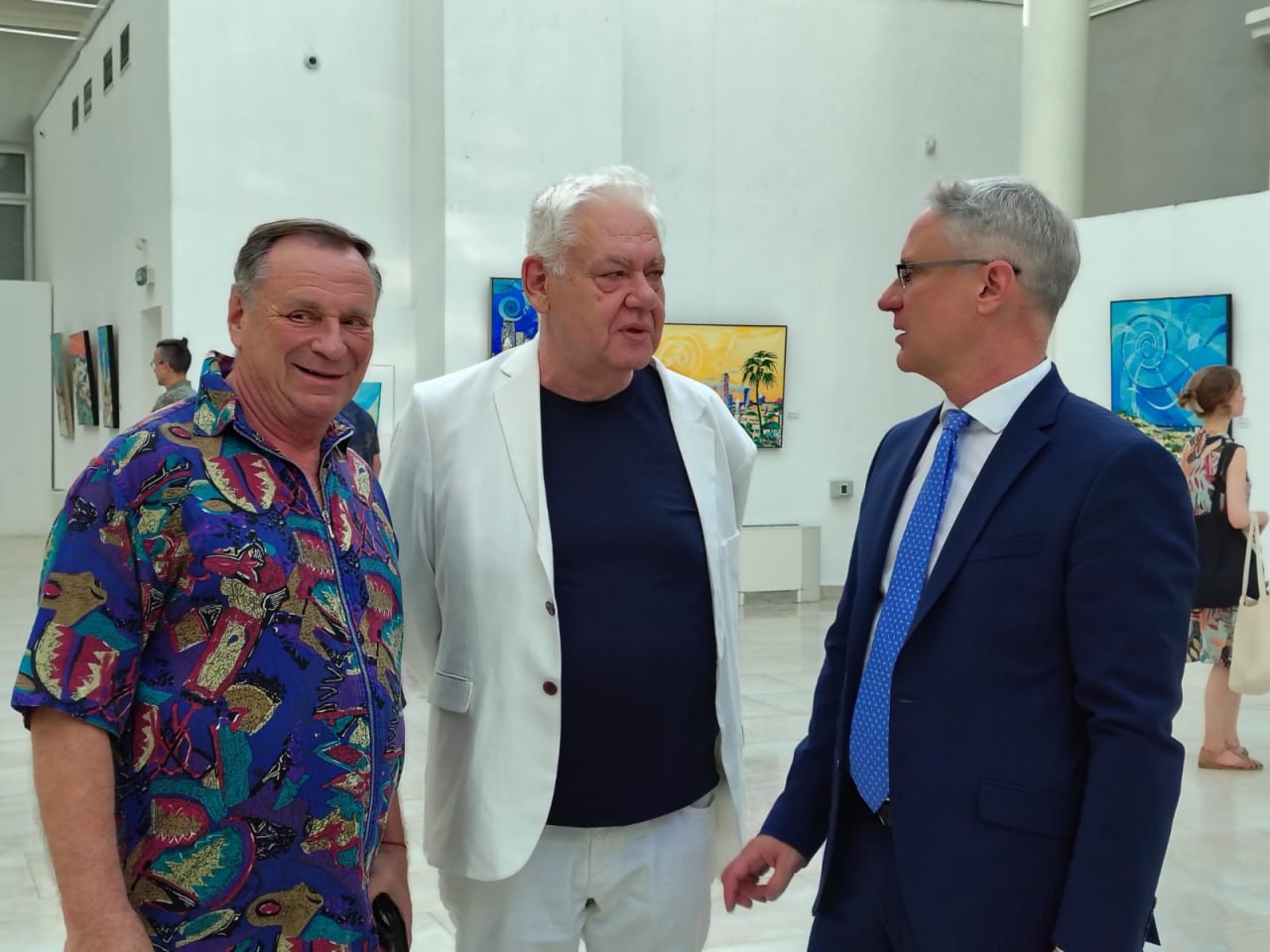
The artist brought to Ukraine a selection of works created in her signature style using the vibrant colors of oil and acrylic. Each painting conveys an impression or memory, an image of the city, its atmosphere, and its inner magic.
Sever’s works feature the rooftops of Jerusalem, black and white cats, the streets of the Old City, and the biblical white donkey as a symbol of eternity. The central theme of the exhibition is the home as a place of strength, memory, and return.
The organizers note that for Jews, even after two thousand years of diaspora, Israel remained a point of anchor—a home that needed to be reclaimed and restored. In the exhibition, this theme is combined with the experience of Ukraine, which today is also fighting for its own home, a peaceful sky, and the right to a future.
“This exhibition unites us—Ukrainians and Israelis, soldiers and artists, dreamers and pragmatists. Ordinary people in extraordinary circumstances. Those who stand on the front lines for the sake of their own home,” reads the project description.
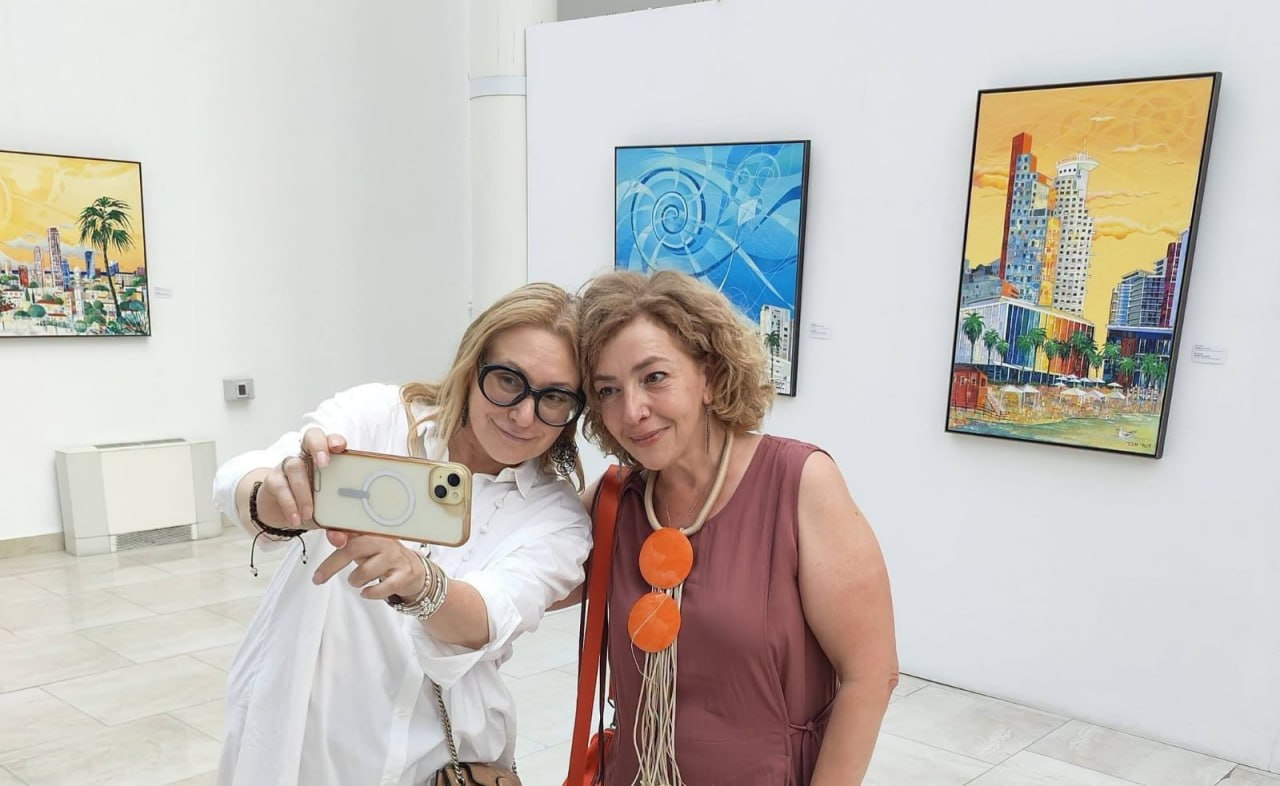
Zoya Sever is an Israeli artist who was born in Lviv. At age 16, she moved to Israel with her parents; she currently lives and works in Tel Aviv. She graduated from the Bezalel Academy of Arts and Design in Jerusalem with a degree in architecture.
After the start of the full-scale Russian invasion of Ukraine, Sever joined a volunteer group that provides protective gear to soldiers of the Armed Forces of Ukraine. She is also the founder of the “United People of the Planet” foundation, which runs the “Window to Peace” project: the artist, together with children, paints the walls of shelters.
Sever is also an instructor for the “Trauma Coalition” in Ukraine. Her works are held in museums and private collections in Israel, the United States, Canada, Spain, France, Germany, the United Kingdom, Switzerland, Australia, the Netherlands, Ukraine, and Kazakhstan.



