

Poland became the largest gold buyer among the world’s central banks in January-August 2026, increasing its reserves by approximately 98 tonnes, according to an Experts Club analysis based on World Gold Council (WGC) data published on October 6.
In August, global central banks continued actively increasing their gold reserves, purchasing another 39 tonnes on a net basis compared with 23 tonnes a month earlier. However, the ranking of cumulative purchases since the beginning of the year differs noticeably from the results of August alone.
According to the WGC, the largest gold buyers in January-August 2026 included:
Poland – about 98 tonnes
China – about 80 tonnes
Uzbekistan – about 50 tonnes
Kazakhstan – about 36 tonnes
Czech Republic – about 14 tonnes
The National Bank of Poland retained first place thanks to the continuation of its large-scale precious metal accumulation programme. In August alone, the Polish central bank purchased another approximately 7.8 tonnes.
As a result, Poland’s gold holdings approached 648 tonnes, while the National Bank’s strategic target is 700 tonnes.
China ranks second. In August, the People’s Bank of China was the largest buyer in the world, increasing its reserves by as much as 20.2 tonnes.
In January-August, China purchased about 80 tonnes of gold, while its official gold reserves reached approximately 2,387 tonnes. Gold accounts for about 9% of the country’s international reserves.
At the same time, China has continued buying the precious metal for 22 consecutive months, making it one of the most consistent buyers among the world’s largest central banks.
Uzbekistan ranks third, having increased its gold reserves by approximately 50 tonnes since the beginning of the year. In August, the country purchased another approximately 7.8 tonnes. The total volume of gold in Uzbekistan’s reserves reached approximately 439 tonnes, with the precious metal accounting for about 90% of the country’s international reserves.
Kazakhstan ranks fourth, with purchases of approximately 36 tonnes over eight months. In August, the National Bank of Kazakhstan added about 7.4 tonnes, bringing its gold holdings to approximately 377 tonnes. Gold accounts for about 79% of the country’s international reserves.
The Czech Republic rounds out the top five largest buyers. The Czech National Bank purchased 14 tonnes since the beginning of the year, including approximately 1.7 tonnes in August. The country’s total gold reserves reached around 86 tonnes.
Notably, the Czech Republic has been increasing its gold holdings for 42 consecutive months, implementing one of the most consistent reserve expansion programmes among European central banks.
At the same time, Turkey and Russia became the largest gold sellers since the beginning of 2026. Turkey reduced its reserves by approximately 82 tonnes, although in August it returned to purchases and bought about 2.9 tonnes. Russia sold about 56 tonnes in January-August, including approximately 6.2 tonnes in August.
The World Gold Council notes that the continued presence of the same countries among active buyers indicates the long-term nature of gold accumulation policies. Monthly changes in purchase volumes largely reflect the implementation schedules of these programmes, market conditions and the liquidity needs of individual countries.
According to the WGC, in January-August 2026 central banks reported net purchases of approximately 170 tonnes of gold. At the same time, officially recorded changes in reserves do not necessarily reflect total public-sector demand, as some central bank transactions become known with a delay or are not disclosed.
The World Gold Council regularly tracks changes in central banks’ official gold reserves based on data from the International Monetary Fund, national regulators and other official sources. The WGC regards central bank demand as one of the key factors in the global gold market.
Central banks, CHINA, CZECH REPUBLIC, EXPERTS CLUB, GOLD, gold reserves, KAZAKHSTAN, POLAND, UZBEKISTAN, WORLD GOLD COUNCIL
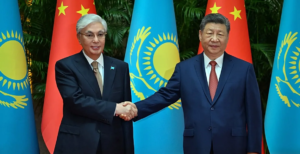
Astana and Beijing signed 50 commercial agreements totaling $8.2 billion during the “Kazakhstan–China” investment forum in Almaty, according to the press service of the President of Kazakhstan.
In particular, an agreement was signed on the construction of an electrolytic aluminum plant and an accompanying wind power plant in the Abai region (Eastern Kazakhstan), as well as on the construction of a particleboard plant in Semey (Semipalatinsk). The document was signed by the regional governor and a consortium of companies comprising Xinjiang Sanbao Industrial Group Co., Ltd. and Inner Mongolia Wanjiang Investment Co., Ltd.
An agreement on joint project development was signed between Samruk-Energo JSC, China Energy Overseas Investment Co., Ltd., and SANY Renewable Energy Co., Ltd.
In addition, a document outlining the basic terms for establishing a specialized investment fund—focused on financing promising projects in Kazakhstan—at the Astana International Financial Center was signed between JSC “NC ‘Kazakh Invest’” and Silk Road Finance Corporation.
An agreement on cooperation in the construction of wind power plants with a total capacity of 450 MW in the Akmola Region was concluded between the regional administration and Sungrow Renewable Development Co., Ltd.
A memorandum of understanding regarding the implementation of the project “Creation of a High-Tech Automobile Manufacturing Complex for the Production of Passenger and Special-Purpose Vehicles” was signed between the administration of the East Kazakhstan Region and the Kazakh-Chinese joint venture East Motors Corporation.
In addition, cooperation agreements were signed between the Turkestan Region and Turan Chemical Company LLC regarding the construction of a urea fertilizer plant.
An agreement on cooperation in organizing and supporting the issuance of dim sum bonds on the Hong Kong Stock Exchange (HKEX) was signed between the Mayor of Almaty and Guotai Junan Securities (Hong Kong) Limited.
An agreement was signed for the construction of a multifunctional complex featuring an international-brand hotel and a business center between the mayor of Almaty, Everest Development, and SunnyWorld Group.
An agreement was concluded on the preliminary terms for financing investment projects in priority economic sectors between the Development Bank of Kazakhstan and the Astana Branch of China Construction Bank Corporation.

Moldova and Kazakhstan remain the two largest markets for Ukrainian cheese: in January–July 2026, they accounted for 34.8% and 25.8% of Ukrainian exports, respectively, according to the Association of Milk Producers, citing data from the State Customs Service.
Germany became the third-largest buyer with a share of 13.1%.
Thus, Moldova and Kazakhstan together account for 60.6% of foreign demand for Ukrainian cheese among the markets listed, and the combined share of the three main markets reaches 73.7%, according to calculations based on data from the Milk Producers Association.
In total, Ukraine exported 8,200 metric tons of cheese over the first seven months of 2026, which is only 1.2% more than the figure for the same period last year.
Export revenue totaled $37.4 million, increasing by only 0.5%.
This means that the value of exports is growing even more slowly than their physical volume. The estimated average price of exported products was approximately $4,560 per metric ton and remained virtually unchanged year-over-year.
At the same time, Ukraine is increasing its cheese imports at a significantly faster rate. From January through July, 28.3 thousand metric tons of cheese were imported into the country—24.7% more than a year earlier—with a total value of $168.8 million.
As a result, Ukrainian cheese exports account for less than one-third of the volume of imports, and their geographic distribution remains fairly concentrated around several key markets.
Germany’s presence in both directions of trade is particularly telling: the country accounts for 16.3% of Ukraine’s cheese imports and is simultaneously the third-largest market for Ukrainian products, with a 13.1% share.
Source: Association of Milk Producers
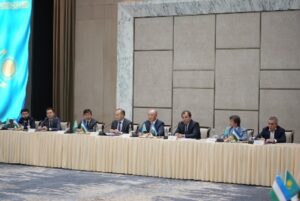
Kazakhstan and Uzbekistan plan to jointly enter new export markets in the Middle East. The agreement was reached during the Kazakhstan-Uzbekistan Business Forum, which took place on August 5 in Tashkent.
As part of the initiative, business delegations from both countries intend to visit Aleppo in late September and Erbil in early October. A trilateral business forum involving companies from Uzbekistan, Kazakhstan, and Syria is planned to be held in Syria. The Uzbek side may be represented by 20–30 companies.
The Syrian market is of particular interest, as demand for construction materials, food products, sunflower oil, and meat products is growing amid the country’s reconstruction.
In Iraq, the supply of confectionery products, porcelain tiles, household chemicals, and polyethylene pellets has been identified as promising areas.
Joint entry into third-country markets will make it possible to:
· expand the export reach of Kazakhstan and Uzbekistan;
· combine the production and export capabilities of the two countries;
· develop cooperation between enterprises;
· utilize shared logistics routes;
· find new foreign partners.
The initiative reflects a new approach to economic partnership between the two countries—shifting from the development of mutual trade to the joint development of third-country markets. Uzbekistan and Kazakhstan also maintain their goal of increasing bilateral trade to $10 billion.

The Russian marketplace Wildberries plans to commission two large logistics complexes in Kazakhstan with a total area of over 260,000 square meters in the first quarter of 2027, according to Kazakhstan’s Minister of Trade and Integration Arman Shakkaliyev.
“In the first quarter of next year, the company is carrying out construction and installation work on a facility of about 160,000 square meters in Almaty. And in Astana, there will be a facility of about 100,000 square meters,” the minister said at a briefing at the Kazakh government on August 4.
According to him, these projects are part of the previously announced development program for Wildberries’ Kazakhstani division. Currently, the company leases approximately 46,000 square meters of warehouse space in the country.
Shakkaliyev also noted that Wildberries has not submitted any new requests to the Kazakhstani authorities regarding the search for or opening of additional warehouse facilities.
However, official data on the distribution of space among cities contradicts the minister’s statements. A statement published by the Kazakh government indicates that the Wildberries logistics hub currently under construction in Astana will have an area of 160,000 square meters, not 100,000 square meters.
Investments in the Astana complex are estimated at 47.7 billion tenge. The project is expected to create approximately 6,000 jobs, and construction is also scheduled for completion in the first quarter of 2027.
Representatives of the merged company RWB had previously reported that a 160,000-square-meter facility is under construction in Astana, and a complex covering more than 100,000 square meters is being built near Almaty. Thus, the total area of the two centers will indeed exceed 260,000 square meters, although the final distribution of space between the cities still needs to be clarified.
The cost of the Wildberries logistics center in Almaty was previously estimated by the Kazakhstani authorities at 43.2 billion tenge. The exact completion date for this facility was not specified in the relevant announcement.
The new centers are expected to expand the marketplace’s capacity for receiving, storing, sorting, and delivering goods within Kazakhstan. Expanding the local warehouse network may also reduce delivery times and increase the number of Kazakhstani entrepreneurs operating through the platform.
In 2025, the volume of retail e-commerce in Kazakhstan, including marketplaces, reached 3.769 trillion tenge. Sales through marketplaces accounted for 3.238 trillion tenge, or 86% of the total e-commerce market.
Wildberries is one of Kazakhstan’s largest e-commerce platforms. Previously, the Ministry of Trade reported on plans by Wildberries and Ozon to build three fulfillment centers in Astana and Almaty with a total area of 291,000 square meters and a combined investment of 101.3 billion tenge.
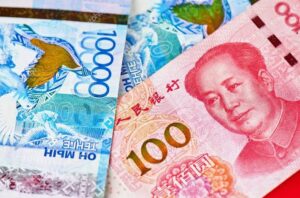
Financial regulators in Kazakhstan and China have reached an agreement to launch a pilot project on settlements in the digital tenge and digital yuan, the press service of the National Bank of Kazakhstan reported following a visit by its delegation to China.
“An important step was the agreement reached between the National Bank and the People’s Bank of China to launch a pilot project for settlements in digital tenge and digital yuan,” the statement said.
“We have agreed to integrate the digital tenge and the digital yuan in two complementary ways: through the mBridge multilateral platform (an international multi-currency platform for real-time cross-border payments and transfers using blockchain technology) and through direct bilateral integration via CBETS (Cross-Border e-CNY Transfer Services, the digital yuan platform for cross-border settlements),” explained Binur Zhalenov, Deputy Chairman of the National Bank of Kazakhstan, who participated in the negotiations, on his social media page.
During negotiations with Cross-Border Interbank Payment System (CIPS), the parties discussed further practical steps to implement the memorandum of understanding between the National Bank, the National Payment Corporation, and CIPS, as well as prospects for expanding the use of cross-border payment infrastructure, developing settlements in national currencies, and strengthening cooperation in the field of international payments.
As part of the implementation of the memorandum between the National Payment Corporation of Kazakhstan and UnionPay International (UPI)—the global division of China UnionPay responsible for the international development of UnionPay products and services—the integration of QR payments between the two countries will be completed by the end of the year, according to the National Bank of Kazakhstan.
The central banks also signed a new three-year currency swap agreement, with the option to extend it by mutual agreement of the parties.
During meetings with the China Banking Association and the leadership of China’s largest commercial banks, discussions focused on their participation in financing investment projects in Kazakhstan and issuing debt instruments.
CHINA, KAZAKHSTAN, PAYMENT, тенге, Юань



