

The Kyiv and Lviv regions together accounted for over 1.1 million square meters of new residential construction reported in Ukraine from January through June 2026.
According to the State Statistics Service, 599,300 square meters were reported in the Kyiv region and 501,500 square meters in the Lviv region.
Another 437,900 square meters were accounted for by Kyiv, 328,700 square meters by the Odesa region, and 248,400 square meters by the Ivano-Frankivsk region.
The concentration is particularly noticeable in terms of the number of future apartments. In the Kyiv region, approximately 9.1 thousand apartments were announced; in the Lviv region, 7.2 thousand; and in the Ivano-Frankivsk region, 5.8 thousand
Together, these three regions alone accounted for over 22 thousand apartments—that is, a significant portion of the total new supply of multifamily housing announced nationwide in the first half of the year.
The regional breakdown reflects an ongoing redistribution of development activity. Kyiv and the Kyiv region remain the largest metropolitan market, while the Lviv and Ivano-Frankivsk regions maintain a significant volume of construction in the western part of the country.
At the same time, the trend is uneven: in the Kyiv region, the volume remained virtually unchanged from last year’s level, while in Kyiv it decreased by 10.7%, and in the Ivano-Frankivsk region—by 20.5%.
Source: State Statistics Service of Ukraine.

Kyiv region became the largest among the regional new housing construction markets specified by the State Statistics Service in January-June 2026, with 599.3 thousand sq. m, while 437.9 thousand sq. m were declared in Kyiv.
According to the Experts Club information and analytical center, around 9.1 thousand apartments were declared at the construction commencement stage in Kyiv region. In annual terms, the area of new construction remained virtually unchanged, decreasing by only 0.3%.
In Kyiv, the area of declared new housing decreased by 10.7% — to 437.9 thousand sq. m.
At the same time, the statistics on the number of apartments in the capital look unusual: the State Statistics Service indicates around 1.4 thousand declared apartments despite the significant total area. This may be related to the structure of specific projects and the specifics of the published data.
Lviv region became the third major market, where 501.5 thousand sq. m of housing and around 7.2 thousand apartments were declared in the first half of the year.
In Ivano-Frankivsk region, the area of new construction amounted to 248.4 thousand sq. m, decreasing by 20.5% year on year. At the same time, around 5.8 thousand apartments were declared.
In Odesa region, the figure reached 328.7 thousand sq. m and around 1.1 thousand apartments, but the State Statistics Service does not disclose comparable figures for the previous year.
Thus, in terms of the volume of declared new construction, the largest markets continue to be concentrated around Kyiv and the western regions of the country.

The Deposit Guarantee Fund (DGF, the Fund) has listed the first three land plots belonging to the bankrupt RVS Bank in the village of Pohreby (Brovary District, Kyiv Region)—with a total area of 2.23 hectares—for sale on the “Prozorro. Sales” system the first three land plots belonging to the bankrupt RVS Bank in the village of
Pohreby (Brovary District, Kyiv Region), with a total area of 2.23 hectares, at a combined starting price of 11.3 million UAH.
According to the announcement, the land plots are intended for the construction of a residential building and outbuildings.
The starting price for the 0.93-hectare plot is 4.7 million UAH, for the 0.55-hectare plot—2.8 million UAH, and for the 0.75-hectare plot—3.8 million UAH.
The auction for the first plot is scheduled for October 2, and the auctions for the other two are set for October 5, 2026. Bidding will follow the English auction model, consisting of three rounds of price increases.
The minimum bid increment for all three lots is 1% of the starting price, and the deposit is 10%.
In total, this fall, the Deposit Guarantee Fund plans to put up for sale 35 land lots belonging to RVS Bank in the Kyiv region, with a total area of 34 hectares.
All interested parties are eligible to participate in the auction, except for individuals associated with the aggressor state. Proceeds from the sale of the assets will be used to satisfy the claims of RVS Bank’s creditors.
As previously reported, the first property from RVS Bank’s assets put up for sale by the Deposit Guarantee Fund was an oil depot in the Poltava region with a starting price of 16.3 million UAH; however, the auction on June 1 did not take place due to a lack of participants.
AUCTION, Deposit Guarantee Fund, KYIV REGION, LAND, РВС Банк
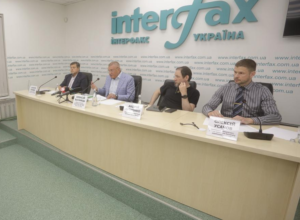
The reform of the prosecution bodies in Ukraine must move from political and personnel experiments to the restoration of professionalism, the depoliticization of the position of prosecutor general, real prosecutorial self-government, and a clear delimitation of powers between law enforcement agencies, the participants of the “Capital Region” discussion club believe.
“Over 34 years of Independence, Ukraine has seen 18 prosecutors general and acting prosecutors general. Every second or third of them declared reform as a main priority, but a deep institutional transformation has still not taken place,” political consultant and chairman of the board of the Institute of Ukrainian Politics Oleksiy Usachov said at a press conference at the Interfax-Ukraine agency on Monday.
According to him, the history of the prosecutor’s office of independent Ukraine can be conditionally divided into several stages. The first was connected with the post-Soviet formation of the system, when the heads of prosecution bodies were mainly professional prosecutors who had passed through all levels of the service hierarchy. The next stage, according to Usachov, was characterized by the politicization of the position of prosecutor general, when the prosecutor’s office increasingly became an element of political struggle.
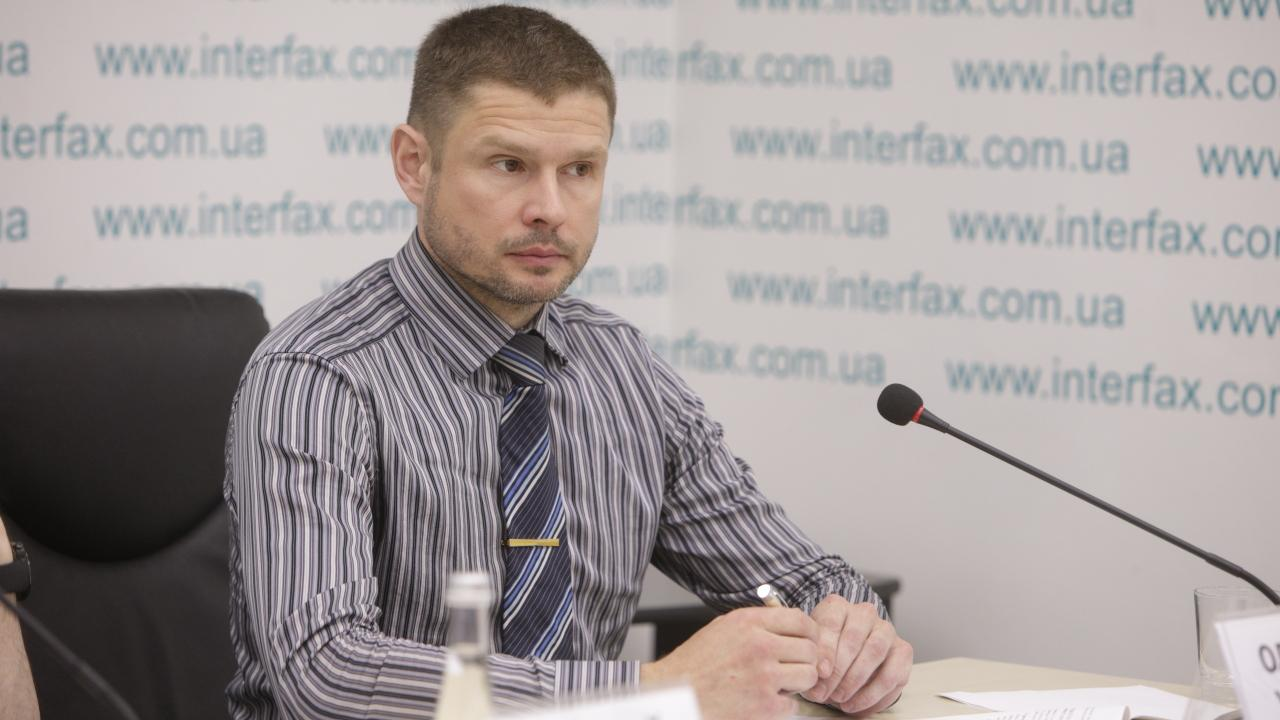
“The prosecutor general increasingly began to be defined by society as a political figure. This resulted in political scandals, processes around the prosecutor’s position, and the allocation of positions according to party affiliation rather than according to the level of integrity and professionalism,” he noted.
Usachov also pointed out that after the Revolution of Dignity, the reform of the prosecutor’s office took place under the significant influence of politicians and international partners, while the system saw the emergence of the practice of appointing people without sufficient prosecutorial experience to the highest positions.
“The system is unbalanced; it has more slogans and declarations than real practical actions. After attempts to disperse everyone and assemble everything anew, there have been no major positive results, since professional personnel were washed out of the prosecutor’s office, while many random and inexperienced people came instead. Proximity to the President’s Office, to the authorities, to the party of power remains the primary reason for a person’s presence in office. The leveling of open competitions and professionalism is the key shortcoming that is currently observed with regard to the prosecutor’s office,” the chairman of the board of the Institute of Ukrainian Politics emphasized.
For his part, lawyer and former Deputy Prosecutor General of Ukraine Oleksiy Bahanets stated that the current model of the prosecutor’s office has become the result of a long-term legislative narrowing of its functions.
“For me, this topic is painful, because I devoted 35 years to work in the prosecution bodies and passed through all service levels — from the district prosecutor’s office to the position of deputy prosecutor general. Therefore, I have something to compare it with: with the Soviet period, with the years of the formation of independence, and with the years of the first wave of the war in the east,” he emphasized.
Bahanets also clarified that the general supervision function of the prosecutor’s office was abolished with the adoption of the 1996 Constitution, but, according to him, subsequent legislative changes effectively deprived the prosecutor’s office of a number of important mechanisms of influence over legality.
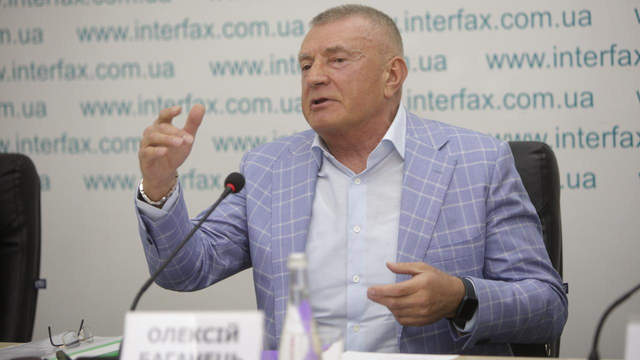
“The new Criminal Procedure Code and the new law on the prosecutor’s office in fact became stages in the destruction of the system that had already been working. Under the pretext of bringing its activities in line with European standards, functions that allowed the prosecutor to really influence compliance with laws were eliminated or substantially narrowed,” Bahanets said.
He emphasized that in different European countries prosecutors’ offices have different scopes of powers, and therefore references to a single “European standard” in this area are incorrect.
“There is no single European standard for the prosecutor’s office. Prosecutors’ offices in different European countries exist with different functions. Therefore, not everything that is offered to us under the guise of European experience can be mechanically transferred into the Ukrainian legal system,” he stressed.
According to Bahanets, the prosecutor’s office has lost the ability to effectively represent the interests of socially vulnerable citizens in courts, while the representation of the state’s interests has been narrowed to exceptional cases.
“The prosecutor has in fact been blurred as a defender of the constitutional rights and freedoms of citizens against lawlessness, primarily on the part of state authorities. And this was one of the components of the system of checks and balances,” he said.
The former deputy prosecutor general also criticized the state of procedural guidance in criminal proceedings. According to his assessment, today a prosecutor often does not have sufficient tools to influence an investigator or the head of a pre-trial investigation body.
“Today the prosecutor has been turned into a simple observer of lawlessness that sometimes takes place in law enforcement bodies. He does not have in his arsenal the proper powers to influence an investigator or the head of a pre-trial investigation body so that they comply with the law,” the lawyer said.
He also drew attention to the consequences of the re-certification of prosecutors in 2019-2020, as a result of which a significant number of dismissed employees were reinstated by courts, while considerable sums of compensation were paid from the state budget. According to him, when the process of certification and re-certification is discussed, one should recall not only slogans but also facts, since there are thousands of prosecutors reinstated by courts and funds that the state paid in connection with unlawful dismissals.
Separately, he expressed the opinion that the prosecutor general should not be perceived as a political position and proposed establishing a requirement for a candidate for this post to have mandatory significant experience working in prosecution bodies, including in managerial positions, as well as strengthening the role of prosecutorial self-government in the procedure for appointing and dismissing the head of the system.
The founder of the sociological company Active Group, Andriy Yeremenko, for his part, drew attention to the fact that society perceives the prosecutor’s office not in isolation, but as part of the broader law enforcement system and the authorities as a whole.
“An ordinary person does not distinguish where the Ministry of Internal Affairs is, where the prosecutor’s office is, where the courts are, and where NABU is. They see that something around them is bad and conclude that the entire law enforcement system is bad. Society wants to see professionals. From the citizens’ point of view, this is a person who has relevant experience and has not been caught in corruption. In the ideal image, experience in the body, involvement in the defense forces, consistency, and a career passed not from the street are important,” he emphasized.
At the same time, he stressed that even when the prosecutor’s office takes positive actions, it often loses the information battle, since society notices scandals better than the internal self-purification of the system.
“When someone in the prosecutor’s office is caught from the outside, it immediately becomes very noticeable and turns into a negative. But internal self-purification remains unnoticed. This is a problem of information work and transparency,” Yeremenko said.
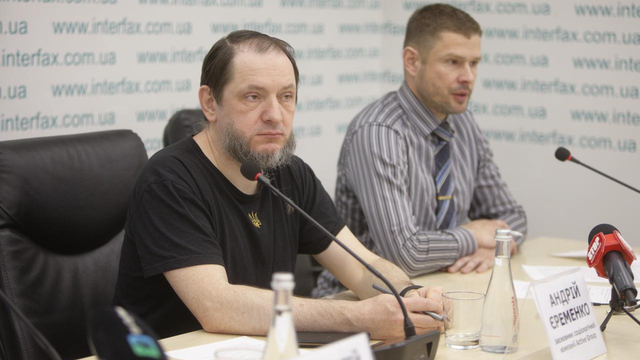
He also emphasized the need for educational work regarding the powers of various state authorities.
“If society does not like the procedure for appointing the prosecutor general, this is a question for the Verkhovna Rada, which must amend the law. One cannot demand from the prosecutor’s office something that does not belong to its competence,” the sociologist noted.
Lawyer and member of parliament of the 4th, 5th and 6th convocations Valeriy Bondyk noted that the prosecutor’s office must remain a professional and independent element of the system of checks and balances.
“The prosecutor’s office in the state has always been a supervisory body, the state’s eye. The system of checks and balances works when there is an independent, strong, qualified and professional prosecutor’s office,” he added.
Bondyk recalled that the Criminal Procedure Code of 2012 was adopted after a broad discussion involving universities, scholars, the Ministry of Internal Affairs, the Prosecutor General’s Office and the judicial community. At the same time, according to him, certain norms, in particular regarding the mandatory registration of statements in the Unified Register of Pre-Trial Investigations, now create a significant burden on the system.
“The legislator’s idea was understandable: to prevent the concealment of crimes and latent crime. But the practical implementation of this norm gave rise to other problems, because everything automatically gets into the register and a pre-trial investigation begins,” he noted.
He also drew attention to the consequences of the liquidation of the military prosecutor’s office and military courts, which, in his opinion, is especially noticeable under martial law.
“Wartime has shown that it was not necessary to reduce and liquidate military courts and a powerful military prosecutor’s office. There are military personnel, there are military laws, and now we see that these flaws are taking effect,” Bondyk stressed.
At the same time, he positively assessed the readiness of the current leadership of the prosecutor’s office to speak publicly about corruption cases within the system.
“To the credit of the current prosecutor general, Ruslan Kravchenko, he does not veil such cases. He honestly and openly says that there are problems, and that the internal inspection or anti-corruption bodies are dealing with them. This is a healthy trend — not to hide problems, but to bring them out so that they do not repeat themselves,” the lawyer said.
Oleksiy Usachov, summing up the discussion, noted that after his appointment Ruslan Kravchenko declared the right tasks regarding the continuation of prosecution reform, but society expects not only declarations, but also practical results.
“The political process in Ukraine is built in such a way that one can declare the best intentions and really want to change the situation, but it may not work out because of political obstacles, a lack of votes, funds, understanding, or personnel. We would not want the word ‘reforms’ to once again become an irritant for society,” he emphasized.
Among the key recommendations voiced as a result of the discussion, the participants named the depoliticization of the procedure for appointing the prosecutor general, ensuring the institutional autonomy of the Specialized Anti-Corruption Prosecutor’s Office, the real independence of prosecutorial self-government, transparent disciplinary procedures, adequate remuneration for prosecutors, and constant integrity checks not only during competitions but also in the course of work.
Also among the necessary steps, according to the experts, are the institutional strengthening of the area of war crimes investigations, optimization of the staffing structure while improving the quality of work, a clear delimitation of the functions of the Security Service of Ukraine, NABU, the State Bureau of Investigation and other bodies, as well as the real implementation of ethical standards by prosecutors.
ANDRIY YEREMENKO, DISCUSSION, IHOR BONDARCHUK, KYIV REGION, OLEKSIY BAGANETS, OLEKSIY USACHOV, PROSECUTOR'S OFFICE, VALERIY BONDIK

Israel will provide communities in the Kyiv region, which is suffering from Russian shelling of energy infrastructure, with 117 mobile generators, according to Israeli Ambassador to Ukraine Michael Brodsky.
“Foreign Minister Gideon Saar had a telephone conversation with Rabbi Meir Stambler, head of the Federation of Jewish Communities of Ukraine (FJCU). The conversation took place on the fourth anniversary of Russia’s war against Ukraine,” Brodsky wrote on Telegram on Tuesday.
According to him, during the conversation, Minister Saar informed the rabbi that on February 25, Israel would transfer 117 mobile generators to the Kyiv region.
During the conversation, Minister Saar inquired about the situation in Ukraine and the condition of the country’s Jewish communities, and wished them a happy Purim holiday.

Representatives of Saudi Arabia have expressed their willingness to cooperate in the restoration of critical infrastructure in the Kyiv region, in particular in the completion of the construction of a secondary school for 600 students in the village of Hora, Boryspil district, according to the head of the Kyiv Regional Military Administration (OVA), Mykola Kalashnik.
“I held an online meeting with representatives of the Humanitarian Fund of His Royal Highness Prince Al-Walid bin Talal bin Abdulaziz Al Saud and the Ukrainian-Arab Business Council. I sincerely thanked our partners from the Kingdom of Saudi Arabia for their willingness to cooperate and their genuine interest in restoring critical infrastructure in the Kyiv region,” he wrote on Telegram on Tuesday.
According to him, the Saudi side confirmed its support for the Kyiv region and its openness to implementing joint humanitarian and social projects. “The key topic of the conversation was the discussion of the completion of the construction of a secondary school for 600 students in the village of Hora in the Boryspil district – an important facility for the community, the construction of which was halted due to the full-scale war,” Kalashnik specified. He reported that the main part of the school has already been built. However, in order to fully commission it, a number of engineering, finishing, and improvement works remain to be completed, as well as the construction of a modern shelter in accordance with safety requirements. According to the head of the OVA, the possibility of involving the Prince Al-Waleed Fund in this project was discussed with the Saudis.
“We are counting on partnership participation in financing the final phase of construction, because this school is the future for hundreds of children in the community,” Kalashnik added.
“I also invited representatives of Saudi businesses to cooperate with the Kyiv region. Our region is not only an area in need of restoration, but also a region of great opportunities. There is potential for launching investment projects in the fields of construction, agriculture, energy, and manufacturing. The interest shown by our Arab partners is further proof that the Kyiv region remains promising and economically attractive even in difficult times,” said the head of the region.



