
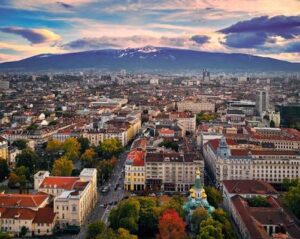
The British newspaper Metro has named Sofia the most underrated capital in Europe, highlighting the city’s combination of relatively affordable prices, historical heritage, modern cultural life, and proximity to natural attractions.
According to the British publication, the Bulgarian capital remains significantly less popular among mass tourists than traditional destinations in Western and Southern Europe, despite its potential for short city breaks.
Metro cites the British market as one example. In 2025, approximately 343,000 travelers from the United Kingdom visited Bulgaria, whereas Spain welcomes around 18 million British tourists annually. Thus, even with growing interest, the gap between Bulgaria and one of Europe’s largest tourist destinations remains vast.
At the same time, tourism in Sofia itself is growing. According to the city’s tourism authorities, the capital welcomed more than 1 million tourists from January through September 2025, and the number of arrivals increased by approximately 10% year-over-year. Foreigners accounted for about 63% of visitors.
Metro highlights Sofia’s historic center as one of its main attractions, where monuments from different eras are concentrated within a small area.
St. Alexander Nevsky Cathedral remains one of the city’s main attractions. The British publication also draws attention to the archaeological complex of ancient Serdica, a significant portion of which can be seen right in the center of modern Sofia.
The city’s proximity to Vitosha Mountain is cited as a distinct advantage. As a result, a trip to Sofia allows visitors to combine exploring the capital with hiking trails and outdoor recreation without having to travel long distances to another region of the country.
British journalists also highlight the capital’s burgeoning cultural scene. Among the events mentioned is the A to JazZ music festival, and among the cultural venues are the Sofia City Art Gallery and other museums in the city.
Another factor contributing to the city’s appeal is the relatively low cost of food, public transportation, and entertainment compared to other European capitals. Metro considers Sofia’s affordability to be one of its advantages amid rising travel costs to the most-visited cities in Western Europe.
Overall, Bulgaria welcomed approximately 13.6 million foreign visitors in 2025, a 2.7% increase from the previous year, according to data from the country’s National Statistical Institute. More than 9.5 million tourists were registered at lodging facilities, a 5.8% increase over the year.
Thus, the British Metro’s focus on Sofia aligns with a broader trend of growing interest in Bulgaria as a destination in its own right for city tourism, rather than merely as a country of summer resorts and winter getaways.
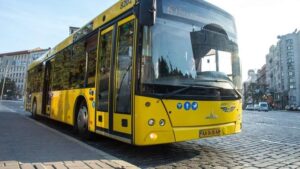
New fares for single rides on public transit will take effect in Kyiv on July 15—a single ride on the metro, bus, tram, trolleybus, or funicular will cost 30 UAH.
Mayor Vitali Klitschko signed the corresponding order on July 7; the document was published on the Kyiv City State Administration’s website on Friday, July 10.
At the same time, discounts are available on “multi-ride passes” depending on the number of trips: 1–9 trips—30 UAH; 10–19 trips—28.90 UAH; 20–29 trips—27.80 UAH; 30–39 trips—26.60 UAH; 40–49 trips—25.50 UAH; 50 trips – 25 UAH.
Starting August 1, a 60-UAH ticket will also be available, allowing for an unlimited number of transfers within 90 minutes.
Tickets purchased before July 14 are valid until September 14. After that, any unused balance will be automatically credited as a cash equivalent to the transit card.
As previously reported, five petitions on the Kyiv City Council website calling for a halt to fare increases on the capital’s public transit system until the end of martial law had already garnered the number of votes required for consideration, but most of them were rejected by city authorities.
On May 18, the Kyiv City State Administration announced plans to update public transit fares. Specifically, the cost of a single trip will depend on the number of trips purchased on the transit card. Specifically, for 1–9 trips, the fare will be 30 UAH; for 10–19 trips, 28.90 UAH; for 20–29 trips, 27.80 UAH; for 30–39 trips, 26.60 UAH; for 40–49 trips, 25.50 UAH; and for 50 trips, 25 UAH. Monthly passes are also available, with the cost of a single trip amounting to approximately 23.3–23.6 UAH. Discounted rates remain in effect for students and schoolchildren: students will pay 50% of the monthly pass price; schoolchildren will ride for free during the school year and receive a 75% discount in the summer. Separately, there are plans to introduce a transfer ticket for 60 UAH, which will allow unlimited transfers between the metro and surface transit within 90 minutes.
Fares in the capital have not been adjusted since 2018. Starting January 1, 2022, there were plans to raise public transit fares to 20 UAH, and to 12 UAH for holders of the “Kyiv Card.”
At the end of 2021, Klitschko assured the public that public transit fares would not increase until the end of the heating season. In 2023, city officials stated that they had no intention of raising public transit fares until the end of the war. In September 2025, Klitschko stated that although public transit in Kyiv is subsidized, the city is looking for ways to avoid raising fares.
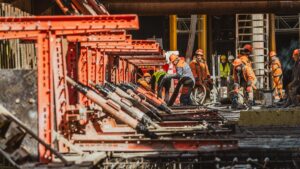
The “Autostrada” Group of Companies has begun the reconstruction of a 1.2-meter-diameter sewer collector in the metro construction zone in Vinogradar; to carry out this work, a remotely controlled shield system from Herrenknecht AG was purchased, with an estimated cost of EUR 1 million.
According to the Autostrada press service, the project will involve laying a new storm sewer system with a total length of 400 m using over 200 pipes. The work is being carried out using the microtunneling method (a high-precision trenchless technology for laying underground utilities without breaking ground), which allows work to proceed in densely built-up urban areas without impacting traffic or the surrounding infrastructure.
The preparatory phase is currently underway—two shaft shafts (launch and reception chambers) are being constructed, from which tunneling will begin in just a few months.
To carry out the work, Autostrada has purchased a remote-controlled shield system from the German manufacturer Herrenknecht AG. The cost of the equipment is approximately 1 million euros. The maximum length of a single tunneling run can reach up to 150 m, ensuring efficiency and continuity of work.
On the section between the “Mostytska” and “Varshavska” stations, over 1,000 m of double-deck monolithic tunnels have already been constructed (500 m per deck). Work on their finishing is being carried out simultaneously on two sections, which significantly accelerates the pace of construction. The construction of monolithic structures on the fork branch section toward the future “Vinogradar” station has also been completed.
At the “Mostytska” station, construction of prefabricated full-section tunnel linings, each approximately 200 m long, has been completed. The next stage is the installation of cable structures in the completed tunnels, which serves as a preparatory step for the subsequent installation of utility networks and the station’s power supply systems.
In the shaft above the deep-level tunnel between the “Syrets” and “Mostytska” stations, installation of the ring-laying machine has been completed; this machine will replace the rings of the left-hand tunnel lining with larger-diameter rings. The right-hand tunnel in this section has already been built.
Construction of the turnaround sidings at the “Varshavska” station is in its final stage. Currently, a shield-type airtight seal—a massive steel structure designed to isolate tunnels and stations—is being installed here. It protects the metro from potential emergencies, including shock waves, flooding, and hazardous substances, and serves as a critical component of the civil defense system, enabling the division of underground structures into sealed compartments.
At all metro construction sites in Vinogradar, work is underway to relocate utility lines outside the construction zone. The relocation of water supply and drainage systems, as well as power lines, is being carried out in stages. Such work ensures the uninterrupted operation of the city’s infrastructure and creates the necessary conditions for the continued execution of construction and installation processes without restrictions.
As previously reported, in August 2024, the municipal enterprise “Kyiv Metro” signed a contract to continue construction of the Syretsko-Pecherska Line toward the Vinogradar residential area. The winner of the tender was Avtostrada Group of Companies LLC. The project duration is set at 30 months, with a total cost of 13.785 billion UAH. The procurement was conducted on the Prozorro public procurement platform. “Avtostrada” resumed metro construction in November 2024.
In December 2023, the Kyiv Metro municipal enterprise terminated its contract with Kyivmetrobud JSC through the courts due to failure to meet construction deadlines. The issue of recovering a portion of the advance payment—the use of which is not confirmed by the relevant certificates of work performed—as well as penalties, is being resolved in court.
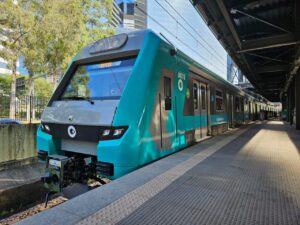
According to Serbian Economist, the French company Alstom has been awarded a €915 million contract to supply a comprehensive turnkey solution for Belgrade’s first metro line—Serbia’s first fully automated metro system. The company announced this on March 27, and the news portal Parametar described the deal as one of the largest infrastructure projects in the region in recent years.
The first phase of Line 1 will connect Makishko Pole and Karaburma. The 15-kilometer section will include 15 stations, with approximately 11 kilometers running through tunnels in the city center.
The contract calls for the delivery of 32 driverless three-car Metropolis trains, as well as signaling and telecommunications systems, power supply, track infrastructure, platform doors, depot equipment, a centralized control center, and cybersecurity systems. The trains will operate using Urbalis CBTC technology, which will enable fully automated service with intervals of up to 90 seconds.
Alstom has already entered the design phase for Line 1. The company emphasizes that the project is being implemented with the support of French government funding, and the agreement itself will be reflected in the financial statements after the finalization of the financial agreement.
The Belgrade metro project is estimated at €4–7 billion in total, and the financing needs for the first line alone could reach €2.5 billion. Construction work on the project is being carried out separately, notably with the participation of Chinese contractors, making the construction model Franco-Chinese in terms of supply and execution.
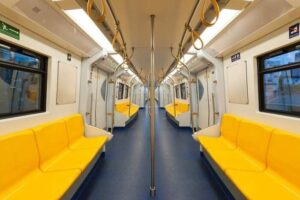
The Kyiv Metro has re-announced a tender for the purchase of 50 railcars as part of the Kyiv Urban Transport Modernization II project, funded by a loan from the European Bank for Reconstruction and Development (EBRD), the subway reported.
According to the report, the tender involves the purchase of 10 five-car trains with a free passage between cars (a “tube”), including the supply of spare parts, consumables, equipment and tools for rolling stock maintenance and repair.
The procurement will be conducted in the format of an open tender with prequalification. The deadline for submitting proposals for the first stage is May 2025.
As reported, the first similar tender in August 2023 was won by Kryukiv Carriage Works (KVSZ), which offered 10 trains for EUR79.2 million (including VAT), which was 37% cheaper than the offer of the second participant, Czech Skoda.
KVSZ proposed a 97-meter-long metro train with an asynchronous traction drive with three motorized and two trailed non-motorized cars, with domestic-made bogies, with a total passenger capacity of 1,650 people.
However, in November of the same year, Kyiv Metro canceled its decision to award the contract to KVSZ, and the carriage plant, in turn, tried to appeal the decision in the Kyiv Commercial Court, but to no avail.
The court’s decision dismissing KVSZ’s claim came into force in November 2024.
According to the court materials, Kyiv justified the decision to cancel the award of the contract by the fact that KVSZ tried to replace the supplier of the main equipment (in particular, control systems, traction power and equipment, traction gearboxes, subway control system) from the Spanish CAF (which was agreed with the EBRD) to a Polish or Japanese company.
At the same time, KVSZ pointed out that the change of supplier was due to the fact that CAF refused to supply the plant with equipment due to the workload of production lines. However, Metro refused to replace the supplier because it contradicted the terms of the tender.
As reported, in February 2021, the EBRD and Kyiv Metro signed a EUR 50 million loan agreement for the purchase of 50 new subway cars.
The subway trains are to be purchased for the Syretsko-Pecherska subway line towards the Vynohradar residential area, which will be resumed in 2024.
According to the Kyiv Metro, its inventory fleet currently includes more than 830 cars. At the same time, about 100 railcars will soon reach the end of their service life.
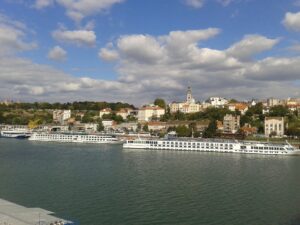
In 2027, Belgrade will host the World Expo 2027, a large-scale international event that will take place from May 15 to August 15. For this event, the municipality of Surcin has already begun building infrastructure, including a national stadium, an exhibition center, and new transportation interchanges. One of the key projects in preparation for the exhibition will be the opening of the first metro line, which will significantly change the transport map of the Serbian capital.
The importance of the metro for the city and the real estate market
The first metro line, which has already started construction, will connect key areas of Belgrade, including the exhibition center in Surcin. This project will not only improve transportation, but will also have a significant impact on the cost of housing and land along the route.
Traditionally, real estate prices near metro stations have been on the rise, making this factor one of the main ones for investors. In the case of Belgrade, the impact of the new infrastructure may be even more noticeable given the growing interest in the city ahead of EXPO-2027.
Surcin – the center of events
Surčin, where the bulk of the EXPO-2027 facilities will be concentrated, is becoming the center of attention for both the authorities and developers. The construction of a national stadium, a new railway station and an exhibition complex is already underway. According to official data, the area of the future exhibition center will be 113 hectares, and the total construction area, including the accompanying infrastructure, will reach 167 hectares.
Real estate prices in Surchyn have already started to rise. For example, the cost of apartments has increased several times over the past year. Land plots have also risen in price, especially those located near transportation hubs and future metro stations.
Impact of EXPO-2027 on the development of Belgrade
Preparations for the World Expo involve large-scale investments in the city’s infrastructure. In addition to Surcin, changes will affect other districts of the capital. Work is already underway on the construction of a new bus station, and the modernization of the Prokop railway station is nearing completion.
The subway will also be an important step in the development of Belgrade. The first line will connect key areas of the city, which will reduce the load on the road network and simplify the movement of residents and visitors to the capital.
Forecasts and prospects
Experts agree that EXPO-2027 will have a long-term impact on the real estate market in Belgrade. In addition to the price increase in Surcin, real estate is expected to rise in price along the routes of the future metro, as well as in the central and prestigious areas of the city.
The Serbian government states that EXPO-2027 will be a stimulus for economic growth, attracting foreign investment and improving infrastructure. These changes will make Belgrade even more attractive for tourists, residents and businessmen.
Thus, EXPO-2027 and related projects, including the metro, are opening a new chapter in Belgrade’s development, strengthening its position as one of the key centers of Southeast Europe.



