
According to Interfax-Ukraine, most Ukrainians are open to territorial concessions to achieve long-term peace, provided there are security guarantees from the U.S. and European partners, and 57% support a ceasefire and seeking a compromise through negotiations, according to the results of a poll by the Rating Group conducted October 3–5.
“Most Ukrainians are ready for a ceasefire and support negotiations as a way to achieve peace. However, this does not mean peace under any conditions. The overwhelming majority believes that neither Ukraine nor Russia is winning the war at this time (62%). A quarter indicate that Ukraine has the upper hand (26%), while 6% say Russia does,” the report states.
Half of the respondents (50%) believe that peace is more important than any victory, while 41% hold the opposite view. Another 9% were undecided. The survey notes that, against the backdrop of intensified shelling in recent months, the proportion of those who consider victory more important has increased.
At the same time, 57% of those surveyed support a ceasefire and seeking a compromise through negotiations. Thirteen percent advocate continuing hostilities until a return to the line of control as of February 23, 2022, while another 21% believe it is necessary to continue hostilities until the territories of Donbas and Crimea are recovered.
The majority of respondents support negotiations as a path to ending the war: 57% view reaching a compromise with the involvement of other countries as the way forward, while another 26% favor direct negotiations.
“Territorial concessions are acceptable, but only with security guarantees, and the decision must be made in a nationwide referendum.” One-third of those surveyed support territorial concessions as a step toward long-term peace. At the same time, 56% believe that territorial concessions can be made for the sake of long-term peace, but only on the condition of security guarantees from the U.S. and European partners, which would include funding for the Armed Forces and military equipment. Only 3% support concessions without preconditions, while 6% answered “difficult to say,” according to the survey results.
If territorial concessions are considered a condition for peace, 68% of respondents believe that the final decision on this issue should be made by the people in a nationwide referendum. Meanwhile, 17% believe the decision should be made by the President of Ukraine, and 9% by the Verkhovna Rada. According to the study, this position has remained virtually unchanged over the past year.
As noted, the “Rating” Sociological Group conducted the survey October 3–5, 2026, using the CATI method among 1,000 respondents aged 18 and older in all regions of Ukraine, except for the ATO zone, as well as in areas where Ukrainian mobile service was unavailable at the time of the survey. The sample was formed by randomly selecting mobile phone numbers, and the results were weighted according to current data from the State Statistics Service. The sample is representative in terms of age, gender, and type of settlement; the statistical margin of error does not exceed 3.1 percentage points with a confidence level of 0.95.
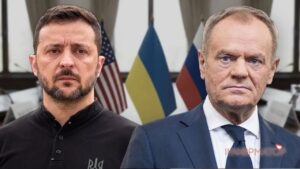
Ukrainian President Volodymyr Zelenskyy held a conversation with Polish Prime Minister Donald Tusk.
“I informed the prime minister about preparations for possible trilateral meetings at the technical level between Ukraine, the United States, and Russia. There are no obstacles on our part, but it is important that the American side prepare on its end and ensure the Russian side’s readiness,” Zelenskyy wrote on his Telegram channel.
The parties also discussed preparations for the Ukrainian power grid ahead of winter and other sensitive issues.
“Not everything can be discussed in detail over the phone—we agreed to meet in person in the near future. I am grateful to Donald and Poland for their support. Only by joining forces across Europe can we stop Russia and prevent this insane war from continuing,” the president concluded.
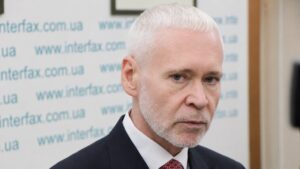
According to Interfax-Ukraine, Kharkiv Mayor Ihor Terekhov responded to a new op-ed by Valeriy Zaluzhny, former Commander-in-Chief of the Armed Forces of Ukraine and Ukraine’s Ambassador to the United Kingdom, stating that Ukraine’s ability to withstand the war should not be interpreted as consent to live in it, and called for a path to peace backed by guarantees from partners.
“For me, the logic of the ‘war party’ begins when war is perceived as Ukraine’s only possible future. I disagree with this,” Terekhov wrote on Telegram.
Terekhov noted that the desire for peace requires no justification. According to him, in a Gallup poll conducted in April 2026, 66% of Ukrainians surveyed supported ending the war as soon as possible through negotiations. This indicates a broad public demand for peace.
“Peace must be based on our defense capabilities and specific commitments from our partners. Guarantees must specify what military assistance Ukraine will receive and how partners will act in the event of a new attack. We must strive to secure these conditions by using military, economic, and diplomatic leverage,” Terekhov writes.
He noted that Russia started this war and bears responsibility for its continuation, which is why international pressure must be directed specifically at the aggressor.
“Our ability to endure the war should not be interpreted as consent to live in it. We strive for peace and prosperity. Our defenders—both men and women—also have the right to a peaceful life. Time with their families, recovery, plans for the future. Their courage obligates the state to provide them with everything they need and to use every realistic opportunity to bring the war to an end,” Terekhov concluded.
In his column on Channel 24, Zaluzhny specifically stated that there can be no “business logic” in resolving the war, and that in the absence of effective international law, any agreements with Russia would become “merely a prelude to the next war.”
In April 2026, the American public opinion institute Gallup conducted and published several important sociological studies. According to the survey, 66% of Ukrainians polled believe that the country needs to reach an agreement to end the war as soon as possible, while 24% advocate continuing hostilities until victory is achieved.
Source: https://t.me/ihor_terekhov/4706
An overwhelming majority (72%) of Ukrainians support peace talks with Russia, however, about half of citizens are open to territorial compromises to end the war, while an absolute majority considers any reduction or limitation of the Armed Forces of Ukraine’s strength unacceptable, according to the results of a public opinion poll conducted by the Future Research Foundation and presented during a press conference at the “Interfax-Ukraine” news agency on Thursday.
“The dynamics of public sentiment demonstrate a strong desire to find diplomatic avenues for a ceasefire. Specifically, 72.2% of respondents tend to support peace talks with Russia. Opposition to this stands at 20.8% of those surveyed,” said Svitlana Kushnir, project manager at the Foundation for Future Studies, during the presentation of the survey results.
Among the possible ways to end the war, 48.5% favor compromises and ceasefire negotiations, even if they involve territorial or political concessions; 24.6% support a temporary “freeze” of the front lines without officially acknowledging the loss of territory, while 18.6% of respondents favor continuing the war to restore the 1991 borders without compromise.
At the same time, 51.7% of citizens are open to territorial compromises to end the war (29.4% – “yes, if it leads to the end of the war,” 22.3% – “probably yes”), while 41.3% of respondents oppose territorial compromises. (20.4% – “no, under no circumstances,” 20.9% – “rather no”).
“This negotiation track is closely linked to security red lines, which society considers unacceptable to cross. In particular, 76.3% of respondents consider reducing or limiting the size of the Armed Forces of Ukraine at the request of the other side to be unacceptable even if it ensures security (for 55.2% of respondents, this is categorically unacceptable),” Kushnir reported.
According to her, 58.7% of respondents believe that the situation in Ukraine is moving in the wrong direction (30.9%—definitely, 27.8%—somewhat). At the same time, 32.5% of respondents assess the direction of development as correct (8.6%—definitely, 23.9%—somewhat), while 8.8% were unable to answer.
At the same time, a number of acute socioeconomic problems are dampening the willingness to compromise, particularly bribery and corruption within government structures (51%) and rising food prices (39.6%). In addition, there is a certain level of concern regarding the winter season: 56.1% of households are fully or partially prepared for possible prolonged power and heating outages, while 43.2% rate their preparedness as insufficient.
According to the survey results, 84.5% of respondents consider the current mobilization process to be unfair, with 59.6% deeming it absolutely unfair.
Ihor Zhdanov, a political expert, former Minister of Youth and Sports of Ukraine (2014–2019), and head of the “Information Defense” project at the Open Policy Foundation, notes that these survey results indicate that Ukraine and its politicians are ready for negotiations, but “they want negotiations with substantive content, not just negotiations about surrender.”
“It is clear that there can be no question of any kind of surrender in Ukrainian society. The point is to hold negotiations, find some kind of compromise, and this society is ready for a compromise. So why isn’t peace being achieved? Why aren’t substantive peace consultations and negotiations already taking place, and why hasn’t some kind of ceasefire been declared for this purpose? And the Russian dictator Putin isn’t ready to hold peace negotiations; he doesn’t want to. Because there, in Russia, the circumstances haven’t yet arisen that would force him or push him toward peace,” he noted during a press conference.
Commenting on the fact that 76% of Ukrainian citizens consider reducing the size of the Armed Forces of Ukraine unacceptable, the expert noted that this indicates that Ukrainian society relies solely on itself and its own Armed Forces. “We rely on ourselves and on our Armed Forces; we also need to develop our own defense-industrial complex so that the situation remains predictable and so that there are level playing fields for Ukrainian and foreign companies,” Zhdanov said.
He also pointed out that more than half of Ukrainians consider corruption in government to be a particularly pressing problem—even more serious than rising prices and low wages.
“Bribery and corruption in government are not just a matter of public opinion but also a problem related to receiving funds from the European Union. We were told in no uncertain terms: you must carry out judicial reform; there is the Kachka-Kosa plan related to anti-corruption efforts, such as adopting an anti-corruption strategy, competitive selection of prosecutors, and implementing judicial reform. Unfortunately, of the 10 points, none have been implemented. All of these bills will benefit the country. None of them are controversial, unlike bills in the socioeconomic sphere. They need to be adopted, but for some reason they aren’t being adopted, and this simply means that we aren’t receiving the corresponding funds from the EU,” Zhdanov noted.
The survey was conducted from September 19 to 22 using the Computer-Assisted Telephone Interviewing (CATI) method with a random sample of mobile phone numbers among 1,203 respondents aged 18 and older in all government-controlled territories of Ukraine. The maximum theoretical margin of error does not exceed 2.9% with a 95% confidence level.
Armed Forces of Ukraine, mobilization, NEGOTIATIONS, POLL, UKRAINE
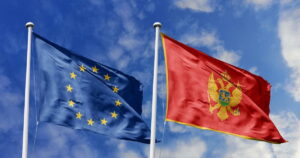
According to the “Serbian Economist,” five EU countries—the Netherlands, Croatia, Estonia, Lithuania, and Latvia—have called for a pause before closing the remaining negotiation chapters with Montenegro, reports the Podgorica-based newspaper Dan, citing diplomatic sources in Brussels.
The Netherlands initiated the move, demanding further analysis of Montenegro’s compliance with European criteria and a more consistent application of established standards. Croatia and the three Baltic countries subsequently joined this position.
This has already affected the negotiation schedule. The EU–Montenegro intergovernmental conference scheduled for September—at which Podgorica had hoped to close new chapters—will not take place.
However, Brussels’ official line is more conciliatory. An EU representative stated that several countries have not yet completed their internal approval procedures, as many negotiation chapters are technically complex.
“The desire to make progress is there. The work is practically complete. It’s more a matter of timing than anything else,” the EU representative said.
The most optimistic scenario at the moment is that the next intergovernmental conference will be held in mid-October in Luxembourg.
Montenegro remains the candidate that has made the most progress in the EU accession process. The country has opened all 33 negotiation chapters, 18 of which have already been provisionally closed. The last conference took place on July 14, when Chapters 8 (“Competition Policy”) and 29 (“Customs Union”) were closed.
Croatia’s position remains a separate issue. In July, Zagreb refused to agree to the closure of Chapter 14, “Transport Policy,” primarily due to issues regarding cabotage and aviation permits. Croatia also continues to block Chapter 31, “Foreign Policy, Security, and Defense,” due to unresolved bilateral issues with Montenegro.
The Council of the EU officially confirms that Montenegro’s progress continues and that work on new negotiating positions is ongoing.
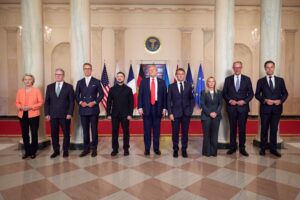
A meeting involving representatives from Ukraine, the U.S., and Europe is set to take place in the near future, Ukrainian President Volodymyr Zelenskyy said following a meeting with Steve Witkoff and Jared Kushner, representatives of U.S. President Donald Trump.
“We agreed that Ukraine, Europe, and the U.S. will meet in the near future. I don’t know where the meeting will take place. Perhaps in Ukraine again,” Zelenskyy said at a press conference in Kyiv.
The president noted that the American delegation’s visit worked for Kyiv “like a Patriot” and emphasized Ukraine’s need for it.
According to him, during the meeting, the parties discussed the challenges facing Ukraine on the eve of winter and a possible winter aid package.



