

Ukrzaliznytsia received 2,000 tons of high-tech R-65 rails from Japanese manufacturer Nippon Steel, with another 1,000 tons expected to be delivered by the end of January, according to a press release from the Ministry of Community and Territorial Development on Thursday.
According to the release, this cooperation was made possible within the framework of the third phase of the emergency recovery program through the Japan International Cooperation Agency (JICA).
“This was the result of systematic interaction and successful agreements with Japanese partners on the part of the Ministry in early 2025. Ukraine currently does not have its own rail production, so attracting partner support is necessary and crucial for the functioning of the Ukrainian railway,” the ministry emphasized.
It is noted that the cooperation currently involves the transfer of 3,000 tons of rails for a total amount of about $4 million.
The ministry specified that railway workers use mobile complexes to weld rails directly on the tracks and thermally join joints, resulting in the creation of a so-called “velvet track” without joints, which increases its service life and ensures smooth train movement.
“We are sincerely grateful to the Government of Japan for its strategic support, which allows us not only to maintain the network, but also to carry out major repairs in accordance with the highest international standards, ensuring reliable connections even in the most difficult times,” said Marina Denisyuk, Deputy Minister of Community and Territorial Development, in a press release.
The Ministry of Development recalled that support from the Japanese government and JICA has continued since the beginning of the full-scale invasion by the Russian Federation. In particular, during this period, almost 25,000 tons of rails have been delivered, which has made it possible to renovate more than 193 km of tracks on strategic routes of the Lviv, South-Western, Dnipro, Southern, and Odesa railways.
In addition, railway workers also received 24 units of construction and loading/unloading equipment from Komatsu, Toyota, and Sonalika, 22 of which were track equipment, and the total cost of equipment and materials supplied during the first two phases of the program exceeded $42 million, the agency noted.
“The delivered equipment, namely wheel excavators, loaders, and bulldozers, has already worked more than 13,000 motor hours on emergency repair work,” the agency emphasized.
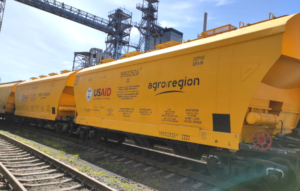
In the 2023-2024 marketing year (MY, July 2023 – June 2024), Agro-Region Agricultural Group refused to use freight forwarders, which allowed it to save 15% of the cost of railroad logistics, said Mykola Muravyov, Deputy Director of Logistics.
“Refusing to use freight forwarders and organizing rail transportation professionally on our own is a strategically sound decision. Of course, there are contracts on a “today-tomorrow” basis that are profitable to fulfill with freight forwarders when our own railcars are fully utilized, but these are isolated cases that we try to avoid,” the company’s press service quoted him as saying.
According to Muravyov, Agro-Region currently operates 100 railcars, of which 25 hopper cars were received by the company as part of the USAID Economic Support for Ukraine grant program.
At the peak of the 2023/2024 MY season, Agro-Region had up to 500 wagons under its operational control, as large volumes of corn harvest and uncertainty about whether the grain corridor and Black Sea logistics would work stably forced the company to make sales more concentrated in certain months to minimize risks, the deputy director explained.
He added that in the 2024/2025 season, the plan is more balanced and sales are planned in equal parts throughout the year, which significantly reduces the need for the number of wagons.
“The main indicator of the economic efficiency of railcar use is railcar turnover. It is important to organize the work so that the cars stand as little as possible and move as much as possible, i.e. make the maximum possible number of turns during the reporting period. The more turns a railcar makes, the more grain will be transported,” said the Deputy Director for Logistics.
Regarding railcar rental, he clarified that its cost is charged on a daily basis and does not depend on whether the railcar is idle or in constant motion.
Agro-Region is a group of agricultural companies that cultivate 40 thousand hectares of agricultural land in Chernihiv, Khmelnytsky, Kyiv and Zhytomyr regions. It has three elevators in Boryspil, Myropil and Zavorychi with a total storage capacity of about 160 thousand tons. The agricultural holding grows corn, wheat, rapeseed, soybeans, barley, sunflower and oats. In 2022, Agro-Region exported an average of 250-300 thousand tons of grain per year and is trying to increase its exports through its own and farmers’ grain.
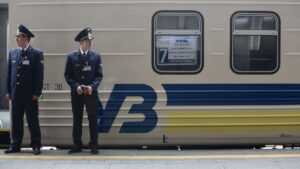
JSC “Ukrzaliznytsia” (UZ) in January-May this year carried in communication with the European Union 2.3 times more passengers (786 thousand) compared to the same period of 2022, reported the press service of UZ in Telegram-channel.
In addition, for five months carried 6.4% more passengers than for the same periods of 2016-2019, when in communication with the EU and back by rail was carried a total of 735 thousand people, calculated in the press service.
“In 5 months of 2023, Ukrzaliznytsia carried more passengers in communication with the EU than in the same period cumulatively during the previous four (dokovidnye) years,” said in the message of UZ on Wednesday.
It is specified that in the five months of 2016 was carried 19.8 thousand passengers, 2017 – 98.2 thousand, 2018 – 230.4 thousand, 2019 – 387.2 thousand, 2020 – 171.7 thousand people. Data for January-May 2021 are not given, but in 2022 during this period UZ carried 341.6 thousand passengers in the EU.
The Company notes that there is a clear trend of Ukrainians returning home: the number of people who have left the country since the beginning of 2023 is 369 thousand, and in the opposite direction – to Ukraine – 417 thousand people.
In the UZ also clarified that if in 2016 in communication with the EU were only 8 trains, now their number has increased to 27, of which 15 formed “Ukrzaliznytsia”, and the rest – foreign carriers.
The company recalled that given the increase in demand since last year due to the full-scale invasion of Russia, UZ is expanding connections with other countries, in particular launched seven new trains: № 19/20, № 23/24 “Kiev-Khelm”, № 32/31 “Zaporozhye-Permyshl”, № 53/54, № 89/90 “Kiev-Permyshl”, № 73/74 “Kharkiv-Permyshl” and № 93/94 “Kharkiv-Khelm”.
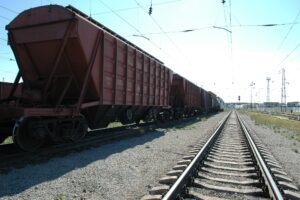
Transportation of grains and oilseeds from Ukraine to Poland by rail in 2022 increased by 27 times compared to 2021, Rafal Weber, state secretary of Polish Ministry of Infrastructure, said at the International Conference on Transport Development at European level without specifying the absolute figure.
At the same time, Mustafa Nayem, head of Ukraine’s State Agency for Infrastructure Rehabilitation and Development, who attended the conference, noted that new logistics routes may have emerged over that period.
“The activity of Central European countries was decisive in the first weeks and months of the war, so that new logistic routes could have appeared,” his words were quoted by the press service of the Polish ministry on the website of the department.
Nayem stressed that the situation with the growth of traffic requires mobilization from the Polish side and further integration of transport systems of Ukraine and the EU.
Further intensification of trade flows puts Poland before the need to increase the transshipment capacity of port infrastructure, the capacity of which until recently has been a deterrent to the growth of grain shipments from Ukraine, the conference participants noted.
“Ports have to be too big to handle growing cargo flows. The Port of Gdansk is currently reaching its maximum transshipment capacity. We have to anticipate what will happen and prepare more berths,” Lukasz Greinke, director of the Port of Gdańsk, said at the conference.
Last year Poland’s largest seaports, Gdansk, Gdynia and Szczecin-Swinoujscie, handled a total of more than 133 million tons of cargo, a record, said Grzegorz Witkowski, deputy minister of infrastructure of the Republic of Poland.
He stressed that the Polish government will continue to implement ambitious projects in Polish ports, so that they can meet the challenges associated with the inclusion of the transport corridor “Baltic Sea – Black Sea – Aegean Sea” in the main Trans-European transport network TEN-T.
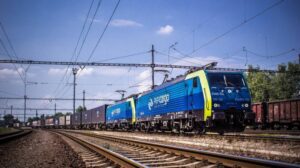
Ukraine and Poland will create a joint logistics venture designed to dramatically increase the volume of rail transportation of Ukrainian exports to the EU and to world markets through Europe, Ukrzaliznytsia said on Saturday evening. The corresponding memorandum was signed on that day by the prime ministers of the two countries Denis Szmigal and Mateusz Morawiecki in Krakow.
Ukrzaliznytsia noted that the creation of such a joint venture is the answer of the railway workers to the challenges posed by Russia’s aggression to both countries. In particular, we are talking about the need to expand railroads for goods that cannot be delivered through ports blocked by the Russians and part of the railway network of Ukraine, which today no longer has links with Russia and Belarus.
“We started preparing the concept of a joint venture with our Polish colleagues as early as a week after the start of the war. Combining the experience and knowledge of Ukrzaliznytsia managers and Polish colleagues will allow us to formulate unique logistics proposals for the European and world market, which refuses Russian deliveries and Russian logistics,” the statement says. in the release of the words of the head of the board of the company Alexander Kamyshina.
The parties also agreed to work together to increase cargo transportation across the western border of Ukraine, jointly solving technical and organizational problems: various customs rules, the use of different railway lines, and the search for free rolling stock.



