

Indonesia is expanding the use of digital technologies to monitor foreign nationals, including artificial intelligence, facial recognition systems, specialized databases, and drones for border surveillance.
Hendarsam Marantoko, Director General of Indonesia’s Immigration Service, stated that in the future, technology should account for about 70% of the immigration system’s operational infrastructure. The statement was made during the opening of the Immigration Lounge in Bali.
Part of the new system is already operational. Ngurah Rai International Airport in Bali uses automated border gates and facial recognition to verify passengers against their travel documents and immigration databases. In April 2026, this technology helped identify a foreign national arriving in Bali who was wanted by U.S. law enforcement agencies.
Another key component is the Subject of Interest (SOI) system. It is integrated with the central immigration information system SIMKIM and enables officials to check, in near real time, on foreigners of heightened interest to law enforcement agencies, analyze their data, and decide on further actions.
At the same time, Indonesia is developing the “Digital Fence” project. The Immigration Service, in collaboration with the Bandung Institute of Technology, is working on using drones to patrol hard-to-reach border areas and detect people crossing the border outside of official checkpoints.
The digitization of border control also affects ordinary foreigners legally residing in or vacationing in the country. Hotels, apartments, guesthouses, and other lodging facilities use the APOA app—Aplikasi Pelaporan Orang Asing—to submit information about foreign residents to immigration authorities. In 2026, the authorities continue to expand the use of this system.
At the same time, on-the-ground monitoring is being strengthened. The country operates the PIMPASA program—Petugas Imigrasi Pembina Desa—under which immigration officers are assigned to specific communities and collaborate with local authorities and residents. Their tasks include gathering information on the whereabouts and activities of foreign nationals and the early detection of potential violations.
This new model is being applied particularly actively in Bali, where authorities intensified checks on foreign nationals in 2026. During the first phase of Operation Dharma Dewata, the immigration service identified 62 foreign nationals with various violations. In the next phase, another 66 people were detained or summoned for inspection. Among the most common violations cited were failure to comply with registration and public order rules, misuse of a residence permit, and overstaying the permitted period of stay.
However, tighter controls do not mean the introduction of new restrictions directly on the purchase of real estate or the acquisition of residence permits by foreigners. The focus is primarily on deeper digital integration of existing immigration controls: the authorities want to know when and through which port of entry a person entered the country, on what basis they are in Indonesia, where they reside, and whether their actual activities correspond to the type of visa or residence permit they hold.
For foreign property owners, investors, and long-term residents of Bali, the practical implication of these changes is that discrepancies between visa status and actual activities will become easier to detect. This applies, for example, to working on a tourist visa, overstaying one’s visa, or engaging in commercial activities without the appropriate authorization.
Indonesian authorities view these tighter controls as part of a broader immigration strategy. In June 2026, the head of the immigration service identified its three main elements: strengthening border controls, monitoring foreigners within the country, and integrating digital services.
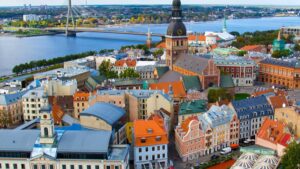
Starting September 15, 2026, Latvia will cease issuing new temporary residence permits based on real estate purchases. These changes are provided for in the new Immigration Law, which the Saeima re-adopted on August 20 and which takes effect on September 15.
Until now, a foreign investor could apply for a temporary residence permit valid for up to five years upon purchasing real estate worth at least EUR 250,000.
The new law no longer provides for this basis for initially obtaining a residence permit. At the same time, the option to obtain a residence permit by depositing funds in a Latvian bank—which previously required an investment of at least EUR280,000—is being discontinued, according to the Prian.ru portal.
That said, investors effectively have a short transition period. Applications for temporary residence permits submitted before the new law takes effect will be processed under the old legislation.
These changes do not mean that residence permits already issued will be automatically revoked. Permits issued before September 15 remain valid until the end of their specified term. Furthermore, a special transitional mechanism is in place for holders of residence permits previously obtained through real estate purchases or bank investments: provided they maintain their investments and meet the established requirements, they will be able to apply for a renewed temporary residence permit valid for up to five years.
After the real estate option is phased out in Latvia, other investment grounds will remain available. A foreign national may obtain a temporary residence permit valid for up to two years by investing at least EUR50,000 in the capital of a small Latvian enterprise or EUR100,000 in a larger company. Additionally, a payment of EUR10,000 must be made to the state budget, and the company must meet the established requirements regarding employment, turnover, and tax payments.
Furthermore, the new law provides for an investment mechanism through a state-established alternative investment fund manager. To obtain a residence permit, applicants must invest a minimum of EUR 150,000 for a period of at least five years and additionally pay EUR 10,000 to the state budget. Such a residence permit may be granted for a term of up to five years.
Citizens of Russia and Belarus will not be able to use these investment-based options. The relevant restrictions are explicitly stipulated in the new legislation.
Latvia’s investment-based residence permit program has been in place since 2010 and, for many years, was one of the best-known European options for obtaining a residence permit through real estate.
IMMIGRATION, INVESTMENT, LATVIA, REAL ESTATE, RESIDENCE PERMIT

The Greek government is preparing changes to the Golden Visa program that could allow foreign investors to obtain a residence permit by purchasing not just a single property, but a portfolio of several properties, provided they are placed in long-term rental agreements.
The proposed change is included in Greece’s National Housing Policy Strategy for 2026–2035. The document outlines 50 measures with a total budget of over EUR 6.5 billion and is primarily aimed at increasing the supply of affordable housing and reducing pressure on the rental market.
Under the proposed model, a foreign investor will be able to purchase multiple properties instead of just one; however, these properties may be used exclusively for long-term rentals. Listing such housing on short-term rental platforms will be prohibited. The authorities also plan to establish a mechanism to monitor the future use of the acquired properties.
The goal of this initiative is to channel foreign investment capital directly toward increasing the supply of rental housing and bringing vacant properties back onto the market. The authorities intend to pay special attention to the conversion of former offices, retail, and industrial spaces into housing.
For now, the changes are still in the planning stages and do not mean that the new Golden Visa category has already taken effect. Its practical implementation will require the appropriate regulatory framework.
Currently, the minimum investment amount under the Greek Golden Visa program depends on the type of property and the region. For Attica, Thessaloniki, Mykonos, Santorini, and islands with a population of more than 3,100 people, the main threshold is EUR800,000; in most other regions, it is EUR400,000. A separate preferential threshold of EUR 250,000 applies, in particular, to the purchase of a commercial property that is subsequently converted into residential housing, as well as to certain protected historic buildings in need of restoration. Official regulations provide for the issuance of a five-year residence permit to the investor.
According to data from the Greek Ministry of Migration and Asylum, 2,551 new applications for an initial residence permit under the Golden Visa program were submitted in the first half of 2026, which is 44% fewer than the 4,553 applications filed from January through June 2025. At the same time, authorities issued 4,919 new permits over the six-month period—21% more than a year earlier—as they continued to process a significant number of applications submitted in previous years.
Most new applicants continue to focus on investments in the range of EUR250,000–400,000, while properties falling below the EUR800,000 threshold are in significantly lower demand.
At the same time, obtaining a residence permit is far from the only reason foreigners purchase real estate. According to data cited in the Greek housing strategy, only about 7% of foreign buyers cite the Golden Visa as their primary motivation. About 30.8% view real estate in Greece as a place for permanent residence, 44.4% as a vacation home, and another 17.8% primarily as an investment. In 2026, the highest interest among foreign buyers is coming from citizens of the United States, the Netherlands, Germany, and the United Kingdom.
Crete remains the most sought-after region among foreign buyers, accounting for 42.9% of demand, followed by the Peloponnese with 22.9% and the Ionian Islands with 12.7%.
golden visa, GREECE, INVESTMENT, REAL ESTATE, RESIDENCE PERMIT

In January–June 2026, Paraguay issued 29,765 thousand residence permits to foreigners, an 81% increase over the 16,456 thousand issued during the same period last year, according to the country’s National Migration Office. The number of applications filed rose by 62% to 33,243 thousand, compared to 20,567 thousand in the first half of 2025. The immigration service described the volume of applications as unprecedented and introduced additional work shifts, including on weekends.
Of the total number of documents issued, 23,833 thousand were for temporary residence permits, and another 5,932 thousand were for permanent residence status. Applicants submitted 27,024 thousand applications for temporary residence and 6,219 thousand for permanent residence.
Neighboring Brazil remains the main source of migration. Its citizens were issued 22,628 thousand permits, or 76% of the total.
Citizens of Argentina ranked second with 2,210 thousand permits. Next came Germany with 1,132 thousand, Spain with 821, Venezuela with 495, the United States with 450, the Netherlands with 426, France with 358, and Bolivia with 357.
Russia ranked tenth. In the first half of the year, 345 Russian citizens received Paraguayan residence permits, accounting for about 1.2% of all foreigners granted residency status.
Ukraine did not make the published list of the top ten countries. The National Migration Service did not provide a separate figure for Ukrainian citizens in its public press release. It was not possible to determine the exact number of Ukrainians based on available statistics.
Throughout 2025, Paraguay received a record 47,687 applications and issued 40,600 residence permits. Thus, in just the first six months of 2026, the country had already issued 73% of the total number of residence permits and permanent residence permits granted last year.
Ukrainian citizens may enter Paraguay without a tourist visa for up to 90 days. However, to extend their stay, obtain resident status, or engage in paid employment, they must comply with specific immigration requirements.

Turkey has started opening some districts that were previously closed for foreigners applying for residence permits, which may support demand for real estate in popular resort locations, primarily in Alanya and other areas of Antalya province, local media report.
This concerns a review of restrictions that in recent years applied to districts with a high concentration of foreign residents. Such zones were closed for first-time residence permit applications, including through the purchase or rental of housing. It was possible to buy real estate there, but it was impossible to obtain a residence permit at an address in a closed district.
After long appeals from businesses, migration authorities lifted some of the strict restrictions in sought-after areas of Alanya. Among the locations that are again being discussed as available for full legalization of foreigners are Mahmutlar, Avsallar and other popular areas of the resort market.
The industry publication Türkiye Today also writes that in June 2026 Turkey effectively returned to broader availability of districts for residence permit applications, with the exception of certain restrictions, particularly in two districts of Istanbul – Fatih and Esenyurt. At the same time, the market is still waiting for additional official clarifications on legal details, including the link between property purchases, address registration and the right to resident status.
Previously, Turkey had a system of closed districts if the share of foreigners in the local population exceeded a set threshold. In 2022-2025, this became one of the factors cooling foreign demand for housing in resort cities, especially in Antalya, Alanya, Mersin and Istanbul.
For the real estate market, the opening of previously closed districts may become an important signal. Foreign buyers often view the purchase of housing in Turkey not only as an investment or resort asset, but also as a basis for long-term residence. Therefore, the ability to register an address and submit documents for a residence permit directly affects the liquidity of such properties.
This change may be especially sensitive for Alanya. In recent years, Mahmutlar, Kestel, Avsallar, Kargicak and other districts actively attracted buyers from Russia, Ukraine, Kazakhstan, Iran, Germany and Middle Eastern countries. After the introduction of restrictions, part of demand shifted to other locations or was postponed.
Restored access to residence permits may support both the primary new-build market and the secondary market, where many apartments were purchased by foreigners in 2020-2023. However, experts expect demand to be more cautious than during the peak relocation period after 2022: buyers have become more attentive to legal risks, housing maintenance costs, the lira exchange rate and the prospects for obtaining documents.
According to the Turkish Statistical Institute, in April 2026 foreigners purchased 1,516 residential properties in Turkey, 1.1% less than a year earlier. The share of foreigners in total sales was 1.2%. In January-April 2026, foreign buyers purchased 5,681 properties, 11.6% less than in the same period of 2025.
The main centers of sales to foreigners in April 2026 remained Antalya and Istanbul. According to specialized Turkish platforms based on TURKSTAT statistics, foreigners bought 453 properties in Antalya, 412 in Istanbul and 120 in Mersin. They were followed by Yalova – 68, Ankara – 53, Bursa – 49, Izmir – 41, Mugla – 27, Kocaeli – 24 and Sakarya – 21.
Among foreign buyers in April 2026, Russian citizens were the leaders, purchasing 263 real estate properties. Chinese citizens ranked second with 110 properties, followed by Iranians with 100. Ukrainians ranked fourth with 78 purchases. They were followed by citizens of Iraq – 65, Germany – 61, Kazakhstan – 54, Azerbaijan – 48, Saudi Arabia – 39 and the United Kingdom – 35.
Thus, Ukrainians remain one of the notable groups of foreign buyers of Turkish real estate, although in April 2026 they were no longer in the top three. For comparison, in January 2026 Ukrainians ranked third among foreigners, purchasing 77 properties and trailing only Russians and Iranians.

Portugal has dramatically accelerated the processing of backlogged immigration cases following several years of delays in the system for issuing and renewing residence permits. According to government data, the Agency for Integration, Migration, and Asylum (AIMA) and a special unit tasked with clearing backlogged cases have conducted 763,000 interviews and issued decisions on more than 525,000 cases, of which approximately 473,000 were approved.
This represents a massive clearance of the backlog that formed following the dissolution of the former Service for Foreigners and Borders (SEF), the creation of AIMA, and the abolition of the former “expression of interest” mechanism. This mechanism allowed foreigners already in Portugal to regularize their status if they had a work and tax history.
According to government data, AIMA notified 445,000 people under the now-abolished “expression of interest” scheme alone. A total of 246,000 decisions were made in this category, of which 229,000 were positive and 26,000 were negative, and 225,000 residence cards have already been issued.
Cases involving citizens of the Community of Portuguese-Speaking Countries (CPLP) were considered separately. Under this scheme, 215,000 people were notified, 207,000 interviews were conducted involving 161,000 migrants, and AIMA issued 153,000 decisions, of which 140,000 were positive. 136,000 residence cards have already been issued.
Another major category involves the renewal of expired residence permits. According to Minister for the Presidency António Leiteu Amaro, there were approximately 360,000 such cases; 193,000 people were notified of the need to regularize their status, 104,000 attended appointments, and 82,000 have already received new permits.
Immigration reform has become one of the most sensitive issues for Portugal. The authorities are attempting to simultaneously reduce the administrative backlog, strengthen controls, transition to a more digital system, and abandon the practice whereby the country effectively legalized a large number of people after their entry.
According to AIMA data, as of the end of 2024, there were 1.543 million foreign nationals in Portugal with valid documents or ongoing regularization procedures. This is nearly four times more than in 2017, when 421,800 foreigners were registered in the country.
Brazilian citizens remain the largest foreign community in Portugal, numbering 484,600 people, or 31.4% of all foreigners. The Indian community is the second largest, with 98,600 people. They are followed by citizens of Angola—92,300, Ukraine—79,200, Cape Verde—65,500, Nepal—58,100, Bangladesh—55,200, the United Kingdom—48,200, Guinea-Bissau—47,300, Pakistan—41,500, São Tomé and Príncipe—40,100, and Italy—40,000.
Ukrainians remain one of the largest European migrant groups in Portugal. According to AIMA data for 2024, 79,232 Ukrainian citizens resided in the country, including 31,271 men and 47,961 women. Some Ukrainians are in Portugal under temporary protection, introduced in the EU after the start of Russia’s full-scale war against Ukraine.
AIMA specifically noted that as of the end of 2024, there were 61,242 recipients of temporary protection in Portugal who are not considered holders of a standard residence permit but are included in the statistics on foreign residents.
Geographically, Portugal’s foreign population is concentrated primarily along the coast. The districts of Lisbon, Faro, Setúbal, and Porto account for 1.101 million foreign citizens, or 71.3% of the total. The Lisbon metropolitan area itself is home to many municipalities with the largest foreign communities: Lisbon, Sintra, Cascais, Amadora, Lores, Odivelas, Almada, and Seixal.
The growth in the number of foreigners reflects several processes at once: labor demand, the influx of migrants from CPLP countries, the increase in the number of people from India, Nepal, Bangladesh, and Pakistan, as well as the presence of Ukrainians who received protection after 2022. Authorities emphasize that more than 1.03 million foreign nationals pay contributions to Portugal’s social security system.



