

According to the Serbian Economist, Montenegro will soon tighten the visa regime for Russian citizens, bringing it in line with the rules of the European Union. This was announced by the Prime Minister of the country Milojko Spajic.
According to the head of the government, Podgorica intends to fully harmonize visa policy with the EU, which means the abolition of the current order allowing Russians to stay in Montenegro up to 30 days without a visa. Spajic emphasized that the measures will be introduced “very soon” and are part of the course to accelerate European integration and achieve EU membership by 2028.
Russian citizens can now freely enter the country for short periods of time without a visa, which has led to a significant increase in the number of tourists and re-locations from Russia in recent years. Once the regime is tightened, entry will require a visa at consular offices, similar to Schengen rules.
How many Russians now reside in Montenegro
According to official data from the Ministry of Internal Affairs of Montenegro, at the beginning of 2024-2025 in the country officially registered about 20 thousand citizens of Russia with a temporary or permanent residence permit. This makes Russians one of the most numerous foreign communities in the small 600-thousand-strong state.
In addition, according to the calculations of tourism and migration services, several thousand more Russians are in the country without long-term statuses – on tourist stay, on business grounds or in the process of registration of residence permits.
Prime Minister also recalled that Montenegro had previously tightened visa rules for citizens of Armenia, Uzbekistan, Kuwait and Egypt within the framework of adapting visa policy to EU standards. Podgorica fully follows the general foreign and defense policy of the European Union, including sanctions and visa restrictions against Russia.
Observers attribute the upcoming changes to pressure from Brussels following the tightening of the EU visa regime for Russians, as well as Montenegro’s desire to reaffirm its commitment to the European course against the backdrop of membership negotiations.
https://t.me/relocationrs/1792
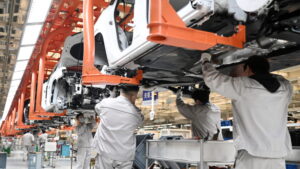
According to Serbian Economist, the Chinese company Techron Automotive plans to build its first foreign plant for the production of plastic car components in the city of Inđija (Vojvodina, Serbia), which will strengthen the country’s role as a regional hub for the automotive industry. This was announced by the Municipality of Inđija, as cited by Serbia-business.eu.
The construction is planned to start by the end of this year. According to the published information, the plant in Indjija will be the first Techron plant outside China. At the first stage, the construction of a 4.5 thousand square meters production building is envisaged. After reaching full capacity, the enterprise will be able to provide about 200 jobs.
The plant is scheduled to open in mid-2026.
Techron produces components for the world’s leading automakers – Volkswagen, Porsche, Audi, Chery, Geely and others. The product line includes engine and transmission parts, interior and exterior components, as well as control system components.
Experts note that the project fits into Serbia’s strategy of deepening specialization in the automotive industry and automotive components: dozens of plants for the production of harnesses, electronics and plastic parts for European and Asian brands are already operating in the country. For the region, this means not only new jobs, but also the need to invest in energy, logistics and vocational education in order to consolidate the effect of the new investor.
https://t.me/relocationrs/1782
Rio Tinto Group has mothballed its $2.95 billion Jadar lithium project in Serbia, Bloomberg reported, according to the Serbian Economist.
The project will be transferred to “care and maintenance” mode in accordance with plans to simplify Rio Tinto’s asset portfolio and focus on more interesting opportunities in the short term, the document said.
A company spokesman confirmed to the agency the decision to mothball Jadar, which has large lithium-rich ore reserves.
The project, which never reached the production stage, faced many problems. The Serbian government has repeatedly changed its position on the issue of granting permits to develop the mine, which was strongly opposed by local communities.
“Given the lack of progress on the issue of permits, we can no longer maintain the previous level of expenditure and resource allocation,” the document said.
https://t.me/relocationrs/1742
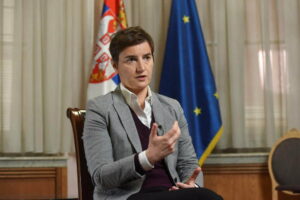
According to Serbian Economist, Serbian National Assembly President Ana Brnabić is visiting Ukraine on November 10. The program includes meetings in the Verkhovna Rada and talks with Ukraine’s top leadership, according to the Serbian Parliament’s press service.
During her visit, Brnabić stated that Serbia supports Ukraine on its European path and is ready to share its experience of parliamentary and technical integration with the EU. Verkhovna Rada Chairman Ruslan Stefanchuk expressed his gratitude for interparliamentary cooperation and support.
The heads of the parliaments have been in contact since the summer of 2025 — in August, the parties agreed on positions on the international agenda and interparliamentary cooperation.
Source: https://t.me/relocationrs/1720

According to Serbian Economist, the Serbian parliament has passed a special law that accelerates preparations for the development of the site of the former Yugoslav National Army General Staff Headquarters in central Belgrade, which was damaged by NATO strikes in 1999. The developer is Affinity Global Development, an investment company founded by US President Donald Trump’s son-in-law Jared Kushner.
The project, worth about $500 million, involves the construction of a hotel, apartments, offices, and retail space, as well as a memorial space for the victims of the bombing.
A 99-year lease agreement with the Serbian government was signed in May 2024. In November 2024, the site was stripped of its protected cultural heritage status, paving the way for the project to go ahead. The adopted lex specialis simplifies and speeds up the issuance of permits and other administrative procedures, the authorities noted.
The opposition and relevant organizations criticize the decision, citing the cultural value of the complex and legal risks. Europa Nostra has included the General Staff Headquarters in its list of the seven most vulnerable European heritage sites of 2025. Radio Liberty notes that the law was passed with the votes of the ruling party, despite protests and an investigation into possible falsification of the document used to remove the protective status.
Affinity Global Development’s public statements and official communications do not mention the hotel brand, number of rooms, number of floors, room area, parking, or exact completion date. International agencies limit themselves to describing the functional mix without specifications. When official materials on the TEP and branding appear, the editorial staff of Serbian Economist will clarify the data.
The government is promoting the project as an investment and revitalization of Belgrade’s central location. Critics believe that the demolition and new construction will damage the modernist legacy of architect Nikola Dobrovic and the public memory of the events of 1999.
https://t.me/relocationrs/1705
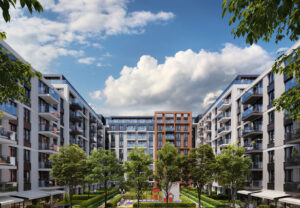
Apartment prices in Serbia in the second quarter of 2025 were 5.78% higher than a year earlier; compared to the first quarter, the increase was 1.36%, according to the statistics agency. In the old housing stock, annual growth reached 5.89%, and in new buildings, 5.57%.
According to Eurostat data for the same period, the average growth in housing prices in the EU was 5.4% year-on-year, with significant variations: from a decline of 1.33% in Finland to growth of 17.23% in Portugal, 15.51% in Bulgaria, and 15.12% in Hungary.
The main trends in the real estate market in Serbia at the moment are as follows:
1) The balance of demand is shifting in favor of fully finished apartments and energy-efficient new buildings in large agglomerations, primarily in Belgrade and Novi Sad.
2) The price gap between new buildings and secondary housing remains significant, but the rates of increase are similar — 5.57% versus 5.89% year-on-year, indicating broad demand support for both segments.
3) The external background is neutral-positive: Serbian dynamics are close to the European average, but without the overheating characteristic of a number of EU markets.
Vera Yegorova-Tolsta, director of the Vidovstan real estate agency (Belgrade), commented on the market situation for Serbian Economist:
“We see sustained interest in well-located properties with clear operating economics — these are new business-class buildings and liquid secondary properties with reasonable utility costs. Buyers have become more careful in comparing options in terms of energy efficiency and management infrastructure, which supports quality projects even at a higher price per square meter. In Belgrade, offers that meet these criteria continue to sell quickly, thanks to local demand and buyers moving from other cities.”
Given the current trajectory of interest rates and household incomes, the baseline scenario is moderate price growth within the limits of inflation plus a premium for location and energy efficiency.
Risk factors for prices include a slowdown in mortgage lending and rising developer costs; support factors include limited supply in prime locations and a moderate influx of internal migrants to the Belgrade agglomeration.



