

According to Fixygen, the standoff between traditional banks and cryptocurrencies is gradually changing in nature: the largest financial institutions are no longer trying to prove that they don’t need blockchain; instead, they are beginning to migrate bank deposits and payments to the very same technological infrastructure on which stablecoins operate.
One of the most significant developments in August was the creation of the BankChain Alliance in the U.S., which brought together banking associations from 39 states. The project aims to create a banking blockchain network by 2027 that will be capable of supporting tokenized deposits, stablecoins, automated settlements, and programmable payments.
In effect, small and regional U.S. banks are trying to develop their own alternative to cryptocurrency payment infrastructure, rather than ceding this market to Circle, Coinbase, and tech companies.
Major banks are moving in the same direction.
On August 4, Wells Fargo announced the launch of tokenized deposits for corporate clients. These funds are bank money recorded on the blockchain and enable round-the-clock settlements, including on weekends. The first phase involves transactions between the U.S. dollar and the British pound, and by 2027, the bank intends to expand its geographic reach and list of currencies.
The fundamental difference between a tokenized deposit and USDC or USDT lies in who the issuer is.
In the case of a traditional stablecoin, the customer holds a digital claim against a specialized issuer. In the case of a tokenized deposit, the customer still holds a bank deposit, but the infrastructure for managing it is blockchain-based.
Therefore, banks are essentially telling the crypto industry: we accept the technology, but we want to keep the money within the banking system.
Payment systems have gone even further.
Visa reported that its annual volume of transactions in stablecoins reached approximately $7 billion, and in the Central and Eastern Europe, Middle East, and Africa (CEE) region, the volume of such transactions increased nearly 60-fold over the year. The company is already developing more than 160 card programs linked to stablecoins.
In July, Visa launched a dedicated platform, the Visa Stablecoin Platform, through which banks, fintech companies, and payment providers will be able to work with stablecoins within a unified infrastructure. In August, the company also expanded Visa Direct to include the ability to make payments and provide pre-funding using stablecoins.
At the same time, the use of stablecoins directly by consumers is growing rapidly.
According to an estimate by the payment company RedotPay, cited by Reuters, spending via cards linked to stablecoins could rise to approximately $50 billion per year by 2028. As early as July 2026, the monthly volume of such card payments exceeded $1 billion for the first time.
The most important factor driving changes in the market is regulation in the U.S.
On August 17, the U.S. Department of the Treasury published a new draft rule for implementing the GENIUS Act. Starting January 18, 2027, the issuance of payment stablecoins in the U.S. will generally be permitted only to licensed issuers. Starting in July 2028, U.S. service providers will also face restrictions on offering users stablecoins issued without the appropriate license.
As a result, the market is entering a completely new phase.
Just a few years ago, the question went something like this: Will cryptocurrencies replace banks?
Now the question has changed: Who will control the digital dollar—crypto companies, banks, or payment systems?
This is precisely where one of the major financial competitive battles of the next few years may unfold.
Circle and Tether have created a model of dollar-backed money that can be transferred around the clock and almost instantly. Banks have realized that customers truly want this functionality, but they are unwilling to hand over the deposits—on which the traditional banking model is based—to tech companies.
As a result, the market is gradually moving toward the coexistence of three forms of the digital dollar.
The first is traditional bank money.
The second is tokenized bank deposits, which Wells Fargo and other banks are transferring to the blockchain.
The third is stablecoins, which exist outside the traditional deposit account system but are becoming increasingly integrated into the financial system under new regulatory conditions.
The winner here has not yet been determined. But one conclusion is already clear: the blockchain infrastructure itself is no longer just an experiment in the cryptocurrency sector.
If the largest banks and Visa begin to process payments 24/7 via blockchain, the major technological debate of the past decade will effectively come to an end.
Blockchain hasn’t destroyed banks—banks have begun to embrace blockchain.
Sources: U.S. Treasury, Wells Fargo, Visa, Reuters, publications from August 4–26, 2026.

According to Fixygen, the British fintech startup Revolut has launched the EURR, a stablecoin pegged to the euro, Bloomberg reports, citing a company statement. The issuer of the EURR is Bridge, a company owned by the American firm Stripe. Bridge will also own and manage the assets backing this stablecoin.
Initially, it will be available to a limited number of Revolut customers in Denmark, Poland, and Portugal, and later this year, the startup plans to expand access to other markets in the European Economic Area (EEA).
EURR will be integrated into the Revolut app and will allow users to exchange euros for cryptocurrency—and vice versa—directly on the blockchain.
The company calls this launch the first step in its stablecoin strategy, which includes the launch of tokens pegged to other currencies as well.
“Revolut started by eliminating hidden fees and barriers to currency exchange,” the company said in a statement. “Now we’re doing the same with cryptocurrency.”
The financial news and analysis platform Finance Magnates, citing official documents, reports that EURR was launched on August 20 and is marketed as Revolut Euro. According to the report, the stablecoin is available in the Revolut retail app and on the Revolut X cryptocurrency exchange. As of Tuesday, only 374 EURR were in circulation, backed by reserves of 374 euros.
Revolut was founded in 2015 in London by Mykola Storonskyi (a graduate of the Moscow Institute of Physics and Technology and the Russian Economic School) and Vladislav Yatsenko. The company serves over 80 million retail and 800,000 business customers worldwide. It operates as a bank in more than 30 countries.
In 2024, Revolut became Europe’s most valuable private tech company, with a valuation of $45 billion, and last year it reaffirmed this status by increasing its valuation to $75 billion.
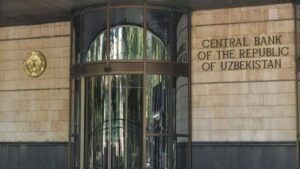
According to Fixygen, the Central Bank of Uzbekistan is exploring the possibility of introducing a wholesale central bank digital currency (CBDC), while also testing stablecoins and intending to continue reducing the state’s share in the banking sector.
Representatives of the regulator made these statements at the Silk Road Finance & Technology Forum 2026, which is taking place in Tashkent from August 24–26. The forum was organized by the Central Bank of Uzbekistan and the Global Finance & Technology Network (GFTN). More than 6,000 representatives from 74 countries are participating.
Nodirbek Achilov, Deputy Chairman and Member of the Board of the Central Bank, stated that the regulator is analyzing international experience with wholesale CBDCs, including both successful and unsuccessful projects.
Unlike a retail digital currency, which could potentially be used by the general public for everyday payments, a wholesale CBDC is intended primarily for settlements between banks and other financial institutions. Among the potential benefits of such an instrument, Achilov cited increased security and efficiency in interbank settlements.
The central bank is also testing a stablecoin system in a special regulatory regime in collaboration with Uzbekistan’s National Agency for Prospective Projects. A decision on further scaling up the project is planned to be made after the completion of research and an assessment of the financial market’s reaction. The topic of stablecoins, central bank digital currencies, and the tokenization of real assets is one of the distinct themes of the forum’s program.
At the same time, the Central Bank plans to continue privatization and reduce the state’s presence in the banking system. Central Bank Governor Timur Ishmetov stated that over the past few years, the state’s share in the sector has decreased from approximately 85% to 60%. “We will continue this trend,” Ishmetov said.
Official Central Bank statistics show that as of June 1, 2026, banks with state participation accounted for about 63% of the banking system’s assets, 66% of the loan portfolio, and 59% of capital. Total assets of commercial banks amounted to 984.4 trillion sum.
The regulator is also preparing to publish a strategy for foreign exchange interventions. According to Ishmetov, the Central Bank’s operations in the foreign exchange market are not aimed at keeping the sum exchange rate at a specific fixed level. Interventions, in particular, are related to gold purchases and the regulation of the money supply.
The Central Bank intends to continue maintaining a flexible, market-oriented exchange rate and to present plans for further liberalization of capital account transactions. “We are ready to be more open and transparent,” Ishmetov noted.
In addition, the Central Bank has prepared a three-year roadmap for reforming banking regulation following the Financial Sector Assessment Program (FSAP) conducted by the IMF and the World Bank. The regulator plans to align requirements with the international Basel III standards and transition banks to reporting under International Financial Reporting Standards (IFRS). The Silk Road Finance & Technology Forum is being held in Uzbekistan for the first time. The organizers cite positioning the country as a regional hub for financial technology in Central Asia as one of the forum’s goals. Specific sessions of the forum are dedicated to digital assets, payment infrastructure, artificial intelligence, cross-border payments, tokenization, and CBDCs.

According to the analytics department of the Fixygen.ua project, the passage of a U.S. law on the structure of the digital asset market, the finalization of stablecoin regulations, and the further expansion of banks’ access to cryptocurrency transactions could be the key government decisions capable of positively impacting the cryptocurrency market in the second half of 2026.
Analysts at JPMorgan, Citigroup, and Bitwise cite the passage of the U.S. Digital Asset Market CLARITY Act as the most significant potential development. The bill aims to delineate the authority of the U.S. Securities and Exchange Commission (SEC) and the Commodity Futures Trading Commission (CFTC), as well as establish federal regulations for cryptocurrency exchanges and token issuers.
JPMorgan analysts, led by Nikolaos Panigirtzoglou, previously noted that the passage of legislation regarding the structure of the crypto market could serve as a positive catalyst for digital assets in the second half of 2026. The law has the potential to reduce legal risks and facilitate participation in the sector by banks, asset management firms, and other institutional investors.
Citi strategist Alex Saunders also believes that regulatory changes will stimulate the further adoption of cryptocurrencies and an influx of capital. However, the bank warned that the window for passing the law in 2026 is narrowing. The delay in considering the CLARITY Act has already become one of the reasons for Citi’s downward revision of its forecasts for Bitcoin and Ethereum.
Bitwise Chief Investment Officer Matt Hogan expects a sharp improvement in market sentiment if a version of the CLARITY Act acceptable to the cryptocurrency industry is passed. In his view, the lack of a final decision maintains uncertainty and is causing institutional investors to postpone investments.
As of the end of July, the bill had made progress in the Senate, but it requires the support of some Democrats for final passage. Controversial issues include rewards for stablecoin holders, anti-money laundering requirements, regulation of decentralized platforms, and restrictions on high-ranking politicians’ involvement in cryptocurrency projects.
A second potential catalyst could be the publication of the final implementing rules for the GENIUS Act, which was signed into law in the U.S. in July 2025.
The law established a federal regulatory framework for payment stablecoins, but a number of provisions require additional regulations from the Department of the Treasury, banking regulators, and financial monitoring agencies.
On April 1, 2026, the U.S. Treasury Department presented the first draft of regulations defining the conditions under which state-level regulation of issuers can be considered comparable to the federal system. A week later, FinCEN and OFAC proposed requirements regarding anti-money laundering and sanctions compliance.
The publication of the final rules could allow banks and payment companies to launch their own stablecoins more quickly, as well as increase demand for blockchain infrastructure, tokenized assets, and digital asset custody services.
Bitwise notes that the volume of tokenized real-world assets has grown by 50.3% since the beginning of 2026, reaching $32.89 billion. In terms of transaction volume, stablecoin transactions are already 2.3 times higher than those of the Visa payment system.
Ethereum, Solana, and other networks actively used for issuing digital dollars, tokenizing assets, and international settlements stand to benefit most from the completion of stablecoin regulation.
A third potential positive development will be further clarification of the legal status of certain cryptoassets and staking transactions.
On March 17, 2026, the SEC and CFTC issued a joint interpretation stating that most cryptoassets are not securities in and of themselves. The document also clarifies the application of the law to mining, staking, airdrops, and inverse tokens.
The next positive step for the market could be formal rules that allow cryptocurrency companies to determine in advance whether a specific token falls under the jurisdiction of the SEC or the CFTC.
Another catalyst could be the further approval of exchange-traded funds that utilize staking. Such products allow investors not only to gain price exposure to cryptocurrencies but also to participate in the revenue generated from transaction validation.
By 2026, exchange-traded products featuring staking of Solana, Avalanche, Ethereum, and other tokens had already appeared in the U.S. The expansion of such authorizations could increase institutional demand, primarily for cryptocurrencies that operate on a Proof-of-Stake mechanism.
A fourth potentially positive development could be the CFTC’s authorization for regulated U.S. platforms to organize spot trading in digital assets.
The CFTC’s Crypto Sprint program is scheduled to run through August 2026 and aims to develop regulated spot trading of crypto assets, enable the use of stablecoins and tokenized assets as collateral, and adapt infrastructure to support 24/7 trading and blockchain-based settlements.
The emergence of regulated spot trading platforms could attract brokers, banks, and professional managers to the market, who are currently constrained by internal rules or counterparty requirements.
This could also reduce U.S. investors’ dependence on foreign trading platforms and increase the liquidity of Bitcoin, Ethereum, and other assets that the CFTC officially classifies as digital commodities.
Analysts consider the further lifting of regulatory restrictions on banks to be a fifth potential catalyst.
The U.S. Office of the Comptroller of the Currency has already confirmed that national banks may provide crypto-asset custody services, buy and sell them on behalf of clients, and engage third-party sub-custodians.
The next step could be broader harmonization of regulations by the Federal Reserve System, the Federal Deposit Insurance Corporation, and state banking regulators.
The issuance of new banking licenses to companies working with digital assets, the launch of cryptocurrency custody services by major banks, and the provision of access to trading through traditional banking apps would send a positive signal to the market.
Such decisions could reduce operational risks for institutional investors and create additional channels for capital inflows into cryptocurrency funds.
Further support for the market could come from the convergence of digital asset regulations between the U.S., the U.K., and the European Union.
On July 14, 2026, the U.S. Department of the Treasury and the UK Treasury presented recommendations on the development of cross-border transactions involving digital assets. The parties separately supported the expansion of international circulation of private stablecoins and the reduction of regulatory barriers between the two financial markets.
A positive development could be the mutual recognition of licenses or reserve requirements for stablecoins, which would facilitate the use of digital dollars and pounds in international settlements.
In the European Union, the MiCA regulation has already established a unified licensing system for cryptocurrency companies. Granting licenses to large international banks and exchanges could boost confidence among institutional clients and accelerate the development of a legal market for digital assets.
However, the most important regulatory factor for the market in the coming months remains the fate of the CLARITY Act. Its passage could reduce the likelihood of legal disputes with regulators and open the U.S. market to a greater number of institutional products.
However, a positive outcome is not guaranteed. Excessively strict requirements for DeFi, stablecoins, or software developers could limit the growth of certain market segments.
Furthermore, even favorable legislation cannot eliminate the impact of interest rates, geopolitics, liquidity, and investor activity. Bitwise notes that in the second quarter of 2026, the index of the largest crypto assets fell by 15.4%, and U.S. spot Bitcoin ETFs recorded a record quarterly outflow of funds.
At the time of writing, Bitcoin was trading at around $63,400, and Ethereum at around $1,625. Thus, the most positive scenario for the crypto market would be the simultaneous passage of the CLARITY Act, the finalization of regulations for stablecoins, and the expansion of banks’ access to digital assets. These decisions have the potential to reduce regulatory uncertainty, but their impact will depend on the final wording of the regulations and the state of global financial markets.

According to Fixygen, the cryptocurrency market ended the week with a partial recovery after Bitcoin fell below the psychological threshold of $60,000, however, the main topics for the industry remained outflows from ETFs, major banks revising their forecasts, intensifying regulatory competition surrounding stablecoins, and miners shifting to the AI data center sector.
At the time of writing, Bitcoin was trading around $62,440, while Ethereum was trading around $1,625. Earlier in the week, BTC fell below $60,000 amid weak demand from institutional investors, outflows from exchange-traded funds, and persistent geopolitical risks.
Data on U.S. spot Bitcoin ETFs served as a key negative signal. According to CoinDesk, citing SoSoValue, the funds recorded $4.5 billion in net outflows in June—the worst month since the launch of such products in January 2024. The previous record low was $3.48 billion in February 2025.
Against this backdrop, Citigroup lowered its 12-month price forecast for Bitcoin from $112,000 to $82,000, and for Ether from $3,175,000 to $2,240,000. The bank attributed the revision to waning investor interest, outflows from ETFs, and a lack of rapid progress in U.S. crypto regulation. Citi also lowered its expectations for net inflows into Bitcoin ETFs from $10 billion to zero.
The week’s regulatory agenda focused primarily on stablecoins. In the UK, the FCA eased its final requirements for stablecoin issuers, lowering the proposed capital reserve from 2% to 1% of the issuance volume. The final rules are set to bring the crypto-asset sector fully under FCA supervision starting in October 2027.
This is an important signal for the global market: jurisdictions are beginning to compete not only for crypto exchanges but also for tokenized payment infrastructure. Following increased U.S. scrutiny of dollar-pegged stablecoins, the UK is attempting to make its own regulations more proportionate so as not to lose companies working with payment tokens.
Another trend of the week is the continued expansion of Bitcoin miners into the AI and data center sectors. Reuters reported that the Hunt and Crow families—both American billionaire families—along with Nasdaq-listed company Empery Digital, have signed an agreement for a $230 million industrial facility with a capacity of 150 MW and plan to convert it into a hyperscale data center. The parties also signed a non-binding letter of intent for a $1 billion lease with a cloud computing company.
Another telling example is Ionic Digital, a company that positions itself as both a Bitcoin miner and an AI infrastructure company, which has filed for a direct listing on Nasdaq. This confirms structural changes in the sector: for some miners, the key asset is no longer so much hash rate as access to electricity, land, substations, and permits for data centers.
For miners, this diversification has been a response to the deteriorating economics of Bitcoin mining following the halving, high network difficulty, and falling BTC prices. Reuters previously noted that crypto miners are increasingly using large energy facilities for artificial intelligence (AI) computing, as mining profitability remains volatile and demand for AI data centers is growing rapidly.
The week also demonstrated a shift in investor sentiment. Following a strong first half of the year for AI-related stocks, part of the market began looking for opportunities to rotate back into Bitcoin after a deep correction. CoinDesk noted that a loss of momentum in the segment of stocks for companies involved in memory and semiconductor manufacturing could raise the question of returning some capital to BTC; however, traders are not yet showing full confidence in the sustainability of the rebound.
From a practical standpoint, the market situation looks like this: Bitcoin has recovered above $60,000 but has not received sufficiently strong institutional validation via ETFs. Ethereum remains under pressure from weaker network activity and lower forecasts, while stablecoins and AI data centers are becoming the most dynamic segments of the crypto infrastructure.
In the coming weeks, key factors for the market will remain the dynamics of inflows and outflows in spot ETFs, macroeconomic expectations regarding U.S. interest rates, regulatory signals regarding stablecoins, and Bitcoin’s ability to consolidate above $60,000. If outflows from ETFs continue, the market may revert to a defensive scenario. If, on the other hand, institutional demand stabilizes, July could be a month of technical recovery following a weak June.

On Thursday, an official ceremony was held at the presidential administration in Bishkek, attended by the head of state, Sadyr Zhaparov. During the event, participants symbolically pressed the launch button, after which 50 million USDKG tokens were released into circulation on the Tron network, each of which corresponds to one US dollar and is fully backed by gold reserves.
According to the report, USDKG is designed as a transparent, secure, and stable digital currency that combines the reliability of gold with the efficiency of blockchain technology. The launch of the stablecoin should strengthen Kyrgyzstan’s position in the global financial ecosystem and lay the foundation for the development of Web3 infrastructure and decentralized services through which government agencies and businesses will be able to interact based on blockchain solutions.
The presidential administration notes that the new instrument is designed to increase the country’s investment attractiveness by creating conditions for capital inflows and technological partnerships. The authorities expect that the availability of a stablecoin backed by real assets will strengthen confidence in financial innovations and demonstrate the possibility of combining digital tools with material support in the interests of sustainable economic development.
The issuer of USDKG is JSC “Virtual Asset Issuer” with 100% state participation. The ceremony was attended by Kyrgyzstan’s Minister of Finance Almaz Baketaev and the company’s CEO Biibolot Mamitov, as well as representatives of the Gold Dollar project, who are involved in the technical and international aspects of the stablecoin’s implementation. In official materials, the project is positioned as the world’s first state-owned stablecoin backed by physical gold and pegged to the US dollar.