
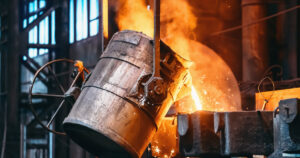
Ukrainian steelmaking companies reduced pig iron production by 14.8% in January–August of this year compared to the same period last year, down to 4.350 million metric tons.
According to data from the “Ukrmetallurgprom” association, 257,100 metric tons of pig iron were produced in August, 432,200 metric tons in July, 670,600 metric tons in June, 634,400 metric tons in May, in April—554 thousand metric tons, in March—690.2 thousand metric tons, in February—561.9 thousand metric tons, and in January—549.9 thousand metric tons.
In 2025, Ukraine’s steel companies increased pig iron production by 11.2% compared to 2024, reaching 7.884 million metric tons.
In 2024, Ukraine increased pig iron production by 18.1% compared to 2023, reaching 7.090 million metric tons. In 2023, pig iron production fell by 6.1% to 6.003 million metric tons, and in 2022, it fell by 69.8% to 6.391 million metric tons.
In 2021, before the war, 21.165 million metric tons of pig iron were produced, or 103.6% of the 2020 level.
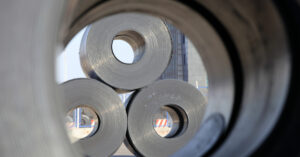
According to preliminary data, Ukrainian steelmakers reduced their production of total rolled steel by 15.6% in January–August of this year compared to the same period last year, down to 3.592 million metric tons.
According to information from the “Ukrmetallurgprom” association, 269,500 metric tons of rolled steel were produced in August, 382,700 metric tons in July, 599,800 metric tons in June, 537,800 metric tons in May, in April—460,800 metric tons, in March—544,500 metric tons, in February—390,300 metric tons, and in January—406,400 metric tons.
In 2025, Ukraine’s steel companies increased their production of general-purpose rolled steel by 4.8% compared to 2024, reaching 6.521 million metric tons.
In 2024, Ukraine increased its production of general-purpose rolled steel by 15.8% compared to 2023—to 6.222 million metric tons from 5.372 million metric tons. In 2023, total rolled steel production rose by 0.4% to 5.372 million metric tons, while in 2022, it fell by 72% to 5.350 million metric tons.
In 2021, before the war, 19.079 million metric tons of rolled steel were produced, or 103.5% of the 2020 level.
METALLURGY, PRODUCTION, ROLLED STEEL, UKRAINE, UKRMETALLURGPROM
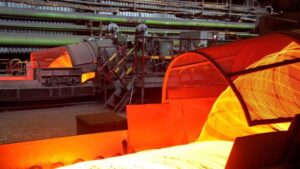
Ukrainian steelmakers reduced steel production by 12.5% in January–August of this year compared to the same period last year, down to 4.3 million metric tons.
According to data from the “Ukrmetallurgprom” association, 277,000 metric tons of steel were produced in August, 457,000 metric tons in July, 690,800 metric tons in June, 629,400 metric tons in May, in April—517,300 metric tons, in March—702,300 metric tons, in February—515,000 metric tons, and in January—511,100 metric tons.
In 2025, Ukraine’s steel companies reduced steel production by 2.2% compared to 2024—to 7.409 million metric tons.
In 2024, Ukraine increased steel production by 21.6% compared to 2023—to 7.575 million metric tons. In 2023, steel production fell by 0.6% to 6.228 million metric tons, and in 2022, it fell by 70.7% to 6.263 million metric tons.
In 2021, before the war, 21.366 million metric tons of steel were produced, or 103.6% of the 2020 level.
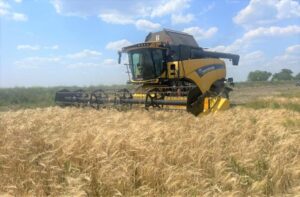
Ukrainian farmers have begun harvesting late-season oilseeds, and as of September 8, 89.3 thousand metric tons of sunflower seeds have been harvested from the first 56 thousand hectares—representing 1% of the projected area—with an average yield of 15.9 centners per hectare.
A total of 79.9 thousand metric tons of soybeans have been harvested from 45.3 thousand hectares (3% of the forecast) at a yield of 17.6 centners per hectare, according to the press service of the Ministry of Agrarian Policy and Food.
As of September 8, farmers across all regions had threshed 6.85 million hectares, or 59% of the projected area. The gross harvest of grain and legume crops reached 32.2 million metric tons, with an average yield of 47 ts/ha.
Farmers have nearly completed the wheat harvest and have fully finished harvesting barley and peas. Specifically, 24.91 million metric tons of wheat were harvested from an area of 5.04 million hectares (98% of the target) with an average yield of 49.4 centners per hectare.
The barley harvest is 100% complete across the entire area, or 1.48 million hectares. The gross harvest amounts to 6.4 million metric tons, with a yield of 43.4 tsentners per hectare.
The pea harvest is also complete—795.2 thousand metric tons were harvested from 298.2 thousand hectares, with a yield of 26.7 tsentners per hectare.
Millet yields totaled 34,000 metric tons, with 14,500 hectares (35% of the area) threshed at a yield of 23.4 centners per hectare. Buckwheat yields totaled 10,900 metric tons from 7,700 hectares (16% of the area) at a yield of 14.2 centners per hectare. The first 43.2 thousand metric tons of corn were harvested from 12.1 thousand hectares, with a yield of 35.9 centners per hectare.
Farmers in the southern and central regions lead in terms of gross grain harvest volumes.
In the Odesa region, a total of 4.82 million metric tons of grain was harvested from an area of 1.19 million hectares. Specifically, 3.22 million metric tons of wheat, 1.31 million metric tons of barley, and 284,900 metric tons of peas.
In the Dnipropetrovsk region, 2.69 million metric tons of grain were harvested from 650,600 hectares. This included 2.04 million metric tons of wheat, 574,600 metric tons of barley, and 37,000 metric tons of peas.
The Kirovohrad region harvested 2.42 million metric tons of grain from an area of 559,000 hectares. The harvest included 1.92 million metric tons of wheat, 412,500 metric tons of barley, and 82,000 metric tons of peas.
The highest yields were recorded in the Khmelnytskyi region—70.8 ts/ha, the Sumy region—59.7 ts/ha, and the Vinnytsia region—59.6 ts/ha.
The rapeseed harvest is complete, with a total volume of 3.8286 million metric tons.
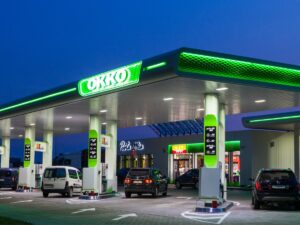
The OKKO network remains the largest importer of automotive gasoline into Ukraine: in August 2026, the company imported 46,100 metric tons of fuel, and 302,000 metric tons since the beginning of the year, according to data from the A-95 Consulting Group. OKKO accounts for about 27% of all Ukrainian gasoline imports since the beginning of the year.
The next group of largest suppliers consists of WOG, UPG, and “Ukrnafta.”
In August, WOG imported 20,200 metric tons of gasoline, UPG—20,000 metric tons, and “Ukrnafta” imported 19,400 metric tons.
Next are “BRSM-Nafta” with 7,000 metric tons, Amic with 3,400 metric tons, and “Avantage” with 3,100 metric tons.
Gaztrim and KLO each imported 2,400 metric tons, and Bars 2000 imported 2,200 metric tons.
Other market participants accounted for 26,100 metric tons.
In total, Ukraine imported 152,000 metric tons of motor gasoline in August.
The largest countries of origin for the fuel were Lithuania—51,800 metric tons—and Poland—40,100 metric tons. The ORLEN Group supplied more than half of August’s imports.

The rise in artisanal gasoline production within Ukraine was one of the factors behind the decline in official fuel imports in August 2026, according to the A-95 Consulting Group.
According to the group, imports of automotive gasoline in August totaled 152,000 metric tons, which is 7% less than a year earlier.
“In August, gasoline shipments were lower due to large carryover stocks and the growth of domestic illicit production, driven by the ability to add tax-exempt solvents,” A-95 reported.
Experts believe that government agencies—primarily the State Tax Service—need to strengthen oversight of this sector.
“This is not only a matter of losses to the state budget but also of the questionable quality of such fuel,” the group emphasized.
The use of components not subject to excise tax as motor fuel potentially allows producers to lower the cost of gasoline blends and gain an advantage over legal market participants who pay fuel taxes in full.
At the same time, there was no overall gasoline shortage on the Ukrainian market in August. Since the beginning of 2026, official import volumes have remained higher than last year’s: 1.12 million metric tons of gasoline were imported over eight months, which is 16% more than a year earlier.
The largest importers remain OKKO, WOG, UPG, and Ukrnafta, while the main supplier countries are Lithuania and Poland.
EXCISE TAX, FUEL, GASOLINE, TAX, UKRAINE



