Business news from Ukraine

Business news from Ukraine

Military aid to Ukraine fell by 43% this summer

The Kiel Institute for the World Economy reported on Tuesday that military aid to Ukraine fell by 43% in July and August compared with the first half of the year.

According to the institute, most military support now flows through the Prioritized Ukraine Requirements List (PURL) program. That consists of NATO allies from Belgium, Canada, Denmark, Germany, Latvia, the Netherlands, Norway and Sweden.

The PURL initiative replaced U.S. arms donations to Ukraine and now requires allies to pay for U.S. weapons deliveries.

https://interfax.com.ua/


,

Ukraine and Slovakia sign cooperation agreement

Ukraine and the Slovak Republic have signed an agreement on technical and financial cooperation and a joint roadmap.

On the Ukrainian side, the agreement was signed by Deputy Prime Minister for European and Euro-Atlantic Integration Taras Kachka following joint Ukrainian-Slovak intergovernmental consultations on Friday.
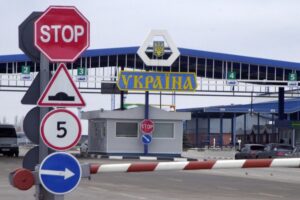
The countries also signed a protocol between the governments on border crossing points across the common state border. On the Ukrainian side, the document was signed by Deputy Prime Minister for the Restoration of Ukraine – Minister of Community and

Territorial Development Oleksiy Kuleba.

In addition, an agreement was signed between the countries on mutual understanding regarding the placement of Ukraine’s diplomatic mission in Slovakia and Slovakia’s diplomatic mission in Ukraine. On the Ukrainian side, the document was signed by Minister of Foreign Affairs Andriy Sibiga.

Prime Minister of Ukraine Yulia Sviridenko and Prime Minister of the Slovak Republic Robert Fico signed an agreement on the exchange of information on labor mobility, as well as a joint roadmap.
As reported, joint Ukrainian-Slovak intergovernmental consultations are taking place on Friday with the participation of Ukrainian Prime Minister Yulia Sviridenko and Slovak Prime Minister Robert Fico.

, , ,

Number of Ukrainian citizens seeking protection in Germany has increased many times over

The number of people from Ukraine seeking protection in Germany has increased significantly in recent weeks, Die Welt reported Wednesday.

The publication writes that the lifting of the travel ban for Ukrainian men between the ages of 18 and 22 who are fit for military service has led to an increase in the number of asylum requests from this group.

“The number of applications has risen from around 100 per week before these provisions came into force to around 1,000 per week,” a spokeswoman for the Federal Interior Ministry said.

“It is impossible to assess at this point how temporary this phenomenon is,” she added.

According to the information, the total number of people from Ukraine in Germany increased during the summer. According to the Interior Ministry, 7,961 Ukrainians were distributed through the Free registration system in May, 11,277 in August and 18,755 in September. Unlike asylum seekers, protection seekers from Ukraine are granted a residence permit under Article 24 of the Residence Act, which entitles them to immediate access to the labor market and social services.

Source: https://www.welt.de/politik/ausland/article68ee019f0a0257c8ba896870/ukraine-krieg-kleine-gruene-maennchen-an-russisch-estnischer-grenze-gesichtet-mehr-bewegungen-als-ueblich.html


, ,

Ukraine will give up clear-cutting in Carpathian forests from 2027 – head of State Forest Agency of Ukraine

Ukraine will stop clear-cutting of main use in the mountain forests of the Carpathians from 2027 and will switch to selective “re-formation logging”, said the head of the State Agency of Forest Resources of Ukraine Viktor Smal in an exclusive interview with the agency “Interfax-Ukraine”.

“This is a revolution. We have given the industry three years to prepare, train staff and switch to methods closer to natural ones,” he said. According to Smal, the new approach will increase the resilience of ecosystems to climatic and biotic factors and ensure continuous natural regeneration of the forest.

State Forestry Agency: timber stock can grow three times faster with nature-like forestry

The State Agency of Forest Resources of Ukraine is a central executive body coordinating the management, protection, reproduction and rational use of forest resources of the country. The agency supervises more than 70 state enterprises, including the State Enterprise “Forests of Ukraine”, as well as scientific, conservation and inventory institutions.


, , ,

First Ukrainian Literature Festival was held in Belgrade

As Serbian Economist reports, the first Ukrainian Literature Festival organized by the Ukrainian Center “Triglav” in cooperation with the Embassy of Ukraine in Serbia took place in the Serbian capital.

The event united Ukrainian writers, translators, literary critics and Serbian fans of Ukrainian culture.

According to the organizers, the goal of the festival is to popularize modern Ukrainian literature abroad and develop cultural dialogue between Ukraine and Serbia.

The festival included readings by Ukrainian authors, presentations of translations into Serbian, panel discussions and meetings with translators working on adapting works by Ukrainian writers for local audiences.

New translations of Ukrainian works into Serbian were presented during the festival. Serbian publishers emphasized that interest in Ukrainian culture has grown significantly after 2022.

https://t.me/relocationrs/1569


, , ,

Global Wheat Producers in 1991–2024 – Video by Experts Club

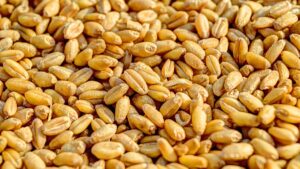
According to data from the Food and Agriculture Organization of the United Nations (FAO), in 2024 Ukraine ranked 9th in the world in wheat production, producing about 23.4 million tons of grain. This information is presented in a new study by Experts Club, based on FAOSTAT statistics and the video “Wheat Production by Country (1991–2024)”.

The top three wheat producers remain traditionally stable:
China — 136 million tons,
India — 113.9 million tons,
Russia — 81.6 million tons.

These three countries account for nearly half of global wheat production and play a crucial role in the world’s agricultural system.

They are followed by:
United States — 53.6 million tons,
France — 35.9 million tons,
Canada — 35.9 million tons,
Australia — 34.1 million tons,
Pakistan — 31.4 million tons,
Ukraine — 23.4 million tons,
Germany — 21.5 million tons.

The second ten producers are opened by Turkey (19 million tons) and Kazakhstan (18.6 million tons), with Italy (6.9 million tons) closing the list.

The Experts Club video analysis demonstrates significant structural changes in global wheat production over the past three decades. The video covers the period from 1991 to 2024. During this time, China and India have almost doubled their production thanks to increased yields and consistent government support for the agricultural sector.

Russia and Ukraine, after a sharp decline in the 1990s, made a remarkable recovery: in the early 1990s, Ukraine produced around 15 million tons, while by 2024 the volume had increased to 23–24 million tons — despite war-related risks and export restrictions.

Kazakhstan, traditionally focused on exports, has maintained its position, supplying grain to Central Asia and parts of China.

Despite military actions and damage to part of its infrastructure, Ukraine remains one of the world’s leading wheat exporters. The main factors behind this are high yields in southern and central regions, improved logistics through Danube ports, and export routes via Romania and Bulgaria.

According to FAO, in 2024 Ukraine exported about 17 million tons of wheat, keeping the country among the three largest global grain suppliers, along with Russia and the United States.

Experts from Experts Club note that growth in production across Asia and CIS countries compensates for declining yields in Europe and North America, which are affected by droughts and climate change. At the same time, Turkey, Iran, and Egypt are strengthening their roles as regional centers of processing and import.

Global markets expect wheat prices to stabilize within the range of 230–250 USD per ton, provided there are no new geopolitical shocks.

“Ukraine’s position in the TOP-10 global wheat producers is a testament to the resilience of its agricultural sector, even during wartime. With the expansion of domestic processing, Ukraine can reach 25–27 million tons of production in the coming years and strengthen its place among the world’s top five exporters.
At the same time, the grain market is becoming increasingly technology-driven: digitalization of agribusiness, precision farming, and climate-resilient wheat varieties will determine leadership in the next decade,” said Maksym Urakin, co-founder of the analytical center Experts Club.

Ukraine remains one of the few countries where the agricultural sector accounts for about 40% of foreign currency earnings. In 2024, wheat ranked second in export volume after corn, and revenues from grain sales exceeded 6 billion USD.

According to Experts Club forecasts, if the pace of infrastructure recovery continues and weather conditions remain favorable, Ukraine’s wheat production may reach 25 million tons in 2025, and exports could exceed 18 million tons.

The study was prepared by the analytical center Experts Club based on data from FAOSTAT, USDA, and IGC.
The video analysis “Wheat Production by Country 1991–2024” is available on the Experts Club Ukraine YouTube channel.

, , , , , ,