
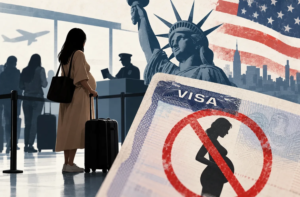
The U.S. has imposed new visa restrictions on foreign nationals who knowingly participate in organizing so-called “birth tourism” or facilitate such trips, U.S. Secretary of State Marco Rubio announced.
The State Department’s new policy took effect on September 23, 2026, and is enforced under Section 212(a)(3)(C) of the U.S. Immigration and Nationality Act. The restrictions may apply to individuals who participate, have previously participated, or assist in organizing trips to the U.S. with the primary purpose of giving birth to a child and securing U.S. citizenship for that child.
Specifically, the measures may affect owners, executives, and managers of companies specializing in “birth tourism,” visa brokers who instruct clients to provide false information when applying for visas, as well as foreign healthcare professionals who knowingly facilitate such trips or the fraudulent use of the Medicaid program. The restrictions may also extend to other individuals who support commercial schemes and, in certain cases, to their family members.
According to Rubio, commercial “birth tourism” networks advertise their services abroad, help applicants conceal the true purpose of their trip, and may charge tens of thousands of dollars to arrange childbirth on U.S. soil.
However, this is not the first time a ban has been in place on using a B-category visitor visa for a trip whose primary purpose is to give birth to a child in order to obtain U.S. citizenship for that child. Since January 24, 2020, U.S. consular officers have been required to deny a B visa if they have reason to believe that this is the primary purpose of the trip.
The new 2026 policy shifts the focus from the applicants themselves to the organizers, intermediaries, and infrastructure behind such schemes. Immigration lawyers note that the State Department has not yet disclosed in detail what evidence will be used, how exactly individuals subject to the restrictions will be identified, or whether the new measures will affect visas that have already been issued.
Pregnancy alone is not an automatic basis for visa denial. The State Department continues to allow travel to the U.S. for medical treatment, including medical care during pregnancy, provided the applicant meets the requirements for the relevant visa and can confirm the purpose of the trip and the ability to pay for medical expenses. However, “birth tourism”—where the primary purpose is to obtain U.S. citizenship for a child—is not officially considered a valid basis for issuing a visitor visa.

According to an analysis by the Serbian business portal Parametar, starting November 1, 2026, Montenegro will introduce a visa requirement for citizens of Russia, Belarus, and Turkey, which could significantly impact the country’s tourism, labor market, rental sector, and real estate market.
On September 24, the Montenegrin government confirmed the initiation of the procedure to terminate the existing visa-free travel agreements with these three countries. The decision was made as part of efforts to bring the country’s visa policy into line with European Union regulations. As early as July 23, the government approved changes to the visa regime, which are set to take effect on November 1.
Until October 31, citizens of Russia and Belarus may enter Montenegro without a visa and stay there for up to 30 days. A similar visa-free regime applies to Turkish citizens. Once the new rules take effect, holders of ordinary passports will need a Montenegrin visa. Regarding Turkey, Podgorica plans to conclude a separate agreement, maintaining visa-free entry for holders of diplomatic, service, and special passports.
However, there are significant exceptions. Citizens of these countries who hold a valid Schengen, U.S., British, or Irish visa or a corresponding residence permit will, as before, be able to enter Montenegro without a separate Montenegrin visa for up to 30 days.
The new regime also does not require a tourist visa for foreigners who already hold a valid temporary or permanent residence permit in Montenegro or a permit for temporary residence and work.
According to data from the Montenegrin Ministry of the Interior cited by Parametar, as of the end of 2025, 20,793 Russian citizens and 13,506 Turkish citizens held temporary or permanent residence permits. Together, these two communities account for approximately 5.5% of the country’s population, which totals about 624,000 people.
The Belarusian community is significantly smaller. According to the latest census, as of late October 2023, 738 Belarusian citizens had permanent residence in Montenegro; more recent data on Belarusians is not currently available.
Tourism could become one of the most vulnerable sectors. In 2025, Russian tourists accounted for 16.4% of all overnight stays by foreign visitors in Montenegro, while tourists from Turkey accounted for another 4.3%. In the private accommodation segment, the Russian market’s share reached 22.1%, while the Turkish market’s share was 4.9%. Thus, these two countries accounted for more than a quarter of all foreign overnight stays in apartments, villas, and other private accommodations.
According to Parametar’s assessment, the most noticeable impact may not be among Russians and Turks who already legally reside in Montenegro, but rather among new tourists, real estate buyers, renters, and those considering the country as a place to relocate. This is particularly important for Budva, Bar, Tivat, Kotor, and Herceg Novi, where foreign demand plays a significant role in the rental, real estate, hospitality, and service markets.
The changes may also affect the labor market. In 2025, 10,346 temporary residence and work permits were issued to Turkish citizens, and 7,429 to Russian citizens. Turkey has become the largest source of foreign labor in Montenegro. The introduction of an additional visa procedure for new workers could potentially delay their recruitment in the construction, hospitality, and other sectors.
The visa reform is linked to Montenegro’s EU accession process. The country’s government notes that full alignment of visa policy is one of the conditions for closing Negotiation Chapter 24, “Justice, Freedom, and Security.” Fulfilling this condition also paved the way for receiving approximately 4 million euros under the EU Growth Plan for the Western Balkans.
As part of a broader reform of Montenegro’s visa regime, visa requirements will also apply to citizens of China and Saudi Arabia starting November 1, since Podgorica’s previous policy toward these countries was also not in line with EU regulations. However, the government’s September 24 decision to suspend international agreements directly concerns Russia, Belarus, and Turkey.
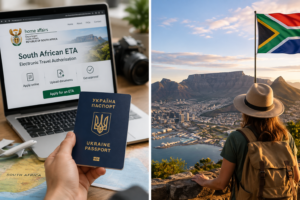
The Republic of South Africa has included Ukraine in the list of countries whose citizens can apply for an Electronic Travel Authorisation (ETA) to enter the country, the Embassy of Ukraine in the Republic of Mozambique reported.
The innovation allows Ukrainian citizens to submit an application remotely without personally visiting the South African embassy or a visa center. The applicant must register in the electronic system, complete the application form, upload the necessary documents and a photograph.
According to the Ukrainian diplomatic mission, after submission of a complete package of documents, the application should be processed within no more than 24 hours.
At the current stage, ETA is available to Ukrainians for trips to South Africa for tourism or private purposes. The maximum duration of stay under such an authorisation is up to 90 days.
The issued electronic entry authorisation can be used within 180 days from the date of issuance.
An application can be submitted on the official website of the Department of Home Affairs of the Republic of South Africa: South African ETA. The official system confirms the possibility of applying for an Electronic Travel Authorisation online.
At the same time, at the initial stage, ETA cannot be used at all border crossing points. Entry with an electronic authorisation is available through four international airports in the country: O. R. Tambo International Airport in Johannesburg, Cape Town International Airport, Lanseria International Airport and King Shaka International Airport in Durban.
These airports are equipped with the necessary systems for checking electronic authorisations and passengers’ biometric data.
The embassy recommends that Ukrainians additionally check the current ETA requirements and the conditions for entry into South Africa before traveling, as the procedure for using the electronic system may change as it is further implemented.
The introduction of ETA significantly simplifies the organization of tourist and private trips by Ukrainians to South Africa, since previously obtaining permission required going through the traditional visa procedure.
The administration of U.S. President Donald Trump is preparing to revoke up to 200,000 business and tourist visas held by foreign nationals who applied for asylum after entering the country. If the decision is carried out on the stated scale, it will be the largest single mass revocation of visas in U.S. history.
The Associated Press reported this on August 24, citing documents from the U.S. State Department and two U.S. officials.
The measure applies to nonimmigrant visas in the B1 and B2 categories, which are intended primarily for business and tourist travel, visiting relatives, and receiving medical treatment, respectively.
Visas issued between 2016 and 2026 may be subject to this new measure if their holders applied for asylum after arriving in the United States or are continuing the asylum process.
State Department spokesperson Tommy Pigott confirmed that the procedure is being prepared but did not specify its final scope.
“We are coordinating with the Department of Homeland Security to identify and revoke nonimmigrant visas held by foreign nationals who entered the United States as short-term visitors and subsequently applied for asylum in order to remain here permanently,” the State Department spokesperson said.
According to him, the process will be carried out gradually, so the number of revoked visas remains uncertain for now.
Thus, the figure of up to 200,000 visas is currently an AP estimate based on internal documents and information from U.S. officials, rather than an officially announced quota by the State Department.
The revocation of visas will not result in the immediate deportation of all affected foreign nationals from the U.S.
According to the AP, most people whose asylum applications are pending will be transferred to the appropriate immigration category; however, they will no longer be considered to be in the country as business or tourist visitors.
The administration’s main argument is that B1/B2 visas are issued to people who state that their trip is temporary and that they intend to leave the U.S. The authorities view the filing of an asylum application after entry as possible evidence that the original purpose of the trip may not have matched the stated one.
The large-scale revocation of visas is expected to face legal challenges. The AP notes that the decision could still be reviewed or challenged before it is fully implemented.
The new measure will be a continuation of the significant tightening of U.S. visa and immigration policies.
The State Department reported on August 10, 2026, that more than 175,000 visas for foreign nationals have already been revoked since Donald Trump’s return to the White House.
According to the department, the grounds for revocation included visa violations, criminal offenses, fraud, threats to national security, and other violations. Among the most common reasons cited by the State Department were assaults, driving under the influence, theft, and drug-related crimes.
However, the planned revocation of up to 200,000 visas is unique in that it targets a single specific category of visa holders and is part of a unified administrative campaign. This is precisely why the AP describes it as potentially the largest one-time mass revocation of visas in U.S. history.
In 2025–2026, the Trump administration also expanded social media screening of applicants, tightened requirements for several categories of foreign nationals, introduced or expanded visa restrictions for citizens of dozens of countries, and intensified scrutiny of visas that had already been issued.
The new measure applies to foreign nationals regardless of their specific nationality, provided they meet the specified criteria. Therefore, in theory, it could also affect Ukrainian citizens who entered the U.S. on valid B1/B2 visas and subsequently applied for asylum. At the same time, other mechanisms governing Ukrainians’ stay in
the U.S. are not, in and of themselves, the subject of the announced campaign.

Indonesian authorities have begun reviewing the residency and taxation rules for foreign digital nomads and other remote workers, whose numbers are growing, particularly in Bali and other popular tourist regions of the country.
Hendarsam Marantoko, Director General of the Indonesian Immigration Service, announced at a press conference that the agency, in collaboration with the tax service and other government agencies, is exploring possible legislative changes regarding foreign professionals who are physically present in Indonesia but work for companies abroad.
According to Marantoko, the current system creates a legal conflict. Standard work visas are primarily intended for foreigners employed by Indonesian employers, whereas digital nomads earn their income outside the country. The authorities need to determine whether they should be considered primarily as long-term foreign visitors who spend money on housing, food, and services, or as working residents subject to tax obligations.
That said, a separate legal framework for remote work in the country already exists. The current visa classification includes the E33G Remote Worker category for foreigners who are employed by a company located outside Indonesia and perform this work from within the country.
One of the key issues in the upcoming review will be taxation. According to current guidelines from the Indonesian Directorate General of Taxes, a foreign national can generally obtain domestic tax resident status if they reside in the country for more than 183 days within a 12-month period or demonstrate an intention to reside permanently in Indonesia. These rules may also apply to digital nomads, depending on specific circumstances and international double taxation treaties.
The Indonesian authorities have not yet disclosed the specific details of the new rules or the timeline for their implementation. The Immigration Service has stated that official changes will be announced after the completion of an interagency review. At the same time, the authorities aim to preserve the economic benefits of having remote workers while strengthening oversight of immigration violations, overstaying visas, and undeclared economic activities.
Bali remains one of the world’s largest hubs for digital nomads: foreigners who live here long-term drive demand for rental housing, restaurants, coworking spaces, and other services. Therefore, changes to visa and, especially, tax regulations could directly affect a significant portion of foreigners who use the island as a permanent base for remote work.

The administration of U.S. President Donald Trump is considering the possibility of introducing refundable security deposits of up to $100,000 for certain foreign nationals applying for immigrant visas and green cards through U.S. consulates abroad.
The proposal is being developed by the U.S. Department of State in collaboration with the Department of Homeland Security. A final decision has not yet been made, and official regulations and a list of applicant categories have not been published. The amount of the bond under discussion may be determined on a case-by-case basis and could be either lower or higher than the estimated $100,000.
It is expected that the requirement will initially be tested on citizens of a limited number of countries. The bond could be posted either by the applicant themselves or by relatives or sponsors residing in the U.S.
According to The Wall Street Journal, the money is planned to be returned after the immigrant obtains U.S. citizenship. Naturalization is typically possible no earlier than five years after obtaining permanent resident status. Thus, a significant amount of money may remain frozen for several years.
The State Department stated that it is reviewing existing authorities that allow it to require financial guarantees from certain applicants. The stated goal of the initiative is to confirm that a prospective immigrant has the means to support themselves and will not become dependent on public assistance.
U.S. law allows for the denial of a visa to a foreign national whom a consular officer deems a potential recipient of public assistance. The assessment takes into account the applicant’s age, health, education, professional skills, financial resources, and family status.
Current federal regulations already provide for the possibility of issuing an immigrant visa after a bond is posted, provided that it eliminates the risk of the applicant being deemed a potential financial burden on the government. Such a bond may be released after naturalization, permanent departure from the United States, or the foreign national’s death, provided the conditions have not been violated.
The proposed mechanism should not be confused with the existing pilot bond program for B-1/B-2 tourist and business visas. Under this program, certain applicants from countries with high rates of visa violations may be required to post a refundable bond of up to $15,000.
The introduction of a $100,000 bond could significantly limit access to family-based immigration for applicants with low to moderate incomes. Immigrant visas are most commonly issued to spouses, parents, children, and other relatives of U.S. citizens or permanent residents.
For now, this is only a proposed initiative. Applicants are not required to post such a bond until an official decision is published and they receive a corresponding request from a U.S. consulate.



