Participants in the panel discussion “Connecting Economies: Cross-border Infrastructure and the Power of Partnership” at the Ukraine Recovery Forum in Bucharest emphasized that the development of border infrastructure and joint projects is a key condition for unlocking the economic potential of Ukrainian-Romanian cooperation, especially in the border regions of Chernivtsi and Zakarpattia Oblasts.
The discussion was moderated by Bogdan Bernyage, senior associate expert at the New Strategy Center (Romania). The panel was attended by Gheorghe Șoldan, chairman of the Suceava County Council (Romania), Mykhailo Pavliuk, deputy chairman of the Chernivtsi Regional Council, and Andrii Sheketa, first deputy chairman of the Zakarpattia Regional Council.
According to the participants, the economic partnership between Chernivtsi region and Romania is of strategic importance: Romania accounts for over 20% of the region’s foreign trade turnover. There is significant potential for deepening cooperation in the woodworking industry, where Chernivtsi’s raw material base can be combined with the processing capacities of the Romanian side. Opportunities for the development of joint projects in the fields of IT, tourism, agriculture, and transport were also noted. “Our regions are already closely linked by trade, the next step is to move from simple exports of raw materials to joint production chains,” Pavliuk said.
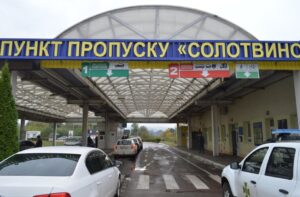
With regard to Zakarpattia, the participants emphasized that the reconstruction of the region is closely linked to its long-term development and the deepening of ties with Romania. Despite the fact that the region has the longest section of the common border with this country, the border infrastructure remains underdeveloped, and a number of checkpoints operate below their potential capacity. According to Sheketa, targeted infrastructure investments—in roads, rail approaches, and the modernization of border crossing points—are a necessary condition for improving connections between Transcarpathia and Romania and for making fuller use of the opportunities for cross-border cooperation.
Following the discussion, the participants concluded that the development of joint projects and the modernization of border infrastructure could strengthen the economic integration of border regions and create additional opportunities for business and employment on both sides of the border.
Passenger traffic across the Ukrainian border in the sixth week of autumn, from October 4 to 10, decreased by 8.2% to 515,000, according to data from the State Border Guard Service.
According to it, the number of arrivals to Ukraine during the week decreased from 278,000 to 253,000, while the number of departures fell from 283,000 to 262,000.
The number of vehicles passing through border checkpoints also decreased to 129,000 from 137,000, while the flow of vehicles carrying humanitarian cargo increased from 481 to 501.
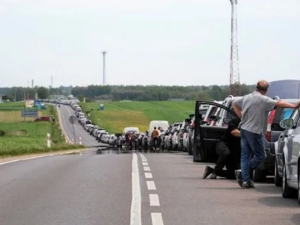
As of 9:00 a.m. this Saturday, according to the State Border Guard Service, the largest queue on the border with Poland consisted of 45 cars at the Shehyni checkpoint, with another 35 cars waiting at Krakivets, 25 at Ustyluh, and 10 at Hrushiv.
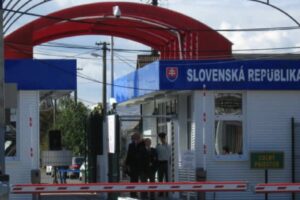
On the border with Hungary, small queues of 10 cars were observed at the Tysa, Vylok, and Luzhanka crossings, with another 5 cars waiting at Kosyno, while on the border with Slovakia there was a queue only at the Uzhhorod checkpoint — 11 cars.
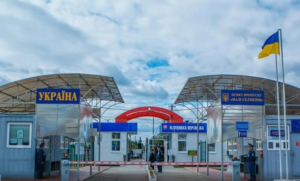
Finally, on the border with Romania, 15 cars accumulated at the Porubne checkpoint, while there were no queues at all other points, nor on the border with Moldova.
The total number of border crossings this week was, for the first time in a long while, lower than last year’s (by 1.3%), because last year during the same week pilgrims were leaving after celebrating Rosh Hashanah. Therefore, the number of those leaving the country was significantly higher than those entering — 272,000 versus 250,000 respectively. However, vehicle flow was lower then — 124,000.
Last year, passenger traffic remained at about this level until a slight increase during the autumn school holidays, after which it fell by about 20% before the Christmas and New Year holidays.
As reported, since May 10, 2022, the outflow of refugees from Ukraine that began with the start of the war was replaced by an inflow that lasted until September 23, 2022, totaling 409,000 people. However, since late September, possibly under the influence of news about mobilization in Russia and “pseudo-referendums” in occupied territories, and later massive shelling of energy infrastructure, the number of people leaving began to exceed those entering. From late September 2022 to the first anniversary of the full-scale war, this surplus reached 223,000 people.
During the second year of the full-scale war, the number of border crossings leaving Ukraine exceeded entries by 25,000, in the third year by 187,000, and since the beginning of the fourth year by 189,000.
As Serhiy Soboliev, then Deputy Minister of Economy, noted in early March 2023, the return of every 100,000 Ukrainians home adds 0.5% to GDP growth.
In its July inflation report, the National Bank worsened its migration forecast: while in April it expected a net inflow to Ukraine of 0.2 million people in 2026, it now forecasts a net outflow of 0.2 million, matching this year’s estimate. “Net return will begin only in 2027 (about 0.1 million people, compared to 0.5 million in the previous forecast),” the NBU added. In absolute terms, the NBU estimates the number of migrants currently abroad at about 5.8 million.
According to updated UNHCR data, the number of Ukrainian refugees in Europe as of October 3, 2025, was estimated at 5.192 million (5.138 million as of September 2), and worldwide at 5.753 million (5.696 million).
Within Ukraine itself, according to the latest UN data from July this year, there were 3.340 million internally displaced persons (IDPs), compared to 3.757 million in April.
Intense fighting broke out between Afghan and Pakistani forces on the border between Afghanistan and Pakistan, marking one of the most serious escalations in recent years.
According to reports from the Afghan side, 58 Pakistani soldiers were killed during night operations, and 25 border posts were captured. Pakistani authorities confirm the deaths of 23 of their soldiers and claim significant losses on the Afghan side, exceeding 200 people.
Pakistan cites air strikes on its targets in Kabul and eastern Afghanistan, including strikes on suspected Tehreek-i-Taliban Pakistan (TTP) positions, as the cause of the conflict. The Afghan side claims that in response to repeated violations of its airspace by Pakistan, it launched an operation to capture border positions.
As a result of the intensification of fighting, the Pakistani authorities closed key border crossings — Torkham and Chaman, as well as a number of smaller border crossings.
Imports of goods from Ukraine in January-September 2025 amounted to $60.1 billion in monetary terms, which is 17.4% higher than in the same period of 2024, while exports decreased by 3.1% to $29.5 billion, according to the State Customs Service (SCS).
“At the same time, taxable imports amounted to $45.9 billion, which is 76% of the total volume of imported goods. The tax burden per 1 kg of taxable imports in January-September 2025 was $0.52/kg,” the agency’s Telegram channel reported on Wednesday.
Traditionally, China imported the most goods to Ukraine – $13.3 billion, followed by Poland – $5.7 billion, and Germany – $4.8 billion.
Ukrainian goods were exported mainly to Poland – $3.7 billion, Turkey – $2.1 billion, and Germany – $1.8 billion.
Of the total volume of goods imported into the country in January-September 2025, 69% of the categories were machinery, equipment, and transport – $23.8 billion (with customs clearance, UAH 148.3 billion, or 29% of customs payments, was paid to the budget), chemical industry products – $9.4 billion (72.9 billion hryvnia paid to the budget, or 14% of revenues), fuel and energy – $7.6 billion (146.6 billion hryvnia paid, accounting for 29% of customs payments).
According to the State Customs Service, the top three most exported Ukrainian goods were food products – $16.2 billion, metals and metal products – $3.4 billion, and machinery, equipment, and transport – $2.8 billion.
“In the first nine months of 2025, UAH 641.9 million was paid to the budget during customs clearance of exports of goods subject to export duties,” the service concluded.
Passenger traffic across Ukraine’s border in the fifth week of autumn, from September 27 to October 3, decreased by 5.2% to 561,000, according to data from the State Border Service.
According to the data, the number of arrivals in Ukraine during the week decreased from 286,000 to 278,000, while the decrease in the outbound flow was more significant – from 306,000 to 283,000, which is explained by the end of the Jewish New Year “Rosh Hashanah” celebrations last week and the departure of pilgrims from Ukraine.
At the same time, the number of vehicles that passed through checkpoints increased from 133,000 to 137,000, while the flow of vehicles carrying humanitarian cargo remained approximately the same – 481.
This Sunday, as of 6:00 p.m., according to the State Border Service, the longest queue of 50 passenger cars was at the Ustyluh checkpoint, another 15 cars were waiting to cross the border at the Uhryniv checkpoint, and 10 cars had accumulated at the Shehyni checkpoint.
At the border with Hungary, there were queues of 20 cars at the Tisa and Luzhanka checkpoints, another 15 cars were waiting at the Vilok checkpoint, while at the border with Slovakia, there were queues of 15 cars at the Uzhgorod and Maly Berezny checkpoints.
At the border with Romania, there was a queue of 20 cars only at the Porubne checkpoint, while at the border with Moldova, 15 cars were waiting at the Mamalyga checkpoint.
The total number of border crossings this week is only 3.7% higher than last year, because then pilgrims came to celebrate Rosh Hashanah mainly during this week. Therefore, the number of those who left the country was less than the number of those who entered – 256 versus 285, respectively. The flow of cars was also lower – 128,000.
Last year, passenger traffic remained at approximately this level until a small surge during the autumn school holidays, after which it fell by about 20% until the Christmas and New Year holidays.
As reported, from May 10, 2022, the outflow of refugees from Ukraine, which began with the start of the war, was replaced by an influx that lasted until September 23, 2022, and amounted to 409,000 people. However, since the end of September, possibly influenced by news of mobilization in Russia and “pseudo-referendums” in the occupied territories, followed by massive shelling of energy infrastructure, the number of those leaving exceeded the number of those entering. In total, from the end of September 2022 to the first anniversary of the full-scale war, it reached 223,000 people.
During the second year of the full-scale war, the number of border crossings to leave Ukraine, according to the State Border Service, exceeded the number of crossings to enter by 25,000, during the third year by 187,000, and since the beginning of the fourth year by 180,000.
As Serhiy Sobolev, then Deputy Minister of Economy, noted in early March 2023, the return of every 100,000 Ukrainians home results in a 0.5% increase in GDP.
In its July inflation report, the National Bank worsened its migration forecast: while in April it expected a net inflow of 0.2 million people to Ukraine in 2026, it now forecasts a net outflow of 0.2 million, which corresponds to the estimate of the net outflow this year. “Net return will only begin in 2027 (about 0.1 million people, compared to 0.5 million in the previous forecast),” the NBU added. In absolute terms, the National
Bank estimates the number of migrants currently remaining abroad at about 5.8 million.
According to updated data from the UNHCR, the number of Ukrainian refugees in Europe as of October 3, 2025, was estimated at 5.192 million (as of September 2 – 5.138 million), and globally – at 5.753 million (5.696 million).
In Ukraine itself, according to the latest UN data for July this year, there are 3.340 million internally displaced persons (IDPs), compared to 3.757 million in April.
The Cabinet of Ministers of Ukraine has updated the procedure for crossing the state border: men aged 18 to 22 will be able to cross the border without hindrance during martial law, Prime Minister Yulia Svyrydenko said.
“This applies to all citizens of the relevant age,” she wrote on Telegram.
According to the head of government, this decision also applies to citizens who, for various reasons, find themselves abroad. We want Ukrainians to maintain their ties with Ukraine as much as possible. The changes will take effect the day after the resolution is officially published.