

The number of UK residents with a personal fortune of at least GBP1 million fell by 7% in 2025 to 442,000, according to calculations by the Adam Smith Institute. This is the lowest figure since the 2008 global financial crisis. Compared to the peak in 2021, when the country had approximately 1.07 million millionaires, their number has decreased by about 59%.
For the purposes of the study, a millionaire is defined as an adult resident of the United Kingdom with a net worth of at least GBP1 million in constant 2025 prices. The calculation includes real estate, pension savings, cash, and investments, net of debt.
The Institute attributes the decline primarily to a decrease in the real value of assets. Post-pandemic interest rate hikes have put pressure on the value of pension savings and high-priced real estate, particularly in London. An additional factor is the low savings rate among British households, which limits the accumulation of private capital.
The study’s authors cite the departure of wealthy residents and the UK’s declining appeal to foreign entrepreneurs and investors as another reason. The Institute points to high tax rates, the abolition of the former “non-dom” tax regime, and discussions regarding new taxes on wealth and capital gains.
Effective April 6, 2025, the UK replaced the “non-dom” tax system with a new regime based on tax residency. New residents who have not lived in the country for the previous ten years may, for the first four years, receive an exemption from UK tax on foreign income and capital gains. After this period ends, the general rules apply to them.
The Adam Smith Institute also emphasizes that its data are estimates. The UK does not have an up-to-date government registry of personal wealth, so the indicator is calculated based on data from the Office for National Statistics and statistical modeling. It primarily reflects the general trend in changes to private wealth, rather than the exact number of wealthy residents.
The Institute has called on British authorities to abandon plans to introduce a wealth tax, lower the capital gains tax, and review the tax treatment of wealthy foreign residents. According to its data, the top 1% of British earners account for 29.1% of income tax revenue.

According to “Serbian Economist”, on July 30, the Montenegrin government approved a proposal to establish a mechanism for screening foreign investments that could affect the country’s security and the functioning of critical infrastructure.
The new rules have not yet taken effect. A separate law must be passed for them to be implemented.
Prior approval will be required from investors from countries outside the EU who acquire control or at least 10% of the capital or voting rights in companies operating in strategic sectors.
The review may cover the energy sector, ports, airports, railways, banks, payment systems, telecommunications, media, digital infrastructure, technology, food production, and critical raw materials.
Real estate will be subject to review only if it is associated with strategic facilities or located near critical, military, or government infrastructure. This initiative does not directly apply to ordinary apartment purchases by foreigners.
The government will have the authority to approve a transaction, impose additional conditions, or prohibit it entirely. Potential requirements include restrictions on access to confidential data, disclosure of information about ultimate owners, and sources of funding.
The preliminary review is expected to take up to 45 days. Concluding a transaction without authorization may result in a fine, restrictions on voting rights, or the mandatory sale of the acquired stake.
The initiative is part of Montenegro’s efforts to align its legislation with EU rules. The final terms will be determined after the law is drafted and adopted.
Formally, specific countries are not named in the initiative. However, in practice, the mechanism will be particularly important for investors from Russia, Serbia, and China. All three countries are outside the EU, and their capital is significantly represented in Montenegro’s economy.
The possible adoption of this law will, in one way or another, also affect Ukrainian investors. Ukraine ranks high in terms of the number of companies in Montenegro. According to the latest data from MONSTAT, in 2024 there were 1,069 enterprises with Ukrainian owners operating in the country, accounting for 3.6% of all active companies with foreign capital. This places Ukraine fourth, behind Russia, Turkey, and Serbia.
At the same time, Ukrainian investments are concentrated primarily in real estate and small companies. In 2023, the inflow of such investments amounted to 19.1 million euros, of which 15.2 million euros went toward real estate purchases.
Therefore, the impact of the new rules on Ukrainian businesses is likely to be limited. Routine purchases of apartments and the establishment of small companies should not automatically be subject to review. Permission will be required for investments in strategic sectors or projects related to critical infrastructure.
Source: Government of Montenegro

Nova Poshta, Ukraine’s leading express delivery service and a member of the NOVA Group, made additional capital contributions to seven subsidiaries totaling UAH 136.27 million in January–February 2026, according to the company’s 2025 annual report.
The funds were allocated, in particular, to Supernova Airlines LLC – 47 million UAH, Nova Post Europe LLC – 20 million UAH, Nova Poshta Delivery S.L. (Spain) and Nova Post UK Ltd (United Kingdom) – 30.60 million UAH each, Nova Global Logistics CA Ltd (Canada) – 2.75 million UAH, Nova Post Netherlands B.V. (Netherlands) – 5.10 million UAH, and Logistika Podillya LLC – 0.2 million UAH.
It is also noted that in January of this year, the company announced dividends in the amount of 357.89 million UAH for the second and third quarters of 2024, and in January–February 2026, it received dividends from its subsidiary NovaPay LLC in the amount of 325.5 million UAH.
In addition, in February of this year, Nova Poshta conducted a buyback of securities of NovaPay Credit LLC totaling 200 million UAH, comprising 200,000 shares.
In the same month, the company sold 99.24% of its subsidiary Novobox LLC for UAH 1.46 billion. According to YouControl data, the new owner is the Cypriot company NP Holdings Limited, whose beneficiaries, like those of Nova Poshta, are Volodymyr Poperechnyuk and Vyacheslav Klimov. After the sale, the company was renamed “Nova Box.”
In March of the same year, “Nova Poshta” acquired 100% of Sliding Yurt-Industry LLC for 261,100 UAH. According to YouControl data, the company’s authorized capital is UAH 28 million, and its beneficiaries are Volodymyr Poperechnyuk and Vyacheslav Klimov.
According to the report, as of the end of 2025, Nova Poshta’s balance sheet included financial investments in a total of 36 companies.
As reported, in the first quarter of 2026, Nova Poshta increased its revenue by 26.9% compared to the same period in 2025—to 14.98 billion UAH—and its net profit by 4.4 times, to 1.28 billion UAH.
In 2025, the company increased revenue by 21.6%—to 54.2 billion UAH—and net profit by 4.4%, to 2.6 billion UAH.

Mining company Ferrexpo, with its main assets in Ukraine, had a net cash position of $17 million as of April 17; its directors emphasize the need for an urgent increase in share capital by at least $100 million, without which shareholders could lose the entire value of their investments.
“The Board of Directors believes that increasing the share capital is currently the only viable solution within the required timeframe,” Ferrexpo stated in a stock exchange announcement on Wednesday.
According to the statement, such a share capital increase is likely to be structured as a conditional placement of new shares among existing and new institutional investors with the aim of raising at least $100 million to support the group’s working capital and meet its short-term operational needs, allowing it to operate at a reduced level over the next 18 months.
“It is currently expected that this capital raising will be initiated and completed (subject to, among other things, the approval of resolutions at the general meeting and the admission to listing and trading of the new ordinary shares to be issued as part of this capital raising) no later than April 30, 2026, so that the company can publish its audited financial results for the year ending December 31, 2025,” the statement notes.
The company does not intend to publish a prospectus in connection with the planned capital raising.
Ferrexpo noted that discussions are ongoing with the company’s largest shareholder—Fevamotinico Sarl, owned by Konstantin Zhevago, which currently holds 294,993,686 shares, representing 49.32%—regarding whether Fevamotinico will support the resolution at the general meeting.
The Board of Directors also warned that if the planned fundraising is not initiated and the share book is not finalized by April 30, the listing and trading of its shares will be suspended from 7:30 a.m. on May 1, 2026, until the completion of the audit and publication of the annual report and financial statements for 2025, which in itself will require the implementation of the relevant financing decision so that financial results can be prepared on a going-concern basis.
“Under this scenario, there can be no certainty regarding the expected timing of the lifting of the suspension of listing and the resumption of trading in the company’s shares, if it occurs at all,” the statement notes.
Ferrexpo shares fell 11.91% to 38.02 pence at the start of trading on Wednesday, corresponding to a market capitalization of GBP258.2 million.
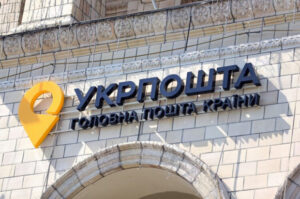
The national communications operator JSC Ukrposhta intends to comply with the National Bank of Ukraine’s (NBU) capital requirements by January 1, 2026, using its own resources, without recapitalization from the budget, according to the company’s CEO Ihor Smelyansky.
“Will Ukrposhta bring its capital into line with the new requirements by January 1, 2026, as required by the NBU resolution? Yes, it will. Does Ukrposhta need additional capital from the state to do this? No, it does not. This will be done with its own resources,” he wrote on Facebook on Friday evening.
According to him, as of June 1, 2025, Ukrposhta’s capital amounted to more than UAH 4 billion. At the same time, from the same date, the NBU changed the procedure for calculating capital, which, according to the CEO, “applies to everyone, but in practice, primarily to Ukrposhta.” As a result, after revising the approaches to capital assessment, the indicator for the company turned out to be negative – minus UAH 600 million.
Smelyansky also explained that Ukrposhta had not yet submitted documents to obtain the opportunity to open a bank because it had already had a negative experience with such attempts when trying to buy Alpari Bank, which was later liquidated. The CEO noted that the company’s shareholder, the Ministry of Community and Territorial Development (Ministry of Development), the First Deputy Prime Minister, and the Ministry of Economy tried to find common ground with the regulator on how best to resolve this issue.
“Moreover, this topic was discussed last week during the IMF mission, so, of course, we did not do anything that could raise questions from our partners,” Smelyansky added.
According to him, at meetings attended by the Ministry of Economy, the Ministry of Development, and representatives of the NBU, it was agreed that Ukrposhta would submit a joint action plan with its shareholder, which would have to be approved by the NBU, and only then would it submit a package of documents in accordance with the approved plan.
“Did Ukrposhta submit a project jointly with its shareholder? Yes, it has. Has the final meeting taken place? No, it has not. Moreover, it has already been postponed three times by the NBU. Does it make sense to submit documents to the bank without an approved plan? No, it does not. Why? Because the regulator has such broad powers that it can reject any documents for any reason,” Smelyansky added.
As reported, this week, National Bank Chairman Andriy Pyshnyy said that the central bank had approached the government in response to a request regarding the fiscal risks it sees in connection with Ukrposhta’s attempts to acquire a bank.
“We have identified the possibility of the need to recapitalize Ukrposhta… The owner of a significant stake must meet the requirements set forth in the legislation: be financially capable, have a well-developed corporate governance system, and have a clear understanding and strategy for the bank. We are waiting for the supervisory board, the owner of Ukrposhta, whose functions are performed by the Ministry of Community and Territorial Development, to provide the relevant documents,” he said on September 11.
Earlier, Smelyansky stated that, despite opposition from the National Bank, the launch of a financial inclusion bank remains a priority goal and task for the national communications operator JSC Ukrposhta.
In the first half of 2025, Ukrposhta increased its revenue by 5.4% compared to the same period last year, to UAH 6 billion 505.0 million, reducing its net loss by 27.2% to UAH 311.8 million. However, the company ended the first half of this year with negative capital of UAH 101.6 million, compared to UAH 210.2 million at the beginning of the year.

Transmagistral Insurance Company PrJSC will increase its authorized capital to UAH 248 million through an additional issue of shares worth UAH 200 million.
According to the company’s information posted in the information disclosure system of the National Securities and Stock Market Commission (NSSMC), this decision was made by shareholders at a meeting on November 29, 2024.
The additional share issue will include 20 million shares with a par value of UAH 10.
As reported at the end of January 2024, JSC Ukrtransnafta, the authorized person acting on the basis of the agreement dated 1 November 2023 on the exercise of rights to 89.4977% of shares in IC Transmagistral, announced a public irrevocable offer for all shareholders of the company to purchase their shares. The purchase price of the shares was UAH 17.76 per ordinary share, which corresponds to the estimated value as of November 2023.
Earlier, the National Bank of Ukraine approved the indirect ownership of 92.4059% of the shares of Transmagistral Insurance Company by the state of Ukraine. Prior to that, on January 8, the NBU confirmed that the company’s ownership structure met the transparency requirements.
According to the company’s website, as of April 2024, the company’s shareholders were Ukrtransnafta JSC – 91.992%, Ukrtransnafta Corporate Fund LLC – 2.908%, Primary Trade Union Organization of Ukrtransnafta JSC (Kremenchuk, Poltava), Primary Trade Union Organization of Ukrtransnafta JSC – 2.908%.



